




In today’s rapidly evolving job market, traditional academic degrees are no longer the only route to success. Students and parents alike are increasingly exploring vocational school options that focus on practical skills, hands-on training, and direct career readiness. This equips learners with industry-specific expertise, enabling them to transition smoothly from education to employment.
This article explores what a vocational is, its importance, benefits, career opportunities, and why it is becoming a preferred choice for skill-based education.
What Is a Vocational School?

A vocational school is an educational institution that provides specialized training in specific trades, careers, or technical fields. Unlike conventional academic schools that emphasize theory, focus on practical learning and job-oriented skills.
Vocational education prepares students for professions such as healthcare, information technology, hospitality, automotive repair, electrical work, fashion design, culinary arts, and more.
Importance of Vocational School Education
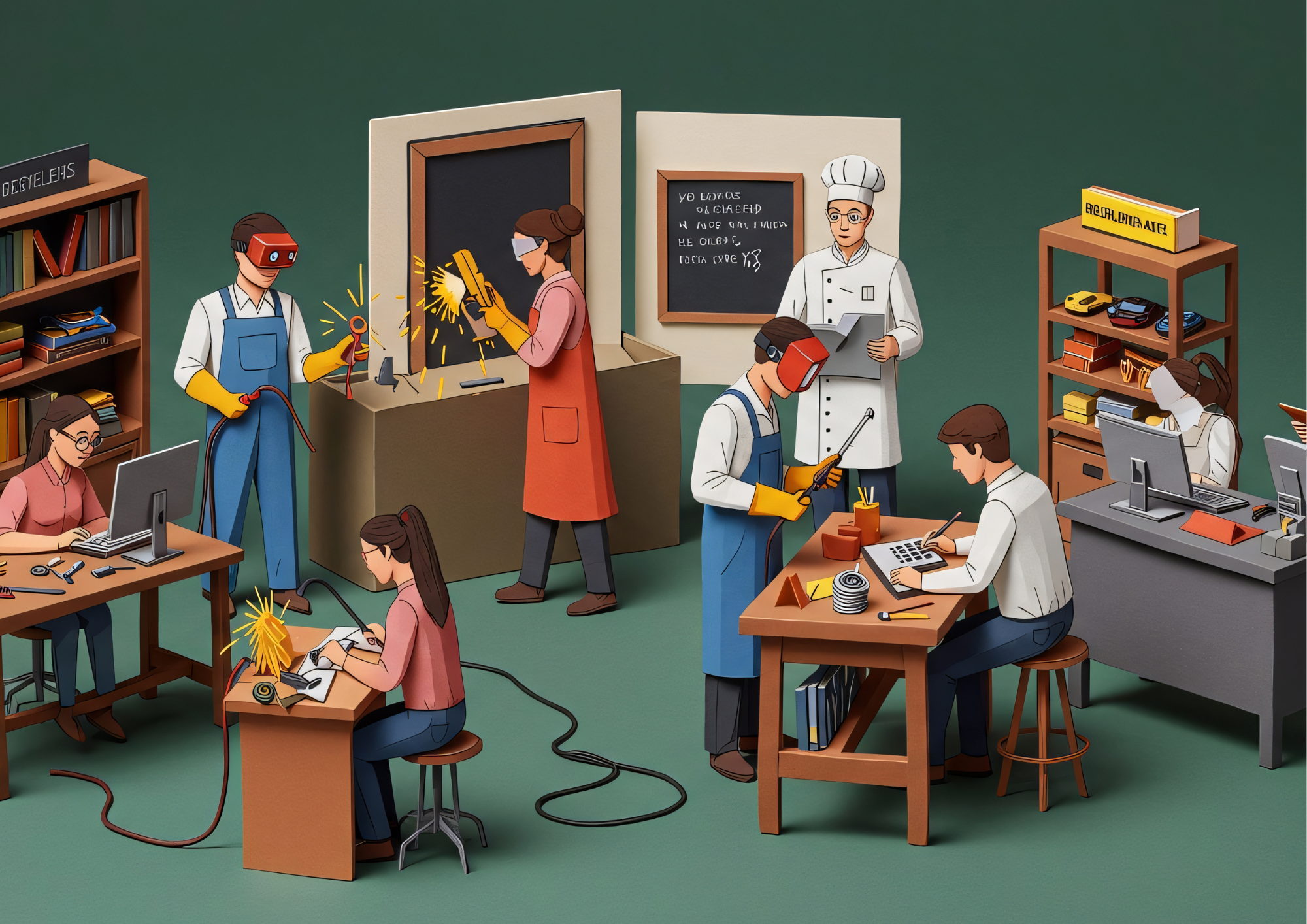
The importance of vocational education lies in its ability to bridge the gap between education and employment. Many industries today require skilled professionals who can perform tasks efficiently from day one.
Key reasons vocational schools are important:
Address skill shortages in various industries
Promote employability and entrepreneurship
Reduce unemployment among youth
Provide cost-effective and time-efficient education
Support economic and industrial growth
How Vocational Schools Differ from Traditional Education
| Vocational School | Traditional Academic School |
|---|---|
| Skill-based training | Theory-based learning |
| Short-term courses | Long-duration degrees |
| Industry-aligned curriculum | Broad academic syllabus |
| Job-focused outcomes | General career pathways |
| Hands-on practical experience | Limited practical exposure |
Benefits of Choosing a Vocational School

1. Job-Oriented Learning
This design their curriculum to meet industry demands, ensuring students acquire relevant and market-ready skills.
2. Faster Entry into the Workforce
Most vocational courses range from a few months to two years, allowing students to start earning sooner.
3. Affordable Education
Compared to traditional degrees, vocational programs are more economical and provide higher return on investment.
4. Practical Training and Internships
Students receive real-world exposure through workshops, labs, apprenticeships, and industry collaborations.
5. Career Flexibility
Vocational education allows learners to upskill, reskill, or switch careers with ease.
Popular Courses Offered by Vocational Schools

Information Technology and Computer Applications
Healthcare and Paramedical Training
Electrical and Electronics Technology
Automobile and Mechanical Trades
Hospitality and Tourism Management
Fashion Designing and Textile Studies
Culinary Arts and Bakery
Beauty and Wellness Training
Media, Animation, and Graphic Design
Each specializes in fields aligned with local and global employment opportunities.
Who Should Consider a Vocational School?

A vocational school is ideal for:
Students seeking early career opportunities
Learners interested in hands-on professions
Students who prefer skill-based learning over theory
Working professionals looking to upskill
Entrepreneurs planning to start their own businesses
Role of Vocational Schools in Skill Development
This play a crucial role in national skill development initiatives by:
Aligning education with industry requirements
Enhancing workforce productivity
Promoting self-employment and startups
Supporting government skill missions
Encouraging inclusive education for all learners
Vocational School and Career Opportunities

Graduates from schools find employment across various sectors, including:
Manufacturing and engineering
Healthcare services
IT and digital industries
Construction and infrastructure
Hospitality and tourism
Creative and design industries
Many vocational students also choose entrepreneurship, freelancing, or family businesses.
Future Scope of Vocational School Education
With the rise of automation, AI, and industry 4.0, demand for skilled professionals is increasing. They are adapting by introducing:
Digital skill programs
Green and sustainable technology courses
Industry-certified training modules
Hybrid and online vocational education
The future of school education looks promising, offering global career opportunities and lifelong learning pathways.
Conclusion
A school provides a powerful alternative to traditional education by focusing on practical skills, real-world training, and career readiness. As industries evolve and skill demands increase, vocational education is emerging as a smart, flexible, and future-proof choice for students and professionals alike.
Choosing a school is not just about learning a trade—it is about building confidence, independence, and a successful career.