For parents choosing a girls school exchange programme India today, the academic record is only the beginning of the conversation. Increasingly, what sets the finest residential schools apart is what happens beyond the classroom — and nothing illustrates that difference more clearly than a well-designed student exchange programme. Across India’s leading girls’ boarding schools, international exchange has evolved from an occasional perk into a cornerstone of holistic education, offering students experiences that no curriculum, however rigorous, can replicate.
For Indian girls specifically, the stakes are high and the potential is enormous. A generation navigating a rapidly globalising economy — where collaboration across cultures, comfort with ambiguity, and genuine cross-cultural empathy are professional necessities — cannot afford to spend their school years looking only inward. Exchange programmes are, in this sense, not extracurricular enrichment. They are preparation for the world as it actually is.
What Is a Girls school exchange programme India? A Working Definition
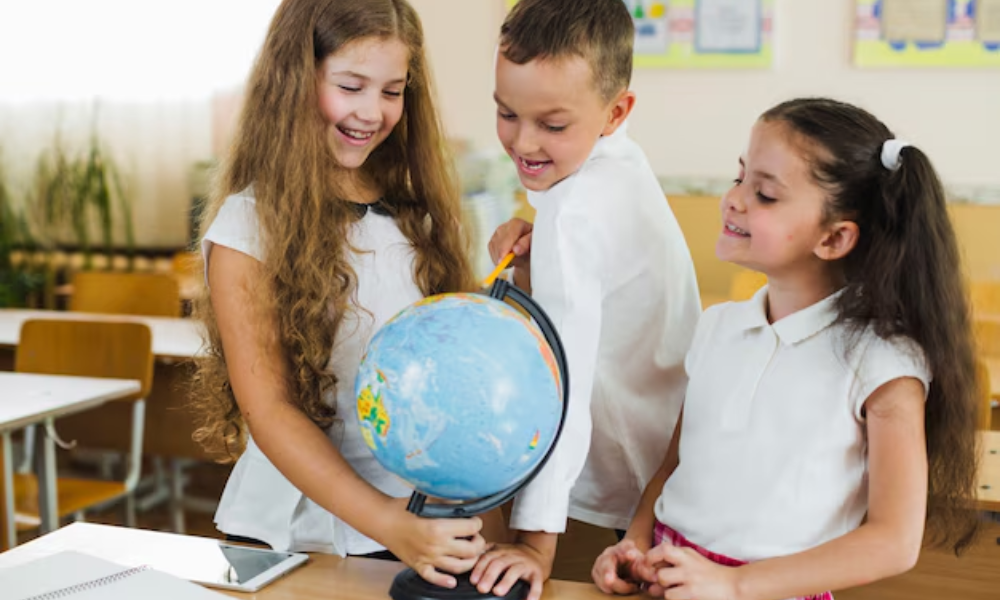
A student exchange programme is a structured arrangement through which students from one school spend a defined period — typically two to eight weeks — living and studying at a partner institution, often in a different country. In return, students from the host institution may visit the originating school, creating a genuine two-way exchange of culture, perspective, and learning.
In the context of Indian girls’ schools, exchange programmes take several forms:
- Outbound exchanges: Students travel abroad to partner schools in the UK, USA, Europe, Southeast Asia, or Australia, attending classes, participating in activities, and living with host families or in residential facilities.
- Inbound exchanges: International students visit Indian schools, living among the student community and offering domestic students the experience of engaging with a different culture without leaving the country.
- Community service exchanges: Often organised through international school networks, these bring students from multiple countries together for collaborative social impact projects in a host community.
Why Exchange Programmes Matter More for Girls
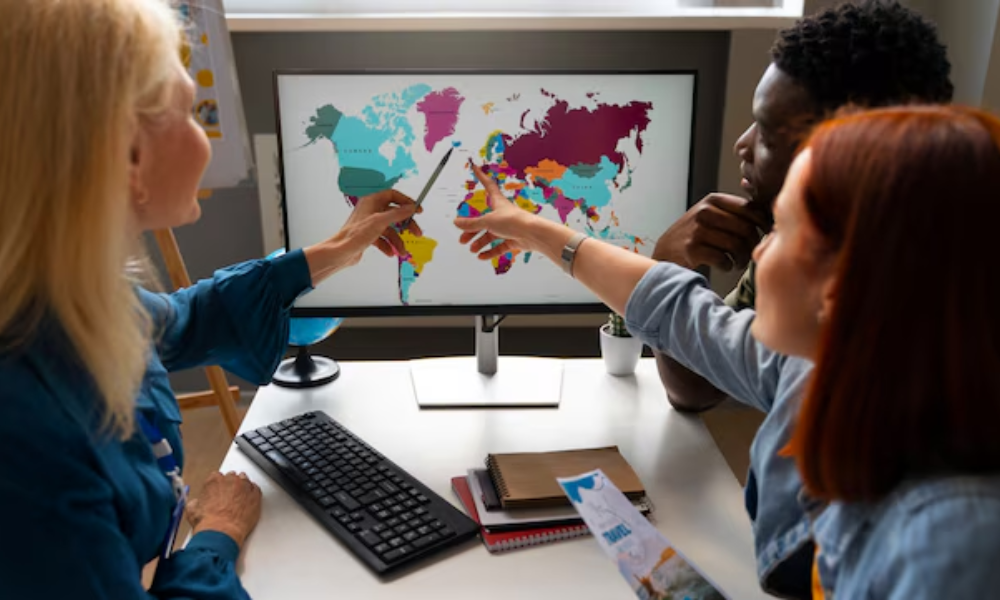
Research on girls’ education consistently points to a cluster of capabilities that determine long-term success: confidence in leadership, comfort speaking in unfamiliar environments, the ability to form productive relationships across difference, and resilience in the face of discomfort. Exchange programmes, almost uniquely among school activities, develop all of these simultaneously.
A girl who spends three weeks navigating a new country — managing logistics, building friendships with students from entirely different backgrounds, representing her school and her culture — returns fundamentally changed. She has evidence, from her own lived experience, that she can handle the unfamiliar. That internal shift — from theoretical confidence to demonstrated capability — is arguably the most valuable outcome of any school programme.
For Indian families with daughters in boarding schools, the exchange programme also addresses a practical concern: how to provide genuine international exposure during the formative school years, without the cost or disruption of overseas relocation. A well-run exchange programme offers precisely this — a structured, supervised, duration-limited experience of the wider world, delivered within the framework of an established school relationship.
A Benchmark in Action: Ecole Globale’s Exchange Programme, Dehradun
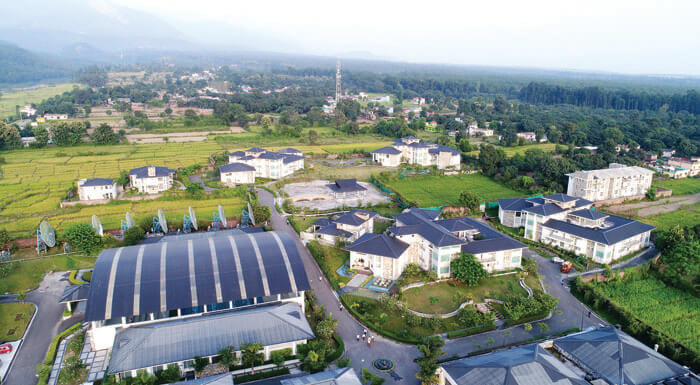
Among India’s girls’ boarding schools, Ecole Globale International Girls’ School in Dehradun has established one of the most thoughtfully designed exchange frameworks in the country. The school’s approach is built on its active membership of the Round Square International Service (RSIS) network — a global consortium that connects some of the world’s most prestigious schools and requires students to engage not only in cultural exchange but in hands-on community service in a real-world setting.
The exchange programme at Ecole Globale operates on a dual model. On one side, Ecole Globale students are selected to travel abroad and participate in exchange visits at partner institutions around the world, gaining firsthand exposure to different educational systems, social contexts, and cultural traditions. On the other side, the school also hosts international students from RSIS partner schools, giving Ecole Globale’s own girls the equally valuable experience of welcoming the world into their community.
What distinguishes the RSIS model from a conventional exchange is the community engagement requirement. Students participating in RSIS programmes are not passive cultural observers — they are required to work together, across nationalities, on a concrete service project, often in a rural or resource-limited setting. Past cohorts have collectively constructed school classrooms and built teacher accommodation in communities that needed them. This kind of shared physical labour — working alongside people from different countries toward a common goal that genuinely matters — creates the kind of bonds and broadened perspective that no classroom discussion can manufacture.
The outcomes that Ecole Globale reports from its exchange participants reflect this design. Students return with not only new friendships and a richer cultural vocabulary, but a renewed appreciation for their own country’s complexities, a more grounded sense of global inequality, and — consistently — an enhanced capacity for empathy and public engagement. These are precisely the qualities that higher education institutions and employers across the world identify as defining characteristics of tomorrow’s leaders.
The Round Square Network: What Membership Means for Students

For parents evaluating girls’ schools in India, the Round Square affiliation is worth understanding in some depth, because it significantly shapes what an exchange programme can offer. Round Square is an international organisation of schools united by a commitment to what it calls the IDEALS: Internationalism, Democracy, Environment, Adventure, Leadership, and Service. Member schools must actively demonstrate these values in their programming — it is not a nominal membership.
For students, Round Square membership means access to a global community of peers across dozens of countries, participation in international conferences and baraza (regional gatherings), and the structured exchange and service programme that RSIS coordinates. The network includes schools from the United Kingdom, United States, Canada, Germany, Australia, South Africa, and across Asia — meaning an Ecole Globale student selected for an RSIS exchange could find herself in any of these contexts.
This breadth of network is not incidental. The ability to work effectively with people from radically different cultural, economic, and educational backgrounds is one of the most consistent predictors of success in global careers, international higher education, and leadership roles. Round Square’s design deliberately cultivates this, and schools like Ecole Globale that are active participants in the network give their students a meaningful advantage.
Beyond the Exchange: Social Exposure as a Broader Commitment
The best girls’ boarding schools in India understand that international exchange, while powerful, is one part of a broader commitment to social development. Alongside formal exchange programmes, leading institutions offer a range of activities designed to develop confidence, public voice, and interpersonal skills in a supportive residential environment.
At Ecole Globale, the exchange programme is embedded within a wider student life framework that includes inter-school conferences, collaborative events with schools in the Dehradun region and beyond, community service initiatives, and regular outings that place students in varied social contexts. Each of these — individually modest in scope — contributes to building the kind of socially confident, outward-looking young woman who is ready for university life and professional environments in India and internationally.
Public speaking development runs as a thread through many of these activities. Girls who are comfortable articulating their ideas in front of unfamiliar audiences — from a village community service setting to an international conference table — carry that skill into every domain of their adult life. It is, in the assessments of university admissions offices and corporate talent teams alike, one of the most reliably differentiating capabilities a school can cultivate.
What Parents Should Look for in a School’s Exchange Programme
Not all exchange programmes are equal. When evaluating a girls’ school’s international exchange offering, parents should ask:
- Is the school a member of a credible international school network such as Round Square, UNESCO Associated Schools, or Rotary International’s Youth Exchange? Membership signals institutional commitment and access to verified, high-quality partner schools.
- Does the programme operate in both directions — sending students abroad AND hosting international students? Genuine exchange requires reciprocity, and hosting international students is a distinct and valuable educational experience in itself.
- Is there a structured service or community engagement component? The most impactful exchange programmes require students to contribute, not merely observe. Look for programmes where students work collaboratively on real projects in real communities.
- How many students participate annually, and what is the selection process? A programme that is genuinely active — with regular cohorts, clear selection criteria, and preparation support — reflects a school’s real commitment to the initiative.
- What pastoral and safeguarding arrangements are in place? For girls travelling internationally or hosting international visitors, detailed safety protocols, supervision arrangements, and communication frameworks are non-negotiable.
Dehradun: India’s Premier Destination for Girls’ Boarding Education
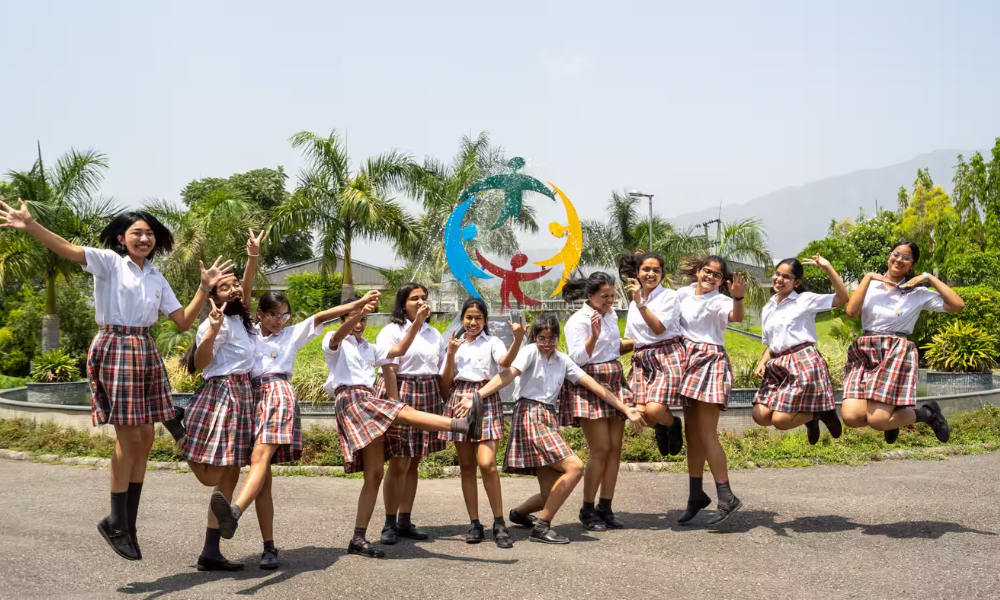
It is no accident that some of India’s finest girls’ boarding schools are concentrated in Dehradun. The city’s long tradition as an educational centre, its temperate climate, its relative distance from the pressures of metro life, and its established infrastructure of residential schools have made it the natural home of India’s premium boarding school sector. Schools in Dehradun benefit from decades of accumulated institutional culture around boarding, pastoral care, and holistic development — and the best of them have leveraged that foundation to build genuinely world-class programmes.
For parents considering a girls’ school with a strong exchange programme, Dehradun’s residential schools — and Ecole Globale in particular, through its RSIS affiliation — offer a combination that is difficult to match elsewhere in India: rigorous academics, a safe and nurturing residential environment, and a structured international exchange framework that opens genuinely global doors.
Conclusion: Exchange Is Not an Extra — It Is the Education
The phrase ‘global citizen’ has become so common in school prospectuses that it risks losing its meaning. But behind the phrase lies a genuine and urgent challenge: how do you prepare a young Indian woman, growing up in one of the world’s most complex and rapidly changing societies, to operate confidently and contributively in a world that is interconnected in ways that previous generations never had to navigate?
Exchange programmes, when they are well-designed and genuinely implemented, are one of the most direct answers to that question. They place students in real situations of cross-cultural encounter, real challenges of communication and adaptation, and real relationships that persist long after the programme ends. The friendships made during an RSIS service project, the confidence gained from representing one’s school in an international conference, the shift in perspective that comes from spending time in a community whose daily realities are entirely different from one’s own — these are not peripheral to education. They are, in the fullest sense, what education is for.
For families looking for a girls’ school in India that takes this seriously, the exchange programme at Ecole Globale International Girls’ School, Dehradun represents one of India’s most compelling models — rooted in the Round Square network, oriented toward genuine service, and designed to send girls back to their classrooms not just with stories, but wit