
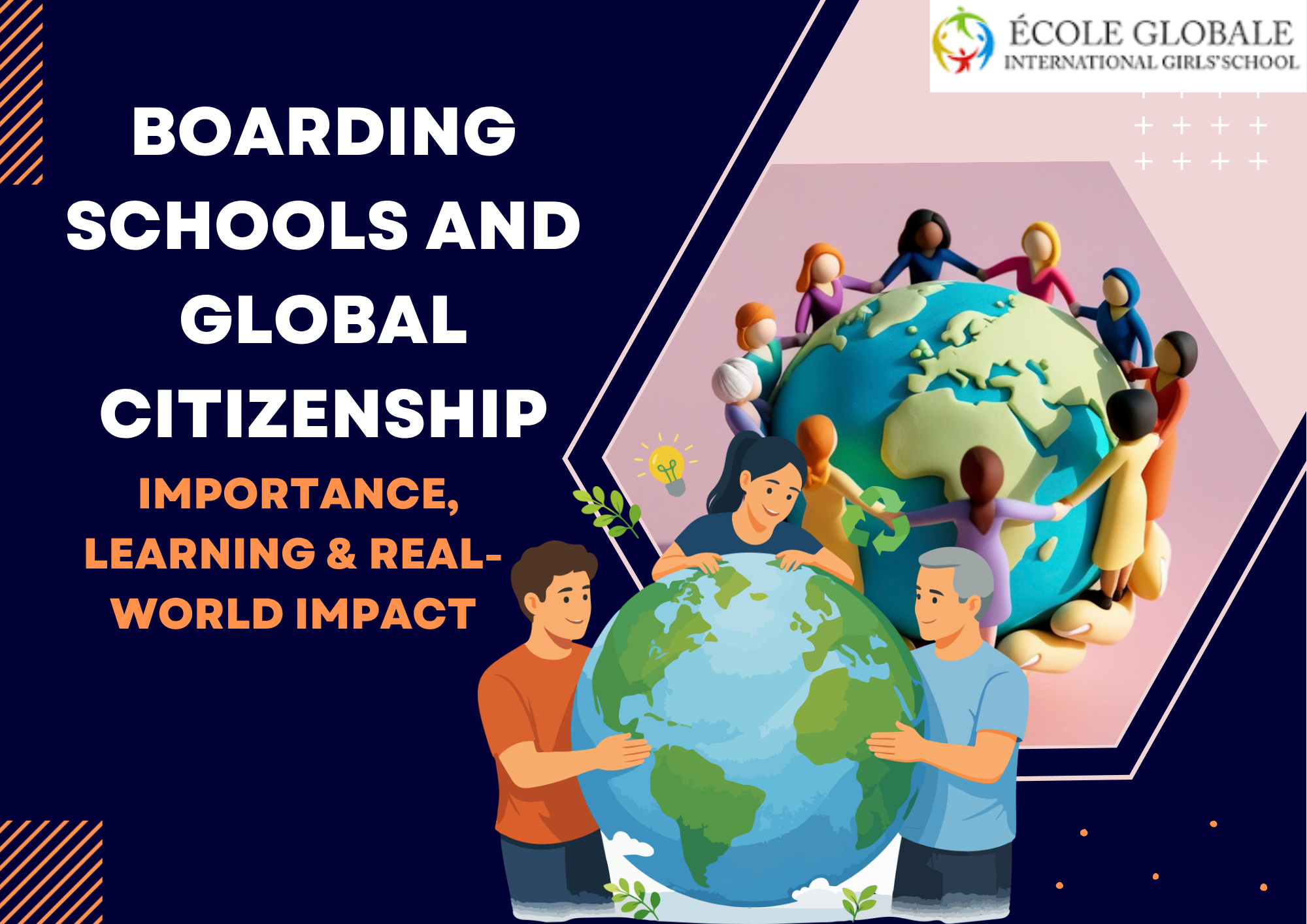
In today’s interconnected world, education is no longer limited to textbooks or national boundaries. One concept gaining strong attention is boarding schools and global citizenship. Parents and educators now look for institutions that prepare students not just for exams, but for life in a diverse and global society.
Boarding schools, with their immersive environments, naturally support this idea. They bring together students from different regions, cultures, and backgrounds, creating a space where global understanding becomes part of daily life. This is where the connection between boarding schools and global citizenship becomes meaningful and relevant.
What is Global Citizenship in Education

Global citizenship is about understanding the world beyond one’s immediate surroundings. It includes awareness, empathy, and responsibility towards global issues.
Core Elements
- Respect for cultural diversity
- Awareness of global challenges like climate change and inequality
- Strong communication and collaboration skills
- Ethical thinking and responsibility
When we connect this with boarding schools and global citizenship, it becomes clear how such environments naturally support these values.
Why Boarding Schools Support Global Citizenship

Boarding schools provide a living-learning environment where students experience diversity firsthand.
1. Diverse Student Communities
Students interact with peers from different states and countries, helping them understand multiple perspectives. This is a key reason why boarding schools and global citizenship go hand in hand.
2. Continuous Learning Environment
Learning doesn’t stop after class. Discussions, group activities, and shared living experiences deepen global understanding.
3. Exposure to Global Practices
Many boarding schools follow international curricula and teaching methods that promote global awareness.
Importance of Boarding Schools and Global Citizenship
The importance of this connection becomes clear when we look at long-term student growth.
1. Preparing for a Global Future
Students develop skills that are useful in international careers and higher education.
2. Building Cultural Sensitivity
Living with diverse peers helps students respect different traditions and viewpoints.
3. Developing Leadership Skills
Global citizens are often strong leaders who can work in multicultural teams.
4. Encouraging Open-Minded Thinking
Students learn to think beyond local perspectives, which highlights the importance of boarding schools and global citizenship in modern education.
Types of Boarding Schools That Promote Global Citizenship
Different types of boarding schools offer various opportunities for global learning.
| Type of School | Contribution to Global Citizenship |
|---|---|
| International Boarding Schools | Offer IB or Cambridge curricula with global focus |
| Traditional Boarding Schools | Blend cultural values with modern global exposure |
| Exchange-Based Schools | Provide student exchange programs |
| Specialized Schools | Focus on leadership and global skills |
Each of these contributes to strengthening the relationship between boarding schools and global citizenship.
Key Educational Theories Supporting Global Citizenship

The concept is supported by strong academic foundations.
1. Experiential Learning
Students learn through real-life experiences, travel, and interaction.
2. Social Constructivism
Knowledge is built through collaboration and shared experiences.
3. Intercultural Learning Theory
Focuses on understanding and respecting cultural differences.
These theories explain why boarding schools and global citizenship work so effectively together.
Benefits of Boarding Schools in Developing Global Citizens

The advantages are both practical and long-lasting.
Academic Benefits
- Exposure to international curricula
- Development of critical thinking skills
- Better communication abilities
Personal Growth
- Increased independence
- Strong adaptability
- Confidence in diverse environments
Social Benefits
- Global friendships and networks
- Improved teamwork skills
- Respect for diversity
These benefits clearly show how boarding schools and global citizenship shape well-rounded individuals.
Challenges in Promoting Global Citizenship

While the benefits are strong, there are some challenges to consider.
1. Cultural Adjustment
Students may initially struggle to adapt to diverse environments.
2. Language Barriers
Communication differences can create early difficulties.
3. Cost of International Exposure
Global programs and exchange opportunities can be expensive.
Despite these challenges, the long-term value of boarding schools and global citizenship remains significant.
Modern Role of Boarding Schools in Global Learning

Today’s boarding schools are evolving rapidly to meet global demands.
- Integration of global topics in curriculum
- International exchange and travel programs
- Focus on sustainability and global issues
- Use of technology to connect with global communities
Institutions like Ecole Globale International Schools reflect this shift by offering a balanced mix of tradition and global exposure. This modern approach strengthens the connection between boarding schools and global citizenship.
How to Choose a School That Supports Global Citizenship

Choosing the right school is essential for meaningful global exposure.
Key Factors to Consider
- Curriculum (IB, Cambridge, or global programs)
- Diversity of student population
- Availability of exchange programs
- Focus on extracurricular activities
- School values and vision
Selecting the right institution ensures that students truly benefit from boarding schools and global citizenship.
Who Should Consider This Path
This approach is ideal for students who:
- Want international exposure
- Are open to new cultures and ideas
- Aim for global careers
- Enjoy collaborative learning
For such students, the combination of boarding schools and global citizenship offers a strong foundation for future success.
Conclusion
The connection between boarding schools and global citizenship is shaping the future of education. These schools go beyond academics to prepare students for a world that values diversity, understanding, and collaboration.
While there may be challenges, the benefits — cultural awareness, leadership skills, and global perspective — make this approach highly valuable. For parents and students looking ahead, this model of education offers not just knowledge, but a broader understanding of the world.
FREQUENTLY ASKED QUESTIONS
Q1. What is global citizenship in simple terms?
Ans: It means understanding and respecting different cultures while taking responsibility for global issues.
Q2. How do boarding schools help in global citizenship?
Ans: They provide a diverse environment where students live, learn, and interact with people from different backgrounds.
Q3. Why is global citizenship important for students?
Ans: It prepares them for global careers and helps them develop empathy and awareness.
Q4. Do all boarding schools promote global citizenship?
Ans: Most modern boarding schools include global exposure through curriculum and activities.
Q5. Can students develop global citizenship at a young age?
Ans: Yes, early exposure to diverse cultures and ideas helps build a strong global mindset.