


Should the reservation system be removed from India? The reservation system was implemented in India after the partition of 1947 to provide affirmative action for SC, ST, and OBC people and to ensure adequate representation in government jobs and educational institutions.
The reservation system in India is one of the most debated and complex socio-political topics. Originally introduced as a temporary measure to uplift historically marginalised communities, it has evolved into a deeply embedded part of the country’s governance and education structure. With ongoing debates about its relevance in modern India, one critical question arises—should the reservation system be removed from India?
This article explores the historical background, current impact, arguments for and against its removal, and potential alternatives to create a more inclusive society.
As per research conducted by international schools in India, the reservation system was implemented in India by the British Empire to uplift the lower classes in India. The system has been a great success and probably has lifted millions out of poverty.
Understanding the Reservation System
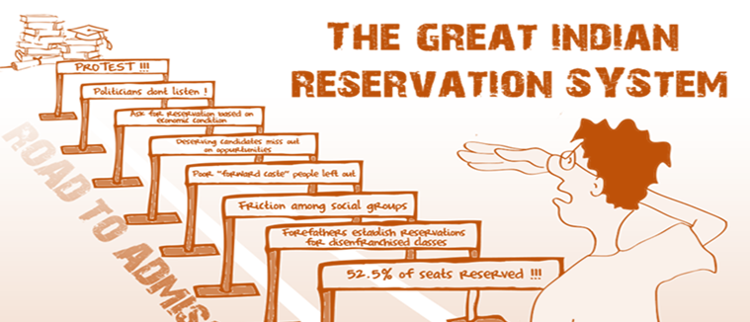
The reservation system in India was introduced to ensure social justice for Scheduled Castes (SC), Scheduled Tribes (ST), and later Other Backward Classes (OBC). It provides reserved seats in the following:
- Government jobs
- Educational institutions
- Legislative bodies
The goal was to bridge centuries of social and economic inequality by offering equal opportunities in a stratified society.
The reservation system has been a part of our lives since independence, and despite that, most of the population still can’t get their education or jobs as per their caste.
In 2016, the government of India issued a draft bill proposing to remove Section 15(1) and (2), which allow for discrimination on the basis of caste and permit the exclusion of some citizens from public goods and services such as schools, hospitals, and public transport.
Reservation is a controversial topic in India. The origin of the reservation in India can be traced back to the historical discrimination meted out to particular castes or tribes for centuries.
The first attempt at the reservation was made by the Britishers with an act called the Communal G.O in 1882 which was for the backward classes like Sudras, Harijans, and Tribals.
It was later repealed in 1902 and reintroduced again in 1909 as a communal award (Lingayat). Then, the reservation was introduced by the Indian National Congress (INC) in 1935 mainly for backward classes like scheduled caste and scheduled tribes in government jobs, education, etc. Later, the reservation was stopped during the period of British rule but continued after the independence of India through constitutional provision.
Arguments in Favor of Removing the Reservation System
1. Meritocracy Over Caste-Based Preferences
Critics argue that reservations compromise merit and efficiency, especially in competitive fields like higher education and government services.
2. Economic Status Ignored
The reservation system is primarily caste-based, often overlooking the economically weaker sections among upper castes or minorities who also need support.
3. Perpetuation of Caste Identity
Instead of erasing caste distinctions, some believe the system reinforces them, keeping society divided and encouraging caste-based politics.
4. Creamy Layer Misuse
The benefits often go to the well-off within backward classes, leaving truly disadvantaged individuals behind. This “creamy layer” exploitation weakens the system’s effectiveness.
Arguments Against Removing the Reservation System
1. Historical and Social Inequality Persists
Caste-based discrimination and socio-economic gaps are still deeply rooted in many parts of India. The reservation system remains a tool for equity.
2. Lack of Equal Opportunity
Despite constitutional rights, marginalised groups often lack access to quality education, healthcare, and employment. Reservations help level the playing field.
3. Under-representation in Leadership
SC/ST and OBC groups remain under-represented in higher administrative and academic positions. Removing reservations may reverse progress made so far.
4. Caste Discrimination Still Exists
Social bias and exclusion are still prevalent in rural and even urban areas. Until society becomes genuinely caste-neutral, reservations act as a safeguard.
Now, reservation has become one of the significant topics to debate in both parliament and public places. Many political parties also built their election manifesto based on this issue only to come into power. This issue is also used as a political tool to win elections as well as to gain votes by giving false promises.
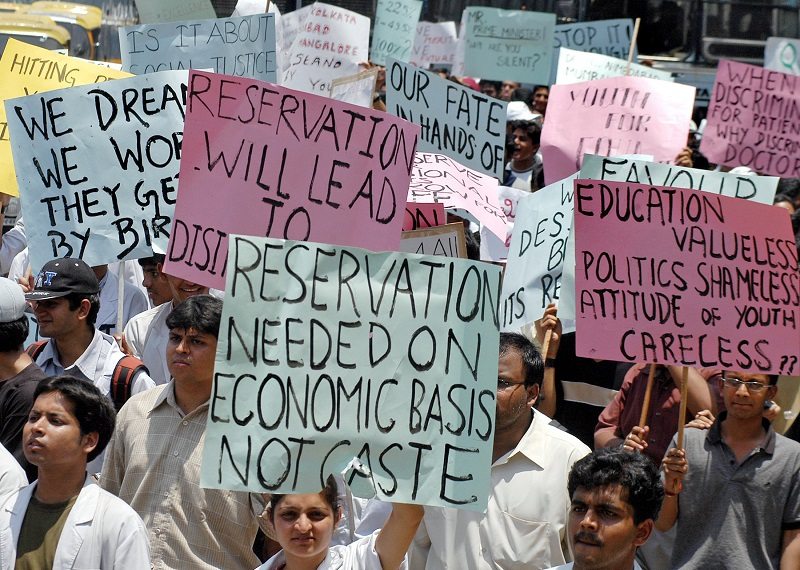
In a bold move, the Modi government announced last week that it would do away with the reservation system in India. The decision has been welcomed by large sections of society, but there are still some people who think that reservations should be kept.
What the Data Says
- SC/ST communities continue to show lower literacy rates and higher unemployment.
- In government services, top-level representation from reserved categories remains disproportionately low.
- Surveys show that a significant portion of India still supports reservations for disadvantaged communities, especially in education.
I’m one of those people. Reservation has done so much for the country, and it should not be removed until a more robust alternative is found to help backward sections of society.
The reason why I feel reservation should not be abolished is that it will affect these communities adversely. If you take away their quota, they will be unable to compete with richer students from big cities who have had access to better education since childhood. The only way to ensure equality is to provide them with the same benefits as rich students get — and that’s exactly what reservation does.
For example, if a college has a 60% reservation for SC/ST students, then it means that about 20% of the seats are set aside for students who have a poor academic record and have to work extra hard because of their poor family background. But when you reserve 60% of the seats, you are actually saying that 60% of the seats are reserved only for those students who can’t make it otherwise!
What happens is that these reserved seats go vacant if nobody applies for them. In that case, they are rolled over to the general category and hence reduce the total number of seats available in the general category!
So even though there was no need to reserve those seats, they have been reserved, and now there are fewer seats in the general category! This is how reservation policy is implemented in practice!
For any queries related to parenting, schooling, or any student-related tips, click here to check out our latest blogs
Frequently Asked Questions
1. What is the reservation system in India?
Ans: The reservation system in India provides reserved opportunities in education, government jobs, and legislative bodies for historically disadvantaged communities.
2. Why was the reservation system introduced in India?
Ans: Reservation was introduced to address historical social discrimination and provide greater access to education, employment, and representation for disadvantaged communities.
3. Should the reservation system be removed from India?
Ans: There are arguments on both sides. Supporters of removal emphasise merit and economic criteria, while opponents argue that social inequality and caste discrimination still require affirmative action.
4. What are the main arguments against the reservation system?
Ans: Critics argue that reservation can affect merit-based selection, reinforce caste identities, overlook economic disadvantage, and allow benefits to reach relatively better-off members of reserved communities.
5. What could be an alternative to the reservation system in India?
Ans: Possible alternatives discussed include greater investment in quality education, economic support, scholarships, skill development, and targeted assistance for disadvantaged students and families.