





Entrepreneurship is not only about starting a company. At its heart, it is about spotting a problem, imagining a solution and having the courage to try. These entrepreneurship skills help in every career, whether a student becomes a doctor, designer, teacher or founder.
That is why entrepreneurship skills for students deserve attention in school. This guide explains what these skills are, why they matter early and how schools, parents and students can build them in simple, practical ways.
What Are Entrepreneurship Skills?
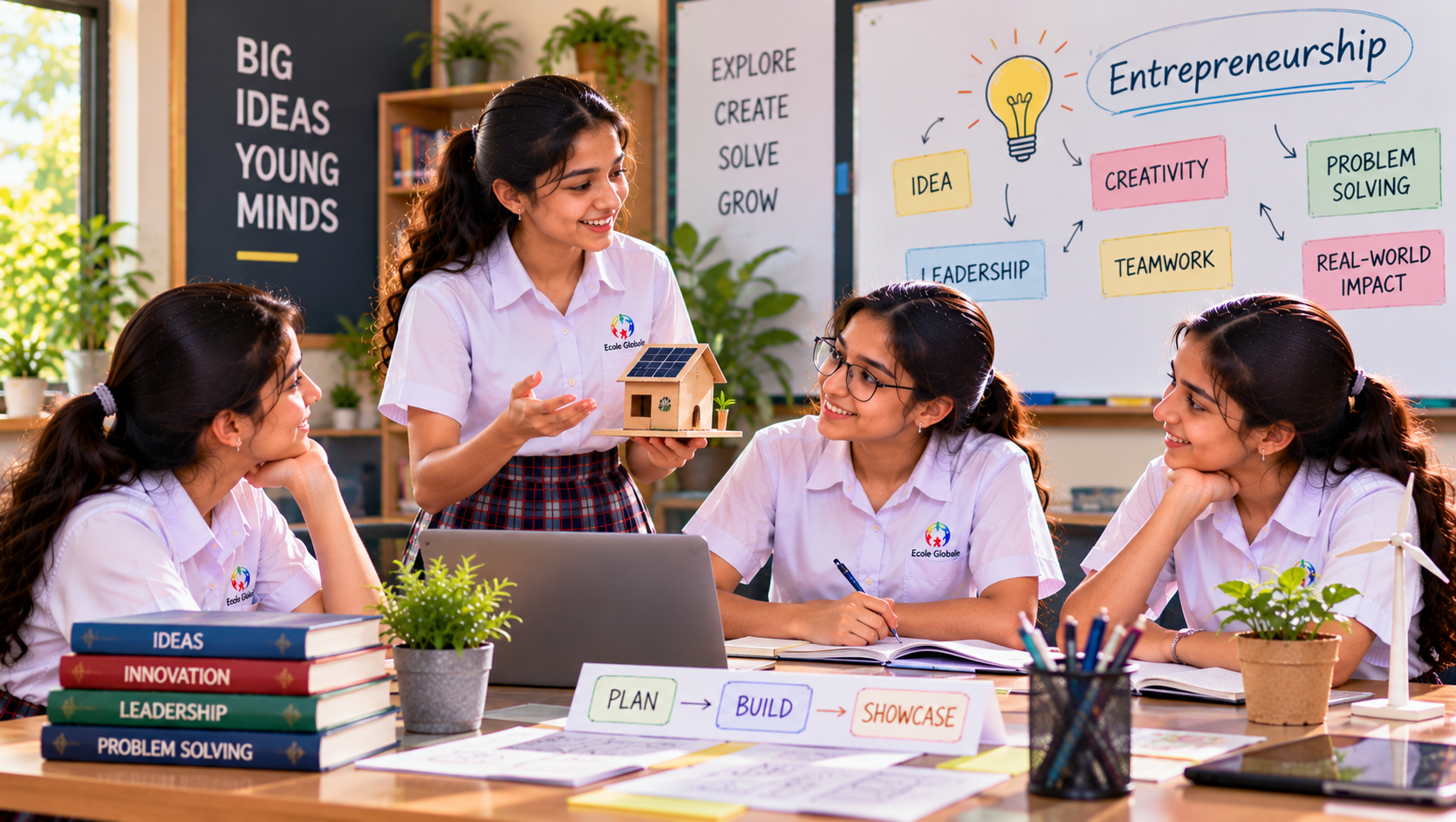
Entrepreneurship skills are the mindset and abilities that help a person turn ideas into action. They include creative thinking, planning, communication, decision-making and the ability to learn from mistakes.
These are not limited to business. A student who organises a school event, leads a science project or starts a community drive is already practising them. The goal is not to turn every child into a founder, but to help every child become resourceful, confident and independent.
Key Entrepreneurship Skills Students Can Build
Seven skills sit at the core of the entrepreneurial mindset:
| Skill | What it looks like at school |
|---|---|
| Creativity | Coming up with new ideas for projects, events or clubs |
| Problem solving | Finding practical fixes to everyday school or community problems |
| Communication | Pitching an idea clearly and persuading classmates or teachers |
| Financial awareness | Budgeting for an event or understanding costs and profit |
| Leadership | Guiding a team and sharing responsibility |
| Resilience | Trying again after a project or idea does not work |
| Adaptability | Changing plans when circumstances shift |
Students do not need to master all seven at once. Each activity builds a few of them.
Why These Skills Matter Early
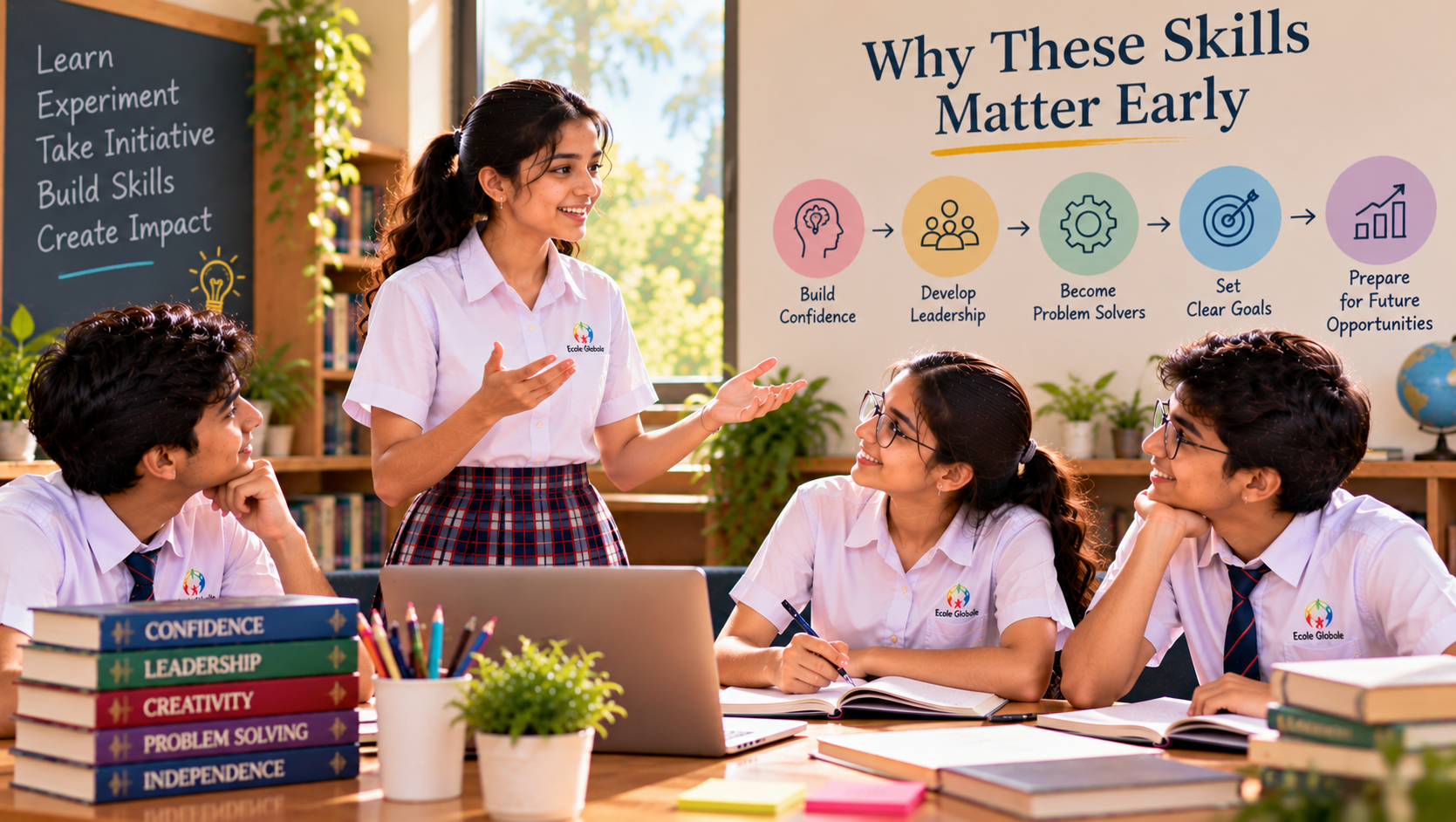
The world students will work in is changing fast. Many future jobs do not exist yet, and traditional career paths are shifting. Young people who can think creatively, learn quickly and take initiative are better prepared for that uncertainty.
Entrepreneurship skills also build self-reliance. Students who have planned, pitched and delivered something themselves feel more capable and less afraid of new challenges. These habits help in college, in jobs and in everyday life, long before anyone launches a business.
How Schools Can Build Entrepreneurship Skills
Schools do not need a special course to start. Small, regular opportunities work well:
- Project-based learning: Let students tackle a real problem and present a solution
- Business fairs and stalls: Give students a chance to plan, price and sell a product
- Clubs and societies: Support entrepreneurship, innovation and social impact clubs
- Guest mentors: Invite founders, alumni and local business owners to share their journeys
- Student-led events: Hand over planning of a fest or fundraiser to a student team
- Reflection time: Ask students what worked, what failed and what they would change
The key is to give students real responsibility, not just theory.
Simple Activities Students Can Try

Students can begin practising right away with small, low-risk projects:
- Run a mini business for a day, such as handmade cards, baked goods or recycled crafts
- Plan a fair stall with a simple budget, price list and sales target
- Start a social project, such as a book drive or cleanliness campaign
- Host a pitch day, where teams present ideas to a small panel
- Play budgeting games to learn about saving, spending and profit
Each activity teaches planning, teamwork and decision-making, even if the project is small.
Learning From Failure
Every entrepreneur fails at something, and school is the best place to learn this lesson safely. A stall that does not sell or a pitch that falls flat is not a disaster. It is feedback.
Teachers and parents can help by asking useful questions: What did you try? What went well? What would you do differently? Praising effort and learning, not only results, builds resilience. Students who learn to bounce back become more willing to take sensible risks.
How Parents Can Support Young Entrepreneurs

Parents do not need business experience to help. A few simple habits go a long way:
- Encourage questions and curiosity about how things work
- Teach basic money habits, such as saving a part of pocket money
- Let children solve problems before stepping in with answers
- Celebrate effort, even when a project does not succeed
- Support clubs and activities where children can lead, like the range of extracurricular activities at Ecole Globale
When children see that their ideas are taken seriously, they dare to try more.
Building Confident Young Leaders at Ecole Globale
Ecole Globale is a girls’ boarding school in Dehradun with a fully residential campus, where academics, sports and activities come together. A full student life gives girls many chances to lead, collaborate and take initiative, which are the foundations of entrepreneurial thinking. You can also read a typical day at Ecole Globale to see how these opportunities fit into school life.
When you explore schools, ask how they encourage students to take initiative and lead projects.
Frequently Asked Questions
Q1. What are entrepreneurship skills?
Ans: They are abilities such as creativity, problem solving, communication, financial awareness, leadership and resilience that help people turn ideas into action.
Q2. At what age can students start building entrepreneurship skills?
Ans: As early as primary school, through simple activities like fairs, group projects and saving habits. Complexity can grow with age.
Q3. Do all students need to start a business?
Ans: No. These skills help in every career, and many students use them as employees, professionals or community leaders.
Q4. How can parents encourage entrepreneurial thinking?
Ans: Encourage curiosity, give small responsibilities, support school clubs and praise effort over results.
Entrepreneurship skills for students are really life skills, and with the right support from school and home, every child can learn to think boldly and act with confidence.