




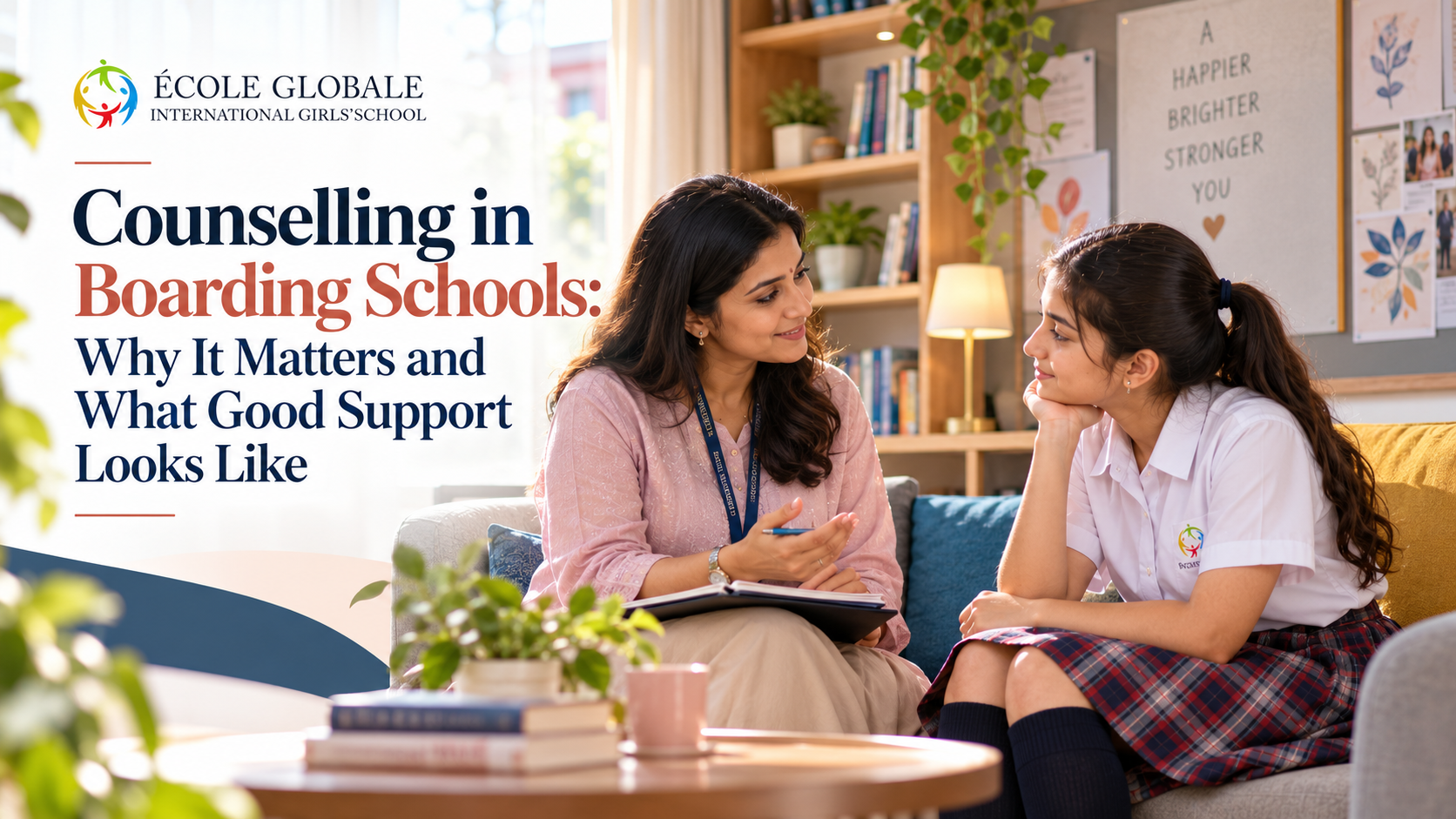
When a child moves into a hostel, parents often wonder who she can talk to when things feel difficult. That is where counselling in boarding schools comes in. A good counsellor gives students a trusted adult, a private space to talk and guidance when life on campus gets hard.
This article explains why counselling matters in a residential setting, what school counsellors do, how students reach them and which questions parents should ask before choosing a school.
Why Counselling Matters in a Residential Setting

In a day school, students go home each evening and share their day with family. In a boarding school, that daily conversation has to happen on campus. The school becomes both classroom and home.
This makes accessible counselling especially important. Small worries, such as homesickness or a friendship fight, can grow quickly when a student has no one to talk to. A counsellor helps catch concerns early, so they stay small and manageable.
What a School Counsellor Actually Does
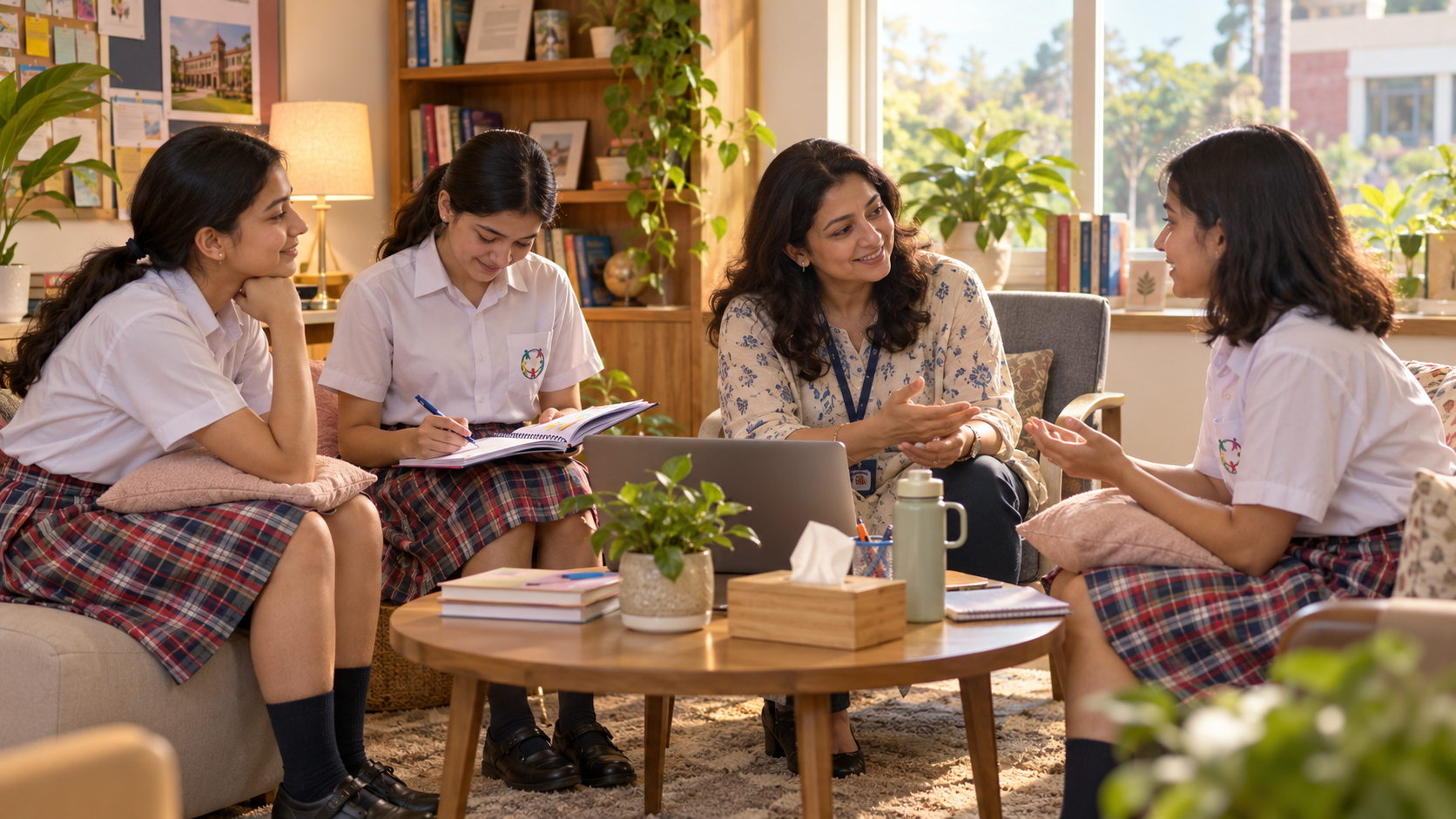
Counsellors are not only for crises. Their everyday work covers a wide range of support:
- Listening: Giving students a calm, non-judgemental space to talk
- Guidance: Helping students build coping skills, confidence and healthy habits
- Academic support: Working with students on study stress, exam anxiety and time management
- Coordination: Sharing relevant concerns with teachers, house parents and parents
- Referral: Connecting students with a doctor or specialist when a concern needs more than school-based support
- Prevention: Running sessions on topics such as stress, friendships and online safety
A counsellor does not replace family. She works alongside parents and staff to support the student.
Types of Counselling Students Can Access
Schools may offer different kinds of support, depending on their size and resources:
| Type | What it covers |
|---|---|
| Individual counselling | One-to-one conversations about personal or emotional concerns |
| Group sessions | Shared discussions on topics such as stress or friendships |
| Academic counselling | Study plans, exam stress and subject choices |
| Career guidance | Exploring interests, streams and college options |
| Peer support | Trained senior students who offer a friendly first ear |
A good school makes it clear which of these it offers and how students can use them.
Common Reasons Students Seek Counselling
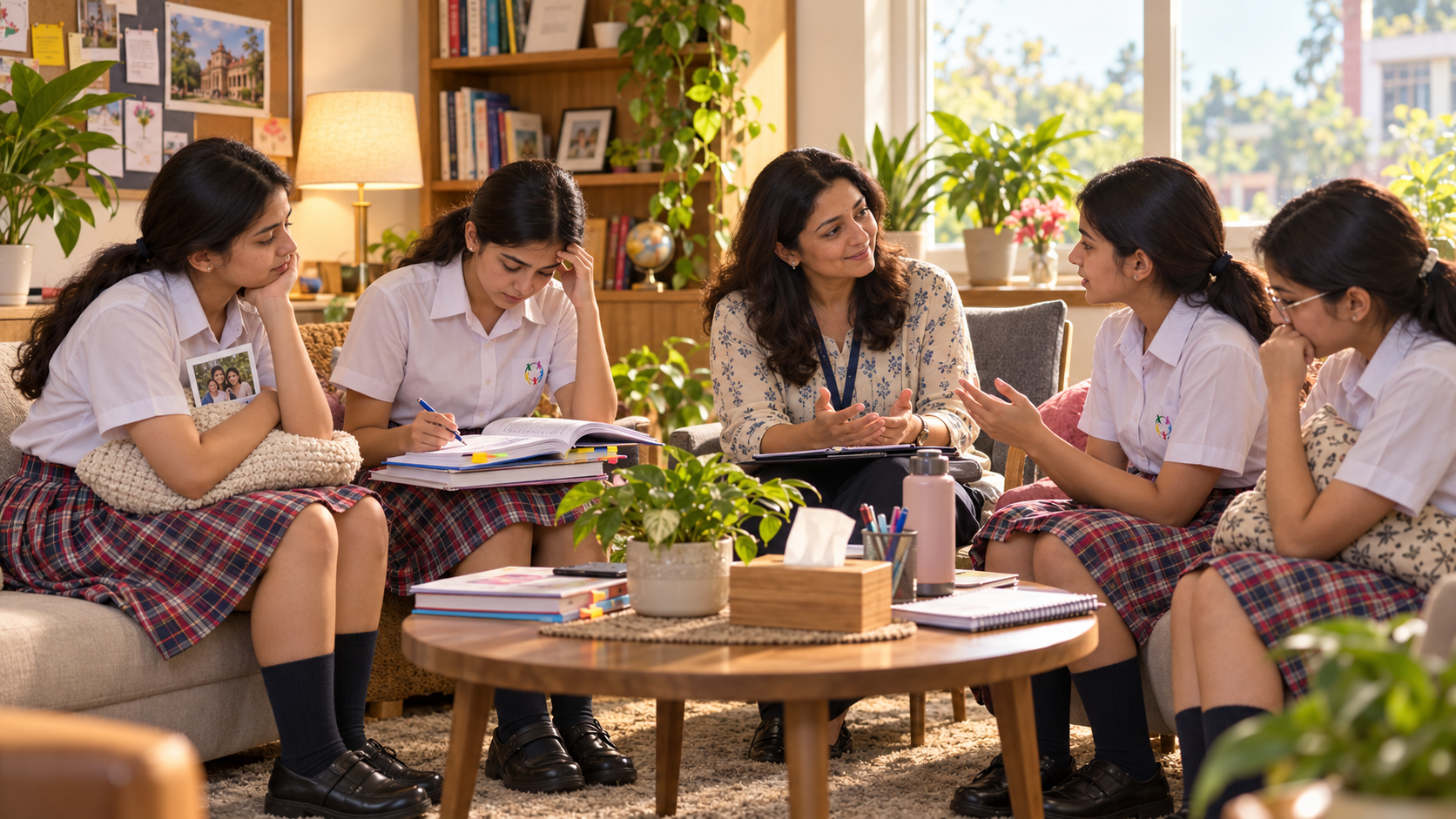
Most students who visit a counsellor are dealing with everyday challenges, not serious problems. Typical reasons include:
- Homesickness in the first weeks and months
- Stress before exams or during subject choices
- Friendship problems and difficulty fitting in
- Struggles with sleep, routine or self-confidence
- Feeling overwhelmed by the pace of school life
Seeking help for these is a sign of maturity. When schools treat counselling as a normal service, students feel less embarrassed about using it.
Counselling in boarding schools :How Students Reach a Counsellor
A counselling service only works if students can easily get to it. Good schools offer several routes:
- Self-referral, where a student books or walks in herself
- Staff referral, when a teacher or house parent notices a change and suggests a meeting
- Parent request, when a family raises a concern
- Regular check-ins, such as scheduled sessions for new students or exam classes
Multiple routes matter because some students will never ask for help on their own. A visible, friendly counselling room and open timings make a big difference.
Confidentiality and When Parents Are Informed

Students open up more when they trust that their conversations are private. Most counsellors respect this and share only what is needed. The exception is safety: if a student may be at risk of harm, the school will involve parents and the right professionals.
Exact policies vary from school to school, so parents should ask how confidentiality works, what gets shared and how families are informed. A school that explains this clearly is usually one that handles it carefully.
Questions Parents Should Ask Before Admission
When you visit a school, ask direct questions about its counselling service:
- Is there a qualified counsellor or psychologist on campus?
- How many hours is she available each week, and when?
- How can a student request a session?
- How does the school handle confidentiality and parent communication?
- What happens if a student needs specialist help?
- How are house parents and teachers trained to notice distress?
Clear, confident answers show that counselling is part of the school’s daily life. You can also read about student life at Ecole Globale to see what to look for in a residential community.
Caring for the Whole Student at Ecole Globale

Ecole Globale is a girls’ boarding school in Dehradun with a fully residential campus, where students live, learn and grow together. Its approach to daily life on campus combines academics, sports and activities, which supports balance and wellbeing.
If you are comparing schools, visit the campus, meet the staff and ask about the support students receive. The way a school answers will tell you a lot about how it cares for its students.
Frequently Asked Questions
Q1. Do all boarding schools have counsellors?
Ans: Not all, and the quality varies. Always ask whether a qualified counsellor is on campus and how students can reach her.
Q2. Is counselling only for students with serious problems?
Ans: No. Most students visit for everyday concerns such as homesickness, exam stress or friendship issues.
Q3. Will parents know what a student discusses with the counsellor?
Ans: Usually, details stay private unless safety is at risk. Policies differ, so ask the school to explain its approach.
Q4. How do I know if my child needs counselling?
Ans: Watch for changes in mood, sleep, appetite or marks that last more than a couple of weeks, and talk to the school if you are unsure.
Good counselling in boarding schools gives students a safe place to talk, helps small worries stay small and keeps families and staff working together.