

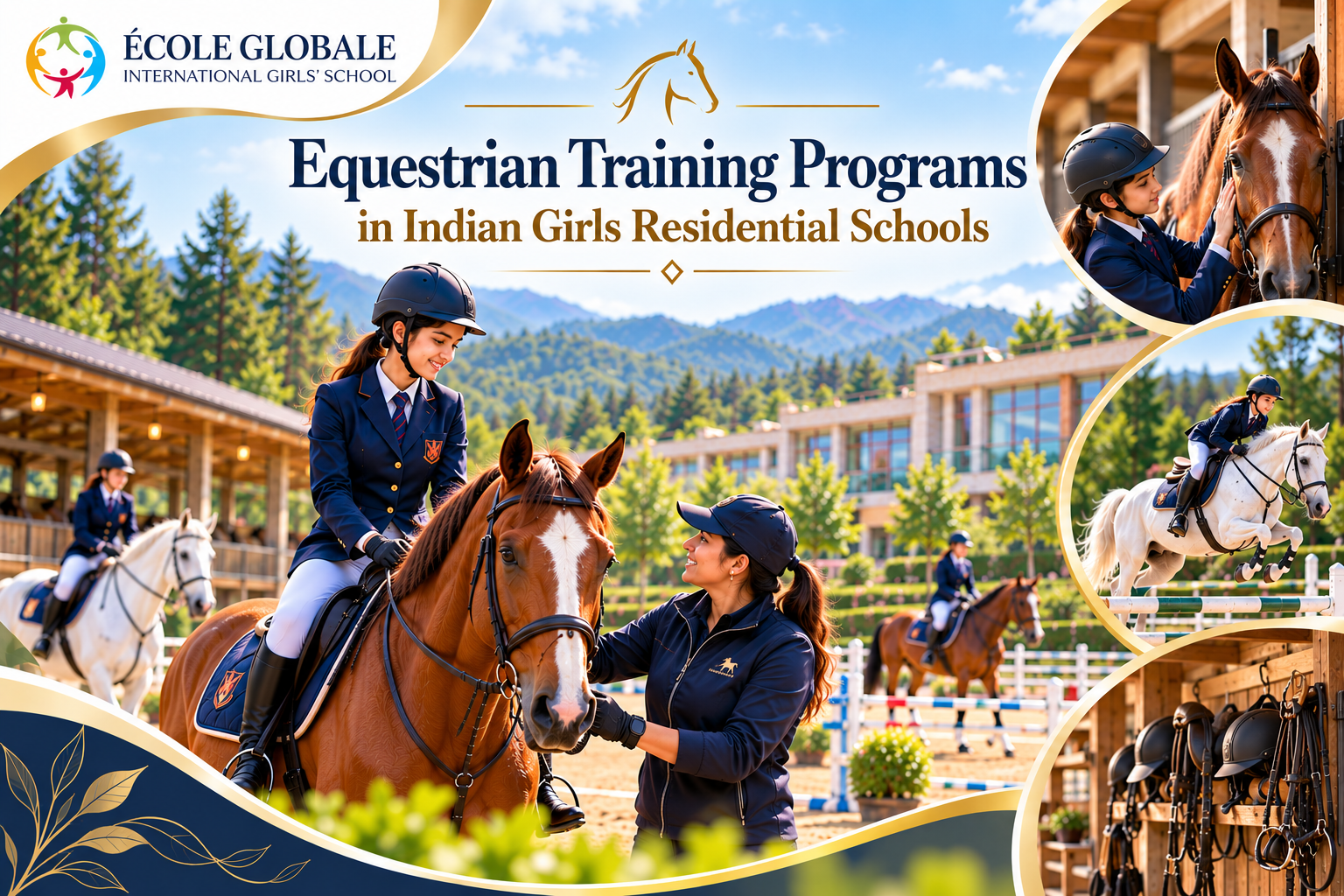
Equestrian training programs are becoming an interesting extracurricular option for students who enjoy outdoor activities and want to develop skills beyond traditional academics. In residential schools, students can participate in structured activities as part of their wider school experience while continuing their academic studies.
For parents researching equestrian training for girls in residential schools, it is important to understand what these programmes involve, what facilities schools may provide, and how they can complement a student’s overall development.
What Are Equestrian Training Programs?
Equestrian training programs involve structured learning related to horse riding and horse care. Depending on the school, programmes may range from introductory riding sessions to more advanced training.
A programme may include:
- Basic riding skills
- Horse handling
- Riding safety
- Grooming and basic horse care
- Riding techniques
- Arena practice
- Equestrian competitions
- Progressive skill development
The exact structure varies between schools. Parents should therefore check the current programme, instructor qualifications, facilities, and safety arrangements before selecting a school.
Why Are Equestrian Activities Offered in Residential Schools?
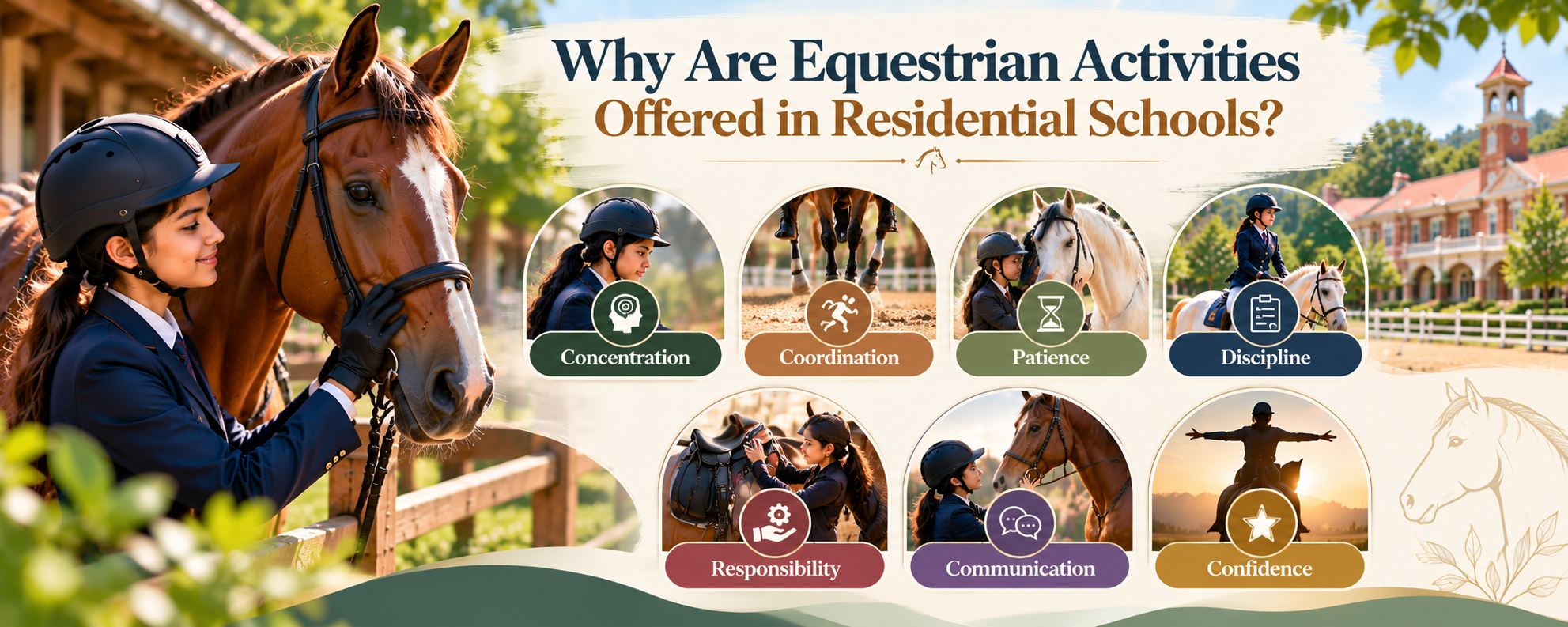
Residential schools often provide students with opportunities to participate in a broad range of extracurricular activities. Equestrian activities can add another dimension to this experience by combining physical activity, practical learning, and interaction with horses.
For students interested in horse riding, regular participation can provide opportunities to practise:
- Concentration
- Coordination
- Patience
- Discipline
- Responsibility
- Communication
- Confidence
These skills can complement academic learning and other extracurricular activities.
Equestrian Training for Girls in Residential Schools
Equestrian training for girls in residential schools can provide students with an opportunity to learn horse riding within a structured educational environment.
Students can gradually develop their skills according to their experience level. Beginners may start with basic safety and handling, while experienced riders may progress to more advanced techniques where the school offers appropriate training.
A structured programme should prioritise proper instruction and safe participation rather than simply increasing the number of riding sessions.
Equestrian Programs in Girls Boarding Schools
Equestrian programs in girls boarding schools can be part of a larger extracurricular programme that may include sports, arts, clubs, leadership activities, and other interests.
Parents should look at the complete programme rather than choosing a school based only on the availability of horse riding.
Important questions include:
- Is horse riding offered regularly?
- Are trained instructors available?
- Are beginner sessions available?
- What safety equipment is provided?
- How are horses cared for?
- How are riding sessions scheduled?
- Are competitions available?
- Is there an additional cost?
Facilities Required for Equestrian Training
Good equestrian training programs require appropriate facilities and supervision.
Depending on the school, facilities may include:
Riding Arena
A designated riding area provides students with a controlled environment for practising basic and advanced skills.
Stables
Stables should provide suitable accommodation and care for the horses. Cleanliness, ventilation, maintenance, and animal welfare are important considerations.
Safety Equipment
Students should have access to appropriate protective equipment and receive clear safety instructions before participating.
Qualified Instructors
Experienced instructors can help students learn correct techniques while adapting training to their individual experience levels.
Horse Care as Part of Learning
Equestrian education can involve more than riding. Where appropriate and supervised, students may also learn about basic horse care and responsible handling.
This can include learning about:
- Grooming
- Feeding routines
- Stable cleanliness
- Equipment care
- Safe horse handling
- Basic horse behaviour
Such experiences can help students understand that horse riding also involves responsibility toward the animal.
Equestrian Training and Student Development
Well-structured equestrian training programs can complement broader student development.
Concentration
Students need to pay attention to instructions, riding techniques, and their surroundings during riding sessions.
Discipline
Progress in riding generally requires regular practice and consistency.
Responsibility
Horse care and equipment management can introduce students to responsible routines.
Coordination
Riding involves coordination between posture, movement, balance, and communication.
Confidence
Learning a new skill can give students opportunities to gradually build confidence as they progress.
These benefits can vary depending on the student’s participation, programme structure, and quality of instruction.
Balancing Academics and Equestrian Activities
For residential students, extracurricular activities need to fit within the academic timetable.
Schools may schedule riding sessions around:
- Classroom lessons
- Study periods
- Meals
- Sports
- Clubs
- Rest
- Residential routines
A balanced timetable helps students participate in extracurricular activities without losing focus on their academic responsibilities.
For this reason, parents considering equestrian training for girls in residential schools should ask how riding sessions are incorporated into the daily schedule.
Safety in Equestrian Training
Safety should be a priority in every equestrian programme.
Parents should ask about:
- Instructor supervision
- Protective equipment
- Beginner orientation
- Riding-area maintenance
- Emergency procedures
- Horse handling protocols
- Student-to-instructor arrangements
Students should receive appropriate instruction before progressing to more challenging riding activities.
Choosing a Residential School With Equestrian Training
When comparing schools, parents can use a simple checklist.
| Factor | What Parents Should Check |
|---|---|
| Training | Beginner and advanced options |
| Instructors | Experience and qualifications |
| Facilities | Arena, stables and equipment |
| Safety | Protective equipment and supervision |
| Horse Care | Welfare and stable management |
| Schedule | Balance with academics |
| Activities | Competitions and additional programmes |
| Cost | Whether additional fees apply |
| Student Support | Guidance and supervision |
This can help parents evaluate equestrian programs in girls boarding schools more effectively.
Equestrian Training at Ecole Globale
For families researching residential education for girls, Ecole Globale International Girls School in Dehradun can be considered alongside other schools based on its academic programmes, campus facilities, residential environment, sports, and extracurricular opportunities.
If equestrian activities are a deciding factor, parents should verify the school’s current equestrian training programs, facilities, schedules, and safety arrangements directly before making a decision.
How Parents Can Support Students
Parents can encourage students to approach equestrian activities as a learning experience rather than focusing only on performance.
They can support their daughter by encouraging:
- Consistent participation
- Safe riding practices
- Respect for animals
- Patience while learning
- Balance between academics and activities
- Responsible use of equipment
This can help students enjoy the activity while developing useful habits.
Conclusion
Equestrian training programs can provide students with opportunities to explore horse riding, develop practical skills, and participate in a distinctive extracurricular activity.
For families considering equestrian training for girls in residential schools, factors such as qualified instructors, safety procedures, facilities, horse care, training levels, and scheduling should be carefully evaluated.
Equestrian programs in girls boarding schools can complement academics and other activities when they are thoughtfully structured and appropriately supervised. Ultimately, parents should choose a school based on the complete educational environment and their daughter’s interests, needs, and long-term goals.
Frequently Asked Questions
Q1. What are equestrian training programs?
Ans: Equestrian training programs teach students horse riding, horse handling, riding safety, and basic horse care through structured sessions.
Q2. Are equestrian training programs suitable for girls in residential schools?
Ans: Yes. Equestrian training for girls in residential schools can provide an extracurricular opportunity for students interested in horse riding, with appropriate instruction and supervision.
Q3. What are the benefits of equestrian programs in girls boarding schools?
Ans: Equestrian programs in girls boarding schools can support concentration, coordination, discipline, patience, responsibility, and confidence while giving students a new practical skill.
Q4. Do students need previous horse-riding experience?
Ans: No. Schools may offer beginner-level sessions for students with little or no previous experience. Parents should confirm the available training levels with the school.
Q5. What should parents look for in equestrian training programs?
Ans: Parents should consider instructor experience, riding facilities, safety procedures, protective equipment, horse welfare, training schedules, and how the programme fits alongside academics.