





Examinations are an important part of a student’s academic journey, but the pressure to achieve good results can sometimes become overwhelming. Students may worry about completing the syllabus, remembering information, managing time and meeting expectations. This makes managing exam stress an essential part of healthy exam preparation.
Managing exam stress is not simply about studying harder or spending more hours with textbooks. It involves developing healthy study habits, maintaining a balanced routine and learning how to respond to academic pressure. Students need practical strategies that help them prepare effectively without neglecting their physical and emotional well-being.
Parents and teachers also play an important role in managing exam stress. Their guidance, encouragement and understanding can help students feel supported during examinations. With proper planning, relaxation techniques and realistic expectations, students can approach exams with greater confidence.
The goal of managing exam stress is not to eliminate every feeling of nervousness. Instead, students should learn to manage pressure in healthy ways, remain focused on their preparation and understand that examination results do not define their entire potential.
1. Understanding the Causes of Exam Stress Among Students

The first step in managing exam stress is understanding what causes it. Different students experience examination pressure for different reasons. Some may feel worried about difficult subjects, while others may be concerned about marks, competition or expectations from family and teachers.
Common causes of exam stress include:
- Fear of poor results: Students may worry about disappointing themselves or others.
- Incomplete preparation: An unorganised study routine can create pressure as examinations approach.
- Time management difficulties: Balancing multiple subjects and assignments can feel challenging.
- High expectations: Unrealistic academic expectations may increase pressure.
- Comparison with classmates: Comparing marks and performance can affect confidence.
- Lack of rest: Insufficient sleep and limited breaks can make preparation more difficult.
Understanding these causes makes managing exam stress more effective because students can identify the specific challenges affecting them. Instead of worrying about everything at once, they can work on individual problems through suitable exam stress management strategies.
Parents should also understand that exam stress does not affect every student in the same way. Recognising individual needs is an important part of Managing Exam Stress and providing the right support.
2. Create a Realistic Study Timetable

Creating a realistic study timetable is one of the most practical ways of managing exam stress. A clear schedule helps students organise their subjects, divide large chapters into smaller tasks and understand how much preparation time is available.
Students should avoid creating an extremely demanding timetable that is difficult to follow. A balanced timetable should consider school hours, subject difficulty, homework, revision requirements and personal routines.
A useful study timetable should include:
- Dedicated study sessions for different subjects.
- Short breaks between study periods.
- Time for revision and practice questions.
- Additional time for challenging topics.
- Regular meals and sufficient sleep.
- Time for hobbies and relaxation.
Students should also review their progress regularly and adjust the timetable when necessary. A flexible study plan is more useful than a strict schedule that creates additional pressure.
Effective management of exam stress begins with knowing what needs to be completed and approaching each task one step at a time. Students who organise their preparation can feel more in control of their workload.
Parents can support managing exam stress by helping children create realistic schedules without controlling every hour of their day. The aim should be to develop independent study habits and responsible time management.
3. Break Large Study Goals into Smaller Tasks
Looking at an entire syllabus can sometimes make students feel overwhelmed. One useful strategy for managing exam stress is to divide large study goals into smaller and manageable tasks.
Instead of planning to finish an entire subject in one day, students can focus on completing one chapter, revising important concepts or solving a set of practice questions.
Students can follow these simple steps:
- List all subjects and chapters that need preparation.
- Identify topics that require additional attention.
- Divide each chapter into smaller study tasks.
- Set realistic daily targets.
- Review completed tasks at the end of each day.
This approach makes managing exam stress easier because students can focus on achievable goals rather than becoming overwhelmed by the entire syllabus.
Completing smaller tasks also allows students to recognise their progress. This can improve motivation and confidence during examination preparation.
Students should remember that effectively managing exam stress requires consistency rather than perfection. Missing one study target does not mean the entire preparation plan has failed. They can adjust the schedule and continue with the next task.
4. Practise Effective Stress Management Techniques
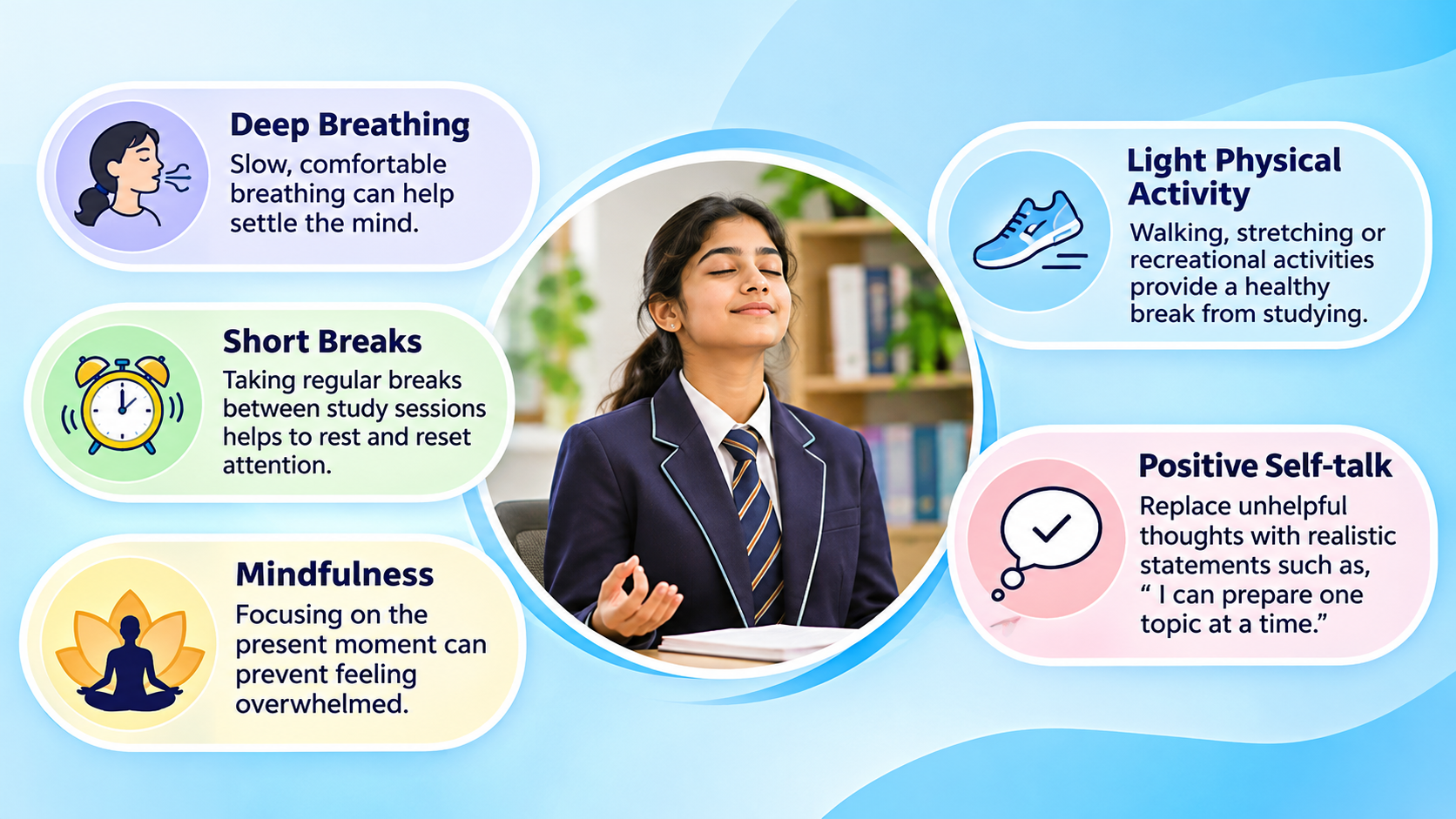
Using practical stress management techniques can make managing exam stress more manageable. Students should identify simple activities that help them relax and return to their studies with better focus.
Some useful stress management techniques for students include:
Deep breathing: Slow, comfortable breathing can help students settle down when they feel tense or overwhelmed.
Short breaks: Taking regular breaks between study sessions gives students time to rest and reset their attention.
Mindfulness: Paying attention to the present moment can help students avoid becoming overwhelmed by worries about future results.
Light physical activity: Walking, stretching or participating in recreational activities can provide a healthy break from studying.
Positive self-talk: Students can replace unhelpful thoughts with realistic statements such as, “I can prepare one topic at a time.”
These techniques can support managing exam stress by helping students respond more calmly to examination pressure. However, different techniques work for different individuals. Students should choose activities that feel comfortable and helpful.
Parents and teachers can also encourage healthy relaxation habits as part of managing exam stress. Students should understand that taking a break is not a waste of study time. Rest can help them return to their preparation with better concentration.
5. Maintain Healthy Sleep and Daily Routines

A healthy daily routine is an important part of managing exam stress. Students sometimes reduce their sleep hours to study for longer periods, especially when examinations are approaching. However, regularly missing sleep can make concentration, memory and learning more difficult.
Students should maintain a consistent sleep schedule and avoid making late-night studying a regular habit. A well-rested mind is better prepared to understand information and work through examination questions.
Healthy daily habits include:
- Getting sufficient sleep according to age and individual needs.
- Eating regular, balanced meals.
- Drinking enough water throughout the day.
- Taking short breaks from screens.
- Including enjoyable physical activities.
- Maintaining a consistent study and rest routine.
Managing Exam Stress becomes more effective when students maintain a balance between preparation and personal wellbeing. Healthy routines can support concentration and make daily study sessions easier to manage.
Parents should encourage these habits instead of asking children to study continuously. A balanced routine is an important part of managing exam stress, especially during demanding examination periods.
6. Avoid Unhealthy Comparisons and Unrealistic Expectations
Comparing academic performance with classmates can increase unnecessary pressure. Every student has different strengths, learning styles, preparation levels and areas that require improvement.
During examination periods, students should focus on their own progress rather than constantly comparing marks, study hours or revision schedules with others.
Parents and teachers also have an important role in managing exam stress by reducing unnecessary comparisons. Instead of focusing only on marks, they can recognise effort, consistency, improvement and responsible study habits.
Students should also understand that perfect results are not the only measure of learning. Academic progress involves understanding concepts, improving skills and learning from mistakes.
Managing Exam Stress becomes more difficult when students believe they must achieve perfect results in every subject. Setting realistic academic goals can help students approach examinations with a healthier mindset.
Parents can contribute to managing the exam. Stress by appreciating their children’s efforts and avoiding comparisons with siblings, classmates or relatives. Every student deserves support based on their individual abilities and learning needs.
7. How Parents Can Help During Exams
Parents play a significant role in managing exam stress. Their words, expectations and behaviour can influence how students experience examination pressure.
Children need encouragement and practical support rather than constant reminders about marks. Parents should create an environment where students feel comfortable discussing their academic difficulties and concerns.
Here are some practical ways parents can support Managing Exam Stress:
- Set realistic expectations: Encourage children to work consistently instead of demanding perfect results.
- Provide a suitable study environment: Ensure students have a reasonably quiet and organised place to study.
- Encourage healthy routines: Support regular meals, sleep and breaks.
- Listen without judgement: Allow children to discuss their worries without immediately criticising them.
- Recognise effort: Appreciate preparation, improvement and consistency.
- Avoid comparisons: Do not compare children with siblings, classmates or relatives.
- Offer practical help: Assist with organising study schedules or finding academic support when needed.
Parents should understand that Managing Exam Stress is not solely the student’s responsibility. A supportive family environment can make it easier for students to discuss challenges and seek help.
Another important part of Managing Exam Stress is allowing students to communicate their needs. Some may need help with a difficult subject, while others may simply need encouragement and understanding.
8. Encourage Revision and Practice Tests

Revision is an important part of effective exam preparation. Students may understand a topic while studying it but still need regular practice to recall information and apply concepts independently.
Practice questions, sample papers and mock examinations can help students become familiar with question formats and time management. They can also identify topics that need further revision.
Useful revision strategies include:
- Revising important concepts regularly.
- Creating short notes for difficult topics.
- Solving previous question papers where available.
- Practising questions under realistic time limits.
- Reviewing mistakes to understand areas for improvement.
- Asking teachers for clarification when concepts are unclear.
These strategies support Managing Exam Stress by helping students understand their preparation progress and become familiar with examination requirements.
Practice tests should be used as learning tools rather than as a reason to create additional pressure. Students should focus on understanding mistakes and improving gradually.
An organised revision plan is an important part of Managing Exam Stress because it reduces last-minute confusion and helps students identify what they have already prepared.
9. Recognise When Students Need Additional Support
Occasional nervousness before examinations is common. However, when exam-related worries begin to interfere significantly with everyday activities, students may need additional support.
Parents and teachers should pay attention to changes such as persistent worry, difficulty concentrating, regular sleep problems, withdrawal from usual activities or ongoing physical complaints.
Managing Exam Stress sometimes requires more than study planning and relaxation techniques. Students should feel comfortable speaking to a trusted parent, teacher, school counsellor or qualified mental health professional when stress becomes difficult to manage.
Schools can support Managing Exam Stress by providing counselling services, approachable teachers, reasonable academic guidance and opportunities to discuss examination concerns.
Seeking support should be treated as a sensible step towards wellbeing, not as a sign of academic weakness. Students should know that asking for help is acceptable whenever they feel unable to manage academic pressure independently.
10. How Schools Can Support Students During Examination Periods
Schools also have an important responsibility in Managing Exam Stress. Teachers and school administrators can create a supportive academic environment by helping students understand examination expectations and develop effective preparation habits.
Schools can introduce initiatives such as:
- Study planning and time management workshops.
- Guidance sessions on exam preparation.
- Access to school counsellors.
- Revision classes and academic support.
- Clear communication about examination schedules.
- Activities that promote relaxation and student wellbeing.
- Parent-teacher discussions about student progress.
Teachers should encourage students to ask questions and seek clarification rather than allowing confusion to build up before examinations.
Schools can also make Managing Exam Stress part of their student wellbeing programmes. Discussions about healthy study habits, realistic expectations and emotional wellbeing can help students develop practical skills for examination periods.
A supportive school environment makes Managing Exam Stress a shared responsibility involving students, teachers and parents.
Conclusion
Managing Exam Stress is an important part of helping students prepare for examinations while protecting their overall wellbeing. A realistic study timetable, regular revision, healthy sleep habits, relaxation techniques and family encouragement can make the examination period more manageable.
Students should focus on consistent preparation instead of aiming for perfection or comparing themselves with others. Parents can contribute to Managing Exam Stress by setting realistic expectations, listening patiently and recognising effort rather than concentrating only on results.
Schools should also provide academic guidance, counselling support and a positive learning environment. When students receive the right support from their families and teachers, they can develop healthier ways of responding to examination pressure.
Ultimately, Managing Exam Stress requires a balanced approach. The objective is not simply to achieve better examination results but also to develop confidence, independence and healthy habits that remain useful throughout a student’s educational journey.
Frequently Asked Questions (FAQs)
Q1. What is the best way to manage exam stress?
Ans: The best approach to Managing Exam Stress includes creating a realistic study timetable, dividing large topics into smaller tasks, revising regularly, getting sufficient sleep and taking short breaks. Students should also seek support when they feel overwhelmed.
Q2. What are the common causes of exam stress among students?
Ans: Common causes include fear of poor results, incomplete preparation, difficult subjects, time management problems, high expectations and comparisons with classmates. Understanding these causes is an important first step in Managing Exam Stress.
Q3. How can parents help manage exam stress?
Ans: Parents can support Managing Exam Stress by providing a supportive study environment, setting realistic expectations, encouraging healthy routines, listening to their children and appreciating their efforts. Avoiding unnecessary comparisons and pressure is equally important.
Q4. Which stress management techniques are useful for students?
Ans: Useful Stress Management Techniques for Students include comfortable deep breathing, short breaks, mindfulness, light physical activity and positive self-talk. These activities can support Managing Exam Stress when practised regularly and comfortably.
Q5. How important is sleep when Managing Exam Stress?
Ans: Sleep supports concentration, memory and learning. Students should maintain a consistent sleep routine instead of regularly staying awake late to study. Adequate rest is an important part of Managing Exam Stress and effective exam preparation.
Q6. When should students seek help for exam stress?
Ans: Students should speak to a trusted adult, teacher or school counsellor when exam-related worries persist, affect everyday activities or make it difficult to manage regular routines. Seeking appropriate support is an important part of Managing Exam Stress and maintaining student wellbeing.