





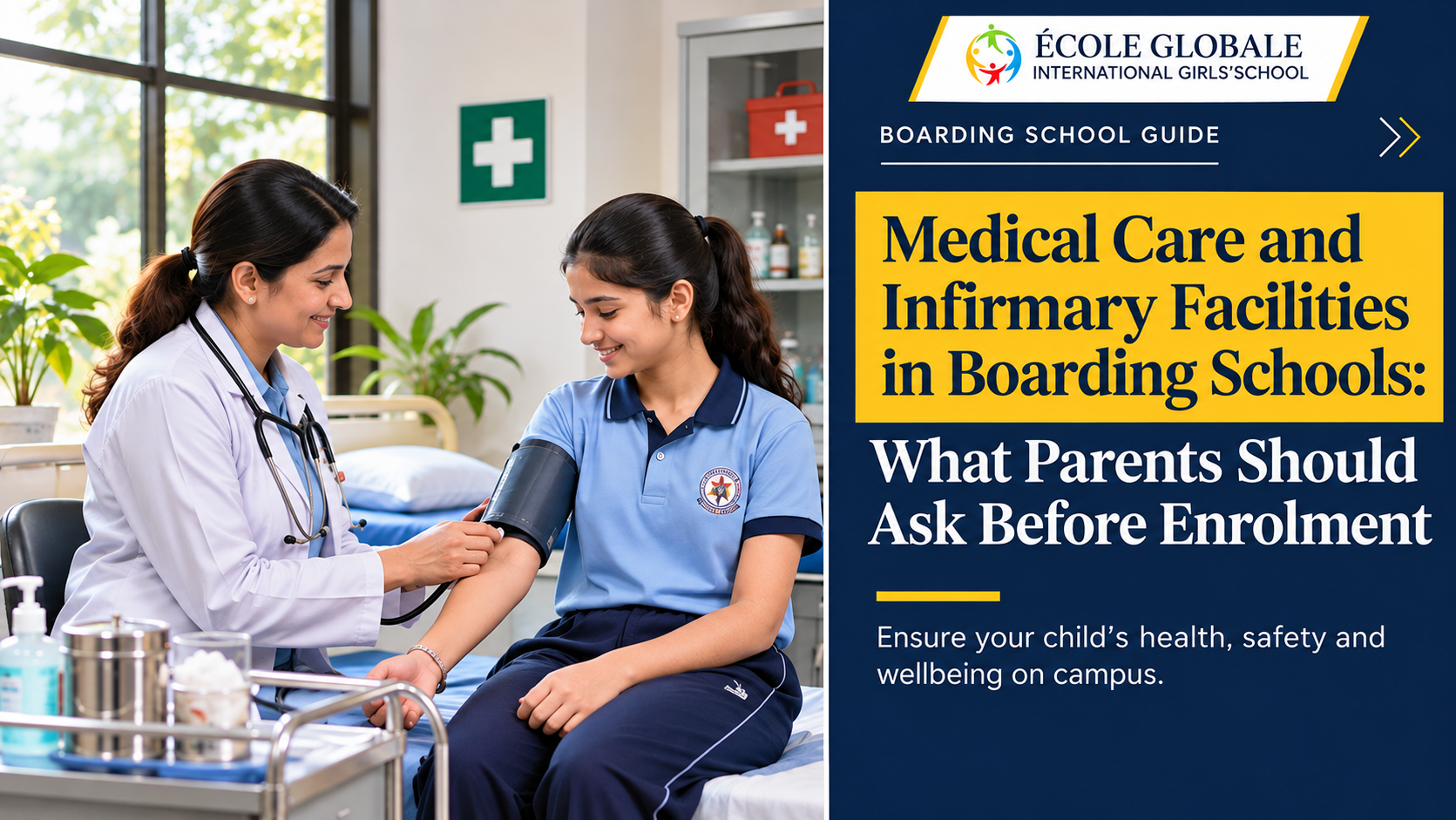
Choosing a boarding school involves more than evaluating academic performance, teaching methods and extracurricular activities. Parents must also understand the healthcare arrangements available to students. Medical Care and Infirmary Facilities in Boarding Schools play an important role in supporting student health, managing illnesses and responding to medical emergencies.
Since students live away from their families, access to timely medical assistance becomes particularly important. Parents should understand whether the school has a properly equipped infirmary, qualified medical staff and arrangements for emergency treatment. Evaluating Medical Care and Infirmary Facilities in Boarding Schools before admission helps parents understand how the institution manages everyday healthcare needs.
Before completing the admission process, parents should carefully examine Medical Care and Infirmary Facilities in Boarding Schools, including the availability of nurses, doctors, first-aid supplies and emergency transportation. These facilities should provide students with access to appropriate healthcare support throughout their residential school experience.
Why Medical Care and Infirmary Facilities in Boarding Schools Matter

Students living in residential schools follow a structured routine involving classroom lessons, sports, recreational activities and hostel life. During this time, they may experience minor illnesses, injuries or other health concerns that require medical attention.
Medical Care and Infirmary Facilities in Boarding Schools help ensure that students can access appropriate healthcare support when required. A well-organised medical system should include basic first aid, access to qualified healthcare professionals, emergency response arrangements and proper communication with parents.
Parents should understand how Medical Care and Infirmary Facilities in Boarding Schools contribute to student health and safety.
Important healthcare arrangements include:
- An accessible school infirmary or medical room
- Availability of qualified medical staff
- Basic first-aid supplies and medical equipment
- Emergency transportation arrangements
- Access to nearby hospitals
- Proper student health records
- Clear procedures for informing parents
These Medical Care and Infirmary Facilities in Boarding Schools should be supported by clear policies and practical arrangements rather than verbal assurances alone.
Understand the Medical Care and Infirmary Facilities Available
The school infirmary is one of the first facilities parents should inspect during a campus visit. It serves as a designated space where students can receive initial medical attention when they feel unwell or experience minor injuries.
When evaluating Medical Care and Infirmary Facilities in Boarding Schools, parents should check whether the infirmary is clean, organised, accessible and appropriately equipped.
A school medical room may include beds for temporary observation, first-aid supplies, basic medical equipment and suitable arrangements for students who need rest before returning to their regular activities.
Parents should ask the following questions about Medical Care and Infirmary Facilities in Boarding Schools:
- Is there a dedicated medical room or infirmary on campus?
- How many students can the infirmary accommodate?
- Is the medical facility available throughout the school day?
- Are medical supplies checked and replenished regularly?
- Is there a separate arrangement for students who need temporary isolation due to contagious illness?
Parents should not assume that all schools provide the same level of medical support. Inspecting the infirmary helps families understand the actual Medical Care and Infirmary Facilities in Boarding Schools available to students.
Check the Availability of Qualified Medical Staff
A medical room alone does not guarantee reliable healthcare. Parents should also check whether trained professionals are available to provide medical assistance.
Medical Care and Infirmary Facilities in Boarding Schools should include clear arrangements for accessing qualified healthcare professionals whenever students need attention.
Ask the school whether it employs a full-time nurse, visiting doctor or other qualified medical personnel. It is equally important to understand their working hours and availability during nights, weekends and school holidays.
Consider asking these questions:
- Is a qualified nurse available on campus?
- Does the school have a visiting or full-time doctor?
- Who provides medical assistance after regular school hours?
- Are hostel wardens trained in basic first aid?
- What happens if a student requires medical attention at night?
The availability of trained staff is an essential part of Medical Care and Infirmary Facilities in Boarding Schools. Parents should understand exactly who is responsible for student healthcare and how medical assistance is arranged outside normal school hours.
When comparing Medical Care and Infirmary Facilities in Boarding Schools, parents should distinguish between having a medical room, employing a nurse and providing access to a qualified doctor. These arrangements are not necessarily the same.
Ask About Emergency Medical Care and Hospital Tie-Ups
Medical emergencies require timely action and proper coordination. Parents should understand how the school responds when a student needs treatment beyond the facilities available on campus.
Reliable Medical Care and Infirmary Facilities in Boarding Schools should include a documented emergency response procedure and arrangements for accessing external medical services.
Ask whether the school has an established relationship with a nearby hospital or clinic. Find out how students are transported for treatment and who accompanies them.
Important details to verify include:
- Availability of emergency transportation
- Distance from the nearest hospital
- Hospital or clinic arrangements
- Staff responsibilities during medical emergencies
- Procedures for contacting parents
- Arrangements for follow-up treatment
These emergency arrangements are an important part of Medical Care and Infirmary Facilities in Boarding Schools. Parents should ask the school to explain its procedures rather than relying on general assurances about emergency support.
Understanding emergency arrangements also helps parents evaluate whether Medical Care and Infirmary Facilities in Boarding Schools can provide appropriate support when students require urgent medical attention.
Review First Aid and Infirmary Equipment
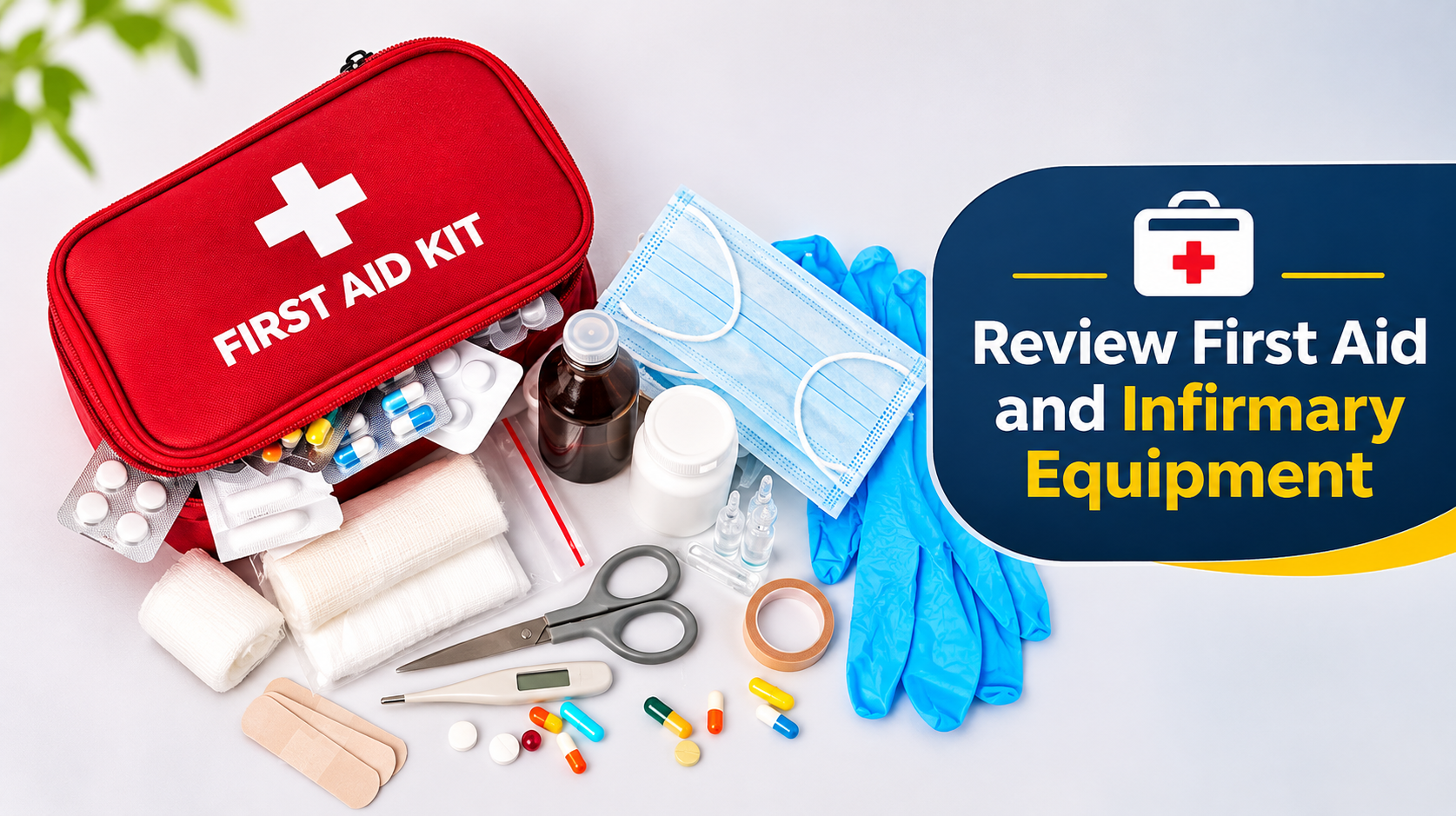
First aid is often the first level of assistance provided when a student experiences a minor injury or suddenly feels unwell. Therefore, parents should examine whether the school’s medical room has appropriate first-aid supplies.
As part of Medical Care and Infirmary Facilities in Boarding Schools, first-aid arrangements should be supported by trained staff who understand when a student needs further medical evaluation.
Parents can ask whether the school maintains:
- First-aid kits in the infirmary
- Basic medical examination equipment
- Clean bedding and resting arrangements
- Appropriate hygiene and sanitation facilities
- Records of medical visits and treatment
- Emergency supplies maintained according to school policy
Parents should also ask how frequently medical supplies are inspected and replenished.
Well-maintained equipment supports the effectiveness of Medical Care and Infirmary Facilities in Boarding Schools by helping staff provide initial medical assistance when necessary.
However, parents should remember that first aid and an infirmary cannot replace professional diagnosis or hospital treatment when required. A responsible school should have clear procedures for referring students to appropriate healthcare professionals.
Understand Medication Management and Health Records
Some students may need regular medication or additional healthcare attention during their stay at a boarding school. Parents should understand how the institution stores, records and administers medicines.
Medical Care and Infirmary Facilities in Boarding Schools should include a clear medication management policy to reduce confusion and ensure that students receive appropriate support.
Before enrolment, parents should ask:
- How should parents submit prescribed medicines?
- Who is responsible for administering medication?
- Are medication records maintained?
- How are allergies and medical conditions documented?
- What happens when a student’s medication needs to be updated?
Parents should provide accurate information about their child’s medical history, allergies and prescribed treatments through the school’s approved process.
Student health records should be handled confidentially and accessed only by authorised personnel. Proper medication management and record keeping are important elements of Medical Care and Infirmary Facilities in Boarding Schools.
Parents should also understand how the medical staff communicate changes in a student’s healthcare requirements. These procedures help make Medical Care and Infirmary Facilities in Boarding Schools more organised and responsive to individual student needs.
Check Regular Health Check-Ups and Student Health Monitoring
Regular health monitoring can help schools identify certain health concerns and encourage students to maintain healthy habits.
When reviewing Medical Care and Infirmary Facilities in Boarding Schools, parents should ask whether the school organises routine health check-ups and maintains records of relevant findings.
Depending on the school’s healthcare policy, these check-ups may cover general health observations, dental health, vision concerns and other age-appropriate assessments.
Parents should understand:
- How frequently health check-ups are organised
- Whether qualified healthcare professionals conduct them
- How parents receive health-related updates
- What happens when a concern requires further evaluation
- Whether student health records are maintained securely
Regular health monitoring should form part of the school’s wider healthcare arrangements. It also helps parents understand how Medical Care and Infirmary Facilities in Boarding Schools support students beyond immediate medical emergencies.
Schools should have appropriate procedures for managing illness within the hostel environment and reducing the spread of contagious infections.
Ask About Medical Support During Nights and Weekends
Boarding school students remain on campus beyond regular classroom hours. Therefore, parents should understand how medical assistance is arranged during evenings, nights, weekends and school holidays.
The availability of Medical Care and Infirmary Facilities in Boarding Schools should be considered in relation to the school’s complete residential timetable.
Ask whether a nurse or doctor is available around the clock or whether the school follows an alternative emergency arrangement. Find out which hostel staff members are responsible for responding when a student becomes unwell at night.
Parents should also understand how students can contact the warden or medical staff if they need assistance outside scheduled hours.
These arrangements are an important part of Medical Care and Infirmary Facilities in Boarding Schools because students may require medical attention even when regular classes and infirmary hours have ended.
When evaluating Medical Care and Infirmary Facilities in Boarding Schools, parents should ask for a clear explanation of after-hours medical support rather than assuming that daytime arrangements continue throughout the night.
Understand Communication Between the School and Parents
Clear communication between parents and school authorities is essential when managing student health. Parents should know how they will receive information about illnesses, injuries, medical appointments and emergencies.
Medical Care and Infirmary Facilities in Boarding Schools should be supported by transparent communication procedures that allow families to remain informed about their child’s health.
Before admission, ask the school:
- Who contacts parents when a student becomes unwell?
- How quickly are parents informed about medical emergencies?
- Are parents consulted before non-emergency medical treatment?
- How are medical updates shared?
- Who can parents contact to discuss healthcare concerns?
Parents should also understand the school’s consent procedures for medical treatment and emergency situations.
Effective communication strengthens Medical Care and Infirmary Facilities in Boarding Schools by ensuring that families understand how healthcare decisions are made and how important information is shared.
A clear communication system helps parents remain involved in their child’s healthcare, even when the student is living away from home.
Questions Parents Should Ask Before Enrolment
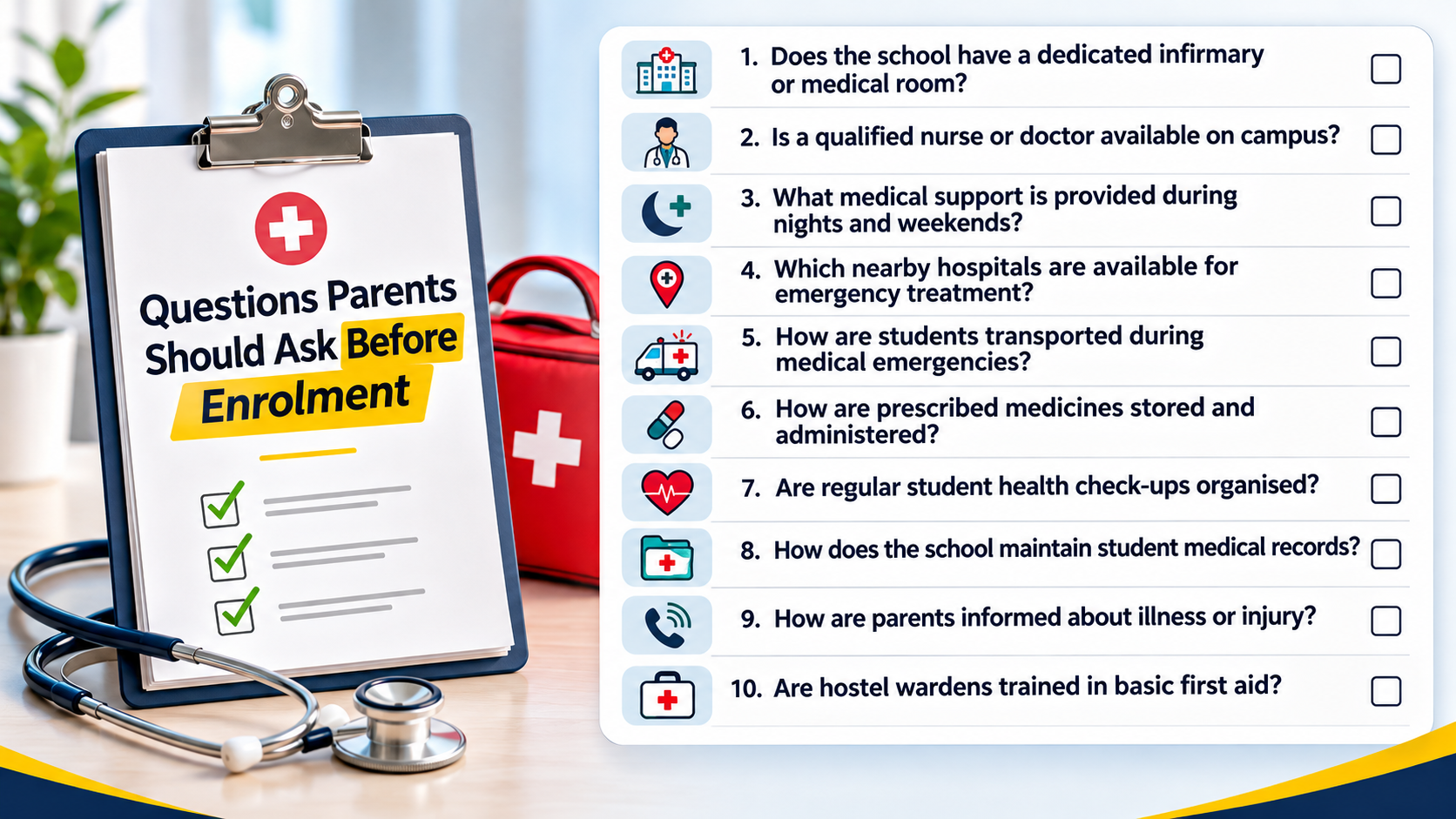
Before selecting a residential school, parents should speak with the principal, medical staff or hostel administration. Asking specific questions can help them evaluate the school’s healthcare arrangements.
Use this checklist to assess Medical Care and Infirmary Facilities in Boarding Schools before completing the admission process.
- Does the school have a dedicated infirmary or medical room?
- Is a qualified nurse or doctor available on campus?
- What medical support is provided during nights and weekends?
- Which nearby hospitals are available for emergency treatment?
- How are students transported during medical emergencies?
- How are prescribed medicines stored and administered?
- Are regular student health check-ups organised?
- How does the school maintain student medical records?
- How are parents informed about illness or injury?
- Are hostel wardens trained in basic first aid?
These questions help parents evaluate Medical Care and Infirmary Facilities in Boarding Schools beyond the information provided in admission brochures.
Parents should also request clarification wherever the school’s answers are unclear. Verifying actual facilities and written healthcare policies is more useful than relying only on general statements about medical support.
Choosing a Boarding School with Reliable Medical Support
Healthcare arrangements should be an important part of the school selection process. Parents should not evaluate a residential institution only on the basis of its academic facilities, campus infrastructure or extracurricular opportunities.
Reliable Medical Care and Infirmary Facilities in Boarding Schools should include accessible medical assistance, trained personnel, proper first-aid arrangements and clear emergency procedures.
Parents should inspect the infirmary, ask about staff availability, understand hospital arrangements and review the school’s healthcare policies before completing admission.
It is also important to distinguish between a school that has a basic medical room and one that provides access to qualified healthcare professionals throughout the residential day.
When comparing different institutions, parents should evaluate Medical Care and Infirmary Facilities in Boarding Schools using consistent criteria. This makes it easier to identify gaps in healthcare arrangements and ask relevant follow-up questions.
Ultimately, Medical Care and Infirmary Facilities in Boarding Schools should support students’ health through organised procedures, responsible supervision and effective communication with families.
Conclusion
Selecting a boarding school requires parents to consider every aspect of student well-being, including healthcare and emergency preparedness. Medical Care and Infirmary Facilities in Boarding Schools should be evaluated carefully before enrolment.
By checking the infirmary, medical staff availability, hospital arrangements, medication policies and parent communication procedures, families can better understand the healthcare support provided by the institution.
Parents should not simply assume that every residential school offers the same medical facilities. They should ask questions, inspect available facilities and verify the school’s written healthcare policies.
Ultimately, Medical Care and Infirmary Facilities in Boarding Schools should be part of a school’s everyday student support system. Careful evaluation helps parents make a more informed decision about their child’s residential education.
Frequently Asked Questions
Q1. What medical facilities should a boarding school have?
Ans: A boarding school should have an accessible medical room or infirmary, first-aid supplies, arrangements for qualified medical assistance and a clear emergency response procedure. Parents should also check hospital access and how the school manages student health records. These are important elements of Medical Care and Infirmary Facilities in Boarding Schools.
Q2. Should a boarding school have a full-time nurse or doctor?
Ans: Parents should ask whether the school employs a full-time nurse or provides access to a visiting doctor. They should also understand how medical assistance is arranged during nights, weekends and emergencies. These details help parents assess the quality of Medical Care and Infirmary Facilities in Boarding Schools.
Q3. How do boarding schools handle medical emergencies?
Ans: Schools should follow an established emergency procedure that may include initial medical assessment, contacting parents, arranging transportation and taking students to an appropriate healthcare facility. Parents should verify these procedures when reviewing Medical Care and Infirmary Facilities in Boarding Schools.
Q4. What should parents check in a school infirmary?
Ans: Parents should check cleanliness, resting arrangements, first-aid supplies, basic medical equipment, staff availability and procedures for handling students who become unwell. These details help parents evaluate the actual Medical Care and Infirmary Facilities in Boarding Schools available on campus.
Q5. How are medicines managed in boarding schools?
Ans: Schools generally follow their own medication policies. Parents should ask how prescribed medicines are submitted, stored, recorded and administered, and who is responsible for supervising medication. Medication management is an important consideration when evaluating Medical Care and Infirmary Facilities in Boarding Schools.
Q6. Why are Medical Care and Infirmary Facilities in Boarding Schools important?
Ans: Medical Care and Infirmary Facilities in Boarding Schools are important because students live away from their families and may need medical attention during school or hostel hours. Proper healthcare arrangements help ensure access to timely assistance, qualified medical support and appropriate emergency procedures.