





Technology plays an important role in modern education and students’ everyday lives. Smartphones, tablets, laptops and internet access help students learn, communicate and explore new interests. However, excessive screen time can affect concentration, sleep routines, academic performance and social interaction. This is why Screen Time and Phone Rules in Boarding Schools have become an important consideration for parents choosing a residential school.
Every boarding school follows its own guidelines regarding mobile phones, internet access and digital devices. Some schools allow students to use personal phones during designated hours, while others restrict smartphones and provide supervised access to computers. Understanding Screen Time and Phone Rules in Boarding Schools helps parents evaluate how a school balances technology, academics, recreation and student well-being.
Before admission, parents should carefully review the school’s mobile phone policies, screen time limits and digital device regulations. A well-planned approach to Screen Time and Phone Rules in Boarding Schools can help students develop responsible technology habits while enjoying a balanced residential school experience.
Why Screen Time and Phone Rules in Boarding Schools Matter
Students need guidance to develop a healthy relationship with technology. Spending too much time on smartphones, social media, online games and entertainment platforms can distract students from their daily responsibilities.
Screen Time and Phone Rules in Boarding Schools establish clear expectations about when, where and how students can use digital devices. These rules help create a structured environment where technology supports education rather than becoming a distraction.
Some important benefits of Screen Time and Phone Rules in Boarding Schools include:
- Better concentration during classroom lessons and study hours.
- More opportunities for sports, outdoor games and creative activities.
- Healthier sleep routines through appropriate restrictions on late-night device use.
- Improved face-to-face communication and social interaction.
- Responsible internet browsing and digital behaviour.
- Better time management between academic and recreational activities.
Parents should remember that effective Screen Time and Phone Rules in Boarding Schools should not simply prevent students from using technology. They should teach students how to use digital devices responsibly and recognise when taking a break from screens is necessary.
Understand the Mobile Phone Policies in Boarding Schools
One of the first things parents should investigate is the school’s mobile phone policy. Different institutions have different approaches depending on students’ ages, campus arrangements and educational requirements.
Some schools do not allow students to keep personal smartphones on campus. Others permit limited phone access during weekends, holidays or specific hours. Certain institutions provide supervised calling facilities so students can communicate with their families.
When reviewing Screen Time and Phone Rules in Boarding Schools, parents should ask the admission team:
- Are students allowed to bring personal smartphones?
- At what times can students use their phones?
- Are phones collected and stored by school authorities?
- Can students use phones during weekends or holidays?
- Are there separate rules for younger and older students?
- How can students contact their parents during emergencies?
Clear Mobile Phone Policies in Boarding Schools help students understand their responsibilities and avoid confusion about device usage.
Parents should also check whether the school communicates its phone policies in writing. Transparent guidelines are an important part of effective Screen Time and Phone Rules in Boarding Schools.
Check Screen Time Limits in Boarding Schools
Screen time management is an important part of digital wellbeing. Students need access to technology for educational activities, but recreational screen usage should also have reasonable boundaries.
Screen Time and Phone Rules in Boarding Schools should explain how the institution manages both academic and non-academic device usage. For example, students may use computers for research and assignments under supervision, while entertainment applications may be restricted during study hours.
Before admission, parents should understand the Screen Time Limits in Boarding Schools and ask whether the institution:
- Establishes designated hours for personal device usage.
- Restricts entertainment applications during academic periods.
- Encourages screen-free time before bedtime.
- Provides supervised access to digital learning resources.
- Promotes outdoor games, reading and creative activities.
- Reviews screen time policies according to students’ needs.
Appropriate Screen Time Limits in Boarding Schools can help students develop better time-management skills. However, parents should look beyond the number of permitted screen hours and understand how the school encourages productive technology use.
A balanced approach to Screen Time and Phone Rules in Boarding Schools should include educational access, recreational boundaries and regular offline activities.
Understand Digital Device Policies in Residential Schools
Smartphones are not the only digital devices students may use on campus. Laptops, tablets, computers and smartwatches can also be part of the learning environment.
Digital Device Policies in Residential Schools should clearly explain which devices students can bring, where they can use them and whether supervision is required.
For example, a school may allow students to use laptops for research projects but restrict gaming applications or unrestricted internet browsing. Similarly, tablets may be permitted for educational activities under teacher supervision.
As part of Screen Time and Phone Rules in Boarding Schools, parents should check the institution’s guidelines for:
- Personal smartphones and tablets.
- Laptops and computers used for academic work.
- Internet access in hostels and common areas.
- Gaming applications and entertainment websites.
- Social media accounts and online communication.
- Device storage and security arrangements.
Clear Digital Device Policies in Residential Schools help students understand the difference between using technology for learning and using it primarily for entertainment.
Parents should also ask how the school enforces these guidelines. Effective Screen Time and Phone Rules in Boarding Schools require consistent implementation rather than policies that exist only in the admission handbook.
How Boarding Schools Encourage Digital Wellbeing
Digital wellbeing means maintaining a healthy relationship with technology. Students should be able to use digital tools productively without allowing them to interfere with their studies, sleep, relationships and daily responsibilities.
Screen Time and Phone Rules in Boarding Schools should encourage responsible device usage instead of depending entirely on restrictions. Schools can support digital wellbeing through the following practices.
Digital awareness sessions: Students can learn about online privacy, cyberbullying, responsible communication and internet safety.
Screen-free activities: Reading, music, art, sports and outdoor games provide opportunities to spend time away from digital devices.
Time-management guidance: Students can learn to divide their day between academics, recreational activities and technology use.
Responsible internet usage: Teachers can guide students towards reliable educational websites and appropriate online resources.
Healthy sleep routines: Schools can establish reasonable device restrictions during night hours to encourage consistent sleeping habits.
These practices make Digital Wellbeing in Boarding Schools an important part of student development. Parents should therefore evaluate whether Screen Time and Phone Rules in Boarding Schools include digital awareness and guidance alongside phone restrictions.
Check Internet Access Rules in Boarding Schools
Internet access is useful for research, online assignments, educational videos and communication. However, unrestricted internet access may expose students to unsuitable content, online distractions and privacy risks.
Parents should understand how a boarding school manages internet access across classrooms, libraries, computer laboratories and hostel facilities.
The Internet Access Rules in Boarding Schools should explain whether students can access the internet independently or only under supervision.
While evaluating Screen Time and Phone Rules in Boarding Schools, parents should check whether the institution provides:
- Supervised internet access for academic purposes.
- Appropriate website filtering and content restrictions.
- Secure Wi-Fi arrangements across the campus.
- Guidelines for social media and online communication.
- Awareness programmes about online safety.
- Support for students who experience online harassment.
Parents should also ask how the school handles inappropriate online behaviour and whether students know how to report digital safety concerns.
Strong internet guidelines are an important part of responsible technology management. They also help make Screen Time and Phone Rules in Boarding Schools more effective and practical.
Balance Technology, Academics and Extracurricular Activities

Technology can support education, but students also need opportunities to develop skills through practical experiences and personal interaction.
A well-planned residential school routine should include classroom learning, supervised study, sports, hobbies, cultural activities and adequate rest. Screen Time and Phone Rules in Boarding Schools should support this balance rather than interfere with other important parts of student life.
For example, students may use digital devices for research during designated academic periods, participate in sports in the afternoon and enjoy reading or creative activities during their free time.
Parents should check whether the school provides enough opportunities for:
- Outdoor sports and physical activities.
- Music, dance, art and creative hobbies.
- Group discussions and collaborative projects.
- Reading and library activities.
- Leadership programmes and student clubs.
- Social interaction without digital devices.
Balancing Technology and Academics helps students understand that digital tools are useful resources, but they are not substitutes for practical learning and real-world experiences.
A good residential school should make offline activities an important part of its daily timetable. This is one reason parents should carefully examine Screen Time and Phone Rules in Boarding Schools before making an admission decision.
Understand How Parents Can Communicate With Students
Communication with family members is an important concern for parents considering residential education. Although some schools restrict personal smartphone usage, they should provide clear and reliable ways for students to contact their families.
Screen Time and Phone Rules in Boarding Schools should explain how communication is managed, including arrangements for regular calls, special occasions and emergencies.
Before admission, parents should ask:
- Can students call their parents on designated days?
- Does the school provide supervised calling facilities?
- Are there specific communication hours?
- How can parents contact students during emergencies?
- Does the school inform parents about changes in phone policies?
- Are video calls permitted under certain conditions?
A clear communication system helps parents stay connected with their children while allowing students to adjust to residential life.
Parents should not assume that strict phone restrictions mean students have no access to family communication. Instead, they should check whether Screen Time and Phone Rules in Boarding Schools provide suitable and dependable communication arrangements.
Questions Parents Should Ask About Screen Time and Phone Rules in Boarding Schools
Before finalising admission, parents should discuss the school’s technology policies with the admission team or residential staff.
Here are some important questions to ask about Screen Time and Phone Rules in Boarding Schools:
- What are the Screen Time and Phone Rules in Boarding Schools followed by the institution?
- Are students allowed to keep personal smartphones?
- How many hours can students access digital devices?
- Are phones permitted inside hostel rooms?
- What restrictions apply to social media and gaming applications?
- Is internet access supervised?
- Are laptops and tablets permitted for academic activities?
- How can students contact their parents?
- What happens if a student repeatedly violates phone usage rules?
- Does the school conduct digital safety and awareness sessions?
Getting clear answers to these questions will help parents understand whether the school’s policies are practical, consistent and suitable for their child’s needs.
Parents should also request a copy of the written technology policy. This makes it easier to understand the actual implementation of Screen Time and Phone Rules in Boarding Schools rather than relying only on general explanations.
Choosing a Boarding School with Balanced Technology Policies
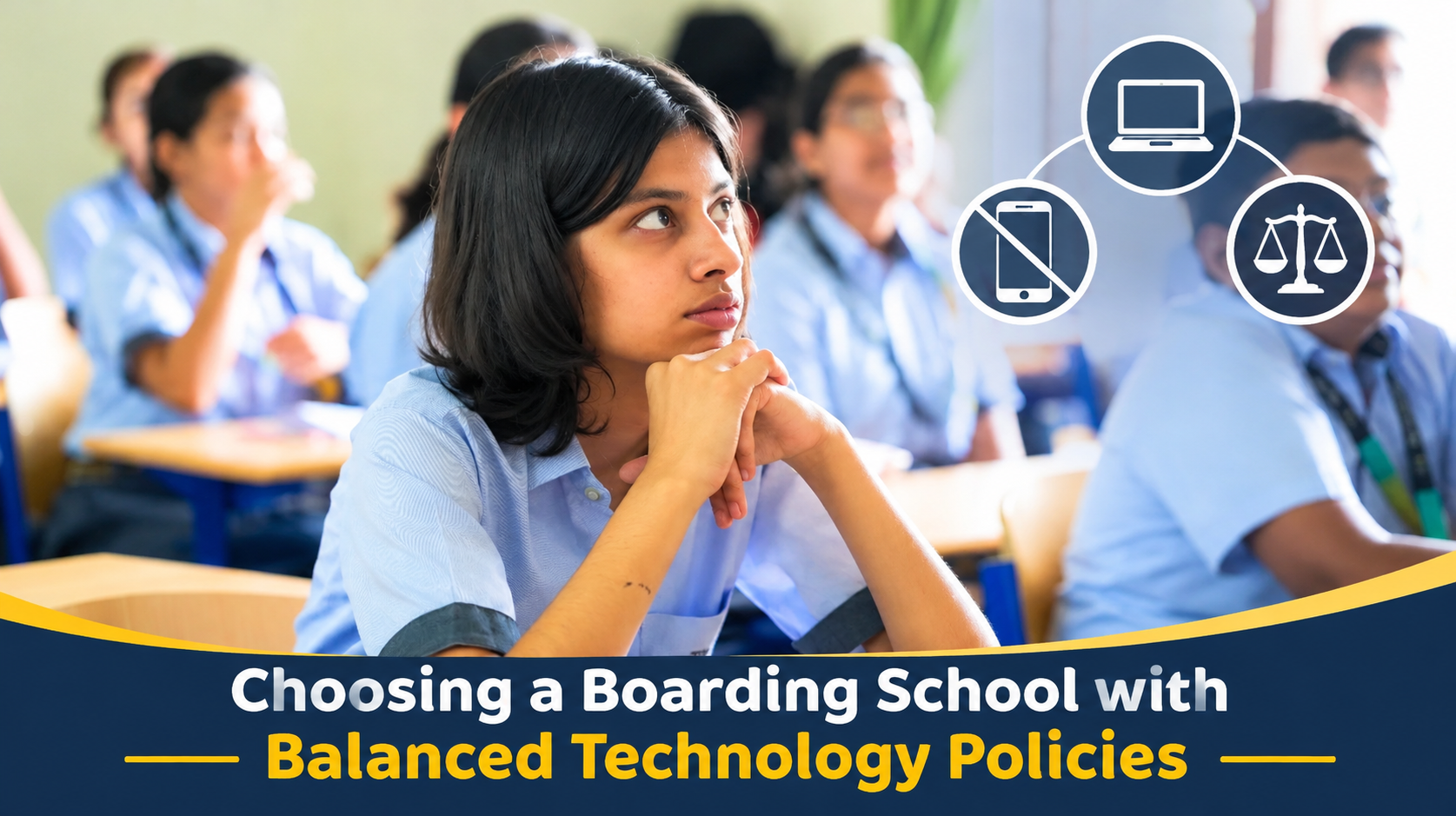
Choosing a residential school involves evaluating more than academic results, campus facilities and extracurricular opportunities. Parents should also understand how the institution manages digital devices and encourages responsible technology use.
Screen Time and Phone Rules in Boarding Schools should be transparent, age-appropriate and consistently implemented. Schools should explain their restrictions, provide suitable communication facilities and allow access to technology when it supports learning.
Parents should avoid assuming that a school with a complete smartphone ban automatically offers better digital wellbeing. Students also need guidance on using technology responsibly because they will eventually have to manage their own digital habits.
The right approach combines reasonable boundaries, supervised access, digital awareness and opportunities for offline activities. By understanding Screen Time and Phone Rules in Boarding Schools, parents can make a more informed admission decision and choose an environment that supports academic progress, personal development and responsible technology use.
Frequently Asked Questions (FAQs)
Q1. Why are screen time rules important in boarding schools?
Ans: Screen time rules help students balance digital activities with academics, sports, sleep and social interaction. They also encourage responsible technology use and better time management.
Q2. Do boarding schools allow students to use mobile phones?
Ans: Policies vary between institutions. Some schools restrict personal smartphones, while others allow limited usage during designated hours or weekends. Parents should confirm the rules before admission.
Q3. How do boarding schools manage screen time for students?
Ans: Schools may establish fixed device usage hours, supervise internet access, restrict entertainment applications and encourage screen-free activities such as sports, reading and creative hobbies.
Q4. Can students use laptops and tablets in residential schools?
Ans: Some residential schools allow laptops and tablets for academic purposes. However, students may need permission or supervision, depending on the institution’s digital device policies.
Q5. How can students contact their parents if phones are restricted?
Ans: Schools may provide supervised calling facilities, scheduled phone access or other approved communication arrangements. Parents should ask about these facilities before enrolment.
Q6. What should parents check before choosing a boarding school’s phone policy?
Ans: Parents should review permitted devices, screen time limits, internet safety measures, phone access timings, parental communication facilities and the school’s approach to digital wellbeing.