
The decision a young woman makes at seventeen about her academic future can echo across decades. Whether she pursues medicine or management, fine arts or finance, engineering or environmental science, the path she chooses — and how well-prepared she is to navigate it — depends to a significant degree on the quality of career counselling in girls schools she received during her school years. For girls in residential schools across India, the access to structured, personalised career guidance is not a luxury add-on to the curriculum. It is one of the most consequential things a good school can offer.
India’s university landscape has never been more complex, or more full of opportunity. Alongside the traditional gateways of IIT, AIIMS, and DU, students today are navigating highly competitive international universities, specialised design and management institutes, emerging fields in AI, data science, and sustainability, and an evolving set of scholarships, pathways, and entrance requirements that change from year to year. Without expert career counselling to guide them through this landscape, even the most capable girl can make uninformed choices — not for lack of ambition, but for lack of information.
What Is Career Counselling in Schools — and Why Does It Matter?

Career counselling in a school setting is a structured, ongoing process through which trained counsellors work with students to understand their aptitudes, interests, personality profiles, and academic strengths, and then map those to realistic, aspiration-aligned career pathways. Good career counselling in a girls’ school is not a one-time conversation about stream selection in Class X. It is a multi-year engagement that evolves as the student evolves.
Done well, career counselling achieves several things simultaneously:
- It surfaces aptitudes and interests the student may not have consciously recognised in herself — particularly important for girls who, under social pressure, may default to conventional or family-approved choices rather than their genuine strengths.
- It provides a realistic map of the higher education landscape: which universities, which entrance requirements, which scholarship opportunities, and which career trajectories follow from which undergraduate choices.
- It prepares students for the mechanics of the application process — from personal statement writing and portfolio preparation to exam strategy and interview readiness.
- It builds the self-awareness and articulation skills a student needs to present herself compellingly to admissions teams, whether at Indian institutes or international universities.
Career Counselling in Girls Schools: Addressing Unique Challenges

Career counselling in a girls’ school carries specific dimensions that are worth taking seriously. Research consistently shows that girls are more likely than boys to underestimate their own academic abilities, to limit their ambitions based on perceived gender expectations, and to be disproportionately influenced by peer opinion when making educational decisions. A career counselling programme designed specifically for girls must actively address these patterns — not by lowering expectations, but by systematically raising them.
This means helping girls identify and challenge the internal narratives that constrain their choices. It means exposing them, from an early stage, to women who have succeeded in a full range of fields — from aerospace engineering and international law to entrepreneurship and policy-making. And it means building, through structured guidance, the confidence to pursue ambitious pathways even when those pathways are unfamiliar or unconventional.
In residential girls’ schools, the boarding environment creates a particular advantage here. Away from the expectations and anxieties of home, girls in boarding schools often develop a more independent sense of self. When this is supported by thoughtful career counselling, the combination can be genuinely transformative: a young woman who knows what she is good at, knows what she wants, and has a concrete plan to get there is immeasurably better positioned than one who has simply accumulated marks without direction.
Career Counselling at Ecole Globale: A Model Built for Global Placement

Among India’s girls’ boarding schools, Ecole Globale International Girls’ School in Dehradun has built a career counselling framework that is directly tied to placement outcomes at some of the world’s leading universities. The school’s approach rests on four interlocking pillars: in-house expert counsellors, university career fairs, campus ambassador visits, and a dedicated Career Counselling Cell that provides individualised support to each student through her final years of schooling.
The in-house career counselling team at Ecole Globale works with students on a continuous basis — not just when university application deadlines loom. Counsellors support girls through profile-building from an early stage, helping them identify and develop the academic record, co-curricular achievements, and personal narrative that will make their applications compelling. Documentation guidance, entrance examination strategy, and personal statement development are all provided as part of this structured career counselling support.
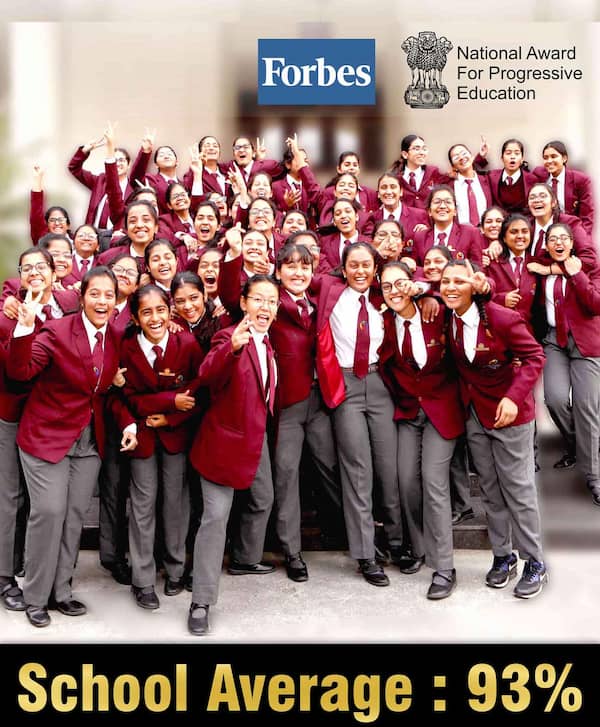
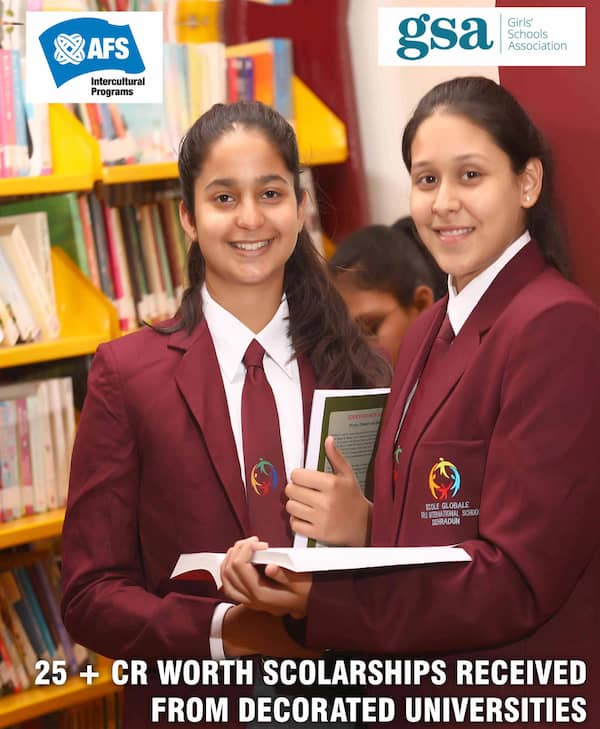
The results speak clearly. Ecole Globale’s alumni are currently enrolled at institutions that include the London School of Economics and Political Science, the University of London, University of Nottingham, University of Delhi, NIFT (National Institute of Fashion Technology), Jawaharlal Nehru University, DY Patil University, the Institute of Business and Finance (ISBF), and the Canadian Flight Institute. Multiple students have secured merit-based scholarships at these universities — a direct outcome of both academic excellence and the career counselling support that helped them present that excellence effectively.
For parents evaluating girls’ schools in India, this placement record is significant not just as a list of prestigious names, but as evidence that the school’s career counselling infrastructure genuinely works — that it translates potential into placement, and ambition into admission.
Career Fairs and Campus Ambassadors: Opening Doors Before Application Season

One of the most distinctive features of career counselling at Ecole Globale is the integration of career fairs and campus ambassador visits into the school’s annual calendar. These events bring representatives of universities — both Indian and international — directly to the school, giving students the opportunity to engage in face-to-face conversations with admissions teams before they begin the formal application process.
This kind of early, informal engagement serves multiple career counselling objectives at once. It gives students accurate, up-to-date information about programmes, entry requirements, campus culture, and scholarship availability — information that is far richer than anything available on a university website. It allows admissions representatives to become familiar with Ecole Globale students in a low-pressure setting. And it gives students the practice of articulating their interests and asking substantive questions — a skill that will serve them well in formal interviews and personal statement writing.
For students in Class XI and XII who are beginning to narrow their university shortlists, these career fairs provide an invaluable reality-check alongside the aspirational thinking that career counselling rightly encourages. They help students make informed, grounded choices rather than decisions driven by prestige or peer pressure alone.
The Full Scope of Career Counselling: From Stream Selection to University Admission

Effective career counselling in a girls’ school spans the full arc of secondary education, not just the final years. The following outline describes what a well-structured career counselling programme should offer at each stage:
Classes VI–VIII: Awareness and Exploration
- Introduction to the concept of careers and how interests connect to professions
- Age-appropriate aptitude activities and personality awareness exercises
- Exposure to a wide range of professions through career awareness sessions and alumni interactions
Classes IX–X: Stream Guidance and Foundation
- Structured aptitude assessments to inform Science / Commerce / Humanities stream selection
- Guidance on CBSE versus international board pathways and the implications for future options
- Preliminary university landscape orientation: what Indian and international higher education systems look like
Classes XI–XII: Application Preparation and University Placement
- Intensive one-on-one career counselling for university shortlisting based on individual profiles
- Personal statement and Statement of Purpose (SOP) development with counsellor feedback
- Entrance examination planning (JEE, NEET, CUET, SAT, IELTS, TOEFL as applicable)
- Career fair participation and campus ambassador interactions
- Scholarship identification and application support
- Interview preparation and mock interview sessions
What to Look for in a School’s Career Counselling Programme

When evaluating the career counselling provision of a girls’ school, parents and students should look beyond the headline placement list and ask more probing questions:
- Is career counselling delivered by trained professionals, or is it an informal responsibility assigned to a subject teacher alongside other duties? The quality of guidance is only as strong as the expertise behind it.
- How early does the career counselling process begin? Schools that start career awareness in the middle school years build significantly stronger placement outcomes than those that focus only on final-year students.
- Does the school use structured aptitude and psychometric assessments to inform career counselling conversations? Good career guidance is evidence-based, not anecdotal.
- Are there regular structured touchpoints between students and counsellors throughout the academic year, or only reactive conversations when a student presents a problem?
- What is the school’s track record of international placements, and how transparent is it about where alumni go after graduation? A school confident in its career counselling outcomes will make this information readily available.
Dehradun’s Girls’ Boarding Schools and the Career Counselling Advantage

Dehradun has established itself as the pre-eminent centre for girls’ residential education in India — and the quality of career counselling available at the city’s top boarding schools is a significant part of why. The residential model gives schools extended contact time with students, making it possible to develop the kind of continuous, relationship-based career counselling that produces genuinely differentiated outcomes.
Schools in Dehradun — and Ecole Globale in particular — also benefit from the network of peer institutions, visiting educators, and international school connections that have developed over decades in the region. This network brings admissions teams, career counselling experts, and alumni back to school campuses in ways that simply are not feasible for urban day schools juggling a more fragmented school day.
For families considering a girls’ boarding school in India, career counselling quality should sit alongside academics, pastoral care, and facilities as a primary evaluation criterion. The years of school are limited; the impact of a well-counselled university choice can define the next decade of a young woman’s life.
Conclusion: Career Counselling Is the Bridge Between Potential and Placement
Every girls’ school in India claims to prepare students for the future. The question parents should be asking is not whether a school makes this claim, but what specific career counselling infrastructure sits behind it. Is there a trained team? A structured process that begins early? A record of university placements that reflects consistent, expert guidance? A commitment to exposing students to the full breadth of their options rather than steering them toward conventional pathways?
At Ecole Globale International Girls’ School, Dehradun, the answer to each of these questions is yes. The school’s career counselling cell — backed by in-house experts, university partnerships, career fairs, and a placement record spanning Indian and international institutions — represents a model of what career guidance in a girls’ school should look like: personalised, proactive, evidence-based, and relentlessly focused on opening the widest possible set of doors for every student who walks through the school’s gates.
In the end, career counselling in a girls’ school is not a service. It is a promise — that the years of effort, growth, and learning will be channelled, with skill and care, into a future that truly fits the young woman who earned it.