





Mathematics can be a make-or-break subject for many students. With the latest exam patterns leaning heavily on application, conceptual clarity, and problem-solving, it’s more important than ever to have a solid, systematic preparation plan. This guide outlines effective strategies to help you prepare for your Class 10 Mathematics exams and score well under the evolving format.
✅ Understand the Exam Pattern & Focus Areas
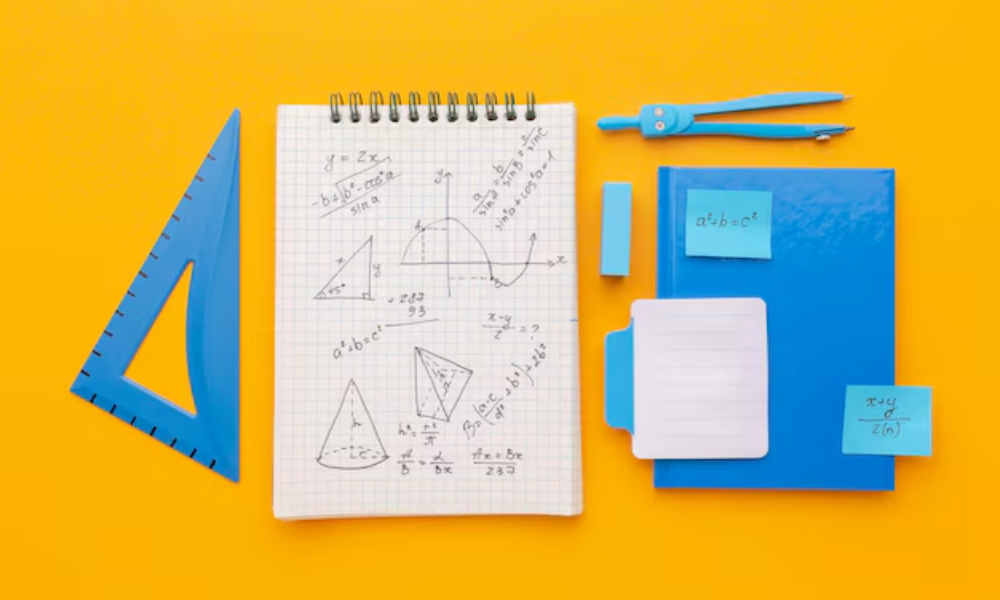
Before diving into practice, it’s crucial to understand what kinds of questions are likely to appear in the exam. Class 10 Mathematics recent exam analyses show that certain chapters in Class 10 Maths tend to have higher weightage — these include algebra, geometry, trigonometry, statistics & probability, and mensuration (surface areas and volumes).
Given this, start by prioritizing these chapters: make sure your fundamentals are crystal clear, and you’re comfortable with both theory and application.
📚 Start with NCERT — Master the Basics
The core of your Maths preparation should always be your standard textbook. For CBSE, the NCERT book remains the most reliable source. Make sure you:
Read and understand every example and explanation.
Solve all exercises, including miscellaneous questions. Basic and well-solved concepts from NCERT often reappear in modified forms in the exam.
Starting with NCERT ensures you cover the syllabus thoroughly and build a firm foundation before moving to harder problems.
🔄 Practice, Practice, and More Practice — Daily Problem Solving

Class 10 Mathematics isn’t a subject learned by reading — it’s learned by doing. Experts recommend daily practice, solving a mix of problems from different chapters. This not only builds speed and accuracy but improves confidence too.
A good strategy: solve 5–10 questions daily, alternating chapters so you don’t stagnate, and gradually increasing difficulty.
📄 Use Sample Papers and Previous-Year Questions (PYQs)
Sample papers and past exam papers are gold mines when preparing for any board exam. They help you:
Familiarize yourself with the exam format and question types.
Improve time management by practicing under exam-like time constraints.
Identify weak chapters and error patterns so you can work on them before the real exam.
Try to solve at least a few full-length papers as you approach exam time. It builds stamina and reduces last-minute surprises.
🧮 Maintain a Formula & Theorem Notebook

Maths involves many formulas, theorems, identities — and under pressure, it’s easy to forget them. That’s why creating a dedicated notebook (or flash cards) of all formulas and theorems per topic is highly recommended.
Regular revision of this notebook helps you recall formulas quickly and apply them correctly in problems — especially useful in algebra, geometry, trigonometry, and mensuration.
📝 Work on Presentation, Steps & Accuracy

In Class 10 Mathematics, how you write your answer matters almost as much as what you write. Marks are awarded for step-by-step logical solutions, correct use of formulas, neat diagrams / constructions (when required), and correct units.
Even if you make a small mistake, proper working often helps you secure partial marks — so never skip steps. Draw neat figures, label diagrams clearly, and write clean, spaced answers.
⏳ Manage Time Smartly During Exams
Time management can make or break your exam performance. Here’s a practical approach to allocate time by question type:
Solve easier, short-answer questions first to secure quick marks.
For long or tricky problems, write down the plan first — formulas needed, steps, diagram (if any) — then proceed methodically.
Reserve last 10–15 minutes for revision: check calculations, units (in measurement questions), diagrams, and ensure no question is left unanswered.
Also, during the first 10–15 minutes (if reading time is provided) read all questions carefully and mark those you’re confident about. This prevents panic and helps you attempt in a calm, planned manner.
🧠 Class 10 Mathematics: Avoid Common Mistakes

Here are frequent pitfalls students face — and how to avoid them:
Neglecting diagrams or using messy diagrams: Draw neatly, with proper labels — especially in geometry or coordinate geometry problems.
Forgetting units in mensuration or measurement problems: Always write “cm”, “m²”, etc. Many marks get lost over missing units.
Skipping revision or formula revision: Without revising formulas and theorems, it’s easy to get stuck. Keep your formula book updated and revise regularly.
Practicing only easy questions: To be ready for board-level complexity, also practice higher-difficulty problems and mixed topics.
🌟 Final Sprint: Last Few Weeks Before Exam
As exams approach, shift your focus to:
Solving full sample papers under timed conditions
Revising formula/theorem notes every day
Practicing diagram-heavy and application-based questions
Working on weak areas identified from previous mock tests
Don’t over-stress — take small breaks, stay calm, and stick to your routine. Consistent, smart preparation pays off much more than last-minute cramming.
✅ FREQUENTLY ASKED QUESTIONS
Q1. Which chapters in Class 10 Maths carry the highest marks?
Ans: High-weightage chapters typically include Algebra, Geometry, Trigonometry, Statistics & Probability, and Mensuration (surface area & volumes). Focusing on these first often results in higher overall scores.
Q2. Should I only solve NCERT questions or use other reference books?
Ans: Start with NCERT — it covers all basic and conceptual parts thoroughly. Once you’re confident, use reference books or sample papers for advanced practice and variety.
Q3. Is practicing previous-year question papers really helpful?
Ans: Yes. They help you understand the exam pattern, types of questions asked, and important chapters/topics. Also, practising under timed conditions builds speed and reduces exam anxiety.
Q4. How important is neat answer presentation?
Ans: Very important. Mathematics rewards proper steps, clear diagrams, and correct units. Even if final answer is wrong, correct method can fetch partial marks.
Q5. What’s the best way to revise formulas and theorems before the exam?
Ans: Maintain a small “formula notebook” or flash-cards. Revise them daily or weekly. Use them for quick checks before attempting problems. Writing them repeatedly helps in quick recall during exams.