



Residential education has long been recognized as one of the most effective models for holistic learning. When students live and study within the same campus environment, they benefit from structured routines, academic focus, and personal development opportunities that traditional schooling sometimes cannot provide.
Understanding the residential education advantages helps parents make informed decisions about their child’s academic and personal growth. Residential schools, often known as boarding schools, provide a balanced environment that nurtures intellectual, emotional, and social development.
For students, residential education is not only about academics—it is about building independence, responsibility, and leadership skills that prepare them for the future.
What Is Residential Education?

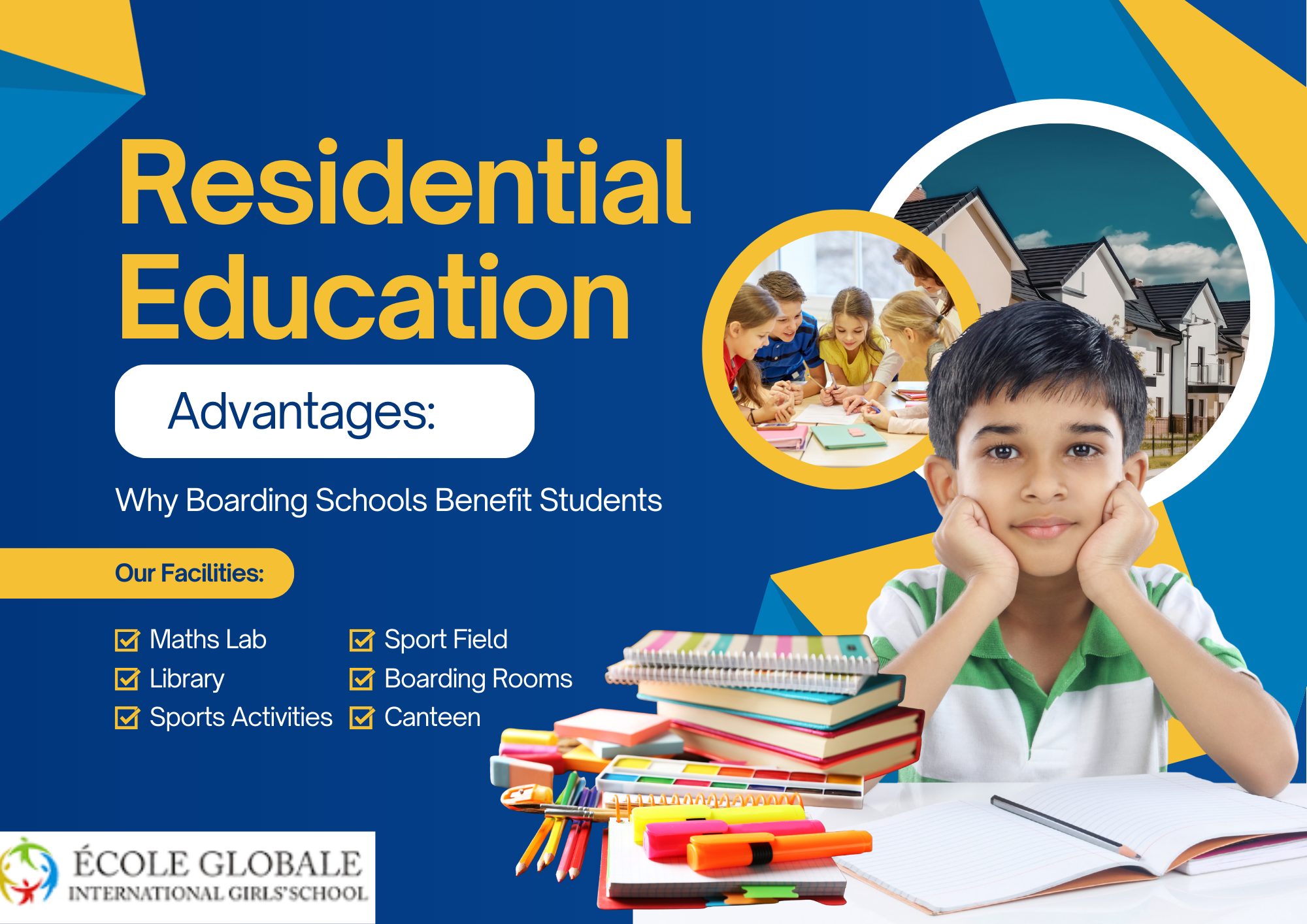
Residential education refers to an educational system where students live on campus while studying. Schools provide accommodation, meals, academic instruction, extracurricular activities, and pastoral care within a structured environment.
This immersive model ensures that learning continues beyond the classroom.
Many families today explore residential education advantages when looking for institutions that offer discipline, academic excellence, and character building.
Parents often research this model alongside understanding the different levels of education in India, which helps them determine the right stage to introduce residential schooling.
Key Residential Education Advantages

1. Development of Independence
One of the most important residential education advantages is the development of independence. Students learn to manage their daily routines, organize their study schedules, and take responsibility for their personal tasks.
Living away from home encourages students to:
Make responsible decisions
Manage time effectively
Develop self-discipline
These skills are crucial for success in higher education and professional life.
2. Structured Learning Environment
Residential schools operate with well-planned schedules that balance academics, sports, and personal development.
A typical day includes:
| Activity | Purpose |
|---|---|
| Morning routine | Builds discipline |
| Classroom learning | Academic growth |
| Supervised study hours | Focused learning |
| Sports and activities | Physical development |
| Evening reflection time | Personal growth |
This structured lifestyle is one of the biggest residential education advantages because it helps students maintain balance.
3. Strong Academic Focus
In residential education systems, academic environments are carefully monitored by teachers and mentors.
Students benefit from:
Guided study hours
Academic mentoring
Peer learning groups
Continuous teacher support
Without daily commuting distractions, students can focus better on their studies.
4. Holistic Development
Another key aspect of residential education advantages is holistic development. Residential schools encourage participation in:
Sports
Performing arts
leadership activities
community service
These experiences help students develop confidence, teamwork, and communication skills.
5. Emotional Growth and Resilience
Living away from home teaches students emotional maturity and resilience.
They learn how to:
Solve problems independently
Manage stress
Build friendships
Adapt to new environments
These life skills are invaluable for long-term success.
6. Cultural Diversity and Social Skills
Residential schools often bring together students from different regions and backgrounds.
This diversity promotes:
cultural understanding
collaboration
empathy
global perspectives
One of the overlooked residential education advantages is the ability to build lifelong friendships and social networks.
Residential Education vs Day Schooling
| Feature | Residential Education | Day School |
|---|---|---|
| Learning environment | Immersive | Limited to school hours |
| Supervision | 24/7 mentorship | Limited supervision |
| Independence | High | Moderate |
| Social development | Diverse community | Local peer group |
| Routine structure | Highly organized | Less structured |
This comparison highlights why many parents consider residential education a transformative experience.
How Residential Education Builds Leadership

Students in residential schools are often encouraged to take on leadership roles such as:
House captains
Club leaders
Sports team captains
Student council members
These opportunities allow students to practice responsibility and decision-making in real-life situations.
Leadership training is one of the most powerful residential education advantages.
Academic Performance in Residential Schools

Studies show that students in residential schools often perform well academically due to structured support systems.
Key academic benefits include:
supervised evening study sessions
teacher accessibility
peer collaboration
minimal distractions
This environment helps students stay focused on long-term academic goals.
When Should Parents Consider Residential Education?

Parents may consider residential education when:
children need structured academic guidance
families relocate frequently
students require focused preparation for higher education
parents want holistic development for their children
Understanding the residential education advantages helps parents decide the right timing.
Common Concerns Parents Have
Despite its benefits, parents sometimes worry about:
homesickness
emotional adjustment
communication with family
However, most modern residential schools provide strong pastoral care, counselling support, and regular parent communication systems.
FAQs on Residential Education Advantages
Q1. What are the main residential education advantages?
Ans: Residential education offers independence, structured learning, academic focus, and holistic personal development.
Q2. Are residential schools better than day schools?
Ans: Both have benefits, but residential schools provide immersive learning and stronger independence skills.
Q3. At what age can students join residential schools?
Ans: Many residential schools accept students from middle school onwards.
Q4. Do students feel homesick in residential schools?
Ans: Homesickness is common initially, but supportive communities help students adjust quickly.
Q5. Does residential education improve academic performance?
Ans: Yes, structured study routines and teacher support often improve academic outcomes.
Q6. Is residential education suitable for all children?
Ans: Most students adapt well, especially when they are emotionally prepared and supported.
Conclusion
The residential education advantages extend far beyond academics. They include personal growth, leadership development, emotional resilience, and social maturity.
By living and learning in a structured campus environment, students develop the discipline and independence needed to succeed in higher education and life.
For parents seeking a comprehensive educational experience that nurtures both intellect and character, residential education remains one of the most impactful choices.