




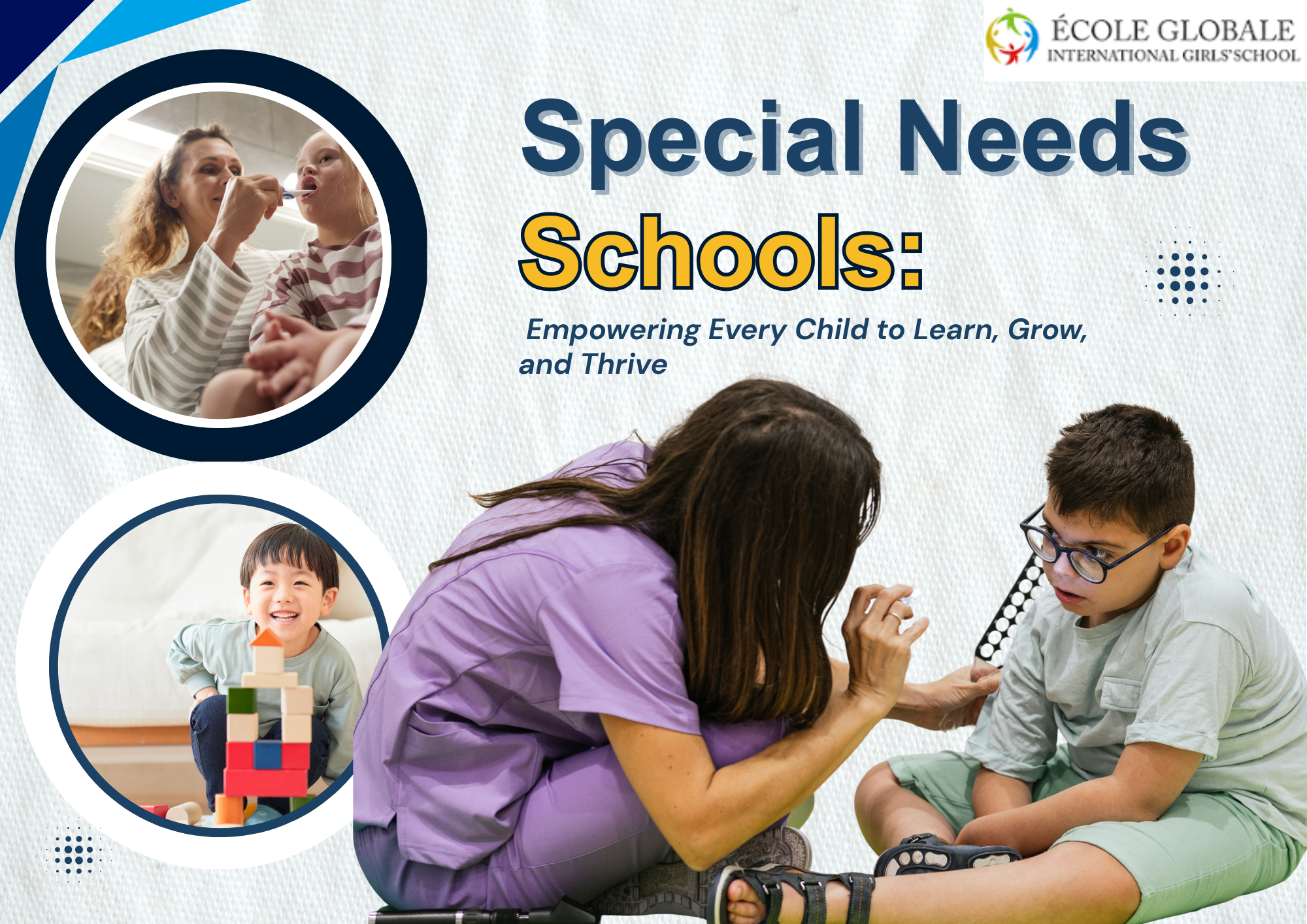
Every child learns differently, and for children with physical, cognitive, emotional, or developmental challenges, the right educational environment is essential. Special needs schools are designed to support students who require personalized learning approaches, therapeutic assistance, and a nurturing atmosphere that helps them reach their full potential. These schools focus not just on academics, but also on life skills, emotional development, and independence.
What Are Special Needs Schools?

These are educational institutions that cater to children with learning differences or disabilities such as autism spectrum disorder (ASD), ADHD, dyslexia, Down syndrome, cerebral palsy, speech and language disorders, hearing or visual impairments, and other developmental delays.
Unlike mainstream schools, these institutions offer:
Individualized Education Programs (IEPs)
Small class sizes
Trained special educators and therapists
Customized teaching methods
Supportive infrastructure and assistive technologies
Types of Special Needs Schools

1. Schools for Learning Disabilities
These schools support children with dyslexia, dyscalculia, dysgraphia, and ADHD by using multisensory teaching methods and flexible assessment patterns.
2. Autism-Specific Schools
Designed for children on the autism spectrum, these schools focus on communication skills, behavioral therapy, social interaction, and sensory integration.
3. Schools for Physical Disabilities
Such schools provide barrier-free infrastructure, physiotherapy, occupational therapy, and adaptive learning tools for children with mobility challenges.
4. Inclusive Special Needs Schools
These schools integrate special needs students with mainstream learners while providing additional support through resource rooms and special educators.
Key Features of Special Needs Schools

Individualized Learning Plans
Each child follows a customized curriculum based on their abilities, pace, and learning style.
Trained Faculty and Therapists
Teachers are supported by psychologists, speech therapists, occupational therapists, and counselors.
Holistic Development
Focus on emotional well-being, communication skills, social interaction, and daily living skills along with academics.
Safe and Supportive Environment
A low-pressure environment that encourages confidence, self-expression, and independence.
Benefits of Enrolling in Special Needs Schools
Personalized attention and care
Improved academic and social outcomes
Enhanced self-esteem and emotional security
Better behavioral and communication development
Preparation for independent or supported living
This ensure that children are not compared unfairly and are allowed to progress at their own pace.
How to Choose the Right Special Needs School

When selecting a school, parents should consider:
Type of special need the school specializes in
Qualifications and experience of teachers
Availability of therapy and counseling services
Student-to-teacher ratio
Safety, accessibility, and infrastructure
Parent involvement and progress tracking
Visiting the campus and interacting with educators is highly recommended.
Special Needs Schools in India: A Growing Landscape

India has seen a steady rise in awareness and acceptance of special education. Many cities now offer well-established special needs schools that follow CBSE, NIOS, or skill-based curricula, focusing on vocational training and life skills along with academics.
Government initiatives and private institutions are working together to ensure inclusive and quality education for children with special needs.
Role of Parents and Community
The success of special education depends heavily on collaboration between parents, educators, and therapists. Regular communication, consistency at home, and emotional support play a crucial role in a child’s development.
Communities that promote inclusion help children with special needs integrate better into society.
Conclusion
Special needs schools play a vital role in shaping a child’s future by recognizing their unique strengths and challenges. With the right guidance, support, and environment, children with special needs can achieve academic success, emotional stability, and a fulfilling life. Choosing the right school is not just about education—it’s about giving every child the dignity, care, and opportunity they deserve.
FREQUENTLY ASKED QUESTIONS
Q1. What are special needs schools?
Ans: These are educational institutions designed for children who require additional academic, emotional, or physical support due to learning disabilities, developmental delays, or other challenges.
Q2. Who should consider special needs schools?
Ans: Children with conditions such as autism spectrum disorder (ASD), ADHD, dyslexia, speech or language delays, intellectual disabilities, or physical impairments benefit from special needs schools.
Q3. How are special needs schools different from regular schools?
Ans: This offer smaller class sizes, individualized education plans, trained special educators, therapeutic support, and flexible teaching methods tailored to each child.
Q4. Do special needs schools follow CBSE or other boards?
Ans: Many special needs schools follow CBSE, NIOS, or skill-based curricula, while others focus on functional academics, life skills, and vocational training depending on the child’s needs.
Q5. Are special needs schools only for severe disabilities?
Ans: No, Special needs schools support children with mild, moderate, and severe learning challenges, including those who may struggle in mainstream classrooms.
Q6. What facilities are available in special needs schools?
Ans: Facilities often include therapy rooms, sensory labs, counseling services, assistive technology, accessible infrastructure, and trained medical or psychological support staff.