



Choosing a career after Class 12 can feel overwhelming, especially for students from the science stream. The science stream opens doors to a wide range of academic and professional pathways. Students with PCM (Physics, Chemistry, Mathematics) and PCB (Physics, Chemistry, Biology) can explore different courses depending on their interests, strengths, and long-term goals.
Understanding the career options after 12th science can help students make a more informed decision instead of choosing a course simply because it is popular. From engineering and technology to medicine, biotechnology, research, architecture, environmental science, and healthcare, there are many possibilities.
Understanding Career Options After 12th Science

Before choosing among the many career options after 12th science, students should first understand their subject combination.
PCM generally includes physics, chemistry, and mathematics. Students with this combination can explore engineering, architecture, computer science, mathematics, physical sciences, economics, and several technology-related fields.
PCB includes physics, chemistry, and biology. Students with PCB can explore medicine, dentistry, pharmacy, biotechnology, life sciences, nursing, nutrition, environmental science, and other healthcare or biological science fields.
Some students may also have additional subjects, such as computer science, psychology, or physical education, which can further expand their choices.
Career Options After 12th Science PCM

There are many career options after 12th Science PCM for students interested in mathematics, technology, engineering, and physical sciences.
1. Engineering
Engineering remains one of the major choices for PCM students. Students can explore areas such as:
- Computer Science Engineering
- Mechanical Engineering
- Civil Engineering
- Electrical Engineering
- Electronics and Communication Engineering
- Chemical Engineering
- Aerospace Engineering
- Environmental Engineering
The exact admission process depends on the institution and programme. Students should research eligibility criteria and entrance examinations for the colleges they are considering.
2. Computer Science and Information Technology
Students interested in computers and technology can consider courses related to computer science and information technology.
Possible areas include:
- Computer Science
- Information Technology
- Artificial Intelligence
- Data Science
- Cybersecurity
- Software Development
These fields combine mathematical thinking with technology and problem-solving.
3. Architecture
Architecture can be another option among career option after 12th science PCM.
Students interested in design, buildings, mathematics, drawing, construction, and spatial planning can explore architecture programmes. Admission requirements vary between institutions, so students should check the latest eligibility and entrance requirements.
4. Pure Sciences
Students who enjoy scientific research and theoretical subjects can consider bachelor’s degrees in areas such as:
- Physics
- Mathematics
- Chemistry
- Astronomy-related fields
- Statistics
- Geology
These courses can lead to research, teaching, analytics, postgraduate education, and specialised scientific careers.
5. Economics and Quantitative Fields
Students with strong mathematical skills may also consider economics, statistics, finance, actuarial studies, and related quantitative fields.
These pathways demonstrate that career options after 12th science PCM are not limited to engineering.
Career Options After 12th Science PCB
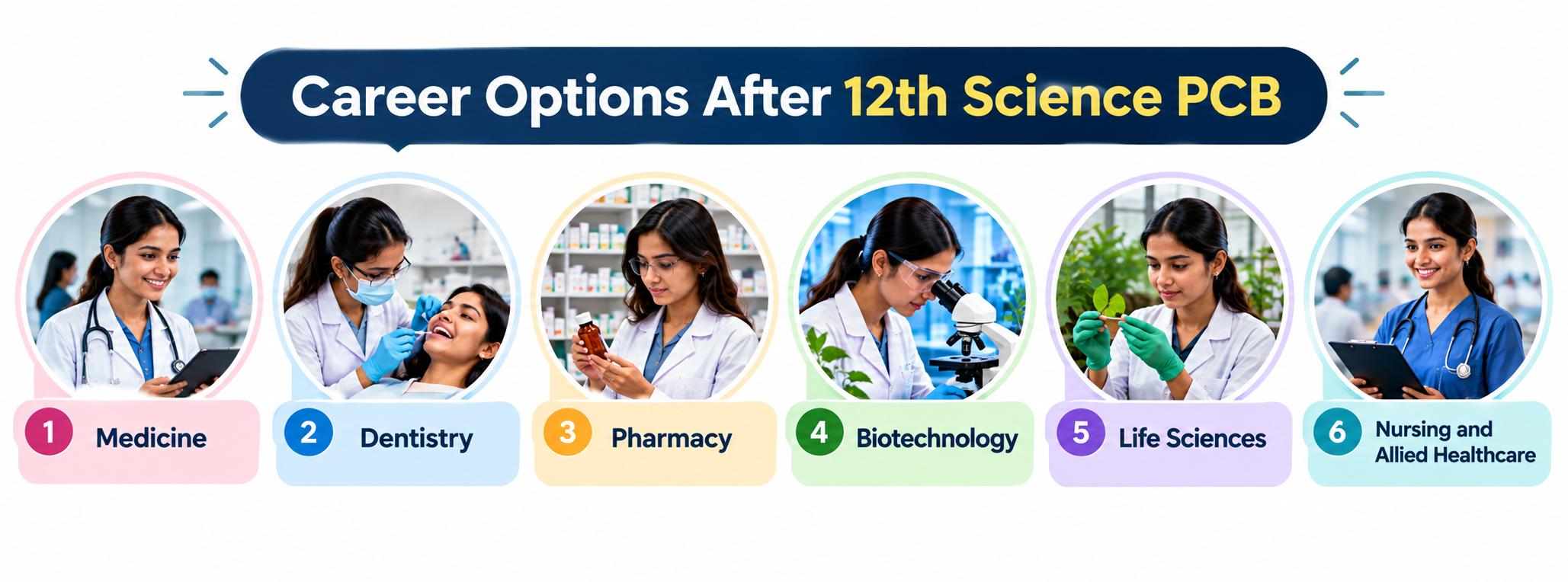
Students with PCB have a different set of possibilities. The career options after 12th science PCB include healthcare, biological sciences, pharmaceutical studies, research, and several allied fields.
1. Medicine
Medicine is one of the most recognised pathways for PCB students.
Students interested in becoming doctors can explore medical education through the applicable undergraduate medical admission pathway and required entrance examination.
However, medicine involves several years of academic and clinical training, so students should consider whether they are genuinely interested in healthcare before choosing this route.
2. Dentistry
Dentistry is another option among the career options after 12th science PCB.
Students interested in oral healthcare, dental science, and patient care can explore undergraduate dentistry programmes subject to the applicable eligibility and admission requirements.
3. Pharmacy
Pharmacy combines chemistry, biology, healthcare, and pharmaceutical science.
Students can explore undergraduate pharmacy programmes and later specialise in areas such as pharmaceutical research, clinical-related roles, drug development, manufacturing, or other areas depending on their qualifications.
4. Biotechnology
Biotechnology is an interdisciplinary field involving biology, chemistry, technology, and research.
Students can study biotechnology at the undergraduate level and later specialise in areas such as molecular biology, genetics, microbiology, bioinformatics, or related fields.
5. Life Sciences
Students interested in understanding living organisms can explore degrees in:
- Biology
- Microbiology
- Biochemistry
- Zoology
- Botany
- Genetics
- Life Sciences
These programmes can provide pathways towards research, laboratory work, higher education, teaching, and specialised scientific fields.
6. Nursing and Allied Healthcare
Nursing and allied healthcare programmes can also be considered by students exploring career options after 12th science PCB.
Depending on the programme, students may explore areas such as nursing, medical laboratory science, radiology, physiotherapy, occupational therapy, and other healthcare-related fields.
Students should carefully check the eligibility requirements for each programme.
Courses After 12th for Science Students
The range of courses after 12th is much broader than only engineering and medicine.
Depending on their subjects and interests, science students can consider:
| Area | Examples of Courses |
|---|---|
| Engineering | B.Tech, B.E. |
| Computer Science | B.Sc. Computer Science, BCA, technology-related degrees |
| Medicine | MBBS and other medical programmes |
| Dentistry | BDS |
| Pharmacy | B.Pharm |
| Biotechnology | B.Sc./B.Tech Biotechnology |
| Pure Science | B.Sc. Physics, Chemistry, Mathematics, Biology |
| Architecture | B. Arch |
| Environmental Science | B.Sc. Environmental Science |
| Agriculture | B.Sc. Agriculture |
| Statistics | B.Sc. Statistics |
| Nursing | B.Sc. Nursing |
| Life Sciences | B.Sc. Life Sciences |
| Psychology | Undergraduate psychology programmes |
| Economics | Undergraduate economics programmes |
The availability and eligibility for these programmes can vary between universities and states.
How to Choose the Right Career After 12th Science
Knowing the career options after 12th science is only the first step. Students also need to evaluate which option fits them personally.
Consider Your Interests
Think about the subjects and activities you genuinely enjoy. A student who enjoys biology and patient interaction may have different preferences from someone who enjoys mathematics and programming.
Consider Your Strengths
Academic performance can provide useful information about which subjects students find easier or more challenging. However, marks should not be the only factor.
Research the Course
Before selecting one of the courses after 12th, research the syllabus, duration, admission process, fees, practical training, and further-study opportunities.
Check Admission Requirements
Different universities and professional programmes can have different eligibility criteria and entrance examinations.
Students should always check the latest official requirements before applying.
Think About Long-Term Goals
Students do not necessarily need to know their entire career at age 17 or 18. However, having an idea of the type of work or field they would like to explore can make the decision easier.
Career Options After 12th Science Beyond Traditional Choices
Students sometimes assume that science means choosing only engineering or medicine. In reality, the career options after 12th science extend into many interdisciplinary fields.
Students can explore:
- Environmental Science
- Food Science
- Forensic Science
- Data Science
- Biotechnology
- Agriculture
- Geology
- Nutrition
- Psychology
- Marine Science
- Renewable Energy
- Scientific Research
These areas can be particularly interesting for students who want to combine science with technology, environment, healthcare, research, or social applications.
PCM vs PCB: Understanding the Difference
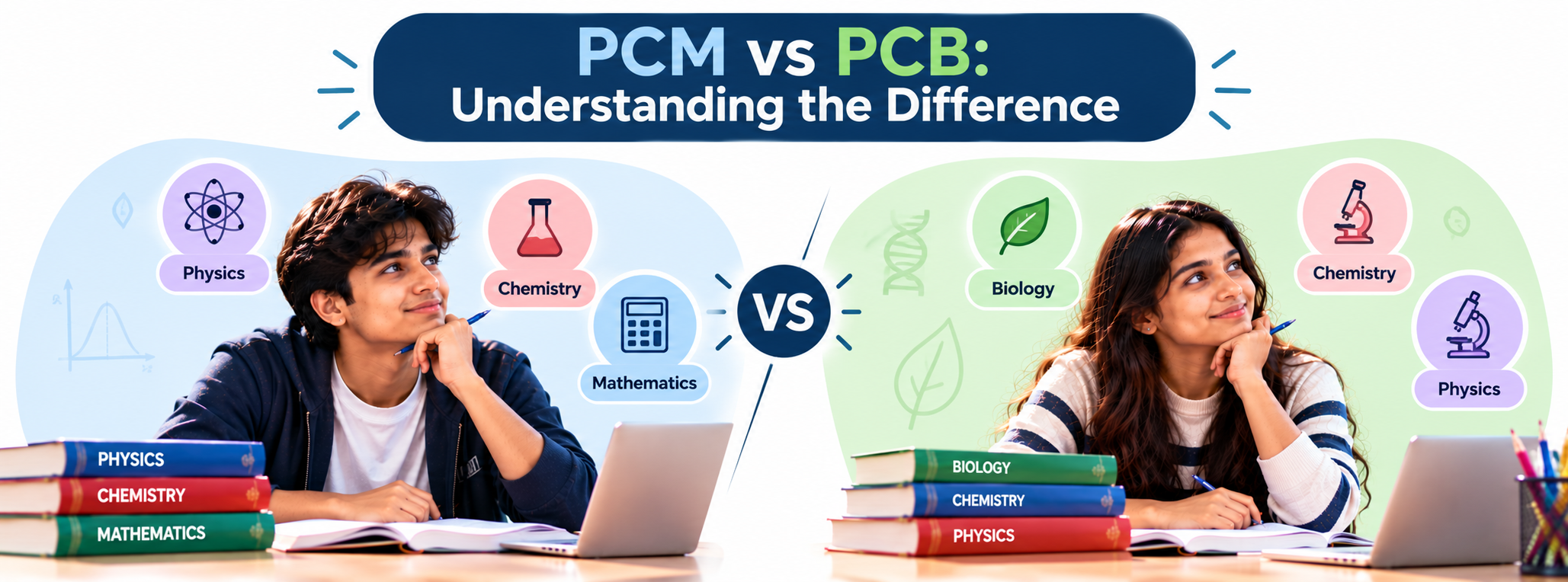
Students choosing between PCM and PCB should first consider the subjects they enjoy and the courses they may want to pursue.
PCM is generally suited to students interested in mathematics, engineering, technology, computing, architecture, economics, and physical sciences.
PCB is generally suited to students interested in biology, medicine, healthcare, biotechnology, life sciences, and related areas.
Students should also consider whether they enjoy mathematics or biology because these subjects can influence the academic pathways available to them.
Role of Parents in Career Planning

Parents can support students by helping them research different career options after 12th science without imposing a particular career choice.
A useful approach is to:
- Discuss the student’s interests.
- Explore different courses together.
- Attend career counselling sessions.
- Research university requirements.
- Consider the student’s strengths.
- Discuss career possibilities realistically.
- Give students time to make an informed decision.
Career planning works best when students actively participate in the process.
Preparing for Life After Class 12
Students should start exploring their career options after 12th science before their final examinations. Early research can help them understand entrance examinations, application deadlines, course requirements, and possible career pathways.
Students can create a shortlist of three to five possible courses and compare them based on:
- Interest
- Eligibility
- Entrance requirements
- Course duration
- University options
- Career pathways
- Higher-study opportunities
This can make the transition from school to higher education more organised.
Conclusion
The science stream offers a wide range of possibilities after Class 12. The right choice depends on a student’s interests, academic strengths, subject combination, future goals, and understanding of different courses.
Students with PCM can explore engineering, computer science, architecture, mathematics, economics, technology, and pure sciences. Students with PCB can consider medicine, dentistry, pharmacy, biotechnology, nursing, life sciences, and other healthcare or biological fields.
Ultimately, exploring career options after 12th science should be about finding a pathway that matches the student’s interests and long-term goals. Careful research into courses after 12th, eligibility requirements, entrance examinations, and university options can help students make a confident and informed decision.
Frequently Asked Questions
Q1. What are the best career options after 12th science?
Ans: There is no single best career for every student. Options include engineering, medicine, computer science, biotechnology, pharmacy, architecture, environmental science, pure sciences, nursing, and many other fields.
Q2. What are the career options after 12th in PCM (Science)?
Ans: The career options after 12th science PCM include engineering, computer science, architecture, mathematics, statistics, economics, physical sciences, data-related fields, and several technology-based courses.
Q3. What are the career options after 12th science PCB?
Ans: The career options after 12th science PCB include medicine, dentistry, pharmacy, biotechnology, nursing, physiotherapy, life sciences, microbiology, biochemistry, nutrition, and other biological or healthcare-related fields.
Q4. What courses after 12th are available for science students?
Ans: Science students can explore courses in engineering, medicine, computer science, biotechnology, pharmacy, architecture, environmental science, agriculture, pure sciences, nursing, psychology, economics, and several other areas.
Q5. Can PCM students pursue careers outside engineering?
Ans: Yes. PCM students can explore computer science, mathematics, statistics, economics, architecture, physics, data science, finance-related fields, and other areas depending on eligibility.
Q6. Can PCB students pursue careers outside medicine?
Ans: Yes. PCB students can explore biotechnology, pharmacy, nursing, life sciences, microbiology, environmental science, nutrition, physiotherapy, research, and other allied fields.