





A well-managed classroom is the foundation for meaningful learning. When teachers use effective classroom management strategies, lessons run smoother, student engagement increases, and instructional time is maximised. This article offers research-informed, practical tactics you can apply immediately — from routines and relationships to restorative approaches and tech-friendly solutions — to create an engaging and productive classroom environment.
What are Classroom Management Strategy?
Classroom management strategy are the methods teachers use to create order, maintain a positive learning climate, and support student behaviour so that teaching and learning can happen effectively. They cover routines, rules, seating, transitions, engagement techniques, behaviour responses and relationships with students and families.
Core Principles
Prevent before you intervene. Most disruptions are avoidable with clear structures.
Consistency builds trust. Predictable routines reduce anxiety and off-task behaviour.
Focus on relationships. Students who feel respected engage more and test boundaries less.
Teach behaviour like a skill. Model, practice, and reinforce expected actions.
Use data and reflection. Track what works; iterate continually.
Practical Classroom Management Strategy
1. Establish Clear Rules & Positive Norms
Co-create 3–5 simple, positively worded rules (e.g., “Respect everyone,” “Be ready to learn”).
Display rules visually and revisit them weekly.
Teach what each rule looks like in practice using role play.
2. Create Predictable Routines
Start class with a consistent opener (bell work, warm-up question).
Use exit tickets to close lessons and inform next steps.
Practice transitions (moving between activities) so they become quick and quiet.
3. Design an Instructional Layout
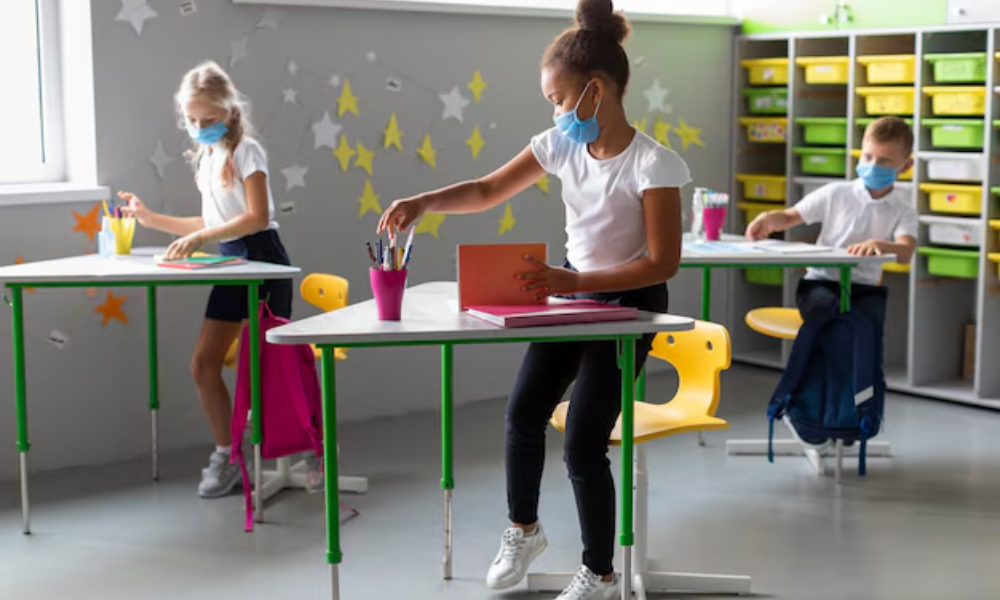
Arrange seating for the lesson objective: circles for discussion, rows for tests, clusters for group work.
Keep high-traffic areas clear; position teacher space for visibility and easy access.
Use visual signals (flags, traffic-light cards) for attention and movement.
4. Build Strong Relationships
Greet students at the door; learn names quickly.
Use one-on-one check-ins for students who struggle behaviourally or emotionally.
Celebrate non-academic wins: kindness, persistence, punctuality.
5. Active Engagement Techniques
Use Think-Pair-Share, cold calling, and mini whiteboards to keep all students involved.
Chunk instruction into short segments with immediate practice.
Incorporate multimodal activities — discussion, visuals, hands-on tasks.
6. Positive Reinforcement & Feedback
Recognize desired behaviours immediately: verbal praise, tickets, or class points.
Give specific feedback (“I noticed you completed the task on time and explained your steps”) rather than general praise.
Balance extrinsic rewards with intrinsic motivators like autonomy and mastery.
7. Differentiation & Inclusive Practices
Use tiered tasks and scaffolds so every learner can access success.
Provide alternative ways to demonstrate learning (oral, visual, written).
Make modifications for learners with IEPs and provide peer supports where appropriate.
8. Proactive Behavior Supports
Use seating plans strategically (pair students with complementary strengths).
Implement checklists, visual schedules, and timers for students needing structure.
Teach self-regulation strategies (breathing, counting, movement breaks).
9. Effective Use of Technology
Use LMS platforms for routines (submit exit tickets, post materials).
Employ formative tools (quizzes, polls) to check understanding in real time.
Set clear device rules and have quick tech-fail protocols to avoid downtime.
10. Restorative & Reflective Responses
Use restorative conversations to fix harm and rebuild relationships rather than only punitive measures.
Implement brief reflective prompts after incidents: What happened? Who was affected? What can you do next time?
Managing Common Challenges
Off-task Talking
Nonverbal cues (proximity, eye contact) first.
Quiet signals for attention (clap patterns, chime).
Private reminder, then a short conference if behaviour persists.
Repeated Disruptions
Record incidents and meet with student to set goals.
Involve parents and school counsellors early.
Offer leadership roles to channel energy positively.
Low Participation
Use low-stakes cold calling and scaffolded questions.
Offer think time and sentence stems for students needing support.
Monitoring & Continuous Improvement

Keep a behaviour log (what, when, triggers). Look for patterns.
Solicit student feedback on class climate regularly.
Collaborate with colleagues for co-planning or peer observation to refine strategies.
Quick Checklist for Teachers
Welcome students at the door
Post lesson objective & agenda clearly
Start with an engaging opener (3–5 min)
Use formative checks every 10–15 minutes
Close with an exit ticket and preview next lesson
FAQs — Classroom Management Strategy
Q1. What are the most effective classroom management strategy?
Ans: Consistency, clear routines, strong relationships, active engagement, and restorative practices are consistently effective across grades.
Q2. How do I start improving classroom management mid-term?
Ans: Pick 1–2 strategies (e.g., a morning routine and an exit ticket), teach them explicitly for a week, and reinforce consistently.
Q3. How can I manage mixed-ability classrooms?
Ans: Differentiate tasks (tiered assignments), use peer tutoring, and provide scaffolded supports so all students experience success.
Q4. What role does seating play in behaviour?
Ans: Seating affects visibility, movement, and peer influence—use it intentionally to reduce disruptions and increase collaboration.
Q5. Should discipline be public or private?
Ans: Start with private corrective conversations to preserve dignity; use public routines and class-wide acknowledgements for positive behaviour.