




Communication skills for teenage girls are essential for building confidence, expressing thoughts clearly, developing healthy friendships, and handling everyday challenges. During adolescence, girls experience new academic, social, and personal situations that require effective communication. Developing communication skills for teenage girls helps them share opinions, understand others, and navigate these experiences with greater confidence.
Strong communication skills for teenage girls involve more than speaking fluently. They include active listening, understanding body language, expressing emotions appropriately, asking questions, and respecting different perspectives. These abilities help girls participate in classroom discussions, group projects, social activities, and important conversations.
By developing effective communication skills for teenage girls, parents and teachers can help young people improve self-expression, empathy, and interpersonal confidence. With regular practice and encouragement, teenage girls can strengthen their communication abilities and prepare for future academic, social, and professional situations.
Table of Contents
- Why Communication Skills for Teenage Girls Matter
- Seven Ways to Improve Communication Skills
- The Role of Parents and Teachers
- Common Communication Challenges
- How Schools Can Encourage Communication
- Frequently Asked Questions
Why Communication Skills for Teenage Girls Matter

Communication skills for teenage girls support academic performance, social development, and personal growth. When girls communicate their thoughts clearly, they may find it easier to participate in lessons, ask teachers for help, and contribute to group assignments.
Strong communication skills for teenage girls also support healthy relationships. Communicating openly helps friends understand each other, resolve disagreements, and establish respectful boundaries. Similarly, expressing feelings clearly can help teenagers discuss concerns with parents, teachers, and other trusted adults.
Developing communication skills for teenage girls is especially useful during adolescence, when friendships, personal identity, and independence may become increasingly important. These abilities encourage girls to understand their own perspectives while remaining open to the experiences and opinions of others.
7 Ways to Improve Communication Skills for Teenage Girls

1. Practise Speaking Clearly and Confidently
One of the first steps towards improving communication skills for teenage girls is learning to express thoughts clearly and confidently. Girls can practise explaining their opinions, describing experiences, and asking questions during everyday conversations.
Speaking confidently does not mean speaking loudly or always knowing the correct answer. It means sharing ideas respectfully, organising thoughts, and allowing time to think before responding.
Classroom presentations, group discussions, storytelling, and debates provide useful opportunities to practise. Starting with familiar topics can make speaking in front of others feel more manageable.
Regular practice helps improve communication skills for teenage girls by encouraging clearer expression and greater participation in academic and social activities.
2. Develop Active Listening Skills
Active listening is an important part of communication skills for teenage girls. Effective communication requires people to understand what others are saying rather than simply waiting for their turn to speak.
Teenage girls can practise active listening by allowing others to finish speaking, asking relevant follow-up questions, and avoiding distractions during conversations.
For example, when a friend discusses a difficult day, listening patiently before offering advice can help the friend feel understood. Sometimes, people need someone to listen rather than immediately suggest a solution.
Active listening also reduces misunderstandings because it encourages clarification instead of assumptions. Developing this habit strengthens communication skills for teenage girls and supports healthier friendships.
3. Learn to Express Feelings Appropriately
Understanding and expressing emotions is another important aspect of communication skills for teenage girls. When girls can explain how they feel, it becomes easier for others to understand their concerns and respond appropriately.
Using clear statements can help. For example, saying, “I felt left out when I was not included in the group discussion,” explains a personal experience without immediately blaming another person.
Girls can also learn to recognise when they need time to think before discussing a difficult situation. Taking a pause can help them organise their thoughts and choose words carefully.
Practising emotional expression improves communication skills for teenage girls by helping them communicate feelings respectfully, recognise other people’s emotions, and manage challenging conversations.
4. Understand Body Language and Nonverbal Communication
Communication skills for teenage girls include understanding how facial expressions, posture, gestures, eye contact, and tone of voice influence conversations.
Girls can practise using a natural posture, an appropriate tone, and facial expressions that match their message. Looking towards the person speaking, when comfortable, can also demonstrate attention.
However, body language varies between individuals and cultures. Eye contact does not look the same for everyone, and some people feel more comfortable communicating without sustained eye contact.
The goal is not to follow rigid rules but to understand how nonverbal signals may affect communication. Greater awareness of body language can help teenage girls express themselves more clearly in classroom discussions, friendships, and formal situations.
5. Learn to Say No and Set Healthy Boundaries
Healthy communication skills for teenage girls include expressing personal boundaries. Girls may sometimes feel pressure to agree with friends, participate in activities they dislike, or remain silent when something makes them uncomfortable.
Learning to communicate boundaries respectfully helps teenagers make decisions that reflect their values and comfort levels.
Simple statements such as “I am not comfortable with that”, “I would prefer another option”, or “I need some time to think about it” can communicate a clear position.
Teenage girls should understand that they do not need to agree with everyone to maintain a healthy friendship. Respectful relationships allow people to express different opinions and personal limits.
Practising boundary-setting strengthens communication skills for teenage girls and supports self-expression, independence, and respectful relationships.
6. Handle Disagreements Respectfully
Disagreements are a normal part of relationships, making conflict resolution an important part of communication skills for teenage girls. Friends may have different preferences, classmates may disagree about a project, and family members may see a situation differently.
Instead of reacting immediately, girls can learn to listen to another person’s perspective, explain their own position, and look for a practical way forward.
Using calm language, avoiding personal insults, and focusing on the issue rather than attacking the individual can make disagreements more constructive.
For example, during a group project, students can discuss different ideas and compare their advantages before deciding how to proceed.
These experiences improve communication skills for teenage girls by teaching them to manage conflict, consider different viewpoints, and work towards shared solutions.
7. Practise Digital Communication and Online Etiquette
Digital communication is an important part of modern communication skills for teenage girls. Messages, group chats, emails, and online discussions help young people stay connected, but written communication can sometimes lead to misunderstandings.
Teenage girls can develop better digital communication habits by writing clear messages, checking their tone before sending a response, and respecting other people’s privacy.
It is also helpful to pause before replying when a message causes frustration. Written messages may not communicate the sender’s intended tone, so asking for clarification can be more useful than making assumptions.
Responsible digital communication also means avoiding hurtful comments, protecting personal information, and seeking help from a trusted adult if an online interaction becomes threatening or uncomfortable.
Developing digital communication skills for teenage girls helps them participate more responsibly in online communities while maintaining respectful relationships.
The Role of Parents and Teachers in Communication Development
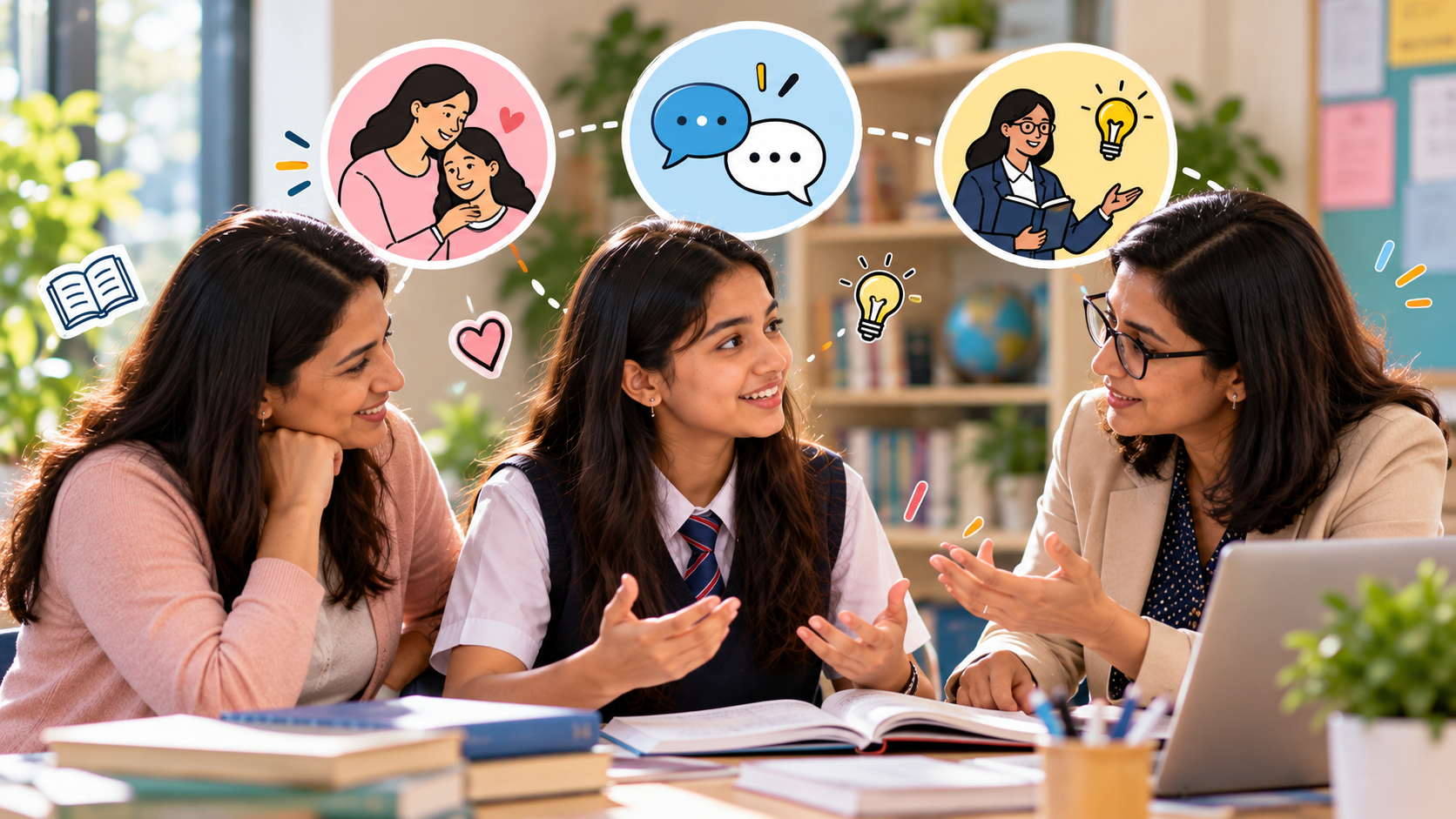
Parents and teachers play an important role in developing communication skills for teenage girls. They can create supportive environments where young people feel comfortable asking questions, expressing opinions, and discussing concerns.
At home, parents can encourage open conversations by listening without immediately criticising or interrupting. Asking thoughtful questions and allowing teenagers time to explain their perspectives can help build trust.
At school, teachers can organise presentations, collaborative assignments, debates, classroom discussions, and peer activities. Constructive feedback helps students identify areas for improvement without feeling discouraged.
Role-playing activities can also help girls practise asking teachers for clarification, resolving disagreements with classmates, and expressing different opinions respectfully.
Consistent encouragement helps communication skills for teenage girls develop over time. Every teenager has a different communication style, so parents and teachers should provide different opportunities to participate and practise.
Common Communication Challenges Teenage Girls May Face
Although communication skills for teenage girls can improve with practice, some teenagers may experience difficulties when speaking in public, expressing disagreement, or explaining complicated emotions.
Fear of being judged can sometimes prevent girls from asking questions or sharing ideas. Differences in communication styles can also create misunderstandings among friends and classmates.
These challenges do not mean that a teenager lacks communication ability. Communication is a skill that develops through experience, feedback, and encouragement.
Helpful strategies include preparing key points before a presentation, practising conversations with a trusted person, asking questions when something is unclear, and reflecting on what went well after a difficult interaction.
If communication difficulties cause significant distress or interfere with everyday life, speaking with a trusted adult, school counsellor, or qualified professional may provide additional support.
How Schools Can Encourage Communication Skills for Teenage Girls
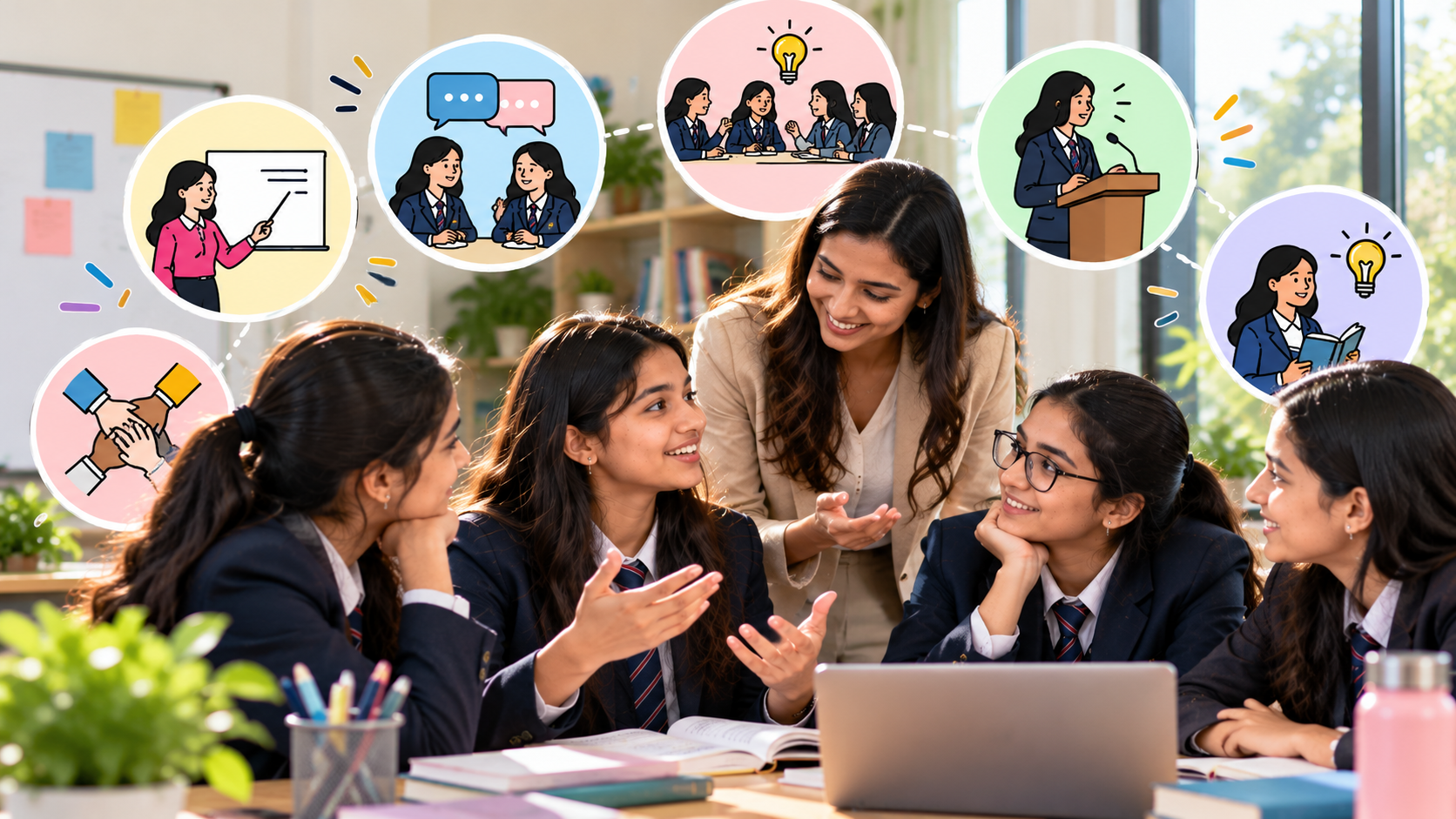
Schools can strengthen communication skills for teenage girls by integrating communication development into everyday learning rather than treating it as a separate activity.
Group projects encourage students to exchange ideas, divide responsibilities, and listen to different perspectives. Presentations help learners organise information and explain it to an audience.
Debates and classroom discussions teach students to support their opinions with reasons while respecting alternative viewpoints. Creative activities such as drama, storytelling, and role-playing provide opportunities to practise verbal and nonverbal communication.
Schools can also establish respectful classroom expectations so students have opportunities to ask questions, contribute ideas, and learn from mistakes without being ridiculed.
These approaches help improve communication skills for teenage girls while supporting collaboration, confidence, and a sense of belonging within the school community.
Conclusion
Communication skills for teenage girls are valuable for expressing thoughts, developing healthy relationships, managing disagreements, and participating confidently in school and everyday life.
By practising clear speaking, active listening, emotional expression, healthy boundaries, respectful conflict resolution, and responsible digital communication, girls can gradually become more effective communicators.
Parents and teachers can support this development by providing encouragement and opportunities for practice. Ultimately, communication skills for teenage girls help young people express themselves clearly, understand others, and approach new experiences with greater confidence.
Frequently Asked Questions
Q1. Why are communication skills for teenage girls important?
Ans: Communication skills for teenage girls help them express thoughts, understand others, develop healthy friendships, participate in academic activities, and handle disagreements respectfully.
Q2. How can teenage girls improve their communication skills?
Ans: Teenage girls can improve communication skills by practising active listening, participating in group discussions, expressing feelings clearly, asking questions, setting boundaries, and communicating respectfully online.
Q3. How can parents support communication skills for teenage girls?
Ans: Parents can support communication skills for teenage girls by listening without interrupting, encouraging open conversations, respecting their daughters’ opinions, and providing opportunities to practise communication in everyday situations.
Q4. Which school activities improve communication skills?
Ans: Presentations, debates, group projects, classroom discussions, drama, storytelling, and role-playing help students practise speaking, listening, collaboration, and respectful disagreement.
Q5. How do communication skills help teenage girls build confidence?
Ans: Communication skills help teenage girls organise their thoughts, express opinions, ask for support, and navigate social situations. Confidence can develop gradually through practice, positive feedback, and encouragement.