




Technology has quietly become a part of childhood. From storytelling to solving math problems, children today are learning through screens as much as through books. What makes this shift interesting is not just access, but how learning itself is changing.
Educational apps for kids are now designed to make learning interactive, engaging, and personalized. They are not just tools for entertainment but structured platforms that help children develop cognitive, emotional, and problem-solving skills. Still, like any learning method, they come with both opportunities and limitations.
This blog takes a balanced look at their importance, types, theoretical foundation, benefits, and challenges, helping parents and educators make informed choices.
What Are Educational Apps for Kids?

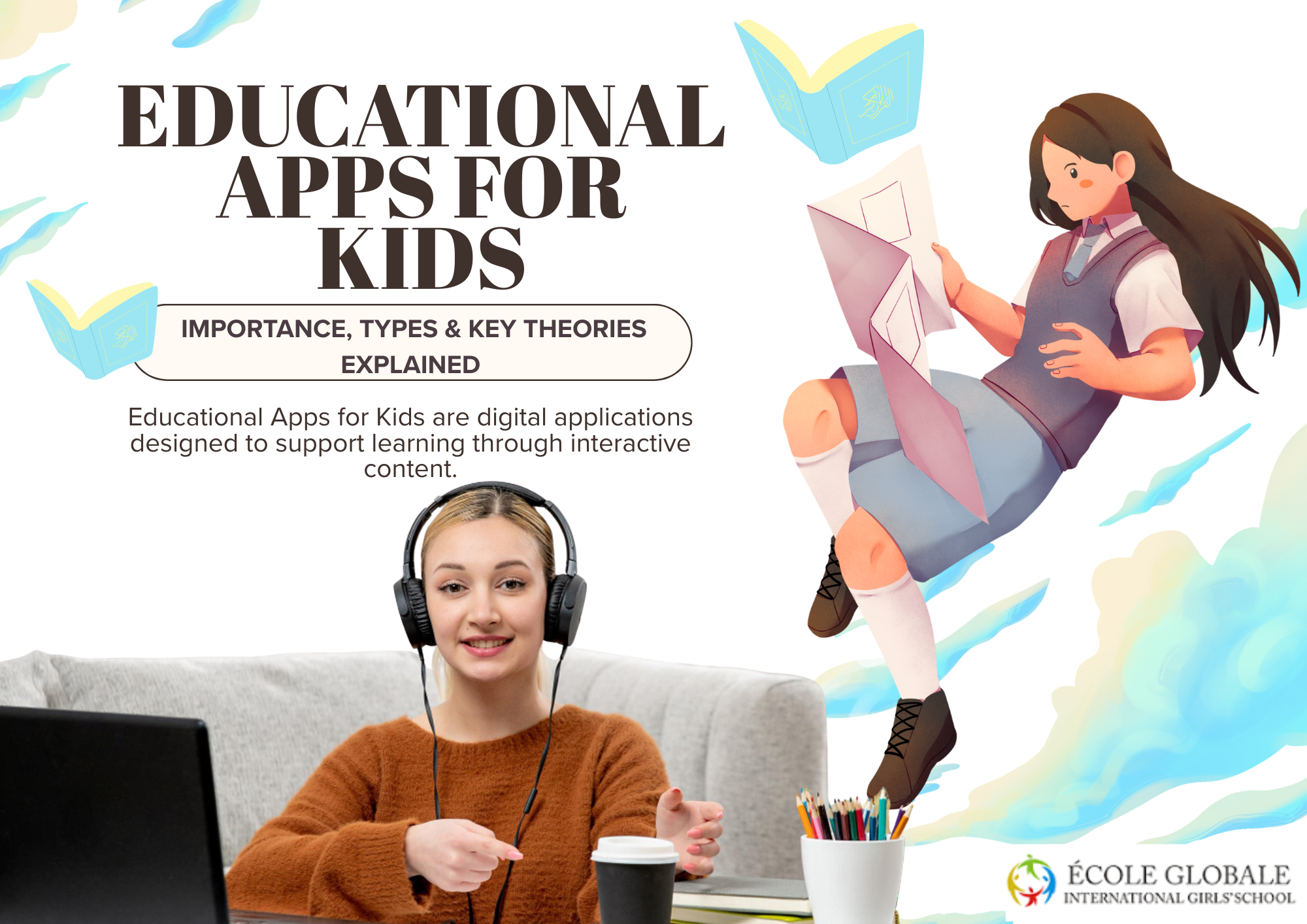
Educational Apps for Kids are digital applications designed to support learning through interactive content. These apps combine visuals, audio, games, and structured lessons to make concepts easier to understand.
Key Features
- Interactive learning modules
- Gamified quizzes and activities
- Personalized progress tracking
- Multimedia-based explanations
- Age-appropriate content
Unlike traditional methods, these apps focus on learning by doing, which often keeps children more engaged.
Importance of Educational Apps in Modern Learning

The role of digital tools in education has grown rapidly, especially in recent years. Children are no longer limited to classroom learning; they can explore concepts anytime, anywhere.
1. Accessibility to Learning
- Learning is no longer location-dependent
- Children can revise lessons at their own pace
- Useful for both urban and remote learners
2. Personalized Learning Experience
- Apps adapt to a child’s performance level
- Weak areas are identified and improved
- Progress tracking builds confidence
3. Engagement Through Interactivity
- Games and animations make learning enjoyable
- Reduces boredom often seen in traditional methods
- Encourages active participation
4. Skill Development Beyond Academics
- Improves logical thinking
- Enhances creativity
- Builds problem-solving skills
In comparison to structured environments like boarding schools in india, where discipline and routine play a key role, apps offer flexibility and self-paced learning.
Types of Educational Apps for Kids

Educational apps are not one-size-fits-all. They are designed based on different learning needs and age groups.
1. Subject-Based Learning Apps
These apps focus on specific subjects like:
- Mathematics
- Science
- Language learning
They help strengthen academic foundations through structured lessons.
2. Skill Development Apps
Designed to enhance abilities beyond textbooks:
- Coding and logical thinking
- Memory and concentration
- Creativity and art
3. Interactive Storytelling Apps
- Combine stories with animations and voiceovers
- Improve reading habits
- Enhance imagination and comprehension
4. Gamified Learning Apps
- Use rewards, levels, and challenges
- Turn learning into a game-like experience
- Increase motivation and consistency
5. Assessment and Practice Apps
- Provide quizzes and mock tests
- Track progress over time
- Help in exam preparation
Quick Comparison Table
| Type of App | Main Focus | Best For |
|---|---|---|
| Subject-Based | Academic learning | School curriculum |
| Skill Development | Cognitive skills | Holistic growth |
| Storytelling | Reading & imagination | Younger children |
| Gamified | Engagement | Motivation & retention |
| Assessment | Practice & testing | Exam preparation |
Key Learning Theories Behind Educational Apps

These apps are not created randomly. Many are built on proven educational theories that guide how children learn best.
1. Constructivist Learning Theory
- Children learn by actively engaging with content
- Apps provide hands-on activities and problem-solving tasks
- Encourages independent thinking
2. Behaviorist Theory
- Learning is reinforced through rewards and feedback
- Points, badges, and levels motivate children
- Helps build consistent learning habits
3. Cognitive Learning Theory
- Focuses on how children process information
- Apps use visuals, patterns, and repetition
- Enhances memory and understanding
4. Social Learning Theory
- Learning happens through observation and interaction
- Some apps include peer comparison or collaboration
- Encourages social engagement in learning
Benefits of Educational Apps for Kids

While traditional education remains important, these apps offer several added advantages.
1. Flexible Learning Environment
Children can learn anytime, without pressure or strict schedules.
2. Improved Retention
Interactive content helps children remember concepts better than passive reading.
3. Instant Feedback
- Immediate correction of mistakes
- Helps children learn faster
- Builds confidence
4. Encourages Independent Learning
- Children take control of their learning
- Develop self-discipline and responsibility
5. Safe Learning Space
- Controlled environment compared to open internet browsing
- Age-appropriate content ensures safety
Challenges and Limitations

Despite their advantages, Educational Apps for Kids are not without concerns.
1. Excessive Screen Time
- Can affect eyesight and physical activity
- Needs proper monitoring
2. Lack of Human Interaction
- Cannot fully replace teachers or peer learning
- Emotional and social skills may be limited
3. Quality Variations
- Not all apps are educational
- Some focus more on entertainment than learning
4. Dependency on Technology
- Over-reliance may reduce traditional learning habits
- Children may struggle without digital tools
5. Distractions
- Notifications and games can shift focus
- Requires parental supervision
How to Choose the Right Educational App

Making the right choice is important for effective learning.
Things to Consider
- Age-appropriate content
- Clear learning objectives
- Ad-free or minimal distractions
- Positive reviews and ratings
- Balanced mix of fun and learning
Simple Checklist
- Does it teach something meaningful?
- Is it easy to use?
- Does it track progress?
- Is it engaging without being addictive?
Conclusion
Educational Apps for Kids have changed the way children learn, offering flexibility, personalization, and engagement that traditional methods sometimes lack. They bring learning closer to children, making it more accessible and enjoyable.
At the same time, they are not a complete replacement for structured education or human interaction. The best approach lies in balance, where digital tools support, rather than replace, traditional learning methods.
When used thoughtfully, educational apps for kids can become powerful tools that nurture curiosity, strengthen skills, and prepare children for a future shaped by both knowledge and technology.
FREQUENTLY ASKED QUESTIONS
Q1. Are educational apps safe for kids?
Ans: Yes, most are safe if chosen carefully. Parents should select age-appropriate apps and monitor usage.
Q2. How much screen time is suitable for learning apps?
Ans: Experts recommend limited and supervised screen time, ideally 1–2 hours depending on age.
Q3. Can educational apps replace schools?
Ans: No, they are supportive tools and cannot replace classroom learning or teacher interaction.
Q4. Which age group benefits most from educational apps?
Ans: Children aged 3–14 benefit the most, as apps are designed to match different learning stages.
Q5. How do I know if an app is truly educational?
Ans: Check for clear learning goals, structured content, user reviews, and minimal distractions.