




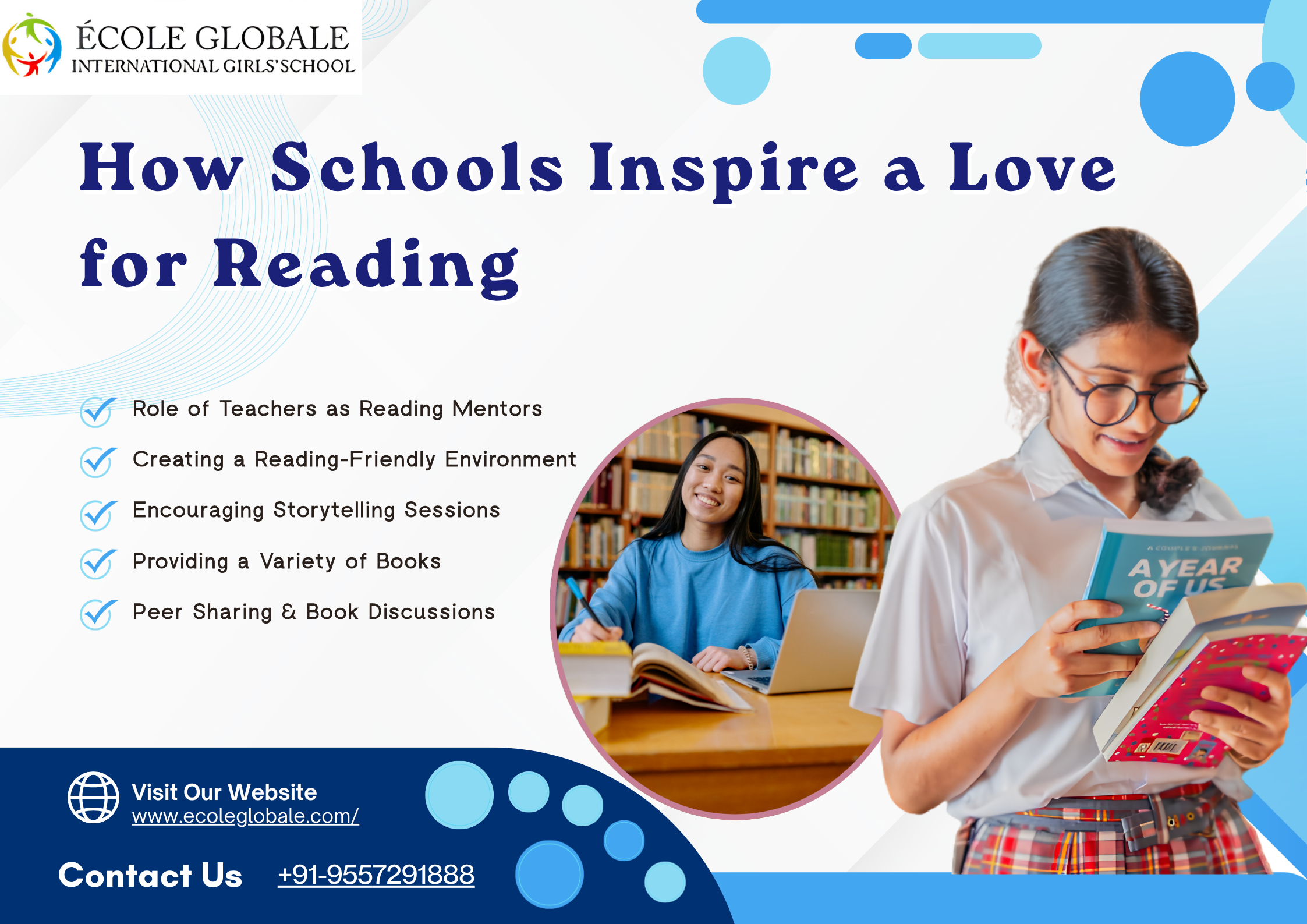
A love for reading can open the door to knowledge, imagination, creativity, and lifelong learning. Schools play an important role in helping students discover books that interest them and develop reading habits that continue beyond the classroom. By creating an engaging reading environment, schools can make reading feel less like an academic task and more like an enjoyable experience.
From well-stocked libraries and reading programmes to book discussions and storytelling activities, schools can provide students with many opportunities to explore different types of books. A positive reading culture can also help students develop vocabulary, communication skills, critical thinking, and confidence.
Why Is a Love for Reading Important?

Developing a love for reading can benefit students both academically and personally. Reading exposes students to new ideas, experiences, cultures, and perspectives.
Regular reading can help students:
- Develop stronger vocabulary
- Improve language and communication skills
- Build concentration and focus
- Strengthen comprehension
- Develop imagination and creativity
- Explore new subjects and interests
- Think critically about different ideas
- Become more independent learners
When students enjoy reading, they may be more willing to explore books independently and develop reading habits for students that support lifelong learning.
1. Creating an Engaging School Library

A welcoming school library can play an important role in encouraging reading in schools. Students are more likely to explore books when they have access to a variety of interesting and age-appropriate reading materials.
A good school library can include:
- Fiction and non-fiction books
- Biographies
- Science and educational books
- Magazines and newspapers
- Reference materials
- Graphic novels
- Books related to different cultures
- Age-appropriate contemporary literature
Allowing students to explore different genres can help them discover what they genuinely enjoy reading.
2. Giving Students the Freedom to Choose Books
Students have different interests and reading preferences. Some may enjoy adventure stories, while others may prefer science, history, biographies, fantasy, or mystery.
Giving students some freedom to choose what they read can make reading more enjoyable. Instead of always assigning the same book to everyone, schools can provide opportunities for students to select books based on their interests and reading levels.
This sense of choice can encourage students to develop a stronger love for reading.
3. Introducing Reading Activities
Reading does not have to be limited to silently reading a book. Schools can organise creative reading activities for students to make books more interactive and engaging.
Examples include:
- Book clubs
- Storytelling sessions
- Reading challenges
- Book reviews
- Character presentations
- Reading competitions
- Author discussions
- Group reading sessions
- Book exhibitions
- Dramatic presentations based on stories
Such activities allow students to discuss what they have read and share their ideas with classmates.
4. Encouraging Daily Reading

Regular practice is important when developing reading habits for students. Schools can set aside dedicated reading time during the school day.
For example, students could spend a short period each day reading a book of their choice. This gives reading a consistent place in their daily routine.
Over time, regular reading can become a natural habit rather than something students only do when preparing for an examination.
5. Making Reading a Social Experience
Although reading is often an individual activity, discussing books with others can make it more enjoyable.
Teachers can encourage students to talk about characters, themes, important events, and their personal reactions to a story. Book clubs and group discussions can provide opportunities for students to exchange recommendations and discover new books.
A strong reading culture in schools can develop when students see their classmates and teachers actively discussing and enjoying books.
6. Teachers as Reading Role Models
Teachers can have an important influence on students’ attitudes towards reading. When teachers regularly recommend books, share interesting stories, or talk about what they are reading, students may become more curious about books.
Teachers can also introduce students to authors, genres, and subjects they may not have discovered independently.
Rather than presenting reading only as an academic requirement, teachers can show students that books can also be a source of entertainment, curiosity, and discovery.
7. Using Storytelling to Spark Interest
Storytelling can be an effective way of encouraging reading in schools, particularly for younger students.
Teachers can read stories aloud, use expressive narration, or organise storytelling sessions where students participate in telling stories themselves.
An engaging story can encourage students to find the book it came from or explore other works by the same author.
8. Connecting Reading With Other Subjects
Reading can be connected with almost every area of learning. Schools can encourage students to explore books and articles related to subjects they study in class.
For example:
- Science students can explore popular science books.
- History students can read biographies and historical accounts.
- Geography students can explore travel books and geographical stories.
- Art students can explore books about artists and creative techniques.
- Environmental studies students can read about nature and conservation.
Connecting books with classroom learning can demonstrate the importance of reading for students beyond language subjects.
9. Organising Reading Challenges and Events
Reading challenges can add an element of excitement to school reading programmes.
Schools might organise events such as:
- Monthly reading challenges
- Book fairs
- World Book Day activities
- Reading weeks
- Inter-house reading competitions
- Library quizzes
- Book character days
- Student book-review competitions
These activities can encourage students to explore books while creating a shared enthusiasm for reading across the school community.
10. Encouraging Students to Discuss Books
Reading becomes more meaningful when students have opportunities to reflect on what they have read.
Teachers can ask questions such as:
- What did you like about the story?
- Which character interested you most?
- What would you have done differently?
- What did you learn from the book?
- Would you recommend this book to a friend?
Such discussions can strengthen comprehension and critical-thinking skills while helping students understand different perspectives.
Reading and the Development of Literacy Skills

One of the important benefits of reading for students is the development of literacy skills. Regular exposure to well-written texts can help students encounter new vocabulary, sentence structures, ideas, and styles of communication.
Reading can support:
- Vocabulary development
- Reading comprehension
- Writing skills
- Grammar awareness
- Communication
- Critical thinking
- Information processing
These skills can contribute to students’ academic development across different subjects.
How Schools Can Build a Strong Reading Culture
Creating a strong reading culture requires more than having a library. Schools can make reading a visible and valued part of everyday school life.
Some approaches include:
- Providing access to diverse books.
- Creating comfortable reading spaces.
- Giving students opportunities to choose books.
- Organising regular reading activities.
- Celebrating student reading achievements.
- Encouraging teachers to recommend books.
- Creating book clubs and reading groups.
- Organising book fairs and reading events.
- Connecting reading with classroom subjects.
- Encouraging students to recommend books to their peers.
When reading becomes part of the wider school environment, students may be more likely to see it as an enjoyable and valuable activity.
The Role of Parents in Developing Reading Habits

Schools and families can work together to support reading habits for students. Parents can encourage children to read at home by providing suitable books and creating a regular reading routine.
Simple activities such as visiting a library, discussing a story, reading together, or allowing children to choose books can help reinforce positive reading habits.
The goal should be to create a positive experience around reading rather than making every reading activity feel like another academic responsibility.
How Boarding Schools Can Encourage Reading
Boarding schools can provide additional opportunities for developing a love for reading because students spend a significant amount of time within the school community.
Dedicated library periods, evening reading time, book clubs, residential activities, and reading competitions can encourage students to explore books outside regular classroom hours.
A supportive residential environment can also make reading a shared activity among students, allowing them to exchange recommendations and discuss their favourite books.
Why a Love for Reading Supports Lifelong Learning
The benefits of reading can extend well beyond school. Students who develop positive reading habits may continue using books and other reliable reading resources to explore new interests throughout their lives.
A love for reading can encourage curiosity and independent learning. Whether students want to learn about science, history, technology, literature, travel, or other subjects, reading provides a way to continue discovering new information.
Conclusion
Schools can play a significant role in developing a love for reading by creating welcoming libraries, providing book choices, organising engaging activities, and making reading part of everyday school life.
The importance of reading for students goes beyond academic performance. Reading can support vocabulary, communication, imagination, critical thinking, concentration, and independent learning.
When schools create a positive reading culture in schools, students can discover that books are not simply educational resources. They can also be sources of curiosity, creativity, enjoyment, and lifelong learning.