





Anti-bullying frameworks in boarding schools are essential for creating a safe, respectful, and supportive environment where students can learn, live, and develop confidently. In residential education, students share classrooms, dormitories, dining areas, sports facilities, and social spaces. This makes clear safeguarding policies, reliable reporting channels, and effective supervision particularly important.
Strong anti-bullying frameworks in boarding schools help students understand acceptable behaviour, recognise bullying, and report concerns to trusted adults. These frameworks should combine prevention, early intervention, staff training, student education, and fair procedures for responding to incidents.
Bullying prevention and student safety in boarding schools require more than written rules. Schools need a culture in which students feel respected, adults respond consistently, and safeguarding measures protect both student welfare and personal privacy.
Table of Contents
- What Are Anti-Bullying Frameworks in Boarding Schools?
- Why Bullying Prevention Matters in Residential Schools
- 7 Essential Strategies for Student Safety
- Surveillance Protocols and Student Privacy
- The Role of Teachers, Wardens, and Parents
- Frequently Asked Questions
- Conclusion
What Are Anti-Bullying Frameworks in Boarding Schools?

Anti-bullying frameworks in boarding schools are structured policies and procedures designed to prevent bullying, identify concerns, protect students, and respond appropriately to reported incidents. They establish clear expectations for student conduct and explain how the school handles harmful behaviour.
A comprehensive framework may include anti-bullying policies, child protection procedures, confidential reporting options, staff training, student awareness programmes, and follow-up support.
In residential settings, these measures should cover both academic and boarding environments. Schools need clear procedures for classrooms, dormitories, common areas, extracurricular activities, school transport, and online interactions connected to school life.
Effective anti-bullying frameworks in boarding schools should also distinguish bullying from ordinary disagreements while taking every safety concern seriously. Repeated harmful behaviour, intimidation, social exclusion, and cyberbullying may require different interventions depending on the circumstances.
Why Bullying Prevention Matters in Residential Schools
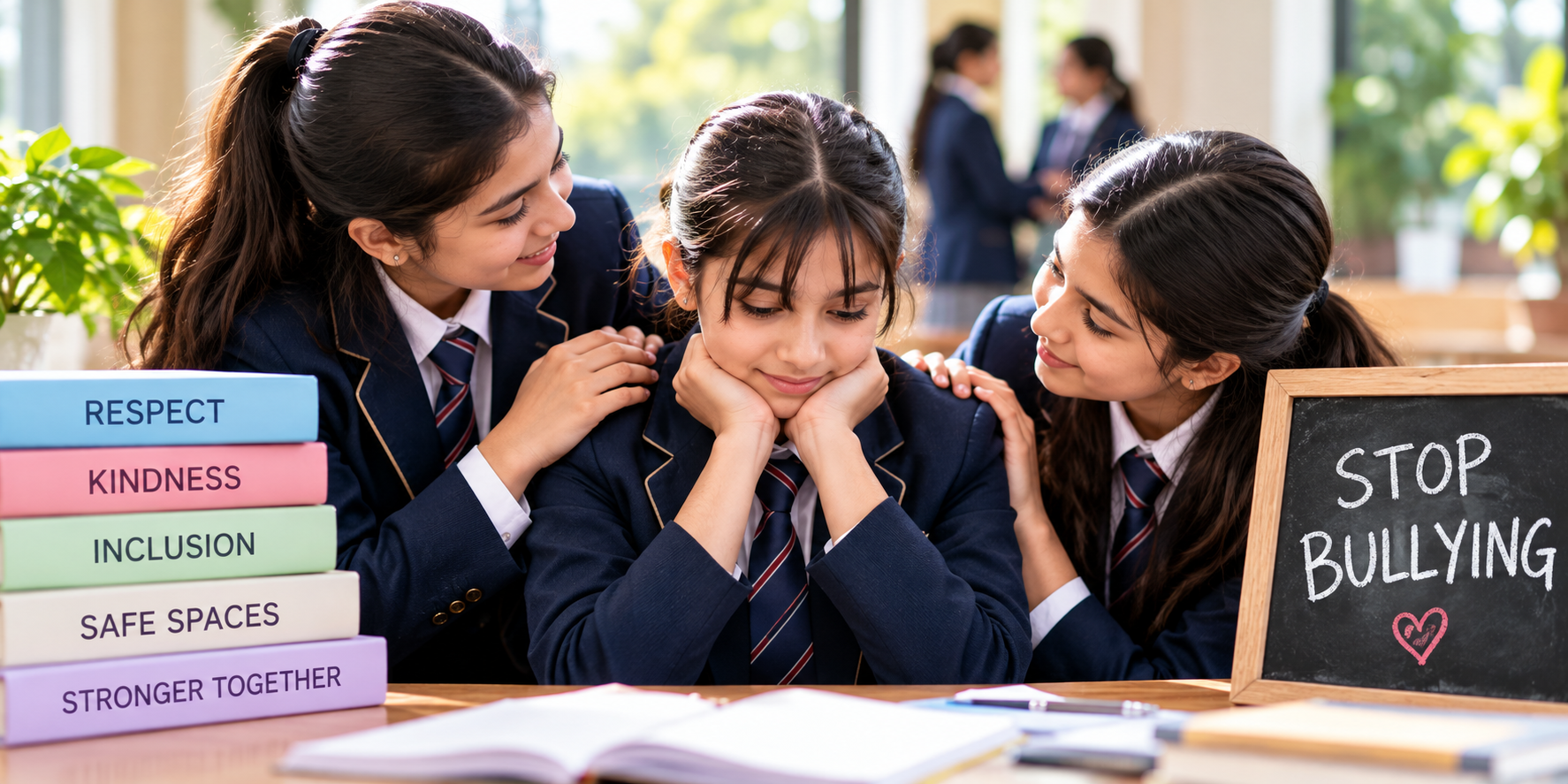
Bullying can affect students’ sense of safety, confidence, relationships, participation, and ability to concentrate on learning. In boarding schools, students may encounter one another throughout the day, making it important to provide reliable ways to seek help.
Bullying prevention and student safety in boarding schools depend on early reporting, consistent adult supervision, and clear responses to concerns. Students should know that they can approach a teacher, counsellor, house parent, warden, or designated safeguarding professional.
Anti-bullying frameworks in boarding schools also help staff understand their responsibilities. Written procedures can clarify how to document concerns, assess immediate safety needs, involve appropriate safeguarding personnel, communicate with families when suitable, and monitor whether further support is necessary.
A supportive school culture encourages students to treat one another respectfully and understand that reporting bullying is a responsible action.
7 Essential Strategies for Student Safety
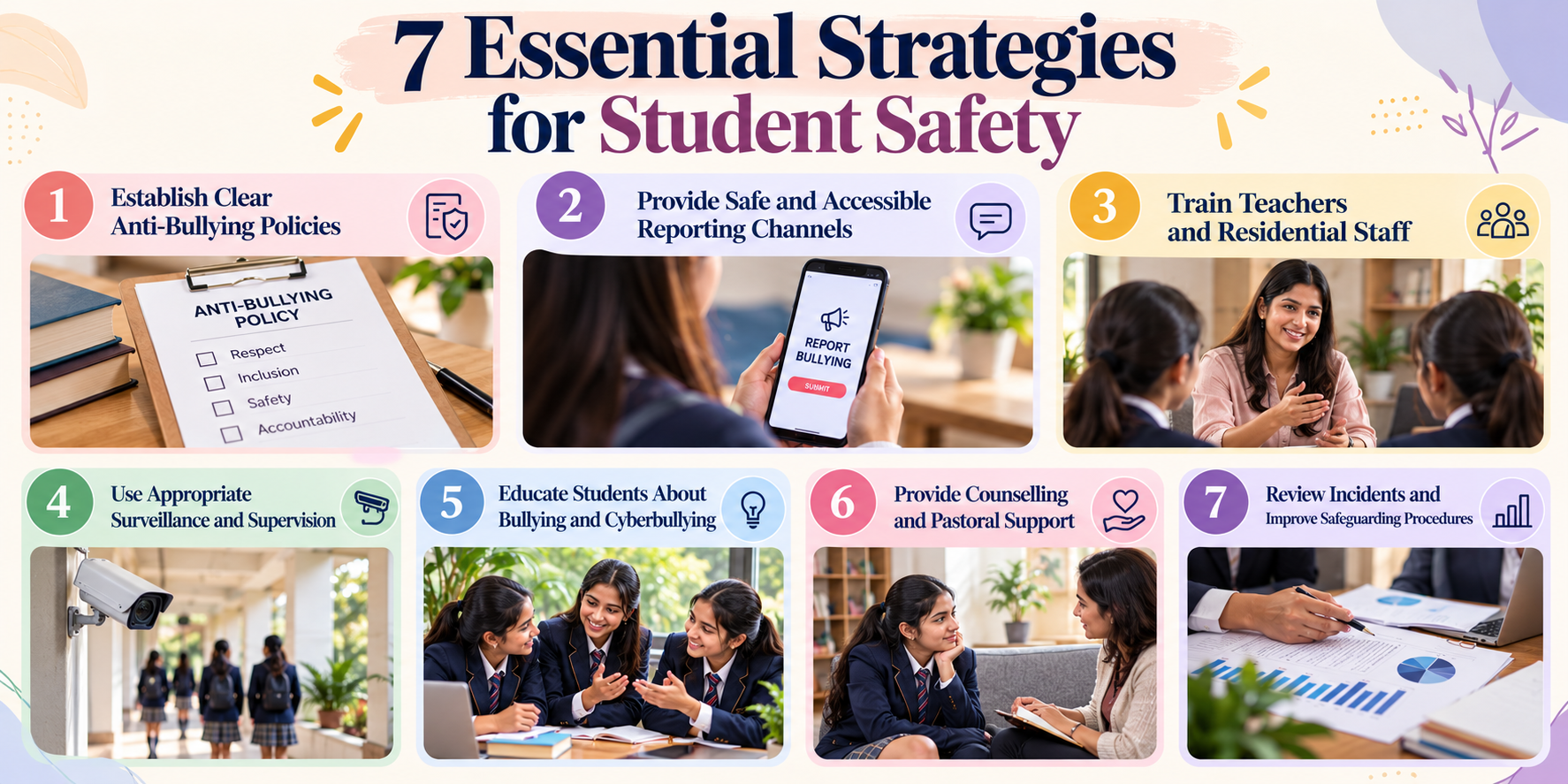
1. Establish Clear Anti-Bullying Policies
Clear anti-bullying policies provide the foundation for effective prevention. Students, parents, teachers, and residential staff should understand what bullying means, which behaviours are unacceptable, and how concerns can be reported.
Anti-bullying frameworks in boarding schools should explain the process for investigating reports, protecting affected students, documenting incidents, and determining appropriate consequences or restorative measures.
Policies should address physical intimidation, verbal harassment, social exclusion, discriminatory behaviour, online harassment, and misuse of personal information.
Schools should communicate these rules during student orientation and review them regularly. Policies are more effective when students know how to access them and trust that concerns will be handled fairly.
2. Provide Safe and Accessible Reporting Channels
Students may hesitate to report bullying because they fear retaliation, embarrassment, or not being believed. Schools should provide several accessible reporting options so students can choose a suitable way to ask for help.
These options may include speaking with a trusted adult, contacting a designated safeguarding lead, requesting a counselling appointment, or using an established reporting form.
Anti-bullying frameworks in boarding schools should explain what happens after a report is received. Students should know that staff will assess the concern, take suitable protective steps, and share information only with people who need it for safeguarding or investigation purposes.
Schools should not promise absolute confidentiality when a report indicates that a student may be at risk. Instead, they should explain privacy limits in age-appropriate language and follow applicable safeguarding requirements.
3. Train Teachers and Residential Staff
Teachers, wardens, house parents, coaches, and other residential staff can play an important role in identifying and responding to bullying.
Training should help staff recognise patterns of intimidation, repeated exclusion, harassment, and cyberbullying. It should also explain how to listen to students, record concerns accurately, avoid making premature assumptions, and refer cases to the appropriate safeguarding personnel.
Effective anti-bullying frameworks in boarding schools include regular training rather than relying only on induction sessions. Staff should understand the school’s reporting process and know how to respond when a concern occurs outside normal classroom hours.
Consistent staff responses help students understand that safeguarding rules apply throughout campus life.
4. Use Appropriate Surveillance and Supervision
Surveillance protocols in boarding schools can support safeguarding when they are lawful, proportionate, transparent, and carefully managed. Appropriate supervision may include trained staff presence in shared areas, routine checks under established policies, and CCTV monitoring in suitable common spaces where permitted.
Monitoring should be guided by a clear purpose, access controls, retention rules, and applicable privacy and child-protection requirements.
Cameras should not be installed in bedrooms, bathrooms, changing rooms, or other places where students reasonably expect privacy. Schools should not use surveillance as a substitute for trusted adults, accessible reporting channels, or effective investigations.
Anti-bullying frameworks in boarding schools should explain how monitoring information is handled, who is authorised to access it, and how concerns identified through supervision are referred to safeguarding staff.
5. Educate Students About Bullying and Cyberbullying
Student awareness programmes can help students recognise harmful behaviour and understand how to respond safely. Workshops, classroom discussions, assemblies, and age-appropriate activities can explain respectful communication, consent, digital responsibility, and the importance of reporting concerns.
Cyberbullying prevention in schools is especially important because harmful behaviour can occur through messaging apps, social media, online games, and shared digital spaces.
Students should learn not to forward humiliating content, share private information without permission, or participate in online harassment. They should also understand how to seek adult support when digital interactions become threatening or distressing.
Anti-bullying frameworks in boarding schools work best when students understand both the rules and the reasons behind them.
6. Provide Counselling and Pastoral Support
Students affected by bullying may need emotional support alongside practical safeguarding measures. Schools should provide access to trusted adults and, where available, qualified counsellors who can assess individual needs and recommend appropriate support.
Pastoral care in residential schools can include check-ins, mentoring, support with friendships, and referrals to specialist services when necessary.
Students accused of bullying may also need guidance to understand the impact of their behaviour and learn more appropriate ways to interact with others. This does not remove the need for accountability or protective action.
Anti-bullying frameworks in boarding schools should focus on safety, fair procedures, appropriate consequences, and follow-up support for everyone involved.
7. Review Incidents and Improve Safeguarding Procedures
An effective safeguarding framework should be reviewed regularly. Schools can examine incident records, reporting patterns, student feedback, and staff observations to identify areas where procedures may need improvement.
Reviews should protect student privacy and follow applicable data-protection requirements. The purpose is to identify recurring concerns, improve supervision, strengthen staff training, and make reporting channels more accessible.
Anti-bullying frameworks in boarding schools should also include follow-up checks after an incident. Schools need to consider whether the behaviour has stopped, whether affected students feel safe, and whether additional support or protective measures are required.
Regular evaluation helps schools move beyond written policies and develop practical systems that respond to students’ actual experiences.
Surveillance Protocols and Student Privacy
Surveillance protocols in boarding schools should support student safety without creating unnecessary intrusion into private life. Monitoring must be based on legitimate safeguarding needs and comply with relevant laws, school policies, and privacy requirements.
Schools considering CCTV or other monitoring measures should establish:
- Clear purpose: Explain why monitoring is necessary and which areas it covers.
- Appropriate locations: Restrict CCTV to suitable common areas and avoid private spaces.
- Restricted access: Limit access to authorised personnel with a legitimate reason.
- Secure records: Protect recordings and establish appropriate retention and deletion rules.
- Transparent policies: Inform students and parents about monitoring arrangements.
- Human supervision: Ensure monitoring complements staff presence, reporting, and investigation procedures.
Surveillance alone cannot prevent every incident. Students need trusted adults, fair reporting processes, and confidence that concerns will be addressed respectfully.
The Role of Teachers, Wardens, and Parents
Teachers and residential staff should model respectful behaviour, respond promptly to concerns, and follow safeguarding procedures. They should listen carefully, record relevant information, and refer cases to designated staff rather than attempting to manage serious incidents informally.
Parents can help by discussing respectful relationships with their children, encouraging them to seek support, and reporting concerns through the school’s established channels.
Students should be encouraged to support peers safely, avoid participating in harmful behaviour, and seek adult help when they witness bullying. They should not be expected to investigate incidents or confront potentially unsafe situations themselves.
When schools, families, and students understand their respective responsibilities, anti-bullying frameworks in boarding schools can become part of everyday campus culture rather than policies that are consulted only after an incident.
Conclusion
Anti-bullying frameworks in boarding schools are essential for protecting student wellbeing and creating a respectful residential community. Clear policies, safe reporting channels, staff training, student awareness, appropriate supervision, counselling, and regular reviews can help schools respond to bullying more effectively.
Bullying prevention and student safety in boarding schools require a balanced approach that combines accountability with support and respects students’ privacy. When safeguarding procedures are understood and consistently followed, schools can build an environment where students feel safer seeking help, developing friendships, and participating in school life.
Frequently Asked Questions
Q1. What are anti-bullying frameworks in boarding schools?
Ans: Anti-bullying frameworks in boarding schools are policies and procedures designed to prevent bullying, provide reporting channels, protect students, guide investigations, and ensure appropriate follow-up support.
Q2. How can boarding schools prevent bullying?
Ans: Schools can establish clear policies, train staff, provide accessible reporting systems, educate students, supervise shared spaces appropriately, and respond consistently to concerns.
Q3. Are surveillance protocols necessary in boarding schools?
Ans: Appropriate supervision and, where lawful and justified, CCTV in suitable common areas may support safeguarding. Surveillance should be proportionate, transparent, privacy-conscious, and combined with staff training and effective reporting systems.
Q4. How should students report bullying?
Ans: Students should be able to approach a trusted teacher, counsellor, warden, house parent, or designated safeguarding professional. Schools should explain how reports are handled and what support is available.
Q5. How can schools prevent cyberbullying?
Ans: Schools can provide digital-safety education, clear online-conduct rules, accessible reporting channels, and appropriate support for affected students. They should also respond to relevant online behaviour under their policies and applicable laws.