




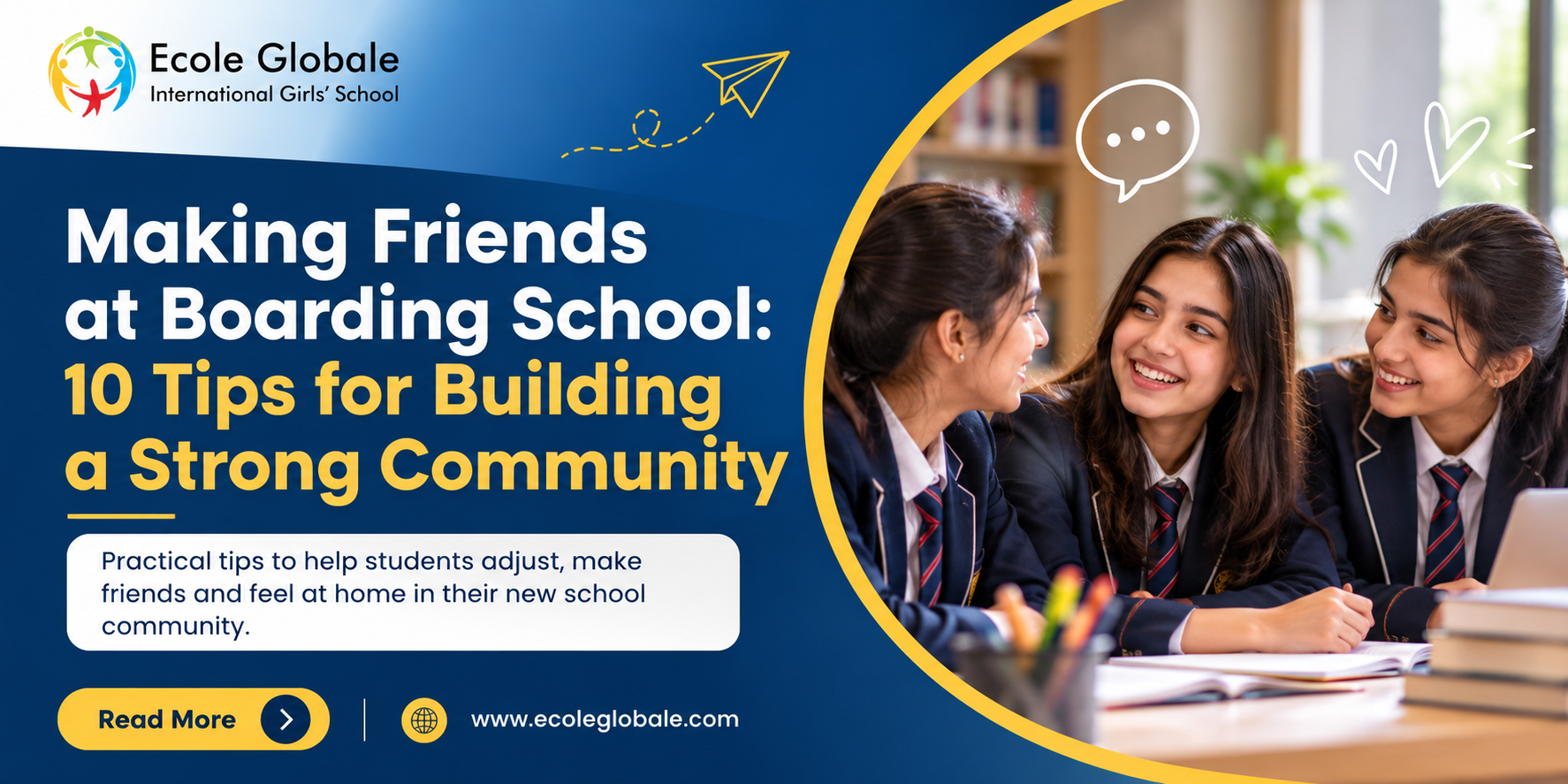
Starting life at a boarding school can be exciting, but meeting new people and adjusting to an unfamiliar environment may take time. Students leave behind familiar friends, family routines, and neighbourhoods to become part of a new community. Learning about Making Friends at Boarding School can help students feel more comfortable, develop confidence, and enjoy their residential school experience.
Making friends at boarding school is not just about meeting classmates. It also involves building trust, respecting differences, participating in activities, and developing meaningful relationships. A positive boarding school social life can help students feel included, while building community at boarding school encourages cooperation, kindness, and a shared sense of belonging.
Whether students are joining a boarding school for the first time or returning after a break, a few practical steps can help them develop friendships and settle into their new environment.
Table of Contents
- Why Making Friends at Boarding School Matters
- Start Conversations With Other Students
- Participate in Group Activities
- Build Community at Boarding School Through Shared Experiences
- Be Yourself and Respect Differences
- Develop Good Communication Skills
- Handle Conflicts in a Healthy Way
- Overcome Shyness and Feelings of Loneliness
- How Schools Can Support Boarding School Social Life
- Tips for Parents of New Boarding School Students
- Frequently Asked Questions
1. Why Making Friends at Boarding School Matters
Friendships play an important role in helping students adjust to residential school life. Having someone to talk to, study with, or share activities with can make a new environment feel more welcoming.
Making friends at boarding school can help students develop communication skills, empathy, teamwork, and confidence. Friendships also provide opportunities to learn how to cooperate, respect different opinions, and solve everyday disagreements.
A healthy boarding school social life can complement academic learning by giving students opportunities to develop interpersonal skills outside the classroom.
Friendships do not need to happen immediately. Some students connect with others quickly, while others prefer to observe and become comfortable gradually. Both experiences are normal.
2. Start Conversations With Other Students
One of the easiest ways to begin making friends at boarding school is to start small conversations. Students do not need to be exceptionally outgoing to make meaningful connections.
Simple questions about classes, hobbies, sports, books, or school activities can create opportunities to talk.
For example, a student might ask a classmate:
- Which subject do you enjoy most?
- Do you participate in any school clubs?
- Would you like to study together?
- Which sports or activities do you enjoy?
- Have you attended this school for a long time?
A friendly greeting, a smile, or an offer to help with a small task can also make interactions easier.
Students should remember that friendships develop through repeated interactions. Talking briefly with classmates each day can gradually lead to more comfortable conversations and stronger connections.
3. Participate in Group Activities
Group activities offer natural opportunities for students to meet others who share similar interests. Sports, music, drama, art, quizzes, and school clubs can help students connect without feeling pressured to start conversations from scratch.
Participation can also improve confidence and help students discover new interests.
For students interested in making friends at boarding school, joining one or two activities they genuinely enjoy may be more helpful than trying to participate in everything.
Team activities encourage cooperation and provide opportunities to celebrate achievements together. Creative activities can also help students express themselves and learn about their classmates.
A balanced boarding school social life includes time for activities, academic responsibilities, rest, and personal interests.
4. Building Community at Boarding School Through Shared Experiences
Building community at boarding school begins with everyday experiences. Eating meals together, attending school events, participating in team projects, and supporting classmates can help students develop a stronger sense of belonging.
Residential schools often provide opportunities for students to interact beyond classroom hours. These shared experiences can help classmates become friends and encourage cooperation across different groups.
Students can contribute to building community at boarding school by:
- Welcoming new students.
- Including classmates in group activities.
- Sharing responsibilities fairly.
- Respecting shared living spaces.
- Offering help when someone needs support.
- Celebrating classmates’ achievements.
- Treating others with kindness and fairness.
A welcoming community does not require everyone to have the same interests or personality. Students can form different friendships while still respecting and supporting one another.
5. Be Yourself and Respect Differences
Students may feel pressure to change their personality or interests to fit into a new group. However, lasting friendships are more likely to develop when students feel comfortable expressing themselves respectfully.
Making Friends at Boarding School does not mean trying to impress everyone. It means finding people with whom students can share interests, communicate openly, and feel accepted.
Boarding schools may bring together students from different regions, languages, family backgrounds, and cultures. These differences create opportunities to learn about new perspectives and traditions.
Students can build stronger relationships by listening without judgement, asking respectful questions, and avoiding assumptions about others.
It is also important to understand that not every classmate will become a close friend. Having a small circle of trusted friends is perfectly normal.
6. Develop Good Communication Skills
Good communication helps students form friendships and maintain healthy relationships. It includes speaking respectfully, listening carefully, expressing feelings appropriately, and understanding other people’s perspectives.
Students can improve communication by giving others time to speak, asking questions, and showing interest in what classmates share.
For example, if a friend is talking about a difficult day, listening without immediately offering criticism can help that person feel understood.
Healthy communication also involves expressing personal boundaries. Students should feel comfortable saying no to activities they do not want to join and asking others to respect their belongings, privacy, and preferences.
An important part of building community at a boarding school is creating an environment where students feel comfortable speaking up and treating each other respectfully.
7. Handle Conflicts in a Healthy Way
Disagreements are a normal part of friendships. Students may have different preferences about room arrangements, group assignments, games, shared responsibilities, or personal boundaries.
Learning to manage disagreements can help students maintain positive relationships.
When a conflict occurs, students can:
- Stay calm before responding.
- Listen to the other person’s point of view.
- Explain their own feelings respectfully.
- Focus on finding a practical solution.
- Apologise when appropriate and accept sincere apologies.
Students should avoid gossip, insults, exclusion, or spreading private information to win an argument.
If a disagreement involves bullying, threats, repeated harassment, or concerns about personal safety, students should seek help from a trusted teacher, counsellor, houseparent, or other responsible adult.
A healthy boarding school social life should allow students to feel safe, respected, and included.
8. Overcome Shyness and Feelings of Loneliness
Some students find it difficult to approach unfamiliar people, particularly during their first few weeks at boarding school. They may worry about being rejected, saying the wrong thing, or not finding people with similar interests.
These feelings do not mean a student will struggle to make friends permanently.
Students can take small steps to become more comfortable, such as greeting a classmate, sitting with different people during meals, joining a club, or asking someone to work together on an assignment.
Setting manageable goals can make making friends at boarding school feel less overwhelming. For example, a student might aim to speak to one new person or participate in one group activity each day.
It is also important to balance social interaction with personal time. Students do not need to be surrounded by friends all the time to belong to a community.
If loneliness continues or begins to affect sleep, learning, or everyday activities, students should speak with a trusted adult or school counsellor.
9. How Schools Can Support Boarding School Social Life
Schools can make the transition easier by creating opportunities for students to connect and feel included.
A positive boarding school social life depends not only on individual effort but also on the environment created by teachers, residential staff, and school leadership.
Schools can support students through:
Buddy Programmes
Pairing new students with trained student buddies can help them learn school routines, understand expectations, and identify people they can approach with questions.
Inclusive Group Activities
Clubs, sports, creative workshops, cultural celebrations, and team projects can bring students together around shared interests.
Supportive Residential Staff
Houseparents and other residential staff can help students navigate everyday disagreements, adjust to shared living arrangements, and find appropriate support when needed.
Anti-Bullying Policies
Clear behaviour expectations and reliable reporting procedures help students understand that harassment, intimidation, and repeated exclusion are not acceptable.
Counselling and Pastoral Support
Access to trusted adults gives students a place to discuss friendship difficulties, homesickness, or social concerns.
These measures can make Building Community at Boarding School a shared responsibility and help students feel more connected to school life.
10. Tips for Parents of New Boarding School Students
Parents can support their children by encouraging realistic expectations about friendship. Remind them that developing meaningful relationships takes time and that they do not need to become friends with everyone.
Before joining, discuss ways to introduce themselves, participate in activities, and seek help if they feel uncomfortable.
After admission, ask open-ended questions about school experiences rather than focusing only on how many friends they have made.
For example, parents might ask:
- What was the most enjoyable part of your day?
- Did you try any new activities?
- Is there someone you enjoyed talking to?
- Is anything making you uncomfortable at school?
Parents should also encourage children to report bullying or persistent social difficulties to responsible school staff. Working together with the school can help address concerns before they become more difficult to manage.
Supporting Making Friends at Boarding School means giving children encouragement while allowing them to develop relationships at their own pace.
Conclusion
Making Friends at Boarding School is a gradual process that develops through everyday conversations, shared activities, mutual respect, and trust. Students can build meaningful relationships by being themselves, participating in school life, communicating clearly, and learning to manage disagreements constructively.
Building Community at Boarding School requires effort from students, teachers, residential staff, and families. A welcoming environment helps students feel accepted and encourages them to contribute positively to their school community.
A healthy Boarding School Social Life is not about being popular or having the largest group of friends. It is about developing supportive relationships, respecting differences, and feeling comfortable being part of a community.
Frequently Asked Questions
Q1. Is making friends at boarding school difficult?
Ans: It can feel challenging at first because students are meeting unfamiliar people and adjusting to a new environment. Starting conversations, joining activities, and giving friendships time to develop can make the process easier.
Q2. How can new students make friends at boarding school?
Ans: New students can introduce themselves to classmates, participate in clubs and sports, join group activities, and show interest in other people’s experiences. Small, regular interactions can gradually lead to meaningful friendships.
Q3. How does building community at boarding school benefit students?
Ans: Building community at boarding school can encourage belonging, cooperation, empathy, communication, and mutual respect. It can also help students feel more comfortable participating in academic and extracurricular activities.
Q4. What should students do if they feel lonely?
Ans: Students can speak with a trusted classmate, join an activity, or approach a teacher, houseparent, or counsellor. If loneliness continues or affects everyday life, seeking support is important.
Q5. How can schools improve boarding school social life?
Ans: Schools can offer buddy programmes, inclusive activities, supervised residential support, counselling, and clear anti-bullying procedures. These measures help students form healthy relationships and feel included.
Q6. Do students need many friends to feel included?
Ans: No. A few supportive friendships can be more valuable than a large social circle. Students should be encouraged to develop relationships that feel comfortable, respectful, and genuine.