





A child’s education is most effective when parents and teachers work together. While teachers guide students inside the classroom, parents provide support, encouragement and guidance at home. Strong Parent-School Communication helps connect these two important environments and ensures that everyone remains informed about a child’s academic progress, behaviour and overall development.
For families exploring Schools in Dehradun, understanding how a school communicates with parents is an important part of the admission process. Regular updates, parent-teacher meetings, digital communication platforms and individual discussions help parents stay involved in their child’s educational journey.
What Is Parent-School Communication?
Parent-School Communication refers to the regular exchange of information between parents, teachers and school management. It allows both sides to discuss a student’s academic performance, attendance, behaviour, achievements and areas requiring improvement.
Effective Parent-School Communication is not limited to sharing examination results or sending school notices. It involves continuous interaction, listening to parental concerns and working together to support students.
In boarding schools, communication becomes even more important because students spend a significant amount of time away from their families. Parents need reliable updates about academic activities, residential routines, school events and student wellbeing.
Why Is Parent-School Communication Important?
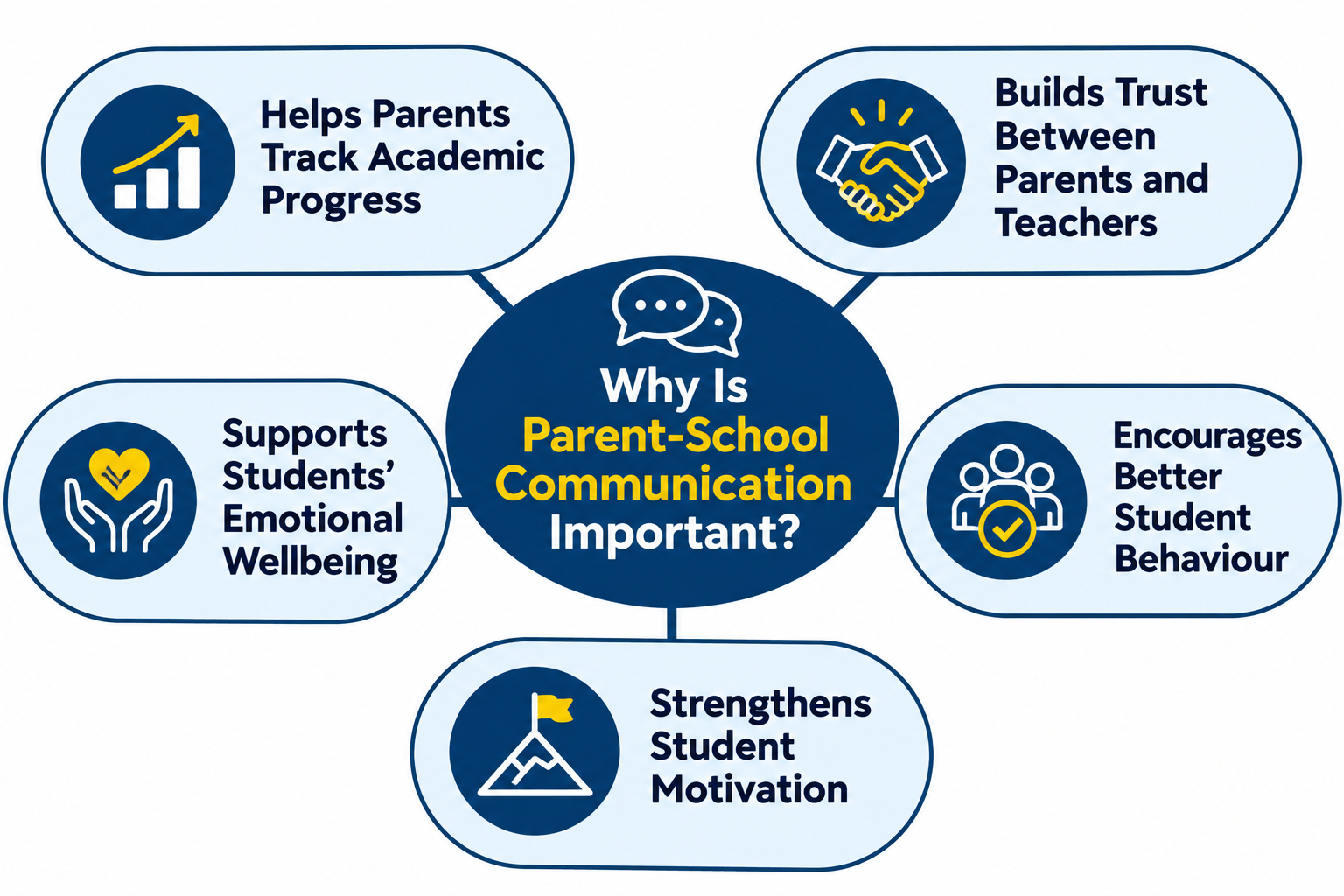
A strong relationship between families and educators creates a supportive learning environment. Consistent Parent-School Communication offers several benefits.
1. Helps Parents Track Academic Progress
Parents want to understand how their children are performing in different subjects. Regular updates from teachers help families identify academic strengths and areas where additional support may be needed.
Through effective Parent-School Communication, teachers can share assessment results, classroom participation, assignment completion and individual progress.
2. Builds Trust Between Parents and Teachers
Trust develops when schools communicate clearly and respond to parental questions. Transparent discussions help parents understand teaching methods, school expectations and student performance.
Good Parent-School Communication also gives teachers an opportunity to understand a student’s interests, learning preferences and challenges outside school.
3. Supports Students’ Emotional Wellbeing
Academic performance is only one part of a student’s development. Emotional wellbeing, friendships, confidence and adjustment to school life also deserve attention.
Regular Parent-School Communication helps teachers and parents identify changes in a student’s behaviour or participation. Early discussions can help them provide appropriate guidance and support.
4. Encourages Better Student Behaviour
Children benefit when parents and teachers maintain consistent expectations. If a student experiences difficulty with discipline, classroom participation or time management, both sides can discuss practical ways to address the concern.
Constructive Parent-School Communication focuses on understanding the reason behind a problem rather than simply assigning blame.
5. Strengthens Student Motivation
Recognition and encouragement can improve students’ confidence. When parents receive updates about achievements, improvements and participation, they can acknowledge their child’s efforts at home.
This connection between home and school creates a more supportive environment for learning.
How Schools in Dehradun Keep Parents Informed
Modern Schools in Dehradun use different communication methods to keep families connected with school activities. The methods may vary depending on school policies, infrastructure and student requirements.
1. Regular Parent-Teacher Meetings
Parent-teacher meetings are among the most common methods of Parent-School Communication. These meetings allow parents to discuss academic performance, classroom behaviour, attendance and individual development directly with teachers.
During these interactions, parents can:
- Understand their child’s academic progress.
- Discuss subject-wise performance.
- Ask about learning difficulties.
- Receive suggestions for academic improvement.
- Share relevant concerns with teachers.
Regular meetings make communication more personal and allow both sides to develop practical solutions.
2. Digital School Communication Platforms
Technology has made Parent-School Communication faster and more convenient. Many schools use digital platforms to share notices, attendance information, examination results, homework updates and event announcements.
Depending on the school’s system, parents may receive information through:
- School mobile applications.
- Parent portals.
- Email notifications.
- SMS alerts.
- Official school communication groups.
These platforms help parents access important information without having to visit the school for every routine update.
3. Academic Progress Reports
Progress reports provide a structured overview of a student’s academic performance. They may include examination marks, subject-wise assessments, teacher observations and participation.
Schools can use these reports as an important part of Parent-School Communication, helping families understand how students are progressing throughout the academic year.
Parents should look beyond marks and consider attendance, classroom participation, improvement and learning habits.
4. School Newsletters and Circulars
Newsletters and official circulars help parents stay informed about upcoming activities, important announcements, competitions, holidays and school celebrations.
These communication methods are useful because they provide consistent information to the entire parent community.
For families with children studying in Boarding Schools in Dehradun, regular announcements can also help them understand campus activities and important school dates.
5. Individual Discussions with Teachers
Sometimes, general meetings and progress reports are not enough to address a student’s specific needs. Individual discussions allow parents and teachers to talk about particular academic, behavioural or personal concerns.
Effective Parent-School Communication should provide suitable opportunities for these conversations while respecting student privacy.
6. Updates About Extracurricular Activities
Education extends beyond classroom learning. Sports, music, dance, debates, art, leadership activities and cultural programmes contribute to students’ overall development.
Schools can keep parents informed through event announcements, participation updates, achievement reports and photographs shared through authorised communication channels.
These updates help families appreciate their children’s interests and accomplishments outside academics.
Parent-School Communication in Boarding Schools
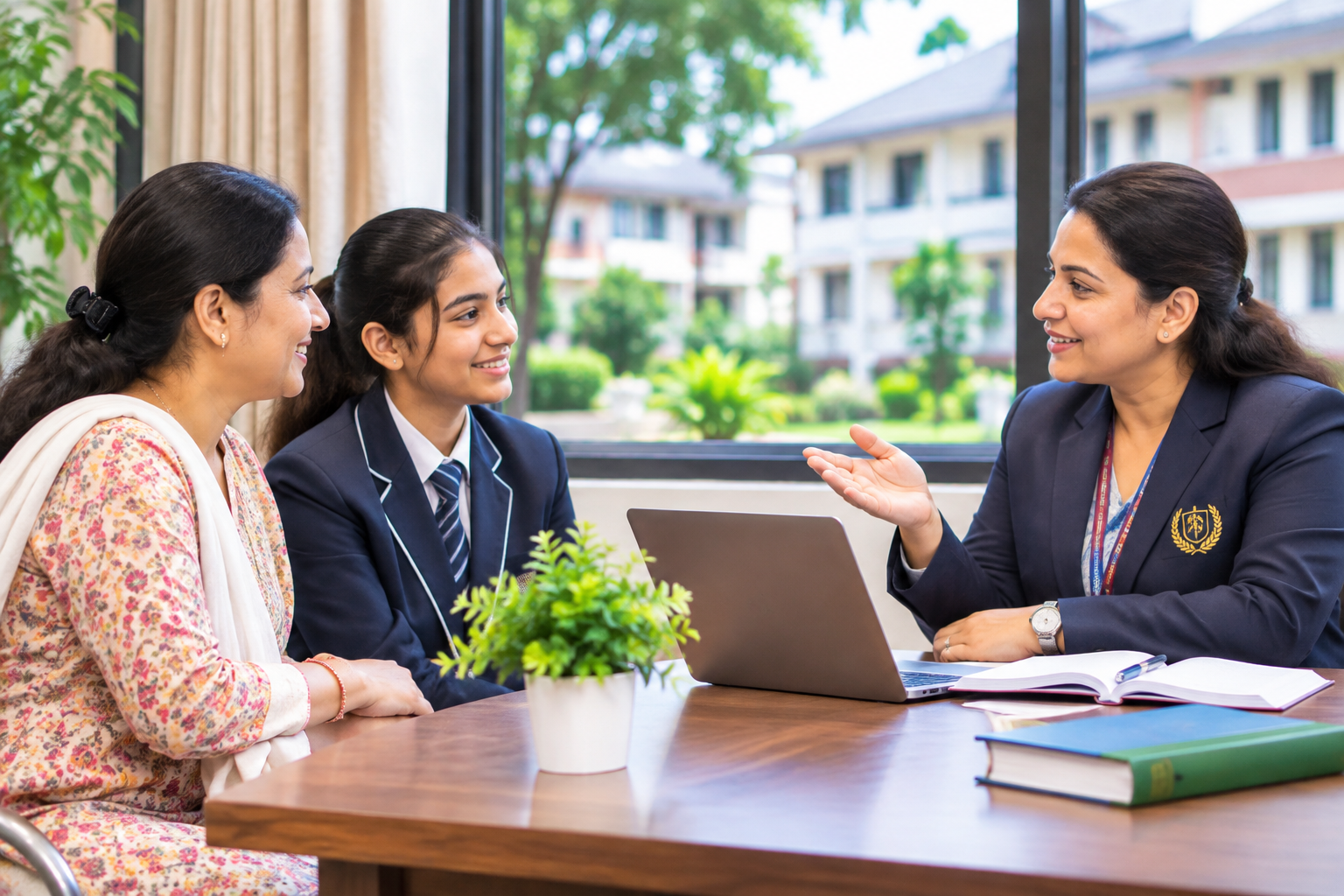
Communication plays a particularly important role in boarding education. Since students live on campus, parents may not have daily opportunities to interact with them or observe their routines.
For this reason, Parent-School Communication in boarding schools should cover more than examination results.
Important areas include:
- Academic development: Subject performance, assessments and learning progress.
- Residential life: General information about hostel routines and campus activities.
- Health and wellbeing: Appropriate updates about relevant student welfare concerns.
- Attendance: Information about attendance and authorised leave.
- Extracurricular participation: Updates about sports, clubs and cultural activities.
- Important announcements: Examination schedules, holidays and school events.
Parents considering Boarding Schools in Dehradun should ask about the school’s communication policies, official contact channels and procedures for urgent situations.
The Role of Parents in Effective School Communication

Communication should not be the responsibility of teachers and school management alone. Parents also play an important role in maintaining a healthy relationship with the school.
Here are some ways parents can participate:
- Attend scheduled parent-teacher meetings.
- Read school notices and announcements carefully.
- Respond to important school communications on time.
- Share relevant concerns with the appropriate teachers.
- Encourage children to discuss their school experiences.
- Appreciate teachers’ feedback and discuss improvement strategies.
- Use official communication channels for school-related queries.
Active parental participation makes Parent-School Communication more meaningful and productive.
Challenges in Parent-School Communication and How Schools Can Address Them
Even when schools have communication systems in place, certain challenges may affect the flow of information.
| Common challenge | Possible solution |
|---|---|
| Delayed responses | Establish clear response timelines |
| Missed announcements | Use consistent official communication channels |
| Limited parent participation | Offer scheduled and flexible meeting options |
| Misunderstandings | Encourage direct and respectful discussions |
| Too many messages | Share organised and relevant updates |
| Privacy concerns | Use authorised channels and protect student information |
A clear communication policy helps schools maintain consistency and ensures that important information reaches the right people.
What Parents Should Ask About Communication Before Choosing a School
When comparing Schools in Dehradun, parents should understand how the institution maintains contact with families.
Consider asking these questions:
- How frequently are parent-teacher meetings organised?
- Does the school provide an online parent portal or mobile application?
- How are academic progress reports shared?
- Whom should parents contact for academic or residential concerns?
- How does the school communicate urgent announcements?
- Are parents informed about extracurricular activities and student achievements?
- What communication arrangements are available for boarding students?
The answers can help parents understand whether the school’s communication approach matches their expectations.
Conclusion
Strong Parent-School Communication is an essential part of a student’s educational experience. Regular discussions, academic updates, digital platforms and parent-teacher meetings help families remain connected with their children’s progress and school activities.
For parents exploring Schools in Dehradun, communication practices should be considered alongside academics, teaching quality, facilities and student support. A school that encourages transparent and respectful interaction can create a stronger partnership between families and educators.
Ultimately, effective Parent-School Communication is about working together to understand students’ needs, recognise their achievements and support their continuous development.
Frequently Asked Questions
Q1. What is Parent-School Communication?
Ans: Parent-School Communication is the regular exchange of information between parents, teachers and school management about a student’s academic progress, behaviour, attendance and overall development.
Q2. Why is Parent-School Communication important for students?
Ans: It helps parents understand their child’s progress, identify learning difficulties early and work with teachers to provide better academic and emotional support.
Q3. How do schools in Dehradun keep parents informed?
Ans: Schools in Dehradun may use parent-teacher meetings, mobile applications, emails, SMS notifications, progress reports and official school announcements.
Q4. How often should parents communicate with teachers?
Ans: Parents should attend scheduled parent-teacher meetings and contact teachers whenever they have relevant concerns about academic performance, behaviour or student wellbeing.
Q5. Why is communication important in boarding schools?
Ans: In boarding schools, students live away from their families. Regular Parent-School Communication helps parents stay informed about academic progress, residential life, school activities and student wellbeing.