





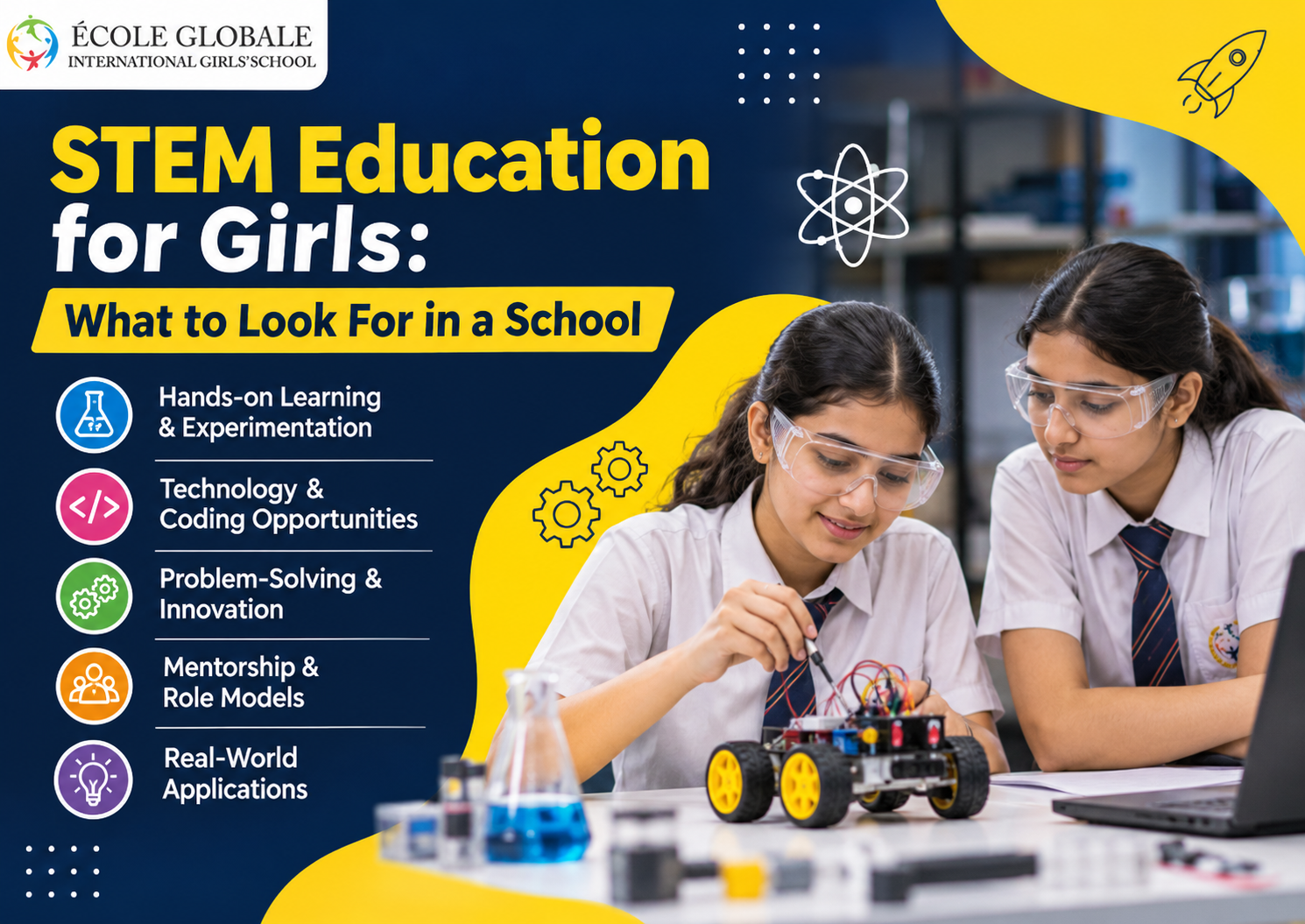
Science, Technology, Engineering and Mathematics (STEM) are important fields that shape the modern world. From artificial intelligence and robotics to healthcare and environmental research, STEM subjects influence many areas of everyday life. Providing students with opportunities to explore these subjects from an early age can help them develop practical knowledge, creativity and problem-solving abilities.
STEM Education for Girls is particularly important because it encourages girls to explore scientific concepts, experiment with new ideas and consider careers in technology, engineering, mathematics and research. Schools play an important role in creating an environment where girls can participate in STEM learning with confidence.
However, choosing a school that offers meaningful STEM learning requires more than checking whether science and mathematics are included in the curriculum. Parents should also consider laboratory facilities, teaching methods, technology access, practical activities and opportunities for independent projects.
Understanding what quality STEM Education for Girls should include can help parents make a more informed school choice.
1. A Strong Science and Mathematics Curriculum

A good STEM programme should begin with a strong foundation in science and mathematics. These subjects help students understand scientific principles, numerical relationships and logical reasoning.
When evaluating STEM Education for Girls, parents should check whether the school provides a structured curriculum covering physics, chemistry, biology and mathematics. Students should have opportunities to understand concepts through examples, experiments and practical applications.
A well-planned curriculum should also connect classroom learning with real-world situations. For example, students can explore how mathematical calculations are used in architecture, how scientific principles influence everyday technology and how biology helps explain environmental processes.
A strong academic foundation makes it easier for students to explore advanced STEM subjects in higher classes.
2. Well-Equipped Science Laboratories
Science laboratories are an important part of practical learning. Students need opportunities to observe experiments, handle suitable laboratory equipment and understand scientific processes beyond textbooks.
Parents exploring STEM Education for Girls should ask about the school’s physics, chemistry and biology laboratories. They should also check whether students regularly participate in supervised experiments.
Practical learning helps students develop observation, measurement, analytical thinking and the ability to interpret results. It also allows them to understand how scientific theories are applied in real situations.
A school should maintain appropriate safety procedures, provide suitable equipment and ensure that students receive guidance from trained teachers during laboratory activities.
3. Robotics, Coding and Computer Science
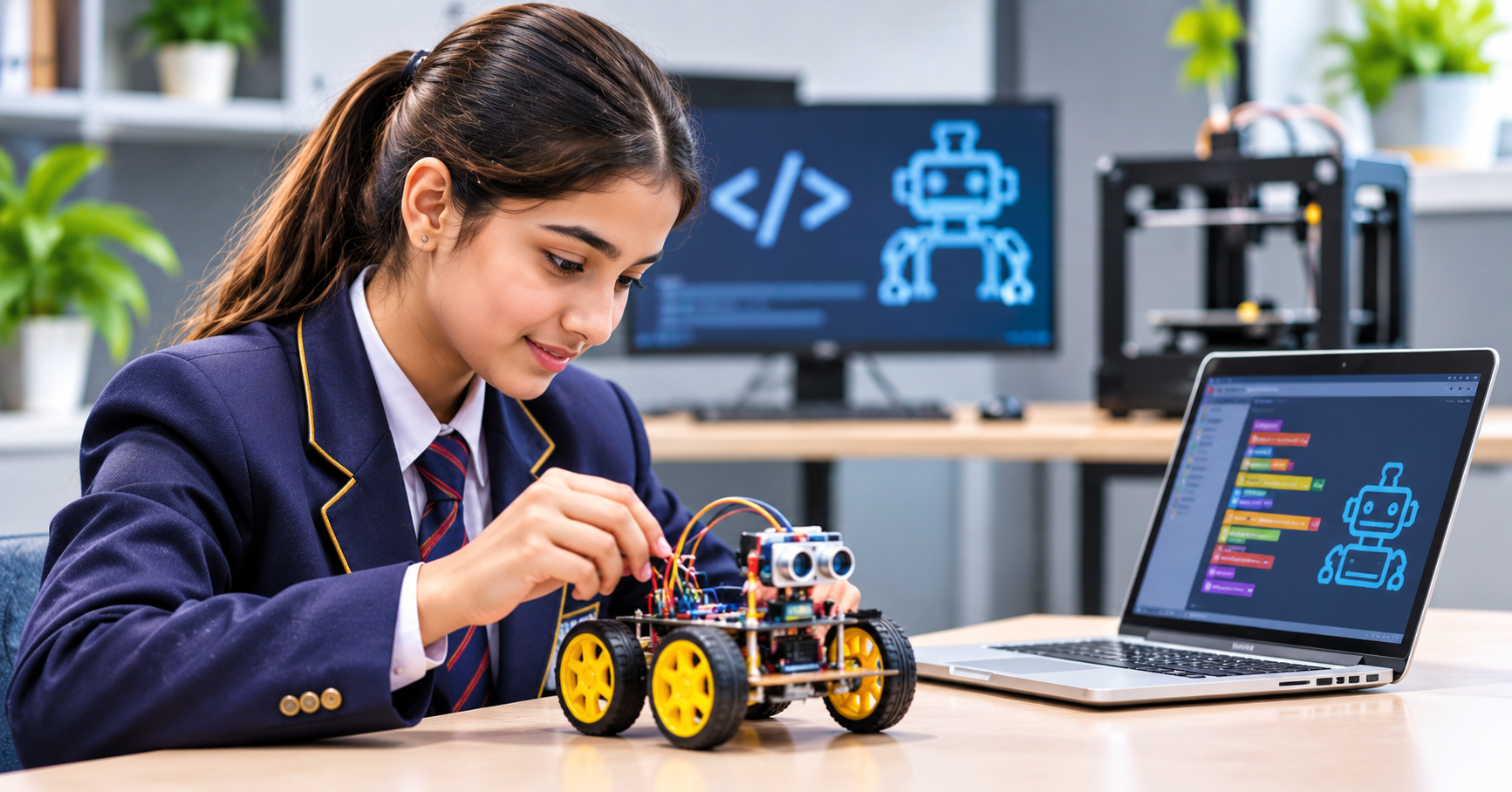
Technology is an essential part of modern STEM learning. Coding, robotics and computer science introduce students to computational thinking and digital problem-solving.
Schools offering effective STEM Education for Girls should provide age-appropriate opportunities to explore programming, basic algorithms, robotics and digital applications.
Students can begin with simple coding exercises before progressing towards more advanced projects. Robotics activities may involve designing basic models, understanding sensors and learning how different components work together.
Parents should check whether the school has computer laboratories, coding programmes, robotics kits and teachers who can guide students through practical activities.
These opportunities can help girls understand technology as something they can create and improve, rather than simply use.
4. Hands-On STEM Activities and Project-Based Learning
STEM learning becomes more meaningful when students apply classroom knowledge to practical challenges. Project-based learning allows students to investigate questions, develop ideas and create solutions.
For example, students may build simple models, design water filtration demonstrations, create basic electronic circuits or develop projects related to renewable energy.
Such activities are valuable for STEM Education for Girls because they encourage curiosity, experimentation and independent thinking.
Parents should ask whether the school regularly organises science exhibitions, innovation projects, mathematics activities and interdisciplinary assignments.
A useful STEM programme should give students opportunities to understand the process behind a project, including planning, testing, identifying problems and improving their work.
5. Qualified Teachers and Supportive Mentorship

Teachers have a major influence on how students understand and engage with STEM subjects. A supportive teacher can make complex concepts easier to understand and encourage students to explore topics beyond the classroom.
When assessing STEM Education for Girls, parents should consider the qualifications and experience of science, mathematics and computer science teachers.
It is also important to understand how teachers encourage participation. Students should feel comfortable asking questions, discussing ideas and learning from mistakes.
Schools can further strengthen STEM learning through mentorship programmes, guest lectures, workshops and interactions with professionals working in scientific and technical fields.
Mentorship can help girls understand different career pathways and see how classroom subjects connect with real professional opportunities.
6. Opportunities to Participate in STEM Competitions
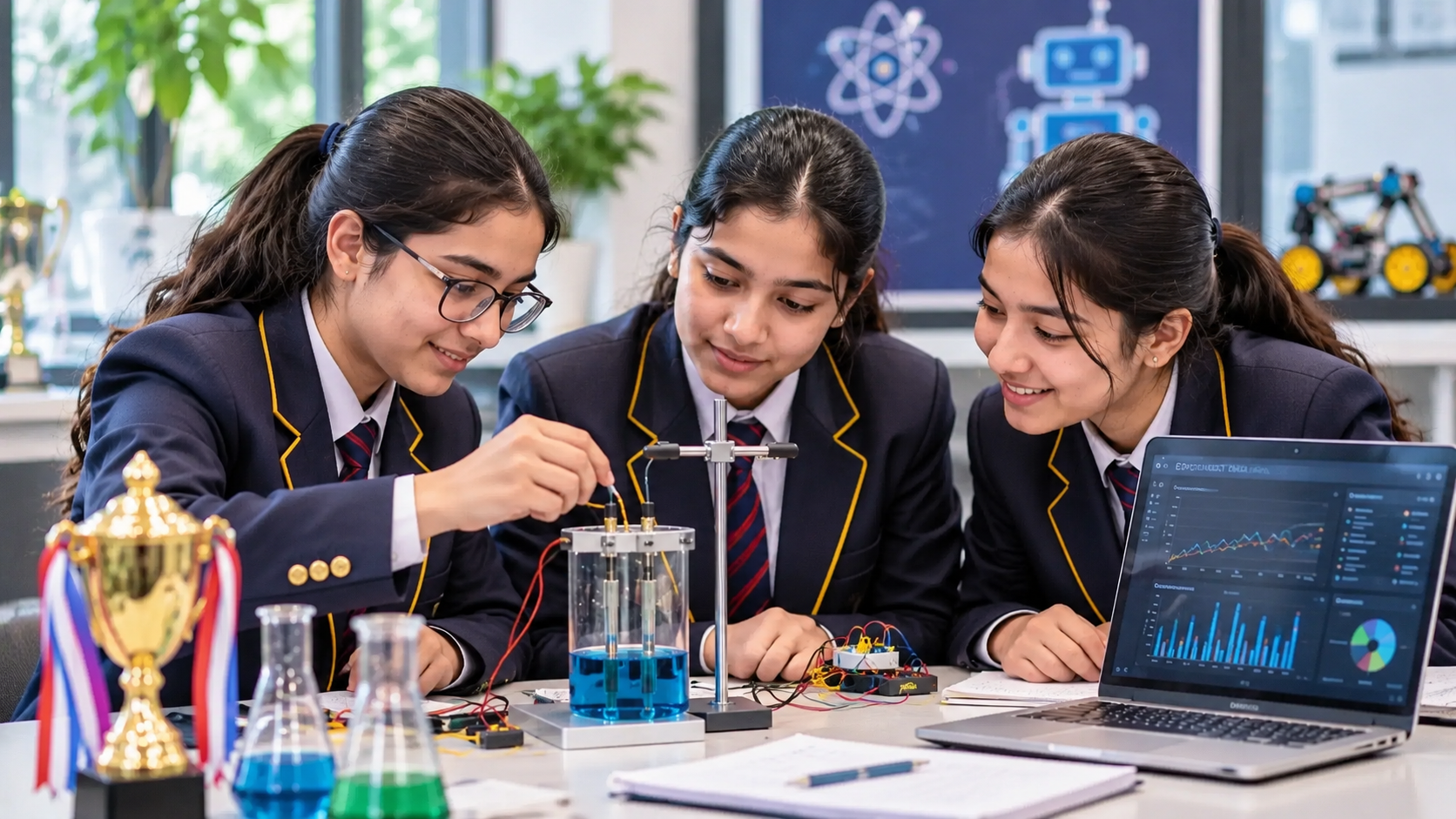
Competitions and exhibitions allow students to demonstrate their understanding and apply their knowledge to specific challenges.
Schools may organise science fairs, mathematics competitions, robotics events, coding challenges and innovation exhibitions. Participation can encourage preparation, teamwork, research and presentation skills.
These opportunities strengthen STEM Education for Girls by allowing students to explore their interests and share their projects with others.
Parents should ask whether students receive opportunities to participate in inter-school competitions, science exhibitions and other academic events.
However, competitions should not be the only measure of a school’s STEM programme. Regular classroom learning and practical experiences are equally important.
7. Equal Participation and Encouragement
A supportive learning environment is essential for meaningful STEM education. Every student should have opportunities to participate in experiments, technology activities, classroom discussions and project work.
STEM Education for Girls should encourage curiosity and participation without limiting students according to traditional assumptions about which subjects or careers are suitable for them.
Parents can observe whether girls receive equal access to laboratory equipment, coding activities, robotics projects and leadership responsibilities during STEM assignments.
Schools should also encourage students to ask questions, share different approaches and explore subjects according to their interests.
An inclusive environment helps students recognise their abilities and make informed decisions about future academic choices.
8. Access to Modern Technology and Learning Resources
Technology resources can support STEM learning when they are used effectively. Computer laboratories, educational software, digital learning platforms and suitable scientific equipment can help students explore concepts in different ways.
When evaluating STEM Education for Girls, parents should ask how frequently students use these resources and whether technology is integrated into regular classroom activities.
Schools may also provide access to digital simulations, educational videos, online research tools and interactive learning platforms.
However, having modern equipment alone does not guarantee quality education. The important factors are how resources are maintained, how teachers use them and whether students get meaningful opportunities to learn through them.
9. Connections Between STEM Subjects and Real-World Problems

One of the most useful aspects of STEM learning is its connection with everyday challenges. Students should understand how science, technology, engineering and mathematics contribute to solving practical problems.
For example, environmental science projects can introduce students to water conservation, waste management and renewable energy. Mathematics can help them analyse data, while technology can support research and presentation.
This approach makes STEM Education for Girls more relevant and encourages students to think critically about the world around them.
Parents should look for schools that connect STEM subjects with practical applications rather than focusing only on textbook exercises.
10. Career Guidance and Future STEM Opportunities
A good STEM programme should help students understand the range of academic and career opportunities available in these fields.
STEM-related pathways include engineering, medicine, biotechnology, computer science, artificial intelligence, environmental science, data science, architecture and scientific research.
Schools can support students through career counselling, subject-selection guidance, professional interactions and information about higher education options.
STEM Education for Girls should help students explore these possibilities based on their interests, strengths and academic goals.
Parents should check whether the school provides career guidance and encourages students to consider a wide range of STEM-related subjects and professions.
Why STEM Education Matters for Girls
STEM education develops more than subject knowledge. It encourages students to ask questions, analyse information, test ideas and approach challenges systematically.
Through STEM Education for Girls, students can develop several useful abilities:
- Critical thinking: Understanding problems and evaluating possible solutions.
- Problem-solving: Finding practical ways to address challenges.
- Creativity: Developing new ideas and exploring different approaches.
- Teamwork: Collaborating with classmates on experiments and projects.
- Digital literacy: Understanding and using technology responsibly.
- Independent learning: Exploring subjects and developing new knowledge.
These abilities are useful across academic subjects and many future career paths.
Conclusion
Choosing a school with a meaningful STEM programme involves looking beyond textbooks and laboratory equipment. Parents should consider the quality of teaching, practical learning opportunities, technology resources, mentorship, student participation and career guidance.
STEM Education for Girls should provide an environment where students can explore scientific ideas, develop technical skills and apply their knowledge to real-world challenges.
By selecting a school that supports practical learning, curiosity and equal participation, parents can help their daughters build a strong foundation for future academic opportunities in science, technology, engineering and mathematics.
Frequently Asked Questions
Q1. What is STEM Education for Girls?
Ans: STEM Education for Girls refers to learning opportunities in science, technology, engineering and mathematics that encourage girls to develop knowledge, practical skills and interest in these subjects.
Q2. Why is STEM education important for girls?
Ans: It helps girls develop critical thinking, creativity, problem-solving and digital skills while introducing them to a wide range of academic and career opportunities.
Q3. What should parents look for in a school’s STEM programme?
Ans: Parents should check science laboratories, coding and robotics facilities, qualified teachers, practical projects, technology resources, competitions and career guidance.
Q4. How can schools encourage girls to learn coding and robotics?
Ans: Schools can organise coding classes, robotics workshops, computer science projects and practical technology activities that allow students to learn through experimentation.
Q5. What careers can girls pursue after studying STEM subjects?
Ans: Girls can explore careers in engineering, medicine, biotechnology, artificial intelligence, computer science, environmental science, data science and scientific research.
Q6. At what age should girls start learning STEM subjects?
Ans: Girls can begin exploring STEM concepts during primary school through age-appropriate experiments, puzzles, building activities and basic technology projects. Learning can become more specialised as they progress through school.