



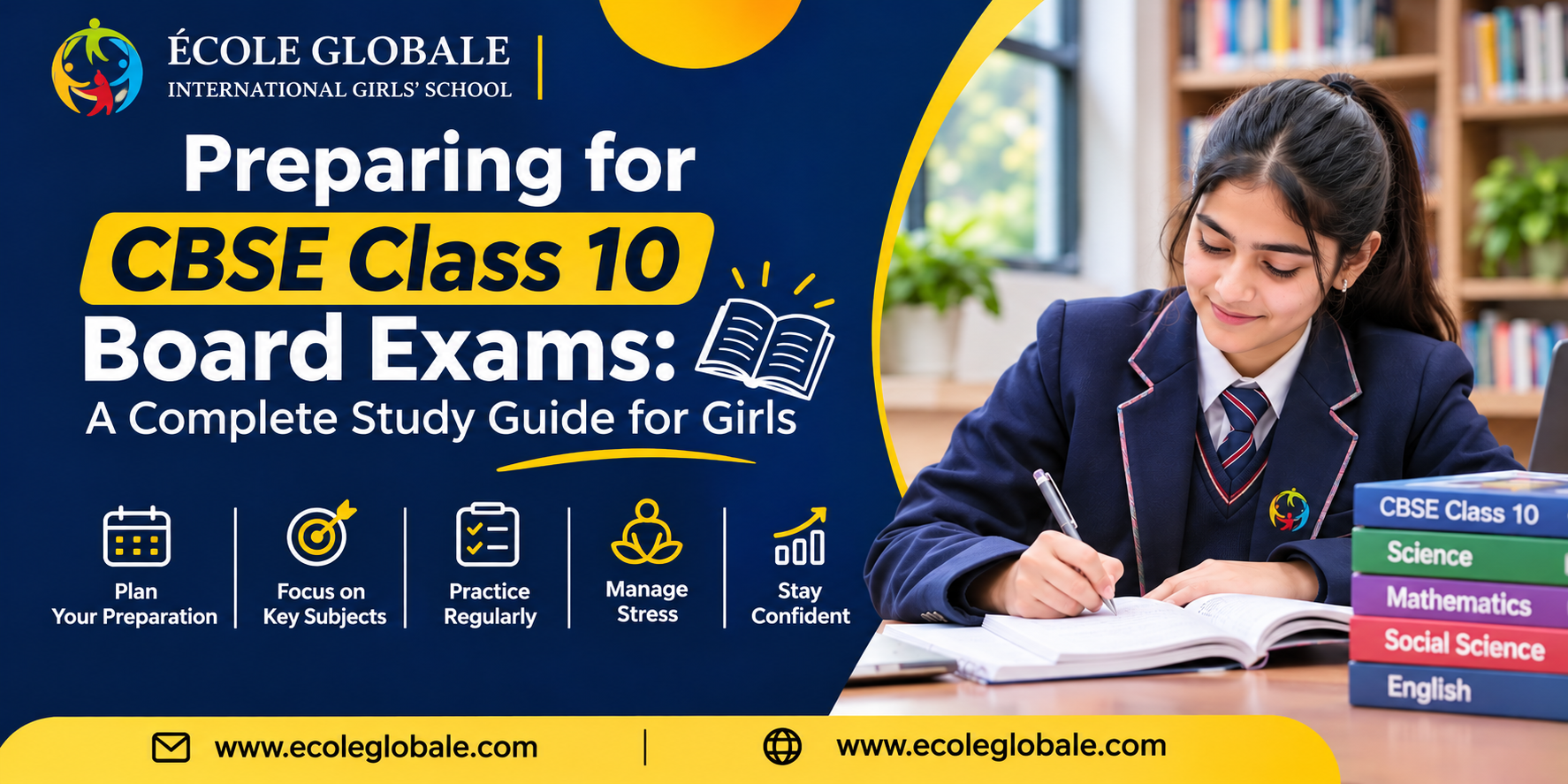
Class 10 is an important academic year because it helps students build a strong foundation for higher education. Board examinations require consistent preparation, subject knowledge, regular revision and effective time management. For girls studying in day schools or residential schools, having a well-organised preparation strategy can make the examination journey more manageable.
Preparing for CBSE Class 10 Board Exams is not simply about studying for long hours. It involves understanding the syllabus, identifying important topics, practising questions and developing confidence in every subject. With the right approach, students can improve their understanding and make better use of their available study time.
This guide explains practical CBSE Class 10 Exam Preparation Tips for Girls, including subject-wise strategies, revision methods, sample paper practice and ways to maintain a balanced study routine.
1. Understand the CBSE Class 10 Board Exam Pattern
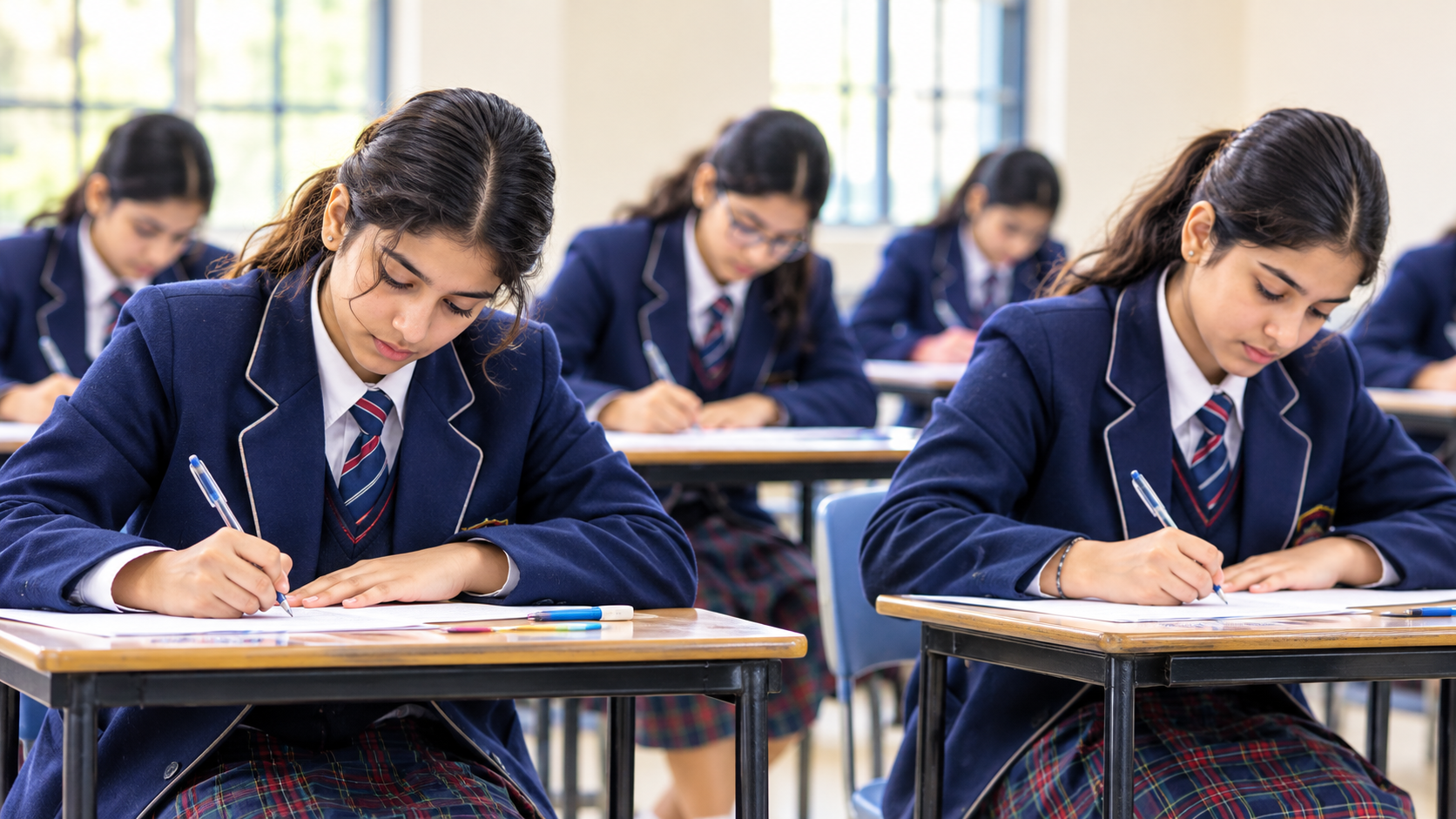
The first step in Preparing for CBSE Class 10 Board Exams is understanding the examination pattern and syllabus. Students should become familiar with the subjects, marking schemes, question formats and assessment requirements applicable to their academic session.
The official CBSE curriculum and examination resources should be the primary reference for preparation.
Students should:
- Download the latest subject-wise syllabus.
- Understand the marks distribution for each subject.
- Identify chapters included in the examination.
- Review the prescribed question paper format.
- Check official sample papers and marking schemes.
Understanding the examination pattern makes Preparing for CBSE Class 10 Board Exams more organised. It also helps students identify areas that require additional practice.
2. Create a Realistic Daily Study Timetable
A practical timetable is one of the most useful CBSE Class 10 Exam Preparation Tips for Girls. Students should divide their available time between different subjects instead of concentrating on only one subject.
A balanced study timetable should include classroom learning, homework, revision, practice questions and adequate breaks.
An illustrative daily study routine could include:
| Activity | Suggested time |
|---|---|
| Revision of previous lessons | 30 minutes |
| Mathematics practice | 45 minutes |
| Science preparation | 45 minutes |
| Social Science revision | 40 minutes |
| English or second language | 30 minutes |
| Homework and doubt clearing | 30 minutes |
Students should adjust this timetable according to their school hours, individual learning needs and examination schedule.
When Preparing for CBSE Class 10 Board Exams, consistency is more useful than following an unrealistic timetable. Students should set achievable daily targets and review their progress regularly.
3. Follow Subject-Wise Preparation Strategies
Every subject requires a different preparation method. Students should understand the nature of each subject and select suitable learning techniques.
Subject-wise preparation is an important part of Preparing for CBSE Class 10 Board Exams because it helps students focus on the skills required for different examinations.
Mathematics Preparation Tips
Mathematics requires conceptual understanding and regular problem-solving practice.
Students should:
- Understand formulas and mathematical concepts.
- Practise NCERT textbook exercises.
- Solve different types of numerical questions.
- Maintain a separate formula notebook.
- Review mistakes and practise similar questions.
Regular practice is one of the most effective ways to strengthen mathematical understanding while Preparing for CBSE Class 10 Board Exams.
Science Revision Tips
Science includes Physics, Chemistry and Biology concepts. Students should understand the principles behind each topic instead of depending entirely on memorisation.
Useful preparation methods include:
- Practising numerical problems in Physics.
- Learning chemical equations and reactions.
- Understanding biological processes through diagrams.
- Revising important definitions and scientific terms.
- Solving textbook exercises and sample questions.
These methods make Preparing for CBSE Class 10 Board Exams more systematic and help students develop a clearer understanding of scientific concepts.
English Exam Preparation
English preparation involves reading comprehension, writing skills, grammar and literature.
Students should practise unseen passages, revise prescribed chapters and understand the format of different writing tasks.
Reading regularly can improve vocabulary, comprehension and communication skills. Students should also practise writing answers within the expected word limits and review their grammar.
Social Science Study Strategy
Social Science requires an understanding of History, Geography, Political Science and Economics.
Students can improve preparation by:
- Preparing short notes for important topics.
- Using maps for relevant geographical concepts.
- Understanding historical events in sequence.
- Learning important definitions and terms.
- Practising source-based and case-based questions.
Organised notes and regular revision can make Social Science easier to manage during Preparing for CBSE Class 10 Board Exams.
4. Make NCERT Textbooks Your Primary Resource
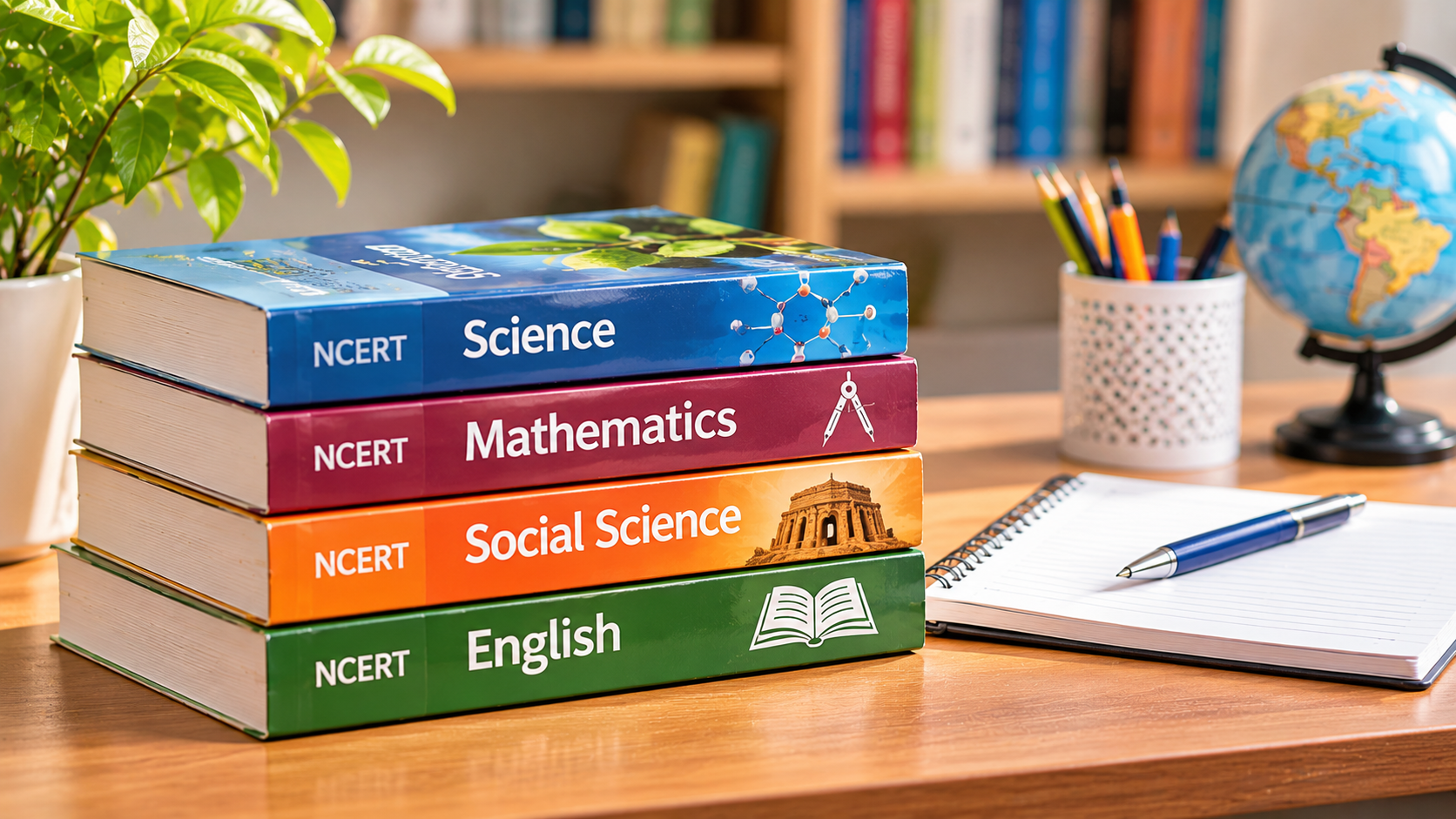
NCERT textbooks are an important foundation for CBSE Class 10 preparation. Students should understand textbook concepts, examples, exercises and important explanations before moving to additional resources.
Instead of collecting too many reference books, students should first complete the prescribed syllabus carefully.
A useful approach includes:
- Read every chapter with attention.
- Highlight important concepts and definitions.
- Solve textbook exercises.
- Mark difficult questions for revision.
- Prepare short notes for quick review.
Using NCERT effectively is one of the most practical CBSE Class 10 Board Exam Preparation Tips because it keeps learning aligned with the prescribed curriculum.
5. Practise Sample Papers and Previous Year Questions
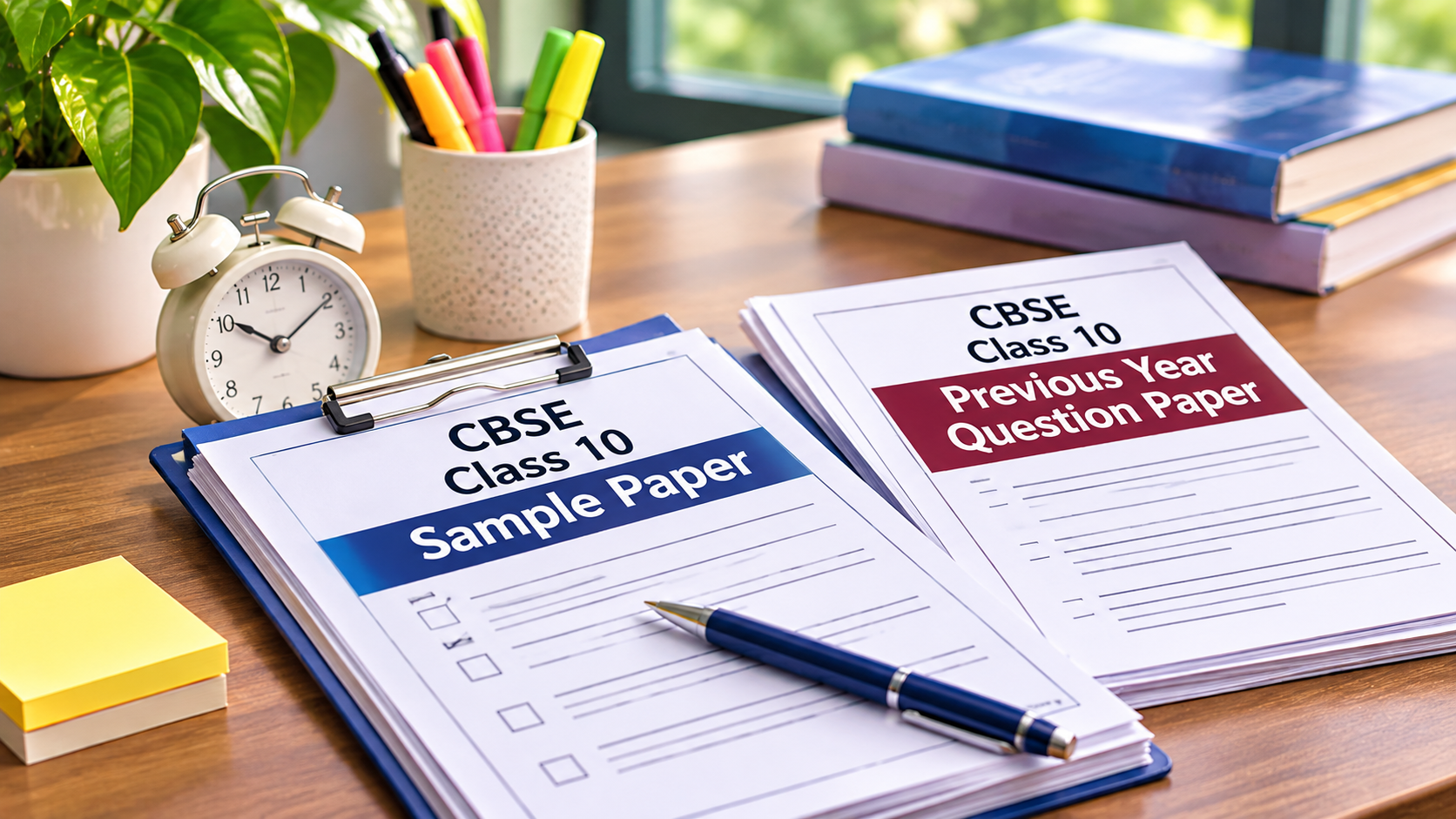
Practising sample papers helps students become familiar with question formats and examination requirements. It also provides an opportunity to identify topics that need further preparation.
During Preparing for CBSE Class 10 Board Exams, students should use official sample papers and previous examination papers as practice resources.
They should:
- Solve papers within the prescribed time.
- Follow the examination instructions.
- Check answers using marking schemes.
- Identify frequently misunderstood concepts.
- Review incorrect answers and practise again.
Students should remember that previous year questions are useful for practice, but they should not assume that the same questions will appear in future examinations.
6. Use Effective Revision Techniques
Revision helps students strengthen their understanding and remember previously studied concepts.
One of the important CBSE Class 10 Exam Preparation Tips for Girls is to revise topics regularly instead of waiting until the final weeks.
Useful revision techniques include:
- Active Recall: Try to remember information without looking at notes.
- Spaced Repetition: Revisit topics at regular intervals.
- Mind Maps: Connect related concepts through visual notes.
- Short Notes: Prepare concise summaries for important chapters.
- Practice Tests: Test understanding through questions and exercises.
These techniques make Preparing for CBSE Class 10 Board Exams more effective because they encourage students to engage actively with the material.
7. Improve Time Management During Examinations
Knowing the subject is important, but students must also learn to manage their time while answering questions.
During Preparing for CBSE Class 10 Board Exams, students should practise completing sample papers within the official examination duration.
Useful time management practices include:
- Read all instructions carefully.
- Plan the order in which questions will be attempted.
- Allocate time according to marks and question requirements.
- Avoid spending too long on one difficult question.
- Reserve time to review answers.
Practising these habits can help students approach the examination hall with better preparation and confidence.
8. Stay Focused and Manage Examination Stress
Board examinations can bring academic pressure, particularly when students are managing multiple subjects and deadlines.
However, preparation should not become a constant source of stress. Students should maintain realistic expectations and focus on gradual improvement.
Some helpful practices include:
- Divide large topics into smaller tasks.
- Take short breaks between study sessions.
- Discuss difficult concepts with teachers.
- Maintain regular sleep and meal routines.
- Seek support from parents, teachers or school counsellors when feeling overwhelmed.
Preparing for CBSE Class 10 Board Exams should involve a balanced approach that supports both academic learning and personal wellbeing.
9. Maintain a Healthy Study Routine
Good study habits are supported by healthy daily routines. Students should make time for physical activity, regular meals, adequate sleep and relaxation.
A healthy routine can help students maintain attention and motivation throughout the academic year.
For girls studying in residential schools, a structured campus timetable may provide opportunities to balance academics with sports, recreational activities and other interests.
These habits are important while Preparing for CBSE Class 10 Board Exams because consistent learning is easier to maintain when students also look after their overall wellbeing.
10. Avoid Common Board Examination Preparation Mistakes
Students sometimes make preparation more difficult by following ineffective study practices.
Common mistakes include:
- Starting revision too late.
- Ignoring difficult subjects.
- Depending entirely on memorisation.
- Collecting too many study resources.
- Avoiding sample paper practice.
- Following unrealistic study schedules.
- Neglecting sleep and regular breaks.
Avoiding these mistakes can make Preparing for CBSE Class 10 Board Exams more organised and productive.
Students should focus on understanding concepts, completing the syllabus and practising questions rather than comparing their preparation with others.
11. How Schools and Teachers Can Support Girls During Preparation
Schools and teachers play an important role in helping students prepare for board examinations. Academic guidance, regular assessments, doubt-clearing sessions and constructive feedback can help students identify areas for improvement.
A supportive school environment can also encourage girls to participate actively in classroom discussions, ask questions and develop independent learning skills.
At Ecole Globale, academic guidance and a balanced educational environment can help students approach Preparing for CBSE Class 10 Board Exams with discipline and confidence.
The combination of classroom learning, teacher support and regular revision can help students become more organised and responsible learners.
Conclusion
Class 10 board examinations are an important academic milestone, but successful preparation requires consistency rather than last-minute effort.
Preparing for CBSE Class 10 Board Exams becomes more manageable when students understand the syllabus, follow a realistic timetable, practise sample papers and revise subjects regularly.
By using effective learning techniques, seeking teacher guidance and maintaining a healthy routine, girls can strengthen their academic knowledge and approach their examinations with greater confidence.
Frequently Asked Questions (FAQs)
Q1. How should girls start preparing for CBSE Class 10 Board Exams?
Ans: Girls should begin by understanding the syllabus, reviewing the examination pattern, preparing a realistic timetable and studying NCERT textbooks regularly.
Q2. How many hours should a Class 10 student study daily?
Ans: There is no fixed number of hours suitable for every student. Study time should depend on individual learning needs, school commitments and academic targets. Consistency and focused learning are more important than simply counting hours.
Q3. Which books are important for CBSE Class 10 preparation?
Ans: NCERT textbooks should be the primary study resource. Students can also use official CBSE sample papers, marking schemes and suitable additional practice materials.
Q4. How can students improve their Mathematics preparation?
Ans: Students should understand concepts, practise NCERT exercises, maintain a formula notebook and solve different types of problems regularly.
Q5. Are previous year question papers useful for board examinations?
Ans: Yes. Previous year question papers help students understand question formats, practise time management and identify areas that need further revision.
Q6. How can students manage stress during board exam preparation?
Ans: Students can manage examination pressure by following realistic study plans, taking regular breaks, maintaining healthy routines and seeking guidance from teachers, parents or school counsellors when needed.