





Managing money is an important life skill that students should learn before entering adulthood. For children living in boarding schools, pocket money provides an opportunity to understand budgeting, saving and responsible spending. Pocket Money and Financial Literacy go hand in hand in helping students develop financial awareness and become more independent.
Boarding school life offers several opportunities for students to practise everyday money management. Whether they are purchasing stationery, buying snacks or managing their monthly allowance, students gradually learn how to make sensible financial decisions. Teaching Pocket Money and Financial Literacy at an early age can help students understand the value of money and develop responsible spending habits.
In this article, we explore how Pocket Money and Financial Literacy help boarding students develop budgeting skills, financial responsibility and independence.
1. Understanding the Importance of Pocket Money for Boarding Students

Pocket money gives students an opportunity to manage a limited amount of money independently. Instead of depending on parents for every small purchase, students learn to make their own spending decisions within reasonable limits.
The relationship between Pocket Money and Financial Literacy helps students understand that money should be used thoughtfully. They begin to recognise the difference between essential purchases and unnecessary expenses.
Pocket money can help students learn to:
- Manage a fixed allowance.
- Understand the value of money.
- Plan purchases according to their needs.
- Avoid unnecessary spending.
- Develop responsible financial habits.
When schools and parents introduce Pocket Money and Financial Literacy together, students get practical opportunities to apply basic money management lessons in everyday situations.
2. Teaching Students the Basics of Budgeting
Budgeting is one of the most important lessons in Pocket Money and Financial Literacy. Students need to understand how to divide their available money between different expenses instead of spending everything at once.
For example, a student receiving a monthly allowance can divide it into categories such as snacks, stationery, personal requirements, savings and emergency expenses.
A simple monthly budget could look like this:
| Expense Category | Example Allocation |
|---|---|
| Snacks and refreshments | ₹300 |
| Stationery | ₹200 |
| Personal requirements | ₹200 |
| Savings | ₹200 |
| Other expenses | ₹100 |
| Total | ₹1,000 |
This is only an illustrative budget and can be adjusted according to the student’s age, needs and school rules.
Through Pocket Money and Financial Literacy, students learn to plan their expenses, monitor their spending and avoid running out of money before the end of the month.
3. Developing the Habit of Saving Money

Saving is another important part of Pocket Money and Financial Literacy. Students should understand that they do not need to spend all the money they receive.
Parents and schools can encourage students to save a small portion of their allowance regularly. Students may save towards books, hobbies, educational materials or other planned purchases.
Some useful ways to encourage saving include:
- Setting simple monthly savings goals.
- Maintaining a savings notebook.
- Tracking money received and spent.
- Understanding the difference between short-term and long-term goals.
- Rewarding consistent saving habits without creating pressure.
Learning about saving through Pocket Money and Financial Literacy teaches students patience and planning. It also helps them understand that small amounts saved regularly can gradually become meaningful savings.
4. Understanding Needs vs Wants
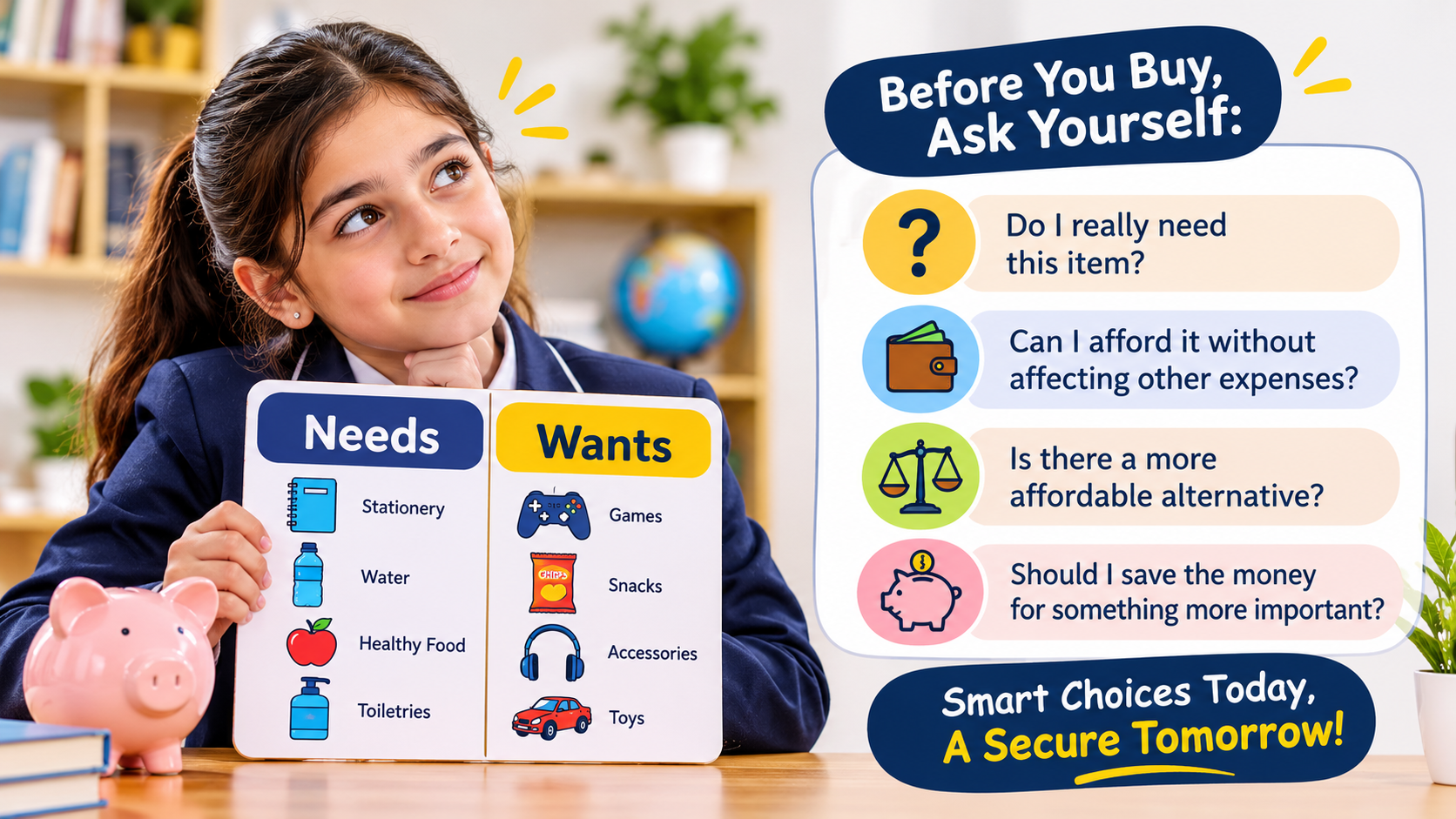
One of the most practical lessons in Pocket Money and Financial Literacy is understanding the difference between needs and wants.
Needs are essential things that students require, such as basic stationery and personal necessities. Wants are additional purchases that may be enjoyable but are not always necessary, such as extra snacks, accessories or non-essential items.
Students can learn to ask themselves a few questions before purchasing something:
- Do I really need this item?
- Can I afford it without affecting other expenses?
- Is there a more affordable alternative?
- Should I save the money for something more important?
Understanding needs and wants makes Pocket Money and Financial Literacy more practical. It encourages students to think before spending and make decisions based on priorities rather than temporary excitement.
5. Teaching Responsible Spending Habits
Responsible spending is an essential outcome of Pocket Money and Financial Literacy. Students should learn that having money does not mean they need to spend it immediately.
Boarding schools can help students develop responsible habits by discussing everyday purchases, comparing prices and explaining the importance of planning expenses.
Some responsible spending habits include:
- Checking prices before making purchases.
- Avoiding impulsive buying.
- Keeping track of daily expenses.
- Spending within the available allowance.
- Avoiding unnecessary purchases influenced by friends.
- Keeping some money aside for unexpected needs.
Through Pocket Money and Financial Literacy, students gradually understand how their spending decisions affect their available money. These habits can become useful when they begin managing larger financial responsibilities in adulthood.
6. The Role of Parents in Teaching Financial Literacy
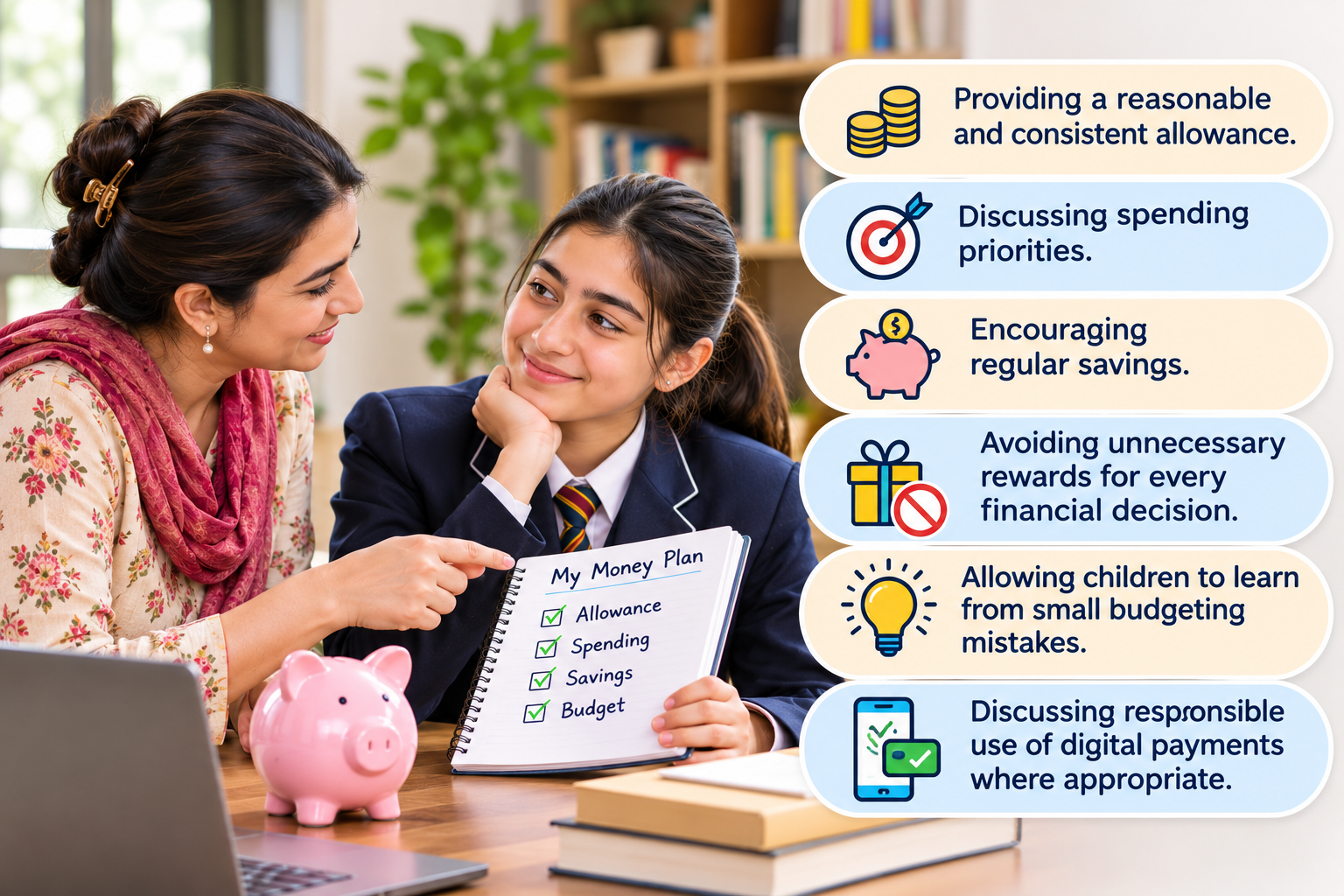
Parents play an important role in introducing Pocket Money and Financial Literacy at home. They can provide an age-appropriate allowance and explain how it should be managed.
Instead of simply giving money, parents can discuss budgeting, saving and responsible spending with their children. They can also encourage students to maintain a record of their expenses.
Parents can support financial learning by:
- Providing a reasonable and consistent allowance.
- Discussing spending priorities.
- Encouraging regular savings.
- Avoiding unnecessary rewards for every financial decision.
- Allowing children to learn from small budgeting mistakes.
- Discussing responsible use of digital payments where appropriate.
When parents actively teach Pocket Money and Financial Literacy, students get a stronger foundation for managing money independently.
7. How Boarding Schools Can Promote Financial Awareness
Boarding schools provide an environment where students can practise financial responsibility through everyday experiences. Schools can introduce activities that explain money management in simple and practical ways.
Some useful school initiatives include:
- Organising basic financial literacy workshops.
- Conducting classroom activities on budgeting.
- Introducing simple savings challenges.
- Teaching students how to compare prices.
- Encouraging responsible shopping decisions.
- Discussing safe and responsible digital payment practices where relevant.
Integrating Pocket Money and Financial Literacy into life-skills education can make financial learning more meaningful. Students can understand basic financial concepts and apply them to their daily routines.
8. Teaching Students About Digital Payments and Financial Safety
Digital payments have become increasingly common, making financial awareness more important than ever. Older students may need to understand how digital transactions work and why financial safety matters.
As part of Pocket Money and Financial Literacy, schools and parents can introduce age-appropriate lessons about digital payment safety.
Students should understand:
- Never sharing passwords, PINs or one-time passwords.
- Checking transaction details before making payments.
- Recognising suspicious messages and payment requests.
- Asking a trusted adult for help when something seems unusual.
- Understanding that digital money is still real money.
Digital financial awareness is an increasingly important part of Pocket Money and Financial Literacy. Students should learn that convenience must always be accompanied by caution and responsible decision-making.
9. Building Financial Independence Through Everyday Experiences
Financial independence begins with small decisions. Managing pocket money, planning purchases and saving regularly can help students become more confident in handling everyday responsibilities.
Pocket Money and Financial Literacy encourage students to take ownership of their financial choices. They learn to plan ahead, recognise spending patterns and understand the consequences of their decisions.
These lessons can support the development of:
- Decision-making skills.
- Self-discipline.
- Personal responsibility.
- Planning and organisational abilities.
- Confidence in managing everyday expenses.
The practical experience of Pocket Money and Financial Literacy can prepare boarding students for future responsibilities, including managing college expenses and personal budgets.
Conclusion
Learning to manage money is an important part of growing up. For boarding students, pocket money provides a practical opportunity to develop budgeting, saving and responsible spending habits.
Pocket Money and Financial Literacy help students understand the value of money and make thoughtful financial decisions. With guidance from parents and schools, students can learn to manage allowances, distinguish between needs and wants, avoid unnecessary spending and develop healthy saving habits.
By introducing Pocket Money and Financial Literacy through everyday experiences and school-based activities, parents and educators can help students develop financial awareness and essential life skills that remain useful well beyond their school years.
Frequently Asked Questions
Q1. Why is pocket money important for boarding students?
Ans: Pocket money gives boarding students an opportunity to practise budgeting, saving and responsible spending. It also helps them understand the practical value of Pocket Money and Financial Literacy.
Q2. How much pocket money should parents give boarding school students?
Ans: The amount depends on the student’s age, school policies, location and personal requirements. Parents should provide a reasonable allowance that meets appropriate needs without encouraging unnecessary spending.
Q3. How can students learn to manage their pocket money?
Ans: Students can maintain a monthly budget, record their expenses, set savings goals and prioritise essential purchases. These activities strengthen their understanding of Pocket Money and Financial Literacy.
Q4. How can boarding schools teach financial literacy?
Ans: Schools can organise budgeting workshops, savings activities, financial awareness sessions and practical exercises that introduce students to everyday money management.
Q5. What is the difference between saving and spending?
Ans: Spending means using money to purchase goods or services, while saving means keeping some money aside for future needs or goals. Both are important concepts in Pocket Money and Financial Literacy.
Q6. At what age should students learn about money management?
Ans: Students can begin learning simple concepts such as saving, budgeting and understanding needs versus wants at an early age. Lessons should become more detailed as they grow older.