






Science education plays an important role in helping students understand the world through observation, experimentation and practical learning. While classroom lessons introduce scientific concepts, laboratories allow students to explore these concepts through hands-on activities. Science Laboratories in Modern Schools in Dehradun provide students with opportunities to connect theoretical knowledge with practical experiences and develop a deeper understanding of scientific subjects.
Modern education places increasing importance on practical learning, critical thinking and problem-solving. Science laboratories support these objectives by allowing students to conduct experiments, observe results, ask questions and analyse findings.
The importance of Science Laboratories in Modern Schools in Dehradun extends beyond completing textbook experiments. Well-equipped laboratories can encourage curiosity, improve scientific reasoning and help students develop skills that are useful in higher education and everyday life.
Why Science Laboratories in Modern Schools in Dehradun Are Important
Science is a subject that becomes easier to understand when students can observe concepts in action. Laboratories provide an environment where students can explore scientific principles through guided experiments and practical demonstrations.
Science Laboratories in Modern Schools in Dehradun support learning in several important ways:
- Practical Understanding: Students can observe scientific concepts through experiments rather than relying only on theoretical explanations.
- Scientific Curiosity: Laboratory activities encourage students to ask questions and investigate how things work.
- Critical Thinking: Students learn to examine observations, compare results and draw logical conclusions.
- Problem-Solving Skills: Experiments introduce students to challenges that require careful thinking and practical solutions.
- Accuracy and Observation: Laboratory work encourages students to follow procedures, record measurements and observe changes.
- Collaborative Learning: Group experiments help students share responsibilities and discuss findings.
These benefits make Science Laboratories in Modern Schools in Dehradun an important part of a well-rounded science education.
Types of Science Laboratories in Modern Schools in Dehradun
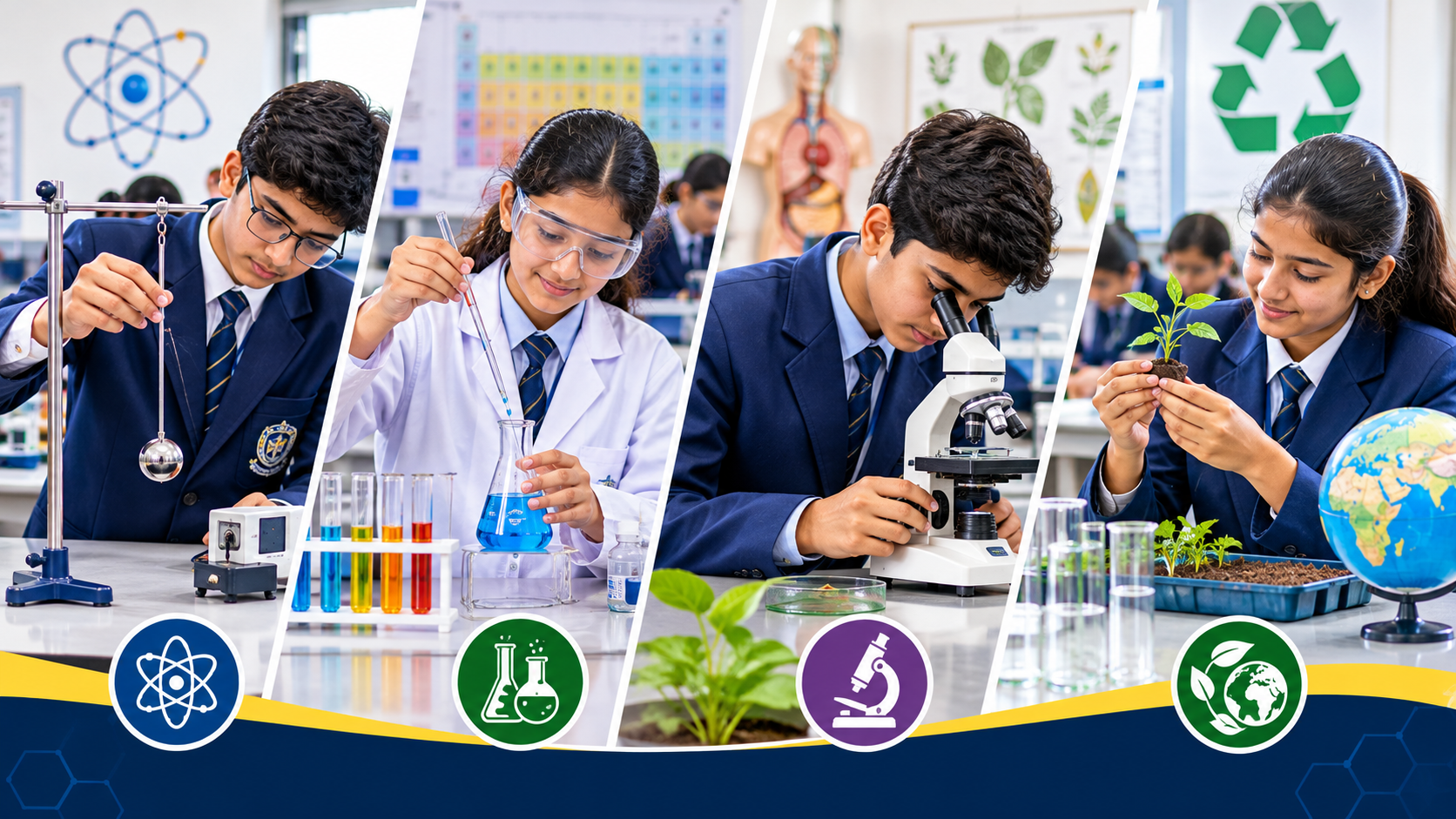
Different scientific subjects require different equipment, materials and practical learning environments. Schools may develop specialised laboratories to support the science curriculum and students’ learning requirements.
1. Physics Laboratories
Physics laboratories help students understand concepts related to motion, force, energy, electricity, magnetism, light and sound.
Students may perform experiments using measuring instruments, electrical circuits, lenses, mirrors, pendulums and other laboratory equipment.
Science Laboratories in Modern Schools in Dehradun can use physics experiments to help students understand scientific laws through practical observation.
For example, students may investigate how the length of a pendulum affects its time period or observe the behaviour of light through lenses and mirrors.
These activities help students connect mathematical relationships with physical phenomena.
2. Chemistry Laboratories
Chemistry laboratories provide opportunities to explore chemical substances, reactions and material properties.
Students may perform supervised experiments involving acids, bases, indicators, solutions and chemical reactions according to their class level and laboratory safety procedures.
Through Science Laboratories in Modern Schools in Dehradun, students can observe colour changes, precipitation, temperature changes and other reactions.
Chemistry practicals also teach students about measurement, laboratory equipment, careful handling of materials and accurate recording of observations.
3. Biology Laboratories
Biology laboratories help students understand living organisms, human anatomy, plant structures and biological processes.
Common learning activities may include observing prepared slides through microscopes, studying plant parts, examining biological specimens and understanding different body systems.
Science Laboratories in Modern Schools in Dehradun can support biology education by giving students opportunities to observe structures that are difficult to understand through textbook illustrations alone.
These practical experiences can strengthen students’ understanding of life sciences and the natural environment.
4. Environmental Science Laboratories
Environmental science introduces students to topics such as pollution, biodiversity, ecosystems, natural resources and conservation.
Some schools may include practical environmental learning activities involving water observation, soil studies, waste segregation and environmental monitoring.
Science Laboratories in Modern Schools in Dehradun can support environmental awareness by helping students investigate issues affecting their surroundings.
These activities encourage students to understand the relationship between human activities and environmental conditions.
How Science Laboratories Improve Practical Learning
Practical learning allows students to participate actively in the educational process. Instead of simply memorising scientific definitions, students can investigate concepts and understand how scientific knowledge is developed.
Science Laboratories in Modern Schools in Dehradun contribute to practical learning through several methods.
1. Learning Through Experiments
Experiments help students understand scientific concepts through observation and testing.
For example, a student studying plant growth may observe how different environmental conditions influence development. Similarly, physics experiments can demonstrate relationships between force, motion and energy.
These practical activities make Science Laboratories in Modern Schools in Dehradun valuable learning spaces for connecting classroom theory with real-world observations.
2. Developing Observation Skills
Scientific learning requires students to observe carefully and identify changes or patterns.
During laboratory activities, students learn to examine materials, record measurements, compare results and identify differences between expected and observed outcomes.
These observation skills help students become more attentive and systematic in their approach to learning.
3. Understanding Scientific Methods
Laboratory work introduces students to the basic scientific method.
Students may learn to:
- Identify a scientific question.
- Develop a possible explanation or hypothesis.
- Plan an experiment under teacher guidance.
- Collect observations and measurements.
- Analyse the results.
- Draw conclusions based on evidence.
By following these steps, Science Laboratories in Modern Schools in Dehradun help students understand how scientific investigations are conducted.
4. Connecting Theory with Real-Life Applications
Many scientific concepts are related to everyday experiences. Laboratory activities help students understand these connections.
For example, studying electricity can help explain household electrical systems, while biology experiments can improve understanding of plants, microorganisms and human health.
This practical connection makes science more relevant and easier to understand.
Essential Equipment in Modern School Science Laboratories
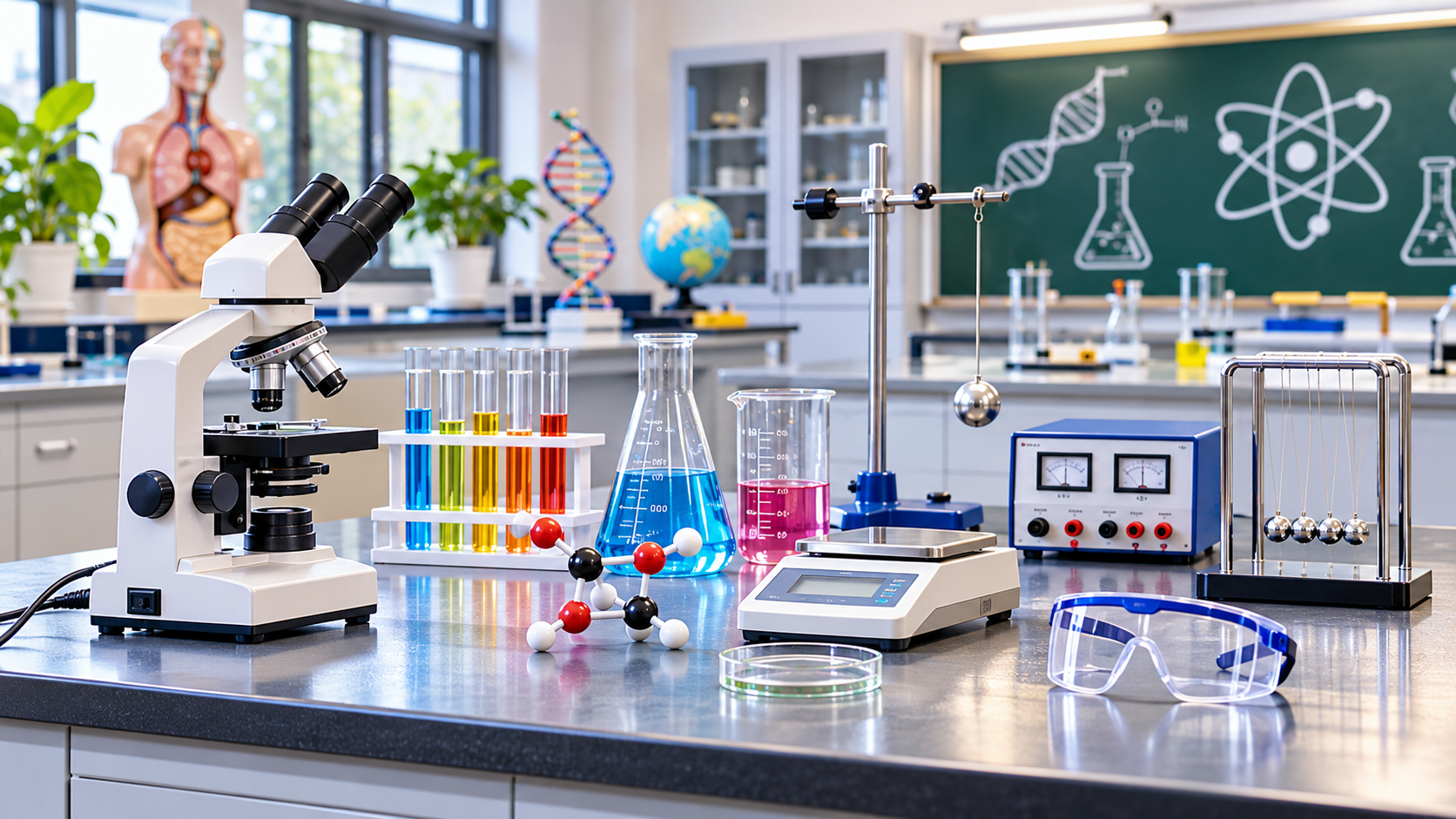
The quality of laboratory learning depends partly on the availability of suitable equipment, materials and safety arrangements.
Science Laboratories in Modern Schools in Dehradun may include different equipment according to the school’s curriculum, laboratory facilities and student age groups.
Some commonly used equipment includes:
| Laboratory | Common Equipment |
|---|---|
| Physics Lab | Measuring instruments, lenses, mirrors, electrical circuits and pendulums |
| Chemistry Lab | Beakers, test tubes, measuring cylinders, droppers and laboratory stands |
| Biology Lab | Microscopes, prepared slides, models and specimen observation equipment |
| Environmental Science Lab | Soil testing materials, water testing kits and sample collection equipment |
Equipment should be suitable for the experiments being conducted and maintained according to laboratory safety requirements.
Importance of Laboratory Safety in Schools
Safety is an essential part of practical science education. Students need to understand that laboratory experiments must be performed carefully and under appropriate supervision.
Science Laboratories in Modern Schools in Dehradun should follow suitable safety procedures to help students use equipment and materials responsibly.
1. Teacher Supervision
Teachers should explain experiment procedures and supervise students during practical activities.
Students should not use laboratory chemicals or equipment without appropriate instructions and permission.
2. Protective Equipment
Depending on the experiment, students may need laboratory coats, safety goggles, gloves and other protective equipment.
Schools should provide suitable protective materials and explain when they are required.
3. Proper Handling of Chemicals and Equipment
Students should learn how to handle laboratory substances, glassware and instruments carefully.
They should follow teacher instructions, avoid unauthorised mixing of chemicals and return equipment to designated storage areas.
4. Emergency Procedures
Students should understand basic laboratory safety rules and know how to respond if an accident or equipment problem occurs.
Schools should maintain appropriate emergency arrangements and ensure that laboratory staff understand their responsibilities.
5. Cleanliness and Waste Disposal
Laboratory cleanliness is important for maintaining a safe learning environment.
Students should follow instructions for cleaning work areas, handling laboratory waste and storing equipment after experiments.
These precautions help make Science Laboratories in Modern Schools in Dehradun more organised and suitable for practical learning.
Role of Science Teachers in Laboratory-Based Learning
Teachers play an important role in connecting classroom lessons with practical experiments. They guide students through procedures, explain scientific principles and help interpret experimental results.
In Science Laboratories in Modern Schools in Dehradun, teachers may support learning through the following activities:
- Explaining the purpose of each experiment.
- Demonstrating the correct use of laboratory equipment.
- Guiding students through experimental procedures.
- Encouraging questions and scientific discussions.
- Helping students record and analyse observations.
- Explaining unexpected results.
- Assessing practical understanding and laboratory skills.
Effective teacher guidance helps students understand not only how to perform experiments but also why those experiments are important.
How Science Laboratories Develop Critical Thinking and Problem-Solving Skills
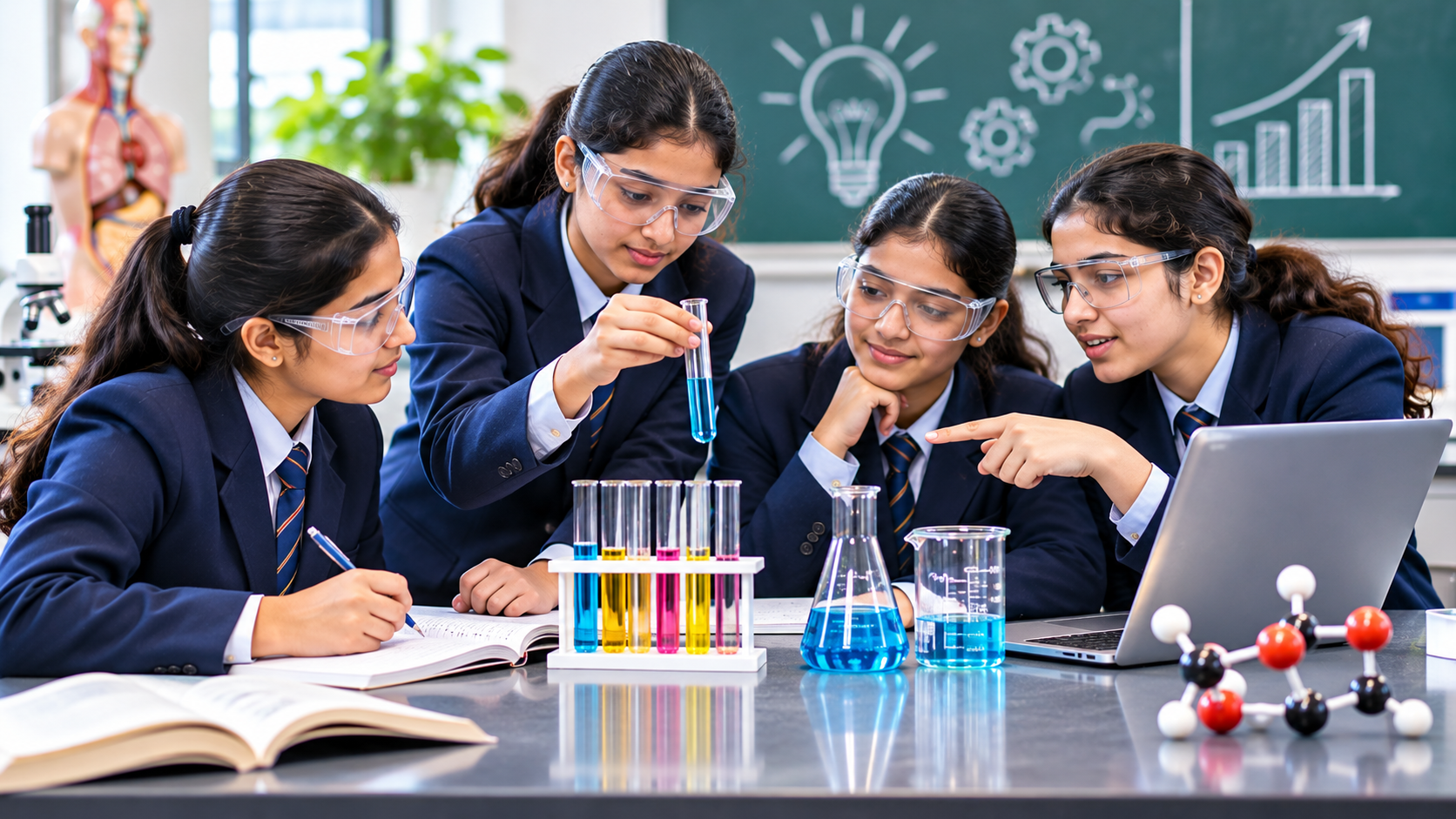
Scientific experiments do not always produce the expected results. Students may need to examine procedures, identify possible errors and consider alternative explanations.
Science Laboratories in Modern Schools in Dehradun provide opportunities to develop these skills through practical investigation.
Analytical Thinking
Students learn to examine experimental observations, compare results and identify patterns.
Problem-Solving
When an experiment does not work as expected, students can discuss possible reasons and identify improvements under teacher guidance.
Evidence-Based Reasoning
Laboratory activities teach students to support conclusions with observations and measurements rather than assumptions.
Teamwork and Communication
Group experiments encourage students to share tasks, discuss findings and communicate their conclusions clearly.
These skills are useful across academic subjects and can support students in future educational and professional pursuits.
What Parents Should Check About Science Laboratory Facilities
Parents comparing schools should consider the quality of science education and the practical learning opportunities available to students.
When evaluating Science Laboratories in Modern Schools in Dehradun, parents can ask the following questions:
- Are separate physics, chemistry and biology laboratories available?
- Is laboratory equipment suitable for the relevant classes?
- How frequently do students participate in practical sessions?
- Are experiments supervised by qualified science teachers?
- What safety equipment and procedures are maintained?
- Do students maintain practical records and experiment reports?
- Are laboratory activities connected with classroom learning?
- Are environmental science or project-based learning activities included?
A school visit can help parents understand the laboratory environment and the availability of practical learning facilities.
Science Laboratory Facilities at Ecole Globale
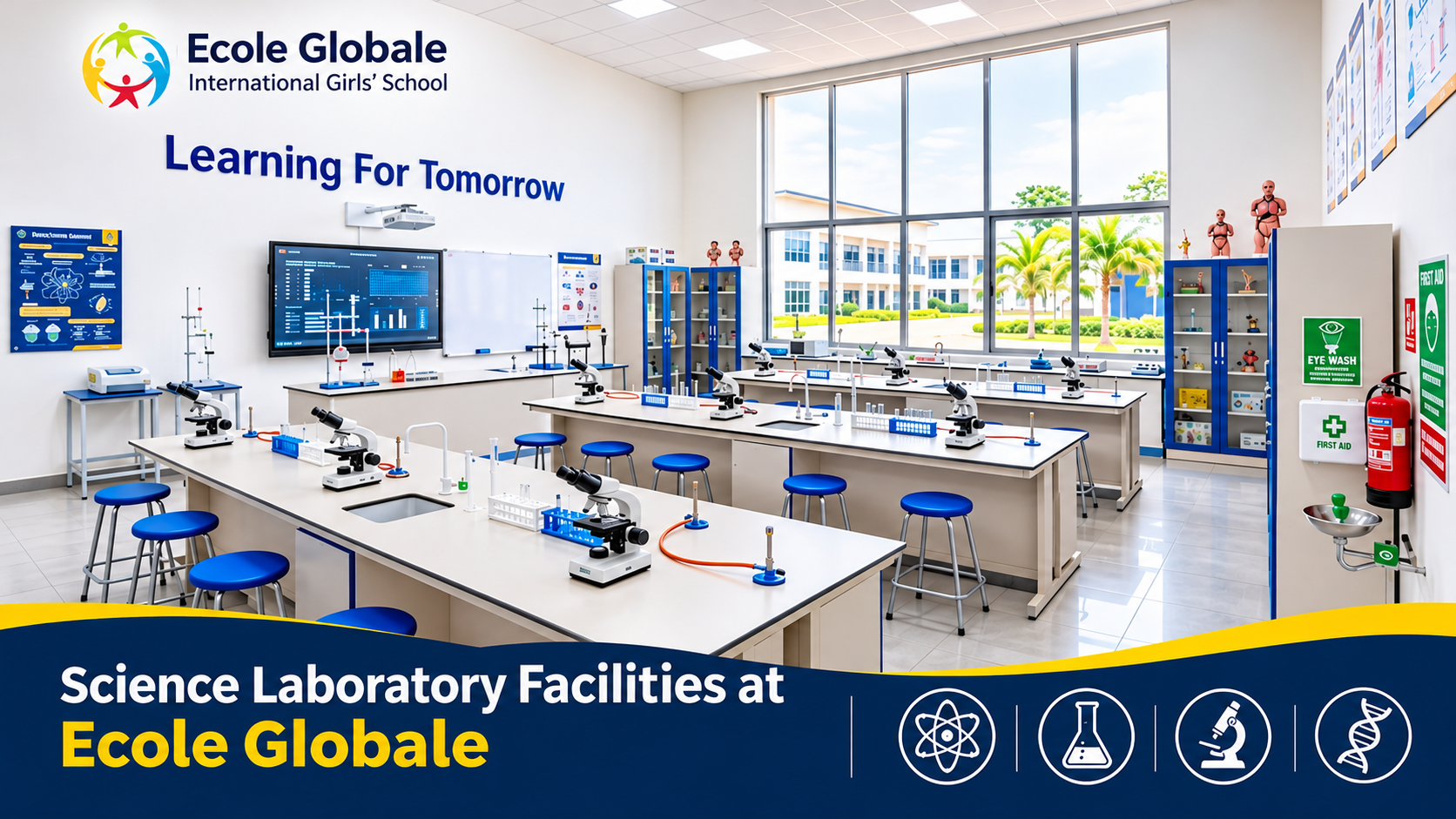
Parents considering Ecole Globale can enquire about the school’s science laboratory facilities, practical learning opportunities and arrangements for different science subjects.
When evaluating Science Laboratories in Modern Schools in Dehradun, families should understand how laboratory sessions are incorporated into the academic curriculum and how students are guided during experiments.
Parents may also ask about available laboratory equipment, teacher supervision, practical assessments and safety procedures.
For the most accurate information, families should confirm the current science laboratory facilities and practical learning arrangements directly with Ecole Globale rather than relying on assumptions about specific equipment or programmes.
Conclusion
Science laboratories play an important role in modern education by helping students move beyond theoretical explanations and explore scientific concepts through practical experiences.
Science Laboratories in Modern Schools in Dehradun support experimentation, observation, critical thinking, problem-solving and collaborative learning. Physics, chemistry, biology and environmental science practicals can help students develop a stronger understanding of scientific principles.
Parents should therefore consider laboratory facilities, equipment availability, teacher guidance and safety procedures when comparing schools. A well-organised laboratory environment can make science education more engaging and help students develop skills that support future learning.
Frequently Asked Questions (FAQs)
Q1. Why are Science Laboratories in Modern Schools in Dehradun important?
Ans: Science Laboratories in Modern Schools in Dehradun help students understand scientific concepts through experiments, practical demonstrations and observation. They also support critical thinking and problem-solving skills.
Q2. What types of science laboratories should a modern school have?
Ans: Schools may provide separate physics, chemistry and biology laboratories. Some institutions may also offer environmental science or other specialised practical learning facilities.
Q3. How do science laboratories improve student learning?
Ans: Laboratory activities allow students to connect theoretical knowledge with practical observations. They also develop accuracy, analytical thinking, scientific reasoning and teamwork.
Q4. What safety measures are important in school science laboratories?
Ans: Important measures include teacher supervision, protective equipment, proper chemical handling, safe equipment storage, emergency procedures and appropriate waste disposal.
Q5. How often should students participate in laboratory activities?
Ans: The frequency depends on the curriculum, class level and school timetable. Regular practical sessions can help students reinforce scientific concepts and develop laboratory skills.
Q6. What should parents check before choosing a school with science laboratories?
Ans: Parents should check laboratory availability, equipment, practical session frequency, teacher supervision, safety procedures and how laboratory work is included in the science curriculum.