




Boarding schools have always held a special place in India’s education system. Known for their strong discipline, academic excellence, and holistic development, these institutions offer much more than classroom learning.
Life in boarding schools in India is a unique experience that shapes students academically, socially, and emotionally, preparing them for real-life challenges.For many students, joining a boarding school is the first step towards independence, self-discipline, and lifelong friendships.
What Defines Life in Boarding Schools in India?

Life in boarding schools in India is structured, community-oriented, and enriching. Students live on campus under the guidance of teachers and house parents, following a daily routine that balances academics, activities, and personal growth.
Unlike day schools, boarding schools provide a 24/7 learning environment where education continues beyond textbooks—through interactions, responsibilities, and shared experiences.
A Typical Day in a Boarding School

Morning Routine
The day usually begins early with morning assembly, yoga, physical training, or sports. These activities promote discipline, fitness, and a positive start to the day.
Academic Sessions
Classes are conducted in a focused and interactive environment. Teachers give personal attention to students, helping them strengthen concepts and clear doubts.
Meals and Breaks
Nutritious meals are served at fixed times, encouraging healthy eating habits. Breaks allow students to relax and socialise with peers.
Evening Activities
Sports, music, dance, art, debates, and clubs are an important part of boarding school life. These activities help students discover talents and build confidence.
Study Hours
Evening study sessions ensure regular revision and completion of homework under supervision.
Night Routine
After dinner, students spend time reading, relaxing, or interacting before lights out, maintaining a disciplined sleep schedule.
Academic Environment in Boarding Schools

One of the strongest aspects of life in boarding schools in India is the academic focus. With fixed study hours and teacher support available beyond class time, students develop strong study habits.
Regular assessments, doubt-clearing sessions, and mentoring ensure that students stay on track academically while learning to manage pressure effectively.
Personal Growth and Independence
Living away from home teaches students valuable life skills. They learn to:
Manage time and responsibilities
Take care of personal belongings
Make independent decisions
Adapt to different situations
This independence builds maturity and self-confidence at an early age.
Social Life and Friendships

Boarding schools create a close-knit community where students form deep bonds. Sharing dormitories, meals, and activities helps build strong friendships that often last a lifetime.
Students also learn teamwork, cooperation, empathy, and respect for diversity by living with peers from different backgrounds.
Extracurricular Activities and Skill Development
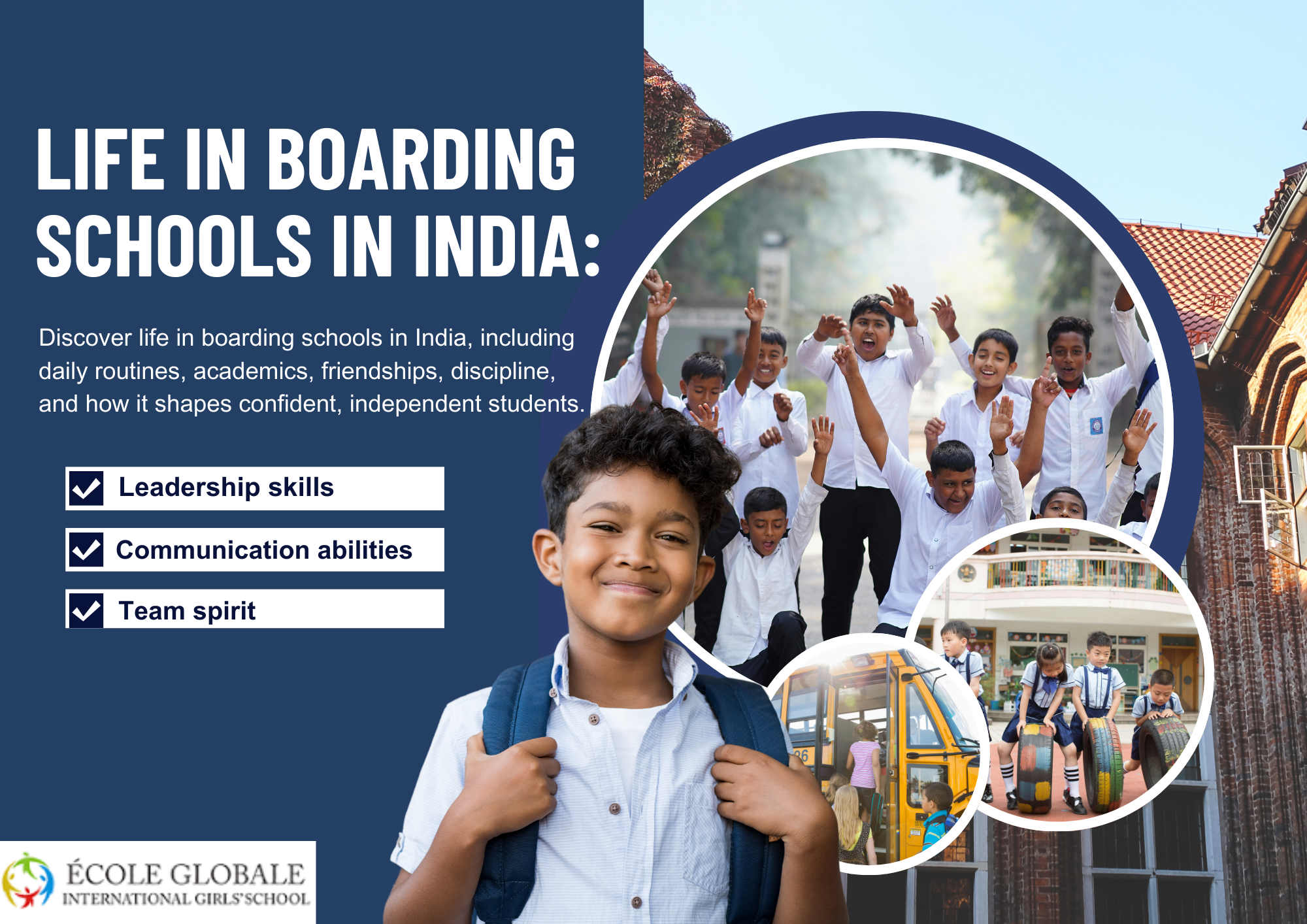
Life in boarding schools in India places great emphasis on extracurricular learning. Participation in sports, cultural programs, leadership roles, and competitions helps students develop:
Leadership skills
Communication abilities
Team spirit
Creativity and resilience
These skills play a crucial role in shaping well-rounded individuals.
Discipline and Values

Discipline is a key part of boarding school life. Fixed schedules, rules, and responsibilities help students develop self-control and consistency. At the same time, schools focus on values such as honesty, respect, empathy, and responsibility.This value-based education prepares students to become responsible citizens.
Challenges of Boarding School Life
While boarding school life offers many benefits, students may face challenges such as:
Homesickness in the initial phase
Adjustment to routines and rules
Managing academic and activity workload
However, with supportive teachers, peers, and counsellors, most students adapt quickly and grow stronger through these experiences.
Why Parents Choose Boarding Schools in India

Parents opt for boarding schools because they offer:
A safe and structured environment
Strong academic focus
Holistic personality development
Exposure to diverse cultures
Preparation for higher education and life beyond school
For many families, boarding schools are an investment in long-term growth and success.
Conclusion
Life in boarding schools in India is a transformative experience that goes far beyond academics. It nurtures independence, discipline, confidence, and social skills while providing quality education in a supportive environment.
Though the journey may begin with challenges, it often results in strong character, lifelong friendships, and well-prepared individuals ready to face the future. For students seeking holistic development and parents looking for a complete educational experience, boarding schools in India continue to be a trusted choice.
FREQUENTLY ASKED QUESTIONS
Q1. What is life like in boarding schools in India?
Ans: Life in boarding schools in India is structured and balanced, combining academics, sports, activities, and discipline to support overall student development.
Q2. Do students feel homesick in boarding schools?
Ans: Homesickness is common initially, especially for younger students, but most adapt quickly with support from teachers, peers, and a caring school environment.
Q3. Are boarding schools in India safe for students?
Ans: Yes, most boarding schools in India provide a secure campus with supervision, trained staff, medical facilities, and strict safety protocols.
Q4. How do boarding schools help in personality development?
Ans: Boarding schools build independence, leadership, time management, and social skills through daily routines, responsibilities, and extracurricular activities.
Q5. Is academic performance better in boarding schools?
Ans: Many students perform well academically due to structured study hours, personalised teacher support, and a focused learning environment.