





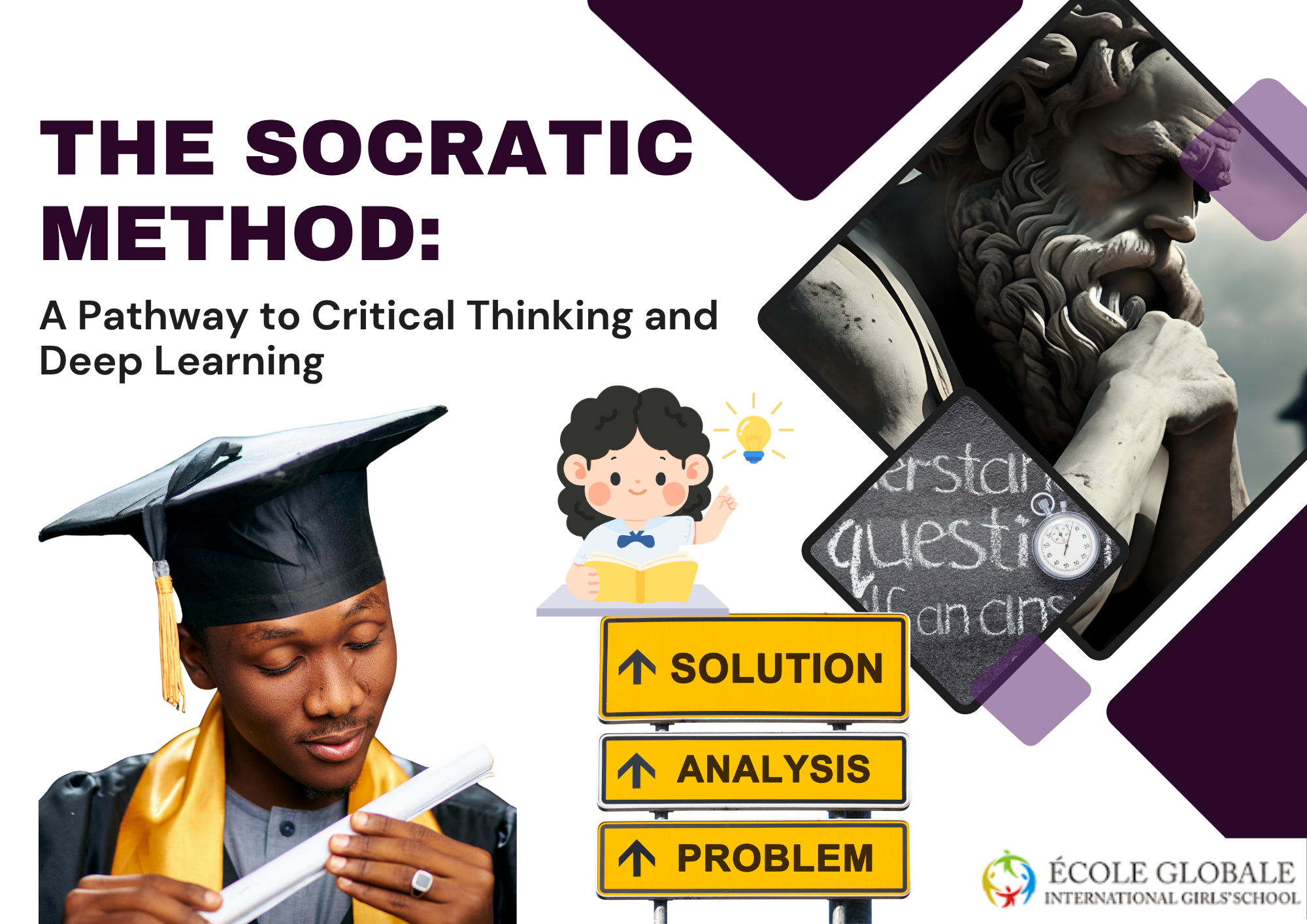
Education today often emphasizes grades and memorization over true understanding. Yet centuries ago, a Greek philosopher, Socrates, introduced a method that encouraged thinking, questioning, and reasoning — a timeless approach known as the Socratic Method.
The Socratic Method is more than a teaching technique; it’s a way of learning that challenges assumptions, encourages dialogue, and cultivates intellectual humility. In classrooms, workplaces, and even personal growth, this method remains a cornerstone for nurturing critical thinkers.
What Is the Socratic Method?

The Socratic Method is a form of cooperative dialogue where questions are used to stimulate critical thinking and uncover underlying beliefs. Instead of providing answers, a teacher or facilitator asks a series of probing questions that lead learners to discover answers on their own.
It’s based on the principle that knowledge is best gained through reasoning and self-examination rather than rote memorization.
In essence:
The Socratic Method is about asking the right questions — not giving the right answers.
Origins of the Socratic Method
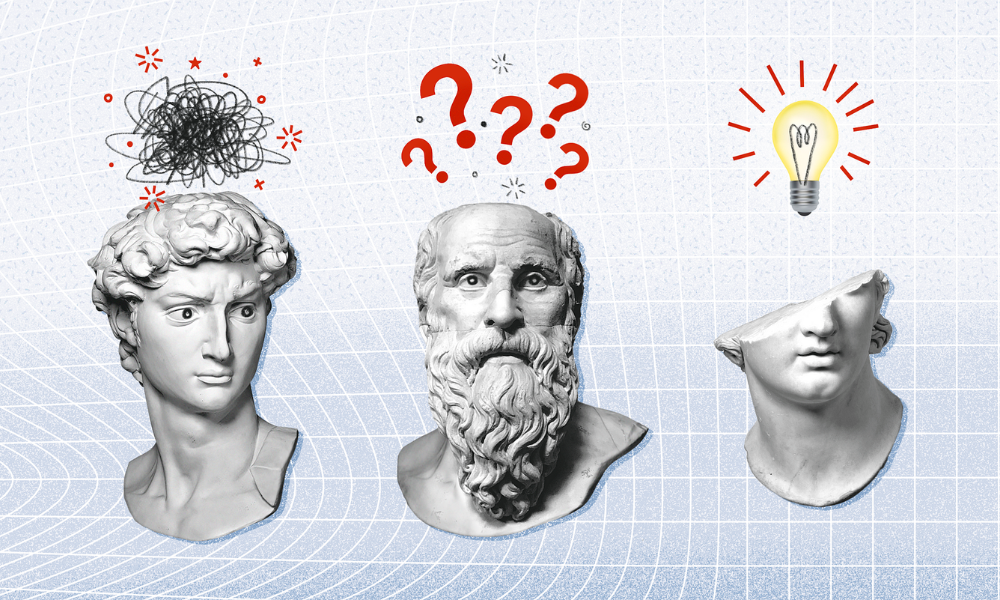
This method dates back to Socrates (470–399 BCE), one of ancient Greece’s greatest philosophers. He used questioning as a way to challenge the Athenian people’s ideas of morality, justice, and virtue.
His student, Plato, recorded many of these dialogues, which became the foundation of Western philosophical thought. Socrates believed that wisdom begins with recognizing one’s own ignorance — a revolutionary idea that still drives education and leadership today.
How the Socratic Method Works

The process typically unfolds through three stages:
1. Questioning Assumptions
The teacher (or “Socratic guide”) starts by asking open-ended questions that challenge the learner’s beliefs.
Example: “What do you mean by success?” or “How do you know that’s true?”
2. Critical Dialogue
Learners are encouraged to analyze their responses and question their reasoning. This stage fosters introspection and discussion rather than passive listening.
3. Realization and Clarity
Through repeated questioning, learners begin to refine their thoughts, discard contradictions, and arrive at deeper understanding or self-awareness.
The Core Principles of the Socratic Method

Inquiry Over Instruction: Knowledge is drawn out, not delivered.
Dialogue Over Debate: The goal is understanding, not winning an argument.
Reason Over Opinion: Every statement must be backed by logic or evidence.
Reflection Over Reaction: Learners must think critically before responding.
Applications of the Socratic Method in Modern Education

1. Classrooms
Teachers use the Socratic Method to engage students in meaningful discussions rather than lectures. Instead of saying “This is the answer,” teachers ask “Why do you think this works?”
This approach improves comprehension, analytical skills, and verbal communication.
2. Law Schools
The power of the Socratic Method is a hallmark of legal education. Law professors often question students intensely to sharpen reasoning and quick thinking — essential traits for courtroom arguments.
3. Corporate Training
In leadership programs, managers use the Method to encourage problem-solving. Asking reflective questions helps employees analyze challenges instead of relying solely on instructions.
4. Personal Growth and Coaching
Life coaches and psychologists employ Socratic questioning to help clients confront limiting beliefs, clarify goals, and make informed decisions.
Examples of the Socratic Method in Action

Example 1: In a History Class
Teacher: “Why do you think revolutions occur?”
Student: “Because people want freedom.”
Teacher: “What kind of freedom — political or economic?”
Student: “Maybe both.”
Teacher: “Then can a country truly be free if its economy is dependent?”
👉 The student gradually refines their understanding through guided reasoning.
Example 2: In Daily Life
You might ask yourself:
“Why am I upset about this situation?”
“Is my reaction based on fact or assumption?”
“What can I control here?”
The Socratic approach helps us think calmly and logically — even outside the classroom.
Advantages of the Socratic Method
Encourages Critical Thinking: Learners analyze information deeply.
Develops Confidence: Students learn to express ideas clearly.
Improves Listening Skills: Dialogue teaches patience and understanding.
Promotes Self-Reflection: Helps identify biases and rethink assumptions.
Fosters Lifelong Learning: Encourages curiosity beyond textbooks.
Challenges of Using the Socratic Method

While powerful, this method also has limitations:
Time-Consuming: Discussions take longer than traditional teaching.
Uncomfortable for Shy Students: Some may hesitate to express opinions publicly.
Requires Skilled Facilitation: Poorly framed questions can derail learning.
Difficult to Assess: Grading “understanding” is more complex than marking right or wrong answers.
Despite these challenges, schools and universities are reintroducing this approach to promote deeper learning and critical reasoning — essential skills for the 21st century.
The Socratic Method in the Digital Age
In today’s digital classrooms and AI-driven learning environments, the Socratic Method is evolving. Online discussion boards, debate forums, and adaptive learning tools now simulate Socratic questioning.
AI tutors, for instance, can guide students by asking reflective questions based on their responses — mirroring the Socratic dialogue virtually.
This blend of ancient wisdom and modern technology is redefining how we think, learn, and grow.
Conclusion
The Socratic Method reminds us that true learning is not about memorizing facts but understanding concepts through reasoning and dialogue.
Whether in schools, workplaces, or personal life, asking “Why?” remains one of the most powerful tools for discovery.
By nurturing curiosity and open-mindedness, that transforms learners into thinkers — and thinkers into lifelong seekers of truth.
FAQs About the Socratic Method
Q1. What is the main purpose of the Socratic Method?
Ans: The main purpose is to encourage critical thinking and self-discovery through questioning rather than lecturing.
Q2. Who developed the Socratic Method?
Ans: It was developed by the Greek philosopher Socrates, who believed that questioning is the path to wisdom.
Q3. How is the Socratic Method used in schools today?
Ans: Teachers use it to spark discussions, analyze ideas, and help students reason independently instead of memorizing answers.
Q4. What are the benefits of the Socratic Method?
Ans: It promotes curiosity, clarity of thought, effective communication, and deeper understanding of complex topics.
Q5. Is the Socratic Method only for philosophy?
Ans: No, It’s used in law, business, medicine, and even counseling — anywhere that requires reasoning and decision-making.