





The Central Board of Secondary Education (CBSE) recently issued a new circular that modifies how APAAR (Automated Permanent Academic Account Registry) IDs are handled for students, especially when parental consent is withheld.
This change offers flexibility in the APAAR ID requirement and clarifies what schools should do when parents do not consent, all under the CBSE APAAR ID flexibility policy.
1. Understanding the APAAR ID & Its Purpose
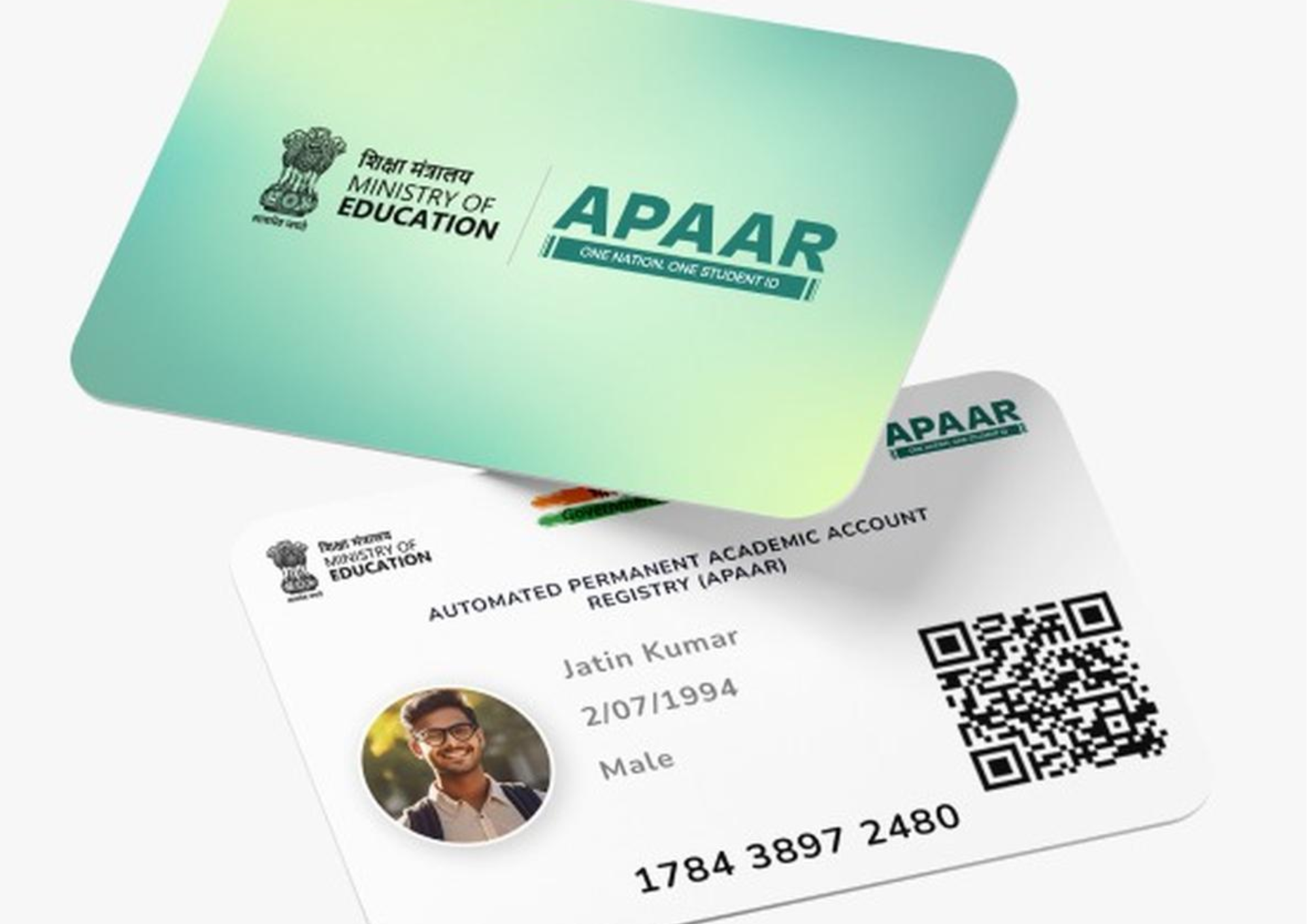
APAAR IDs are part of the Government of India’s “One Nation, One Student ID” initiative under the National Education Policy 2020. These unique student identifiers are meant to:
Store academic credentials (marksheets, transfer certificates) with ease.
Simplify school transitions across states.
Streamline verification for higher education and employment.
Despite these benefits, the APAAR rollout has faced obstacles, particularly when it comes to matching student data with Aadhaar, obtaining parental consent, and technical integration with school data systems.
2. What Changed Under CBSE APAAR ID Flexibility

CBSE’s recent circular makes the following allowances under the APAAR rule:
If parents refuse to grant consent, schools should record “REFUSED” in the List of Candidates (LOC) for Class 10 and 12 instead of forcing entry.
If APAAR ID is not generated for reasons other than non-consent—such as mismatched data, delays, or technical issues—schools can mark the entry as “NOGEN.”
Schools must retain the consent denial document as proof of parental refusal.
These changes are intended to avoid delays in exam registrations and reduce bureaucratic hurdles.
3. Why This Flexibility Is Important

Parental Privacy Concerns
Many parents have expressed concern about linking a child’s academic profile with Aadhaar due to privacy, data security, or mismatch of personal details in different databases. Under the CBSE APAAR ID flexibility rule, this concern is respected.
Technical and Data Mismatch Issues
Some schools reported that the students’ data in school records didn’t match Aadhaar records, making the generation of APAAR IDs difficult or impossible. The flexibility prevents penalizing students for such mismatches.
Avoiding Administrative Delays
Because of APAAR ID issues, many schools feared the List of Candidates (LOC) submission might be delayed. Marking “REFUSED” or “NOGEN” allows registrations to proceed without waiting for perfect data.
4. Implications for Schools, Students, and Parents

For Schools
Must retain a signed document from the parents if they refuse consent.
Should mark LOC entries correctly (as “REFUSED” or “NOGEN”) to avoid penalties.
Need to communicate these new options clearly to parents and students.
For Students
No academic or registration disadvantage if parents deny consent under this policy.
Their examination registration will not be held up due to missing APAAR IDs.
For Parents
Easier to understand their rights related to student data and consent without compromising their child’s academic registration.
Less pressure or coercion to consent when concerns about privacy or data matching arise.
5. What Remains Unchanged

While flexibility has increased, certain things remain:
The goal of the APAAR ID initiative still stands: to have a unified student ID for academic records.
Where possible, APAAR IDs will still be generated for students whose data is consistent and parents consent.
6. FAQ Highlights

What if a school marks both “REFUSED” and “NOGEN” wrongly? Schools must follow CBSE’s definitions carefully to avoid data issues.
Does “REFUSED” affect student eligibility for exams or scholarships? No—under the current policy, refusal alone does not block exam eligibility.
Is this change permanent? As of now, CBSE has introduced this flexibility for the current exam cycles, and further policy enhancements may be subject to review.
Conclusion
The CBSE’s decision to ease provisions for APAAR ID generation under cases of parental consent — the heart of the CBSE APAAR ID flexibility — reflects a more inclusive, pragmatic approach.
This development balances the need for streamlined academic systems with respect for privacy, data integrity, and logistical realities. As implementation unfolds, clear communication between schools, parents, and students will be essential to ensure that no student is unfairly disadvantaged.