



Robotics lab school education gives students an opportunity to move beyond textbooks and experience technology through designing, building, experimenting, and problem-solving. At Ecole Globale International Girls’ School, technology-focused learning encourages students to explore ideas, think creatively, and develop skills relevant to an increasingly digital world.
Building robots is not just about building machines. It can combine and blend science, technology, engineering, mathematics, coding, creativity, and teamwork in an applied learning context when integrated into the school curriculum.
Why Robotics Education Matters for Students
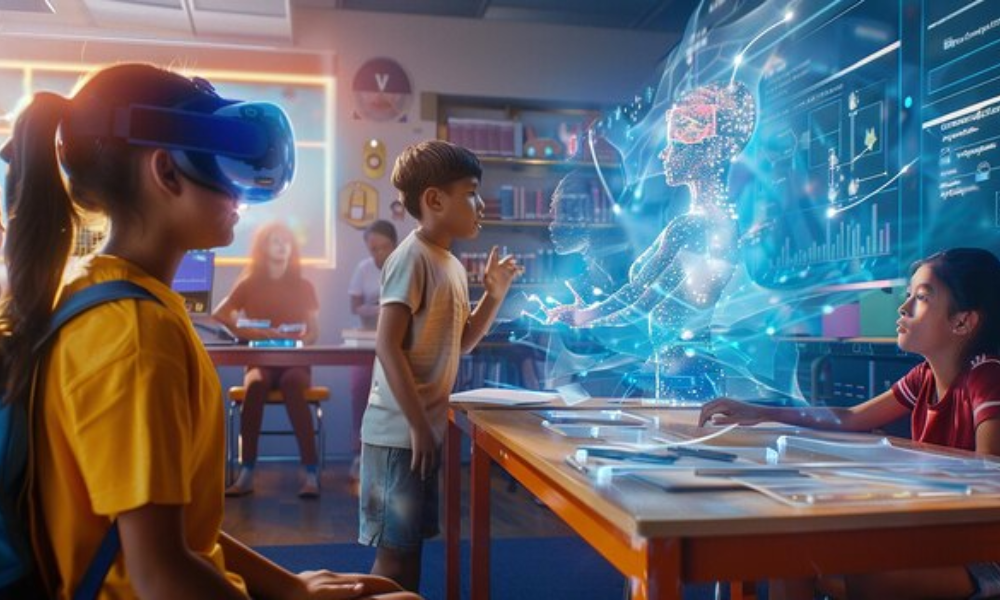
Technology is transforming the ways people study, work, communicate and problem-solve. Therefore, students require more than just theoretical knowledge. They are provided with opportunities to learn about the use of technology and how it can be used creatively.
Robotics education in schools can incorporate logical thinking, experimentation, design, coding concepts, and collaborative problem solving. Students can learn a scientific or mathematical concept in a book but can also learn how knowledge can be used in a practical situation.
One of the great advantages of hands-on STEM learning is that it moves from knowing a concept to putting it into practice.
Robotics Lab School Learning at Ecole Globale
The purpose of technology education at Ecole Globale International Girls’ School is to stimulate students to become active learners. A school robotics lab can offer a setting in which students can test out concepts, fail, make changes to their designs, and try again.
Through age-appropriate activities, students can develop skills such as:
- Logical and analytical thinking
- Problem-solving
- Creativity and innovation
- Basic coding and computational thinking
- Teamwork and communication
- Design thinking
- Scientific curiosity
These skills can support students across academic subjects rather than being limited to robotics alone.
Connecting Robotics with STEM Education

Robotics is a hands-on approach to integrating STEM education—Science, Technology, Engineering and Mathematics.
For instance, students might need to learn about a scientific principle, measure, design a structure, play with technology, and troubleshoot a problem in a robotics activity.
Students use an interdisciplinary approach to develop an understanding of the ways in which various subject areas are connected in real-world contexts.
Science
Students can explore concepts such as motion, energy, electricity, sensors, and mechanics through practical activities.
Technology
Working with robotics introduces students to digital systems, programming concepts, automation, and emerging technologies.
Engineering
Students learn to design, build, test, identify problems, and refine their solutions.
Mathematics
Measurements, calculations, patterns, logic, and spatial reasoning become part of practical problem-solving.
Developing Problem-Solving Skills
One of the best parts of robotics education is that sometimes things don’t always go as planned.
Students might have to decide why a mechanism is not moving as desired, why instructions are not yielding the desired result, or how the design can be better.
This process helps students to analyse, test, correct, and test again.
These can nurture persistence and problem-solving techniques that can be applied to school assignments and everyday challenges.
Encouraging Creativity and Innovation
Robotics is a blend of technical and imaginative skills.
A problem can be presented to students, and they can be encouraged to come up with multiple solutions instead of the one correct answer. This gives them the chance to try out their ideas, consider options and make improvements.
A good STEM robotics lab is more than just about assembling parts and pieces. This educational value lies in its ability to motivate pupils to question, to make choices and to grasp the logic behind their choices.
Robotics and Coding for Students

The correlation between coding and robotics is a natural one. Coding develops in students skills the ability to program, logic, sequencing and conditions to control technology.
If pupils can see a real device working when they give it commands, then they can understand the concepts of coding.
The world of robotics and coding for children can make technology education more fun and can help to slowly build computational thinking skills.
Learning Through Hands-On Experiences
For students, it is better to understand concepts when they are applied.
A project in robotics may start with a concept, and then proceed to planning, building, programming, testing and modifying. Students are not just passive receivers of information but are involved in the learning process.
The use of hands-on activities can also stimulate curiosity. Anyone who wants to understand how a robot is acting is going to start learning more about the scientific, mathematical or technological principle underlying the robot.
Building Teamwork and Communication
Students collaborate on many robotics projects.
One student could work on the design, another on programming or testing. Students must share ideas, share roles, listen to various points of view and resolve conflict constructively in order to complete the project successfully.
These cooperative activities can enhance communication skills, teamwork and skill development.
Preparing Students for a Technology-Driven Future

Many businesses are undergoing transformations with the help of artificial intelligence, automation, robotics, data science and digital technologies. It is not possible for schools to know exactly what career paths students would take were they to come into the world today, but students can build skills that are flexible for future career paths.
Robotics education can introduce students to technological thinking while building broader abilities such as:
- Curiosity
- Adaptability
- Critical thinking
- Collaboration
- Creativity
- Digital awareness
- Independent problem-solving
These skills can remain valuable even as specific technologies change.
Why Choose Ecole Globale for Future-Ready Learning?
Students need to be trained for examination and not for challenges outside the classroom. The environment at Ecole Globale International Girls’ School is designed to facilitate learning alongside exploration, creativity, learning through action and personal development.
If parents are seeking a robotics lab school, it is not enough for a school to have technology available. The important thing is how students make use of that technology for learning, experimenting, thinking, and creating.
The adoption of technology and experiential learning, along with the academic studies, allows Ecole Globale International Girls’ School the opportunity to build confidence and skills to face an evolving future.
Conclusion
A robotics lab school can provide a student with a textbook can’t offer: the chance to experience ideas in practice. The learning that takes place in robotics enables students to ask questions, design, try, and solve problems, work together, and learn from their errors.
At Ecole Globale International Girls’ School, the future ready education can help students build a solid base of academics with technological awareness, creativity and critical thinking.
Frequently Asked Questions
Q1. What is a robotics lab in school?
Ans. A school robotics lab is a learning space where students can explore robotics, engineering, coding, and related STEM concepts through practical activities and projects.
Q2. Why is robotics education important for students?
Ans. Robotics can help students develop problem-solving, logical reasoning, creativity, teamwork, computational thinking, and practical STEM skills.
Q3. Is robotics useful only for students interested in engineering?
Ans. No. Robotics develops transferable skills such as analytical thinking, creativity, communication, and problem-solving that can benefit students across many academic and career paths.
Q4. How does robotics support STEM education?
Ans. Robotics combines elements of science, technology, engineering, and mathematics within practical projects, helping students understand how these subjects interact.
Q5. Does robotics help students learn coding?
Ans. Robotics can provide a practical introduction to coding because students can observe how programmed instructions influence the behavior of a physical system.