




Problem-solving skills in schools are becoming essential as education moves beyond memorisation towards practical learning, independent thinking, and real-world application. Students need to analyse information, identify challenges, evaluate possible solutions, and make informed decisions. These abilities help learners become more confident, creative, and adaptable.
The importance of problem-solving skills for students extends beyond examinations. From completing classroom projects to managing everyday challenges, students benefit from learning how to approach problems logically and creatively. By integrating critical thinking and problem-solving in education, schools can prepare students for higher education, future careers, and lifelong learning.
What Are Problem-Solving Skills in Schools?
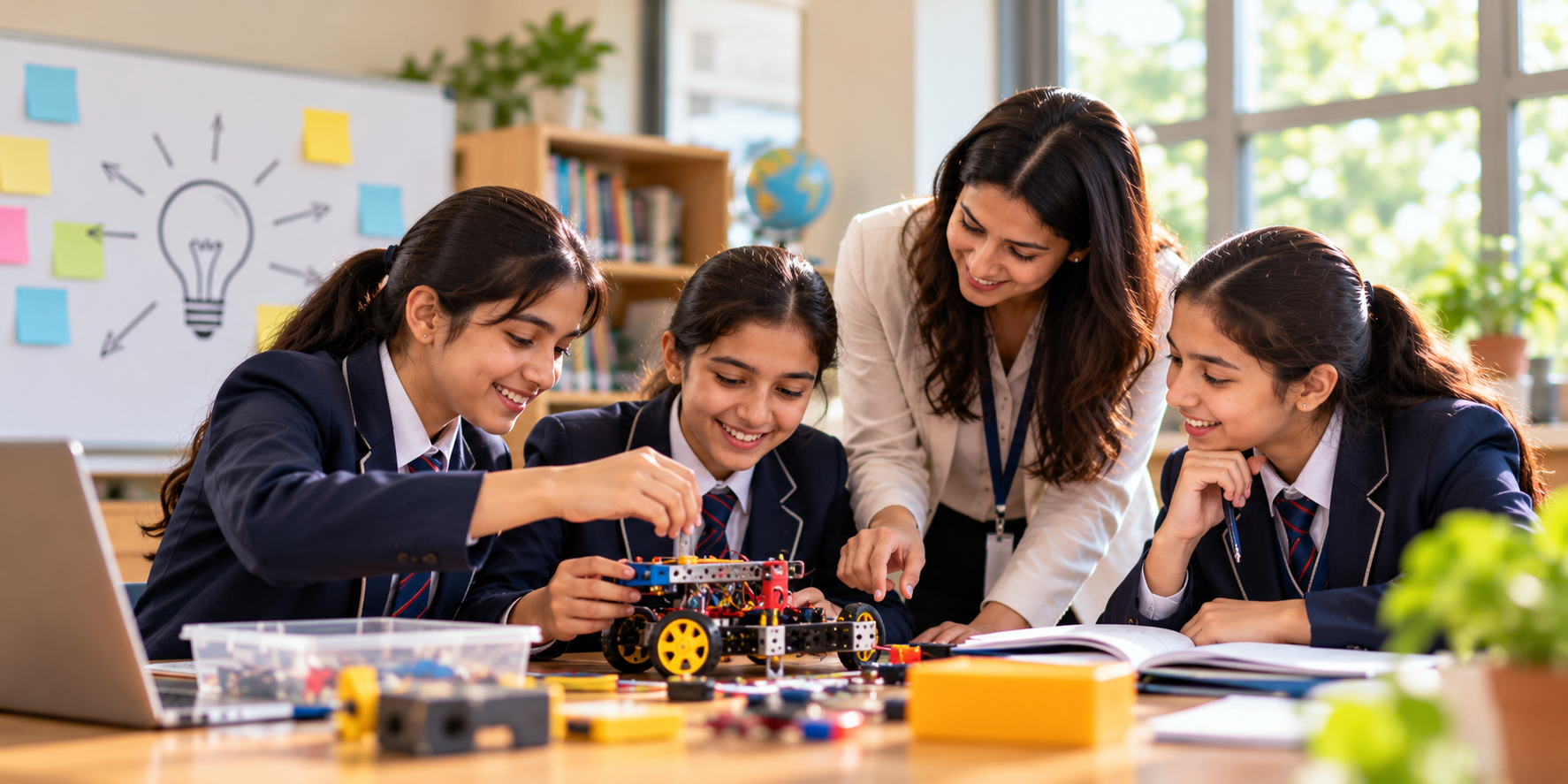
Problem-solving skills in schools refer to the abilities students use to identify a problem, understand its causes, explore possible solutions, and select the most appropriate response. These skills involve logical reasoning, creativity, decision-making, communication, and evaluation.
For example, students working on a school sustainability project might investigate water wastage, collect information, discuss possible solutions, and recommend practical improvements. This activity develops reasoning, collaboration, and decision-making.
Problem-solving can be practised in almost every subject. Mathematics encourages logical thinking, science promotes experimentation, languages develop interpretation, and social studies help students analyse real-world issues. When these activities become part of everyday learning, students gain more opportunities to apply knowledge instead of simply memorising information.
Why Problem-Solving Skills in Schools Matter

Problem-solving skills in schools help students connect classroom knowledge with practical situations. They learn to identify the cause of a problem, explore alternatives, compare possible outcomes, and choose a suitable solution.
These abilities are increasingly relevant because students regularly encounter unfamiliar questions that require more than a memorised answer. Learning how to approach these situations helps them become independent thinkers and active participants in their education.
1. Develops Critical Thinking
One of the main benefits of problem-solving skills in schools is the development of critical thinking. Students learn to examine information, ask questions, evaluate evidence, and consider different perspectives before reaching a conclusion.
For instance, when studying an environmental issue, students might compare different sources of information and assess which solutions are practical. This encourages them to distinguish between facts, opinions, and assumptions.
Critical thinking and problem-solving in education complement each other. Critical thinking helps students evaluate information, while problem-solving helps them apply that information to a particular challenge.
2. Connects Classroom Learning With Real Life
Students often understand concepts more effectively when they can apply them to familiar situations. Practical assignments demonstrate how academic knowledge can be used outside the classroom.
Teachers can ask students to prepare a budget for a school event, design a simple water-conservation plan, or calculate the materials needed for a project. Such tasks encourage learners to combine knowledge from different subjects.
These activities show the importance of problem-solving skills for students because they develop practical abilities alongside academic understanding. Students begin to recognise how classroom learning can help them address everyday challenges.
3. Encourages Creativity and Innovation
Not every problem has one obvious solution. Sometimes students need to explore several approaches, experiment with ideas, and improve their work before finding an effective answer.
Creative classroom challenges give students opportunities to think independently. For example, teachers might ask groups to design a useful object using recycled materials or develop a campaign to reduce waste at school.
Problem-solving skills in schools encourage students to look beyond familiar methods and consider alternative possibilities. They also learn that evaluating and improving an idea is an important part of the creative process.
4. Improves Decision-Making Skills
Students make decisions when planning assignments, selecting project topics, managing their time, and working with classmates. Problem-solving helps them consider the possible consequences of different choices.
A simple decision-making process involves identifying the problem, gathering relevant information, listing possible options, comparing their advantages and disadvantages, and selecting an appropriate solution.
Students can then review the outcome and identify what they might do differently next time. This process develops responsibility and encourages decisions based on reasoning rather than impulse.
The importance of problem-solving skills for students therefore extends beyond classroom performance to everyday choices and long-term planning.
5. Strengthens Teamwork and Communication
Many classroom projects require students to work together. During group activities, learners may have different opinions and approaches, making communication an important part of finding a solution.
Students can develop teamwork by listening to others, explaining their ideas, dividing responsibilities, and resolving disagreements respectfully. They also learn that different perspectives may reveal options they had not considered independently.
Problem-solving skills in schools help students understand that successful collaboration requires patience, clear communication, and a shared commitment to achieving a goal.
These abilities can also support future academic projects and professional environments where people must work together to solve complex problems.
6. Builds Confidence and Resilience
Unfamiliar tasks can sometimes feel challenging for students. However, when learners practise breaking a problem into smaller steps, they can approach difficult situations in a more organised way.
Instead of expecting an immediate answer, students can test an idea, evaluate the result, and adjust their approach. This encourages persistence and helps them recognise that mistakes can provide useful information.
Teachers can support this process by offering constructive feedback and recognising effort, reasoning, and improvement. A supportive classroom allows students to ask questions and try different approaches without being discouraged by every mistake.
As a result, problem-solving skills in schools can help learners become more comfortable with challenges and more confident in their ability to improve.
7. Prepares Students for Future Careers
Future careers often require people to analyse information, adapt to change, collaborate with colleagues, and make informed decisions. Students who practise problem-solving can begin developing these transferable abilities during their school years.
These skills are relevant across many fields, including science, technology, engineering, business, healthcare, education, and environmental management. Although the challenges differ between professions, the ability to understand a problem and evaluate possible solutions remains useful.
The importance of problem-solving skills for students also becomes clear in higher education, where learners may need to conduct independent research, interpret complex information, and complete projects with limited guidance.
Schools can help prepare students for these expectations by providing meaningful opportunities to investigate questions, test ideas, and explain their conclusions.
How Schools Can Develop Problem-Solving Skills
Schools can strengthen problem-solving by making lessons more interactive and encouraging students to participate actively in the learning process.
Project-Based Learning
Project-based learning allows students to investigate a question or complete a practical task over time. Projects might involve designing a school garden, researching energy conservation, or developing a campaign to reduce plastic waste.
Students learn to plan activities, gather information, collaborate with classmates, and present possible solutions. These experiences make problem-solving skills in schools more practical and engaging.
Inquiry-Based Learning
Inquiry-based learning encourages students to ask questions, investigate evidence, and develop explanations. Instead of providing every answer immediately, teachers guide students through a process of discovery.
This approach promotes curiosity, independent thinking, and critical thinking and problem-solving in education. It also helps learners understand how to support their conclusions with evidence.
Classroom Discussions and Case Studies
Teachers can introduce age-appropriate situations involving environmental concerns, school routines, resource management, or community challenges. Students can discuss the causes of a problem and compare different responses.
Explaining why one solution may be more appropriate than another encourages reasoning and respectful discussion.
Experiments and Practical Activities
Science experiments, mathematics challenges, coding exercises, and design activities provide opportunities to test ideas and observe results. When an approach does not work, students can investigate why and try another method.
Practical activities help learners understand that problem-solving involves investigation, evaluation, and improvement rather than simply finding an answer.
Reflection and Feedback
Reflection helps students recognise how they approached a challenge and what they learned from the experience.
Teachers can ask questions such as:
- What problem were you trying to solve?
- What information helped you make a decision?
- Which other solutions did you consider?
- What worked well, and what would you change next time?
Regular reflection helps students improve their strategies and apply lessons from one activity to another.
The Role of Teachers in Problem-Solving Development
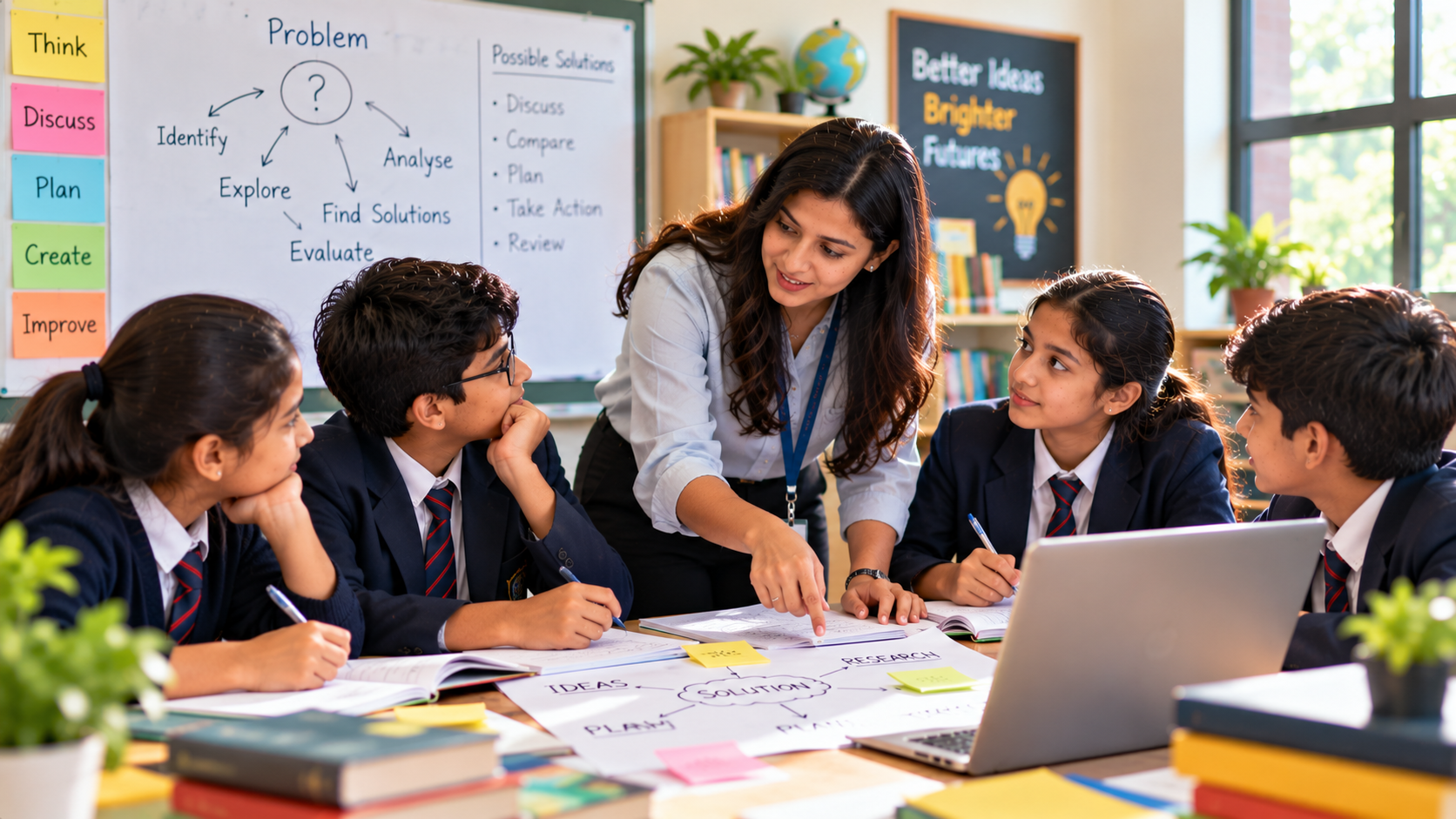
Teachers play an important role in developing problem-solving skills in schools. They can create a learning environment where students feel comfortable asking questions, exploring alternatives, and explaining their reasoning.
Assessment should consider not only the final answer but also the process students use to reach it. Teachers can evaluate how learners identify problems, use evidence, compare options, and respond to feedback.
Activities should also match students’ ages and learning needs. Younger children may benefit from puzzles and simple practical challenges, while older students can explore research assignments, scientific investigations, and complex case studies.
The goal is to provide suitable guidance while gradually encouraging students to think and work more independently.
How Technology Supports Critical Thinking and Problem-Solving in Education
Technology can offer additional ways for students to practise problem-solving. Digital simulations, coding platforms, educational games, and design tools allow learners to experiment with ideas and observe different outcomes.
For example, students might use spreadsheets to compare budgets, digital maps to explore geographical patterns, or beginner coding activities to solve logical challenges.
However, technology should support rather than replace independent thinking. Students need to evaluate information carefully, check sources, and understand that digital tools can have limitations.
When used thoughtfully, technology can strengthen critical thinking and problem-solving in education by providing new opportunities to investigate questions and communicate findings.
How Parents Can Encourage Problem-Solving at Home
Parents can reinforce problem-solving skills in schools by giving children opportunities to make age-appropriate decisions and participate in everyday tasks.
Activities might include planning a family outing within a budget, organising a study timetable, following a recipe, or finding ways to reuse household materials. These experiences help children practise planning, comparison, and decision-making.
Parents can also ask open-ended questions instead of immediately providing answers. Questions such as “What options could you try?” or “How could you find out?” encourage children to explain their reasoning.
Allowing children to learn from manageable mistakes can also help them develop confidence and independence. Supportive guidance helps them understand that reviewing and improving a solution is a normal part of learning.
Conclusion
Problem-solving skills in schools are becoming essential because students need more than subject knowledge to navigate academic challenges and everyday life. They also need to think critically, explore alternatives, make informed decisions, collaborate with others, and learn from experience.
By integrating practical projects, inquiry-based learning, experiments, classroom discussions, and reflection, schools can make problem-solving a regular part of education. Teachers and parents can work together to provide supportive opportunities for students to practise these abilities.
Ultimately, problem-solving skills in schools help learners become more independent, adaptable, and thoughtful. By recognising the importance of problem-solving skills for students and integrating critical thinking and problem-solving in education, schools can provide a strong foundation for lifelong learning and future challenges.
Frequently Asked Questions
Q1. Why are problem-solving skills important for students?
Ans: Problem-solving skills help students analyse challenges, make informed decisions, apply classroom knowledge, and develop independent thinking. They are useful in academic activities, everyday situations, and future careers.
Q2. How can schools improve problem-solving skills?
Ans: Schools can encourage problem-solving through project-based learning, science experiments, classroom discussions, case studies, coding exercises, and group activities that require students to evaluate possible solutions.
Q3. What is the difference between critical thinking and problem-solving?
Ans: Critical thinking involves analysing information, evaluating evidence, and assessing ideas. Problem-solving uses these abilities to understand a challenge and develop an appropriate response.
Q4. Can problem-solving be taught in every subject?
Ans: Yes. Mathematics, science, languages, social studies, arts, and other subjects can include activities that encourage students to investigate questions, compare options, and evaluate results.
Q5. How can parents encourage problem-solving at home?
Ans: Parents can involve children in everyday decisions, ask open-ended questions, encourage independent thinking, and provide opportunities to learn from mistakes.