



Something fundamental has shifted in classrooms around the world, and it happened faster than anyone had a policy ready for. In the space of two academic years, artificial intelligence moved from a distant theoretical concern to an everyday presence in the lives of students and teachers alike. The question education systems now face is not whether Age of AI belongs in schools — it already does — but whether the structures built around teaching, learning, and assessment are fit for a world where it does.
The urgency of that question is backed by data that would have seemed improbable even three years ago. A 2025 survey by the Center for Democracy and Technology found that 85% of teachers and 86% of students in the United States had used artificial intelligence tools during the school year. In the United Kingdom, nearly nine in ten university students acknowledged using generative AI for assessed work. Globally, the AI education market reached $7.57 billion in 2025 and is projected to surpass $112 billion by 2034. These are not niche adoption figures. They describe a structural transformation that is already underway — whether institutions are ready or not.
The System We Have vs The World We Are Preparing Students For
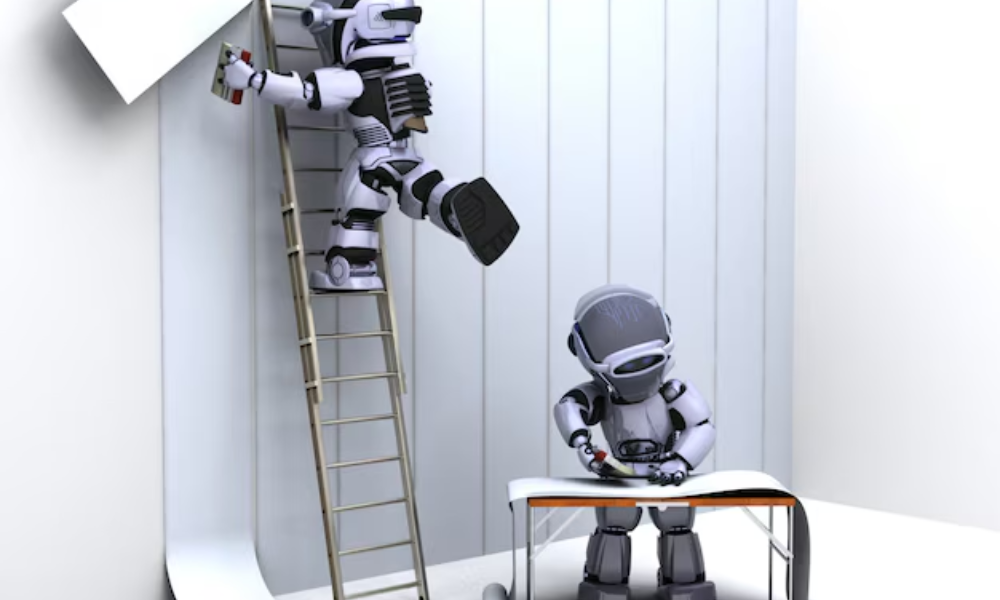
Modern schooling was designed for an industrial economy. Its rhythms — age-grouped cohorts, subject silos, standardised examinations, rigid timetables — were shaped by a 19th-century logic that prioritised consistency, scalability, and a relatively stable body of knowledge. That logic made sense when the skills needed for economic participation changed slowly across generations. It makes considerably less sense now.
The OECD has put it plainly: as artificial intelligence and robotics continue to evolve, education systems must begin to reassess the competencies required for life and work in the new context, and these changes could be significant and fast. What’s at stake is not just which subjects are taught, but the entire model of what teaching is for. If a student can access a near-instant, fluent answer to almost any factual question through an AI assistant, then the transmission of information — long the primary activity of the classroom — loses much of its value as an educational objective.
What cannot be replicated by artificial intelligence, at least not yet, is considerably more interesting: the capacity for original thought, genuine creativity, emotional attunement, ethical reasoning under uncertainty, and the kind of collaborative problem-solving that emerges from human relationships. These are precisely the capabilities that education should be cultivating — and precisely the ones that traditional schooling has often deprioritised in favour of measurable, examiable knowledge.
What AI Actually Does Well in Education
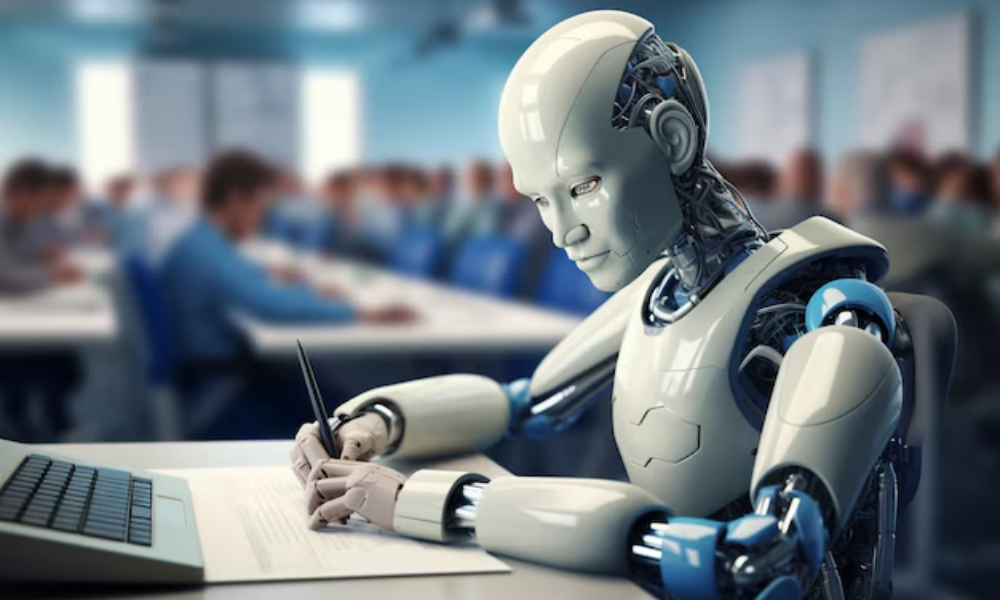
To rethink education effectively in the age of AI, it helps to be precise about what artificial intelligence tools actually do well and where they fall short. The evidence from early-adopter classrooms and EdTech deployments is increasingly clear.
AI excels at personalisation at scale. Traditional teaching requires a single teacher to address the needs of 30 or more students simultaneously — a structural constraint that has always limited how responsive instruction can be. AI-powered adaptive platforms can adjust the difficulty, pacing, and format of content in real time based on each student’s performance, providing a level of individualisation that is simply not possible in a conventional classroom. Khan Academy’s Khanmigo AI tutor, for instance, reported a 1.4 grade-level improvement in pilot school districts. ALEKS, an adaptive mathematics platform, showed a 35% improvement in course completion rates among at-risk students.
Artificial intelligence is also highly effective at reducing the administrative burden on teachers. Lesson planning, marking routine assessments, generating differentiated materials, tracking attendance patterns, and producing progress reports are all time-consuming tasks that consume hours teachers would rather spend in direct engagement with students. In a 2025 EdWeek survey, 69% of teachers said AI tools had improved their teaching methods, while 55% reported having more time for direct student interaction as a result. This frees teachers to focus on what only humans can do: inspire curiosity, notice a struggling student, facilitate a genuinely difficult class discussion, or form the kind of mentoring relationship that changes a young person’s trajectory.
The Assessment Crisis at the Centre of Everything

If there is a single fault line running through the AI-in-education debate, it is assessment. Examinations and graded assignments sit at the heart of educational systems globally — they signal progression, determine access to higher education, and shape the status of students and institutions alike. Generative AI has destabilised almost all of the assumptions on which traditional assessment rests.
When a student can produce a competent, well-structured essay on almost any topic in seconds, the essay-based examination loses its ability to distinguish between a student who understands the material and one who has learned to prompt an AI effectively. This has prompted a wave of institutional responses ranging from outright bans on generative AI tools to the reintroduction of handwritten paper examinations — a response that education observers widely regard as a strategic dead end. You cannot un-invent a technology by pretending it does not exist outside the exam hall.
The more productive response — already gaining traction in forward-thinking schools and universities — is to redesign assessment around what AI cannot easily fake. Process-based assessment asks students to document and reflect on their thinking over time, not just produce a final output. Performance-based assessment evaluates live demonstrations of skill and understanding. Portfolio-based approaches capture the evolution of a student’s work across a term or year. Oral examination and Socratic-style questioning return to the oldest form of assessment in education — dialogue — which remains remarkably difficult to game. These approaches are more labour-intensive to design and evaluate, but they are far more educationally meaningful.
The Teacher’s Role: Not Replaced, But Redefined

Among the most persistent anxieties in this debate is the fear that AI will eventually replace teachers. The research consensus — including from McKinsey and the OECD — is that this is not what the evidence supports. Artificial intelligence will augment teachers, not substitute for them. But this distinction matters only if education systems are thoughtful about how they respond.
The risk is not that AI replaces teachers wholesale, but that it replaces the parts of teaching that were never the most importance of ai anyway — the content delivery, the marking, the administrative tracking — while leaving intact a classroom model that was already struggling to develop the higher-order capabilities students genuinely need. If AI is simply grafted onto existing structures, it will produce more efficient factories of the same low-value output. The opportunity is to use the space that AI creates to fundamentally rethink what teachers do.
In this reimagined model, the teacher becomes less a repository of information and more a curator of learning experiences, a coach for critical thinking, a facilitator of genuine intellectual encounter. This demands a different kind of teacher training, a different professional identity, and — crucially — a different relationship between schools and the students and families they serve.
AI Literacy: The Skill Nobody Is Teaching but Everybody Needs
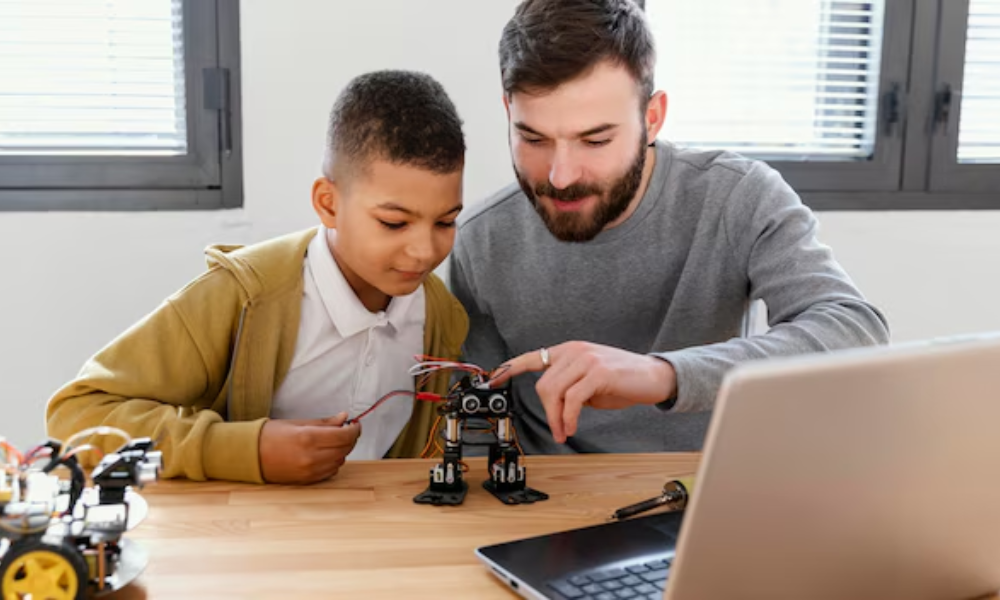
There is a growing consensus among education researchers and policymakers that AI literacy — the ability to understand, critically evaluate, and use AI tools effectively and responsibly — should be considered a core competency for the 21st century, as fundamental as reading, writing, and numeracy.
This means more than teaching students how to use specific artificial intelligence applications. It means developing the capacity to ask whether AI is the right tool for a given task, to identify the limits and biases of AI-generated content, to understand the data and privacy implications of AI systems, and to make ethical judgements about when and how AI should be used. These are not skills that can be acquired through a one-off module. They need to be woven into the fabric of how every subject is taught and how students are asked to work.
What This Means for Indian Schools: An Emerging Opportunity

For India, the challenge and opportunity of AI in education arrive at a particularly consequential moment. The National Education Policy 2020 already articulates a vision of schooling that moves away from rote learning toward competency-based, experiential education — a vision that aligns closely with what the AI era demands. CBSE’s introduction of AI and Data Science as vocational subjects from Class IX, and the broader push toward skill integration in the curriculum, are steps in the right direction.
The more difficult question is whether Indian schools — especially in resource-constrained contexts — can make the deeper shifts in pedagogy and assessment that AI makes both necessary and possible. Access to artificial intelligence tools remains unevenly distributed, with the digital divide between well-funded urban private schools and government schools in rural areas posing a real equity risk. An AI-enhanced education system that widens existing inequality would be a profound failure of the technology’s potential.
Boarding schools, by virtue of their extended learning environments and relatively resourced settings, are well placed to experiment with the kinds of project-based, inquiry-driven, and portfolio-assessed learning models that AI makes more viable. The residential context — where students live, eat, and work together — offers natural laboratories for the collaborative, cross-disciplinary problem-solving that future employers and universities increasingly value above examination performance alone.
The Risks That Cannot Be Ignored
A balanced assessment of AI in education must acknowledge the risks alongside the promise. UNESCO’s 2025 AI in Education report identified several that deserve serious attention:
- Data privacy: The personalisation that makes AI educationally powerful depends on collecting detailed data about student behaviour, performance, and learning patterns. Who owns that data, how it is used, and how it is protected are questions that most schools are not yet equipped to answer.
- Algorithmic bias: AI systems trained on skewed or unrepresentative data can reproduce and amplify existing inequities. A system that consistently underestimates the potential of students from disadvantaged backgrounds — or that is better optimised for one language or learning style — could entrench rather than disrupt educational inequality.
- Over-reliance and cognitive atrophy: There is a legitimate concern that students who habitually outsource thinking to AI may fail to develop the critical reasoning, sustained attention, and intellectual resilience that difficult, unaided cognitive work builds. This is not an argument against AI in classrooms — it is an argument for thoughtful design of when and how students engage with it.
- Academic integrity: The governance frameworks most schools have around plagiarism and authenticity were not designed for a world where generative artificial intelligence can produce competent academic work on demand. Updating these frameworks — and building a culture of genuine intellectual honesty — is urgent work.
The Mandate for Educational Leadership
The message from every serious analyst of artificial intelligence and education converges on the same point: the question is no longer whether AI belongs in learning environments. It already does. The question is whether educational leaders — school principals, curriculum designers, policymakers, teacher educators — are willing to do the slower, harder work of aligning AI with what we actually value about human development.
That work requires honesty about what the current system was built to do and humility about where it has fallen short. It requires courage to redesign assessment even when doing so is politically difficult. It requires investment in teachers — not just in tools — so that the professionals at the centre of education have both the skills and the confidence to navigate a rapidly changing landscape.
Most of all, it requires keeping the purpose of education clearly in view: not to produce students who can pass examinations, but to develop human beings who can think clearly, care deeply, collaborate effectively, and face an uncertain future with curiosity rather than fear. Artificial intelligence, used well, can be one of the most powerful tools ever placed in the service of that goal. Used poorly, or not thought about at all, it will simply be a more expensive way of doing the same thing we have always done.