




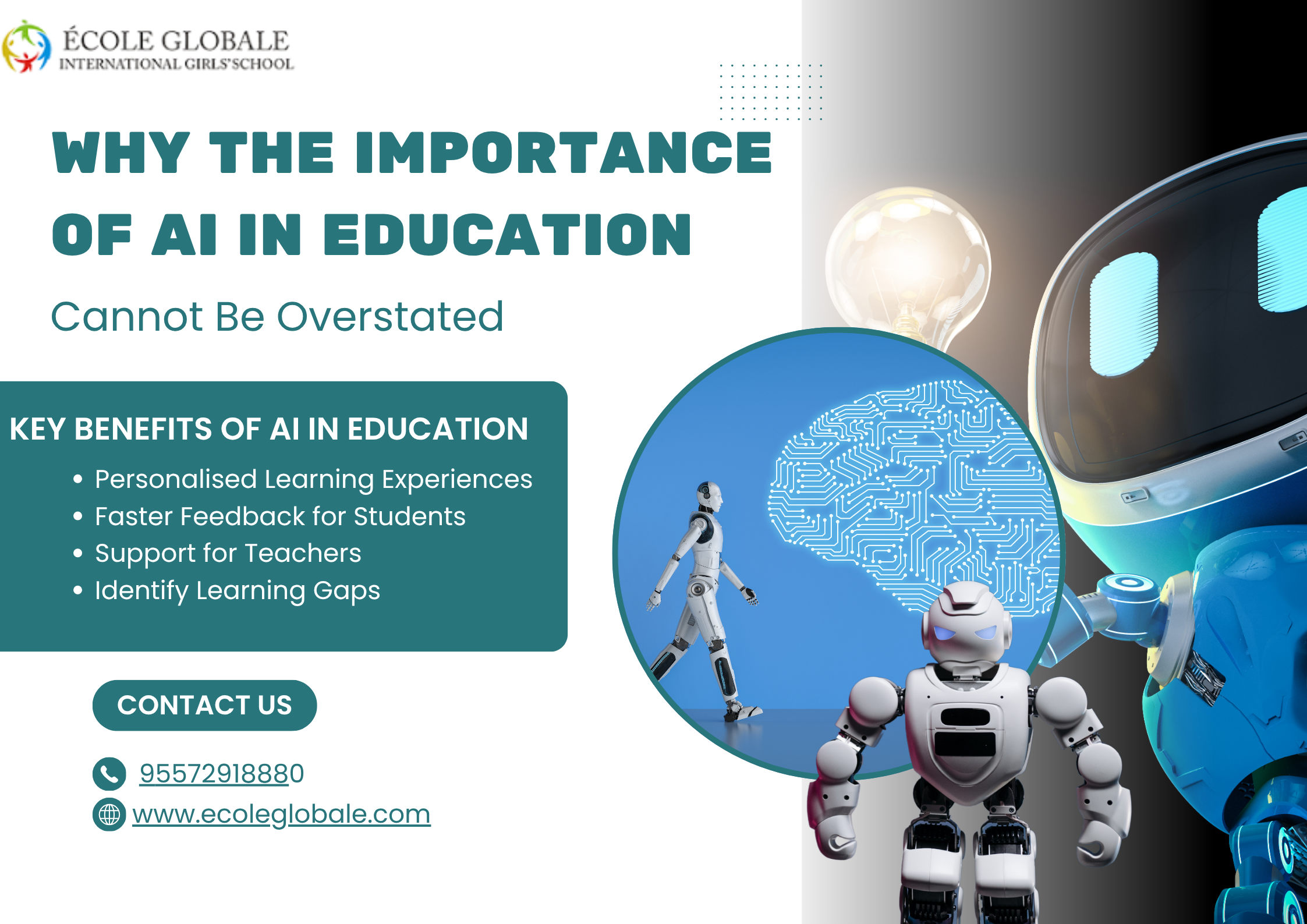
Artificial Intelligence (AI) is changing the way people learn, work, communicate, and solve problems. Education is one of the areas where this change is becoming increasingly visible. From personalised learning platforms to AI-powered tutoring and automated administrative tasks, artificial intelligence is giving students and educators new ways to approach learning.
The importance of AI in education goes beyond introducing technology into classrooms. When used thoughtfully, AI can help teachers understand student needs, provide additional learning support, offer faster feedback, and make educational resources more accessible.
At the same time, AI comes with challenges. Students need to learn how to question AI-generated information, protect their privacy, avoid overdependence, and use these tools without compromising academic integrity.
The real value of AI in education, therefore, lies in using technology to support human teaching and meaningful learning rather than treating it as a replacement for either.
What Is AI in Education?

AI in education refers to the use of artificial intelligence technologies to support teaching, learning, assessment, and educational management.
Unlike conventional digital tools that simply provide access to information, AI systems can analyse patterns, respond to prompts, generate content, identify learning gaps, and adapt certain learning experiences based on available information.
Examples of AI applications in education include:
- AI-powered tutoring systems
- Adaptive learning platforms
- Automated feedback and assessment tools
- Educational chatbots
- Speech and language tools
- Learning analytics
- AI-assisted lesson planning
- Accessibility and assistive technologies
The purpose is not simply to make classrooms more digital. The aim is to use technology where it can solve genuine educational problems and give students better support.
Why Is AI Important in Education?
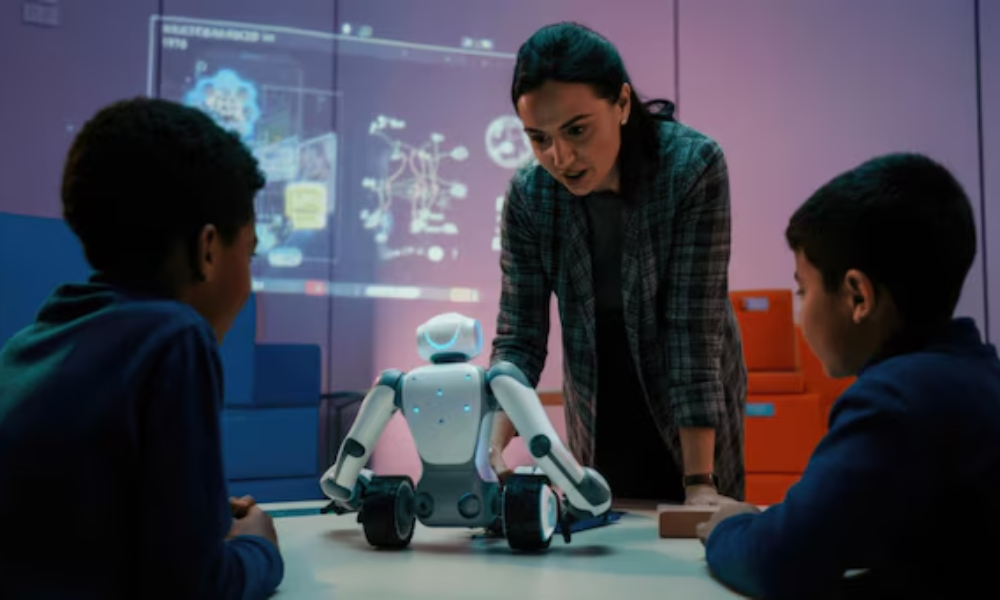
Traditional classroom teaching has to address the needs of many students at once. However, students differ in their learning pace, strengths, interests, and areas that require additional practice.
AI can help educators respond to some of these differences by analysing learning patterns and providing information that can support instructional decisions.
For example, an adaptive learning platform may identify that a student is struggling with a particular concept and recommend additional practice. A teacher can then use that information to decide whether the student needs another explanation, individual support, or a different learning activity.
This makes AI particularly useful as a support system rather than an independent replacement for classroom teaching.
Key Benefits of AI in Education
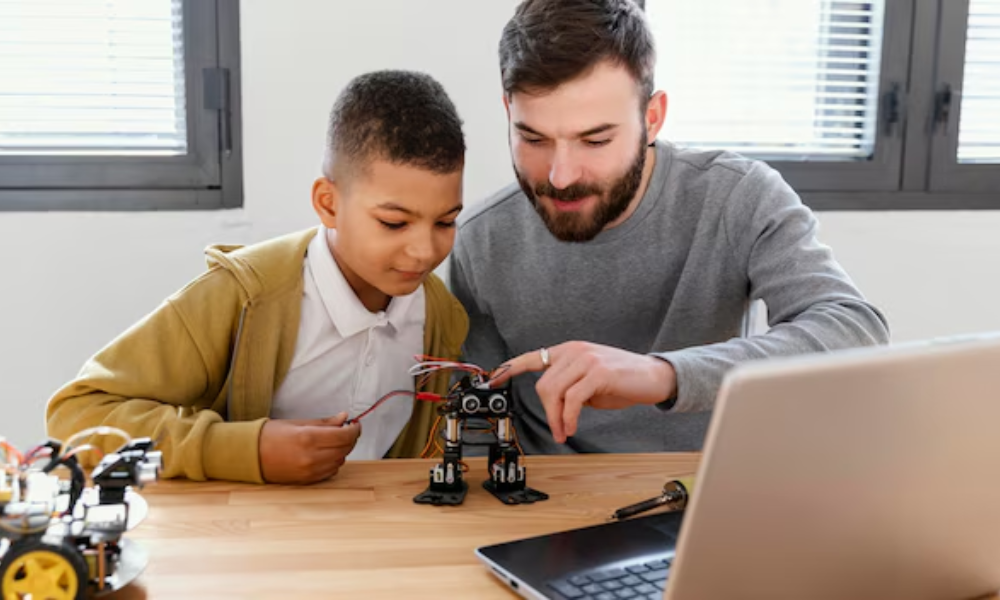
1. Personalised Learning Experiences
One of the most significant benefits of AI in education is its ability to support personalised learning.
Students do not always understand a topic at the same speed. Some may need additional examples and practice, while others may be ready for more challenging material.
AI-powered systems can use performance data to recommend exercises, resources, or learning activities suited to a student’s current level.
This can make learning more flexible and help students spend additional time on concepts they find difficult.
2. Faster Feedback for Students
Feedback is an important part of learning because students need to understand where they made mistakes and how they can improve.
Some AI-based learning tools can provide immediate feedback on selected types of questions and activities. Students can use this feedback to identify gaps and practise again instead of waiting for every task to be reviewed manually.
However, automated feedback should not be treated as automatically correct. Teachers and students still need to evaluate the quality and context of the information provided.
3. Support for Teachers
The role of AI in education is not limited to students.
Teachers spend considerable time on repetitive tasks such as preparing resources, organising information, analysing performance data, and creating practice activities. Certain AI tools can assist with some of these tasks.
For example, AI may help a teacher brainstorm lesson activities or generate different versions of practice questions. The teacher can then review, correct, and adapt the material according to the students and curriculum.
This can allow educators to spend more time on activities that require human judgement, such as discussion, mentoring, feedback, classroom interaction, and emotional support.
4. Greater Access to Learning Support
AI tools can make some educational support available beyond the classroom.
Students may use digital learning systems to practise concepts, receive explanations, generate questions for revision, or explore subjects from different perspectives.
AI can also support accessibility through technologies such as speech recognition, text-to-speech, language assistance, and other tools designed to make information easier to access.
This does not mean every student needs the same technology. The usefulness of an AI tool depends on the student’s needs, the quality of the system, and how it is implemented.
5. Helps Identify Learning Gaps
Student performance data can provide useful information about areas where additional support may be needed.
When used responsibly, AI-supported analytics can help teachers identify patterns such as repeated mistakes, declining performance, or difficulties with particular concepts.
Early identification can allow educators to intervene before a small learning gap becomes a larger problem.
Importantly, AI-generated predictions should support professional judgement rather than determine a student’s future on their own.
How AI Can Help Students Learn Better
AI can be useful at different stages of the learning process.
A student preparing for an examination, for instance, might use an AI-supported platform to:
- Generate practice questions
- Explain difficult concepts in simpler language
- Create revision prompts
- Identify topics that need more practice
- Organise study material
- Explore different examples
- Receive feedback on certain learning activities
The most effective approach is to use AI as a learning assistant, not as a shortcut.
If a student simply asks AI to complete an assignment and submits the response without understanding it, the technology may actually weaken the learning process. If the same student uses AI to explore a difficult concept, compare explanations, identify mistakes, and then completes the work independently, the tool can support deeper learning.
AI and the Development of Future-Ready Skills

The growing use of AI also changes the skills students need.
Knowing how to use an AI tool is only one part of AI literacy. Students also need to understand its limitations and learn how to evaluate what it produces.
Important skills include:
Critical Thinking
AI-generated answers can contain inaccurate, incomplete, or misleading information. Students therefore need to check claims against reliable sources instead of accepting every response at face value.
Digital Literacy
Students should understand how digital systems work at a basic level and how technology can influence the information they see.
Creativity
AI can help students explore ideas, but creativity still depends on human curiosity, judgement, experimentation, and original thinking.
Communication
Students need to explain their ideas clearly and work with others, regardless of how advanced technology becomes.
Ethical Decision-Making
Students should understand academic honesty, privacy, responsible technology use, and the possible social consequences of AI.
These skills can help students become informed users rather than passive consumers of technology.
Challenges of AI in Education
While the benefits are significant, the use of artificial intelligence in education also raises genuine concerns.
Academic Integrity
Students may use generative AI to produce essays, assignments, or answers without doing the underlying work themselves. This can make it difficult to determine whether an assessment reflects genuine understanding.
Schools need clear expectations around when and how AI can be used.
Accuracy and Misinformation
AI systems can generate convincing but incorrect information. Students therefore need to verify important facts through reliable sources.
This is especially important for research-based assignments and academic work.
Privacy and Data Protection
Some educational AI systems process student information. Schools and families should understand what data is collected, why it is needed, how it is stored, and who can access it.
Privacy should be considered before adopting any AI-powered educational platform.
Overdependence on Technology
One of the biggest risks is using AI for every small academic challenge.
If students rely on AI to think, write, solve, and research for them, they may get fewer opportunities to practise independent reasoning.
Technology should make students more capable, not less independent.
Unequal Access
Not every student has the same access to devices, reliable internet connections, paid software, or AI tools.
Schools need to consider accessibility and equity when introducing AI so that technology does not widen existing educational gaps.
How Schools Can Encourage Responsible AI Use

Schools can play an important role in helping students understand both the possibilities and limitations of artificial intelligence.
Instead of treating AI only as a tool to be accepted or rejected, educators can teach students how to use it responsibly.
Schools can:
- Establish clear AI-use guidelines
- Teach students how to verify AI-generated information
- Discuss plagiarism and academic integrity
- Explain data privacy and digital safety
- Encourage students to show their own reasoning
- Train teachers in appropriate AI use
- Use assessments that test understanding rather than only final answers
- Encourage discussions about AI ethics
Teacher training is particularly important. Research on AI literacy among educators indicates that structured training can improve teachers’ confidence and understanding of AI integration.
What Is the Future of AI in Education?

AI is likely to become increasingly integrated into educational technology, but its long-term impact will depend on how schools choose to use it.
Future learning environments may include more adaptive learning systems, AI-supported tutoring, automated administrative assistance, advanced accessibility tools, and learning analytics.
However, technology alone cannot provide everything a student needs.
Education also involves relationships, encouragement, collaboration, empathy, creativity, discipline, and human judgement. Teachers understand classroom dynamics and individual circumstances in ways that automated systems cannot fully replicate.
The future is therefore more likely to involve teachers working alongside AI rather than AI simply replacing teachers.
The most effective education systems will be those that combine technological capability with strong teaching and responsible digital citizenship.
How Students Can Use AI Responsibly
Students can make AI a useful part of learning by following a few basic principles:
- Use AI to understand, not just to finish.
- Check important information using reliable sources.
- Do not submit AI-generated work as your own when it violates school rules.
- Ask teachers when you are unsure whether AI use is permitted.
- Protect personal and confidential information.
- Compare AI explanations with textbooks and trusted educational resources.
- Keep practising independent writing, problem-solving, and research.
These habits can help students benefit from AI without losing the skills that education is meant to develop.
Conclusion: Using AI to Strengthen Education
The importance of AI in education lies in what the technology can contribute to learning when it is used with purpose.
AI can support personalised learning, provide faster feedback, assist teachers, improve accessibility, and help identify areas where students may need additional support. At the same time, concerns around accuracy, privacy, academic integrity, unequal access, and overdependence cannot be ignored.
The answer is not to make technology the centre of education. Instead, AI should complement strong teaching and give students additional ways to learn, practise, question, and explore.
For students growing up in an increasingly digital world, understanding how to use AI responsibly may become just as important as knowing how to use the technology itself. The goal should be an education system where technology supports human potential rather than replacing it.
FREQUENTLY ASKED QUESTIONS
Q1. What is the importance of AI in education?
Ans: AI improves learning by personalizing content, automating tasks, and offering instant feedback, making education more efficient and inclusive.
Q2. How does AI personalize learning for students?
Ans: AI analyzes a student’s learning pace and performance to suggest customized study material, quizzes, and support based on individual needs.
Q3. Can AI replace teachers in the classroom?
Ans: No. AI is designed to support, not replace teachers. It handles repetitive tasks and provides insights so educators can focus on meaningful teaching.
Q4. Is AI in education safe for student data?
Ans: If implemented with proper safeguards, AI tools can be secure. Institutions must follow data privacy laws and ethical guidelines to protect students.
Q5. What are examples of AI tools used in education?
Ans: Common tools include intelligent tutoring systems, automatic grading software, AI chatbots for queries, and adaptive learning platforms like Khan Academy.