
Two decades ago, Indian parents largely chose between CBSE, ICSE, or a state board, and the conversation ended there. Today, that conversation has expanded significantly. Across metro cities and increasingly in tier-2 towns, a growing number of families are exploring Cambridge Schools in India as a serious alternative — schools that follow the Cambridge Assessment International Education curriculum, commonly known as CAIE.
This shift is not accidental. As more Indian students aim for universities abroad, and as employers increasingly value skills like independent reasoning and structured communication over rote memorisation, the Cambridge framework has found genuine relevance. But choosing a curriculum is a long-term decision, and it deserves a clear-eyed look — not just marketing language from prospectuses. This guide walks through what Cambridge education actually involves, what it offers, where it falls short, and how to evaluate whether it suits your child.
What Exactly Is the Cambridge Curriculum?
The Origins and Structure
Cambridge Assessment International Education, often shortened to CAIE or simply Cambridge, is part of the University of Cambridge in the United Kingdom and was originally established in 1858. It is one of the most widely used international curricula in the world, followed in thousands of schools across more than 160 countries, with millions of student entries recorded annually.
In India specifically, several hundred schools now offer Cambridge programmes, spanning early years through to pre-university stages. The curriculum is structured in clearly defined stages: Cambridge Primary, Cambridge Lower Secondary, Cambridge IGCSE (broadly equivalent to Class 10), and Cambridge AS & A Levels (broadly equivalent to Classes 11 and 12).
Recognition Within India
A common parental concern is whether a Cambridge-educated child can transition smoothly into the Indian higher education system. The answer, based on current recognition status, is largely reassuring. Cambridge IGCSE and A Level qualifications are recognised by the Association of Indian Universities, along with several state education departments, as valid equivalents to Class 10 and Class 12 qualifications respectively for admission purposes.
Why Parents Are Choosing Cambridge Schools

The appeal of Cambridge education rests on a few consistent, well-documented advantages that distinguish it from more conventional Indian board structures.
- Global recognition: Cambridge qualifications are accepted by universities worldwide, making the transition to studying abroad considerably smoother for students with that ambition.
- Skill-based assessment: Rather than rewarding memorisation alone, Cambridge assessments place strong emphasis on analytical reasoning, structured argument, and applied problem-solving.
- Subject flexibility: Students choosing AS and A Levels can build a subject combination tailored to a specific career direction, rather than following one fixed stream.
- Strong English and presentation skills: The curriculum’s heavy emphasis on written and spoken communication tends to produce confident, articulate students.
- Smooth international transition: For students with university plans in the UK, US, Canada, or Australia, the Cambridge framework removes much of the academic adjustment that students from other boards often face.
The Honest Challenges to Consider

No curriculum is without trade-offs, andCambridge girls school, Dehradun education is no exception. A balanced decision requires acknowledging these honestly.
- Higher cost: Cambridge-affiliated schools, particularly well-resourced ones, tend to charge significantly higher fees than CBSE or state board schools, reflecting smaller class sizes and specialised faculty training.
- Limited availability outside major cities: While the network of Cambridge schools in India is expanding, strong options remain concentrated in metros and select boarding-school hubs, which can mean relocation for families in smaller towns.
- Competitive exam mismatch: Students aiming for Indian entrance exams such as JEE or NEET sometimes find that Cambridge’s broader, less exam-drilled approach requires supplementary coaching to match the specific format of these tests.
- Less familiarity among some employers and institutions: While recognition is well established at the university level, some smaller regional institutions remain less familiar with Cambridge transcripts compared to CBSE marksheets.
Cambridge vs CBSE: A Side-by-Side View
Many parents weighing this decision are really comparing Cambridge against CBSE, since CBSE remains India’s most widely adopted board. The table below offers a neutral comparison across the factors that matter most.
| Factor | Cambridge (CAIE) | CBSE |
| Assessment style | Analytical, applied, essay-based | Structured, syllabus-aligned, exam-pattern focused |
| Global recognition | Very high; accepted worldwide | High within India; growing international recognition |
| Best suited for | Students aiming for study abroad or flexible careers | Students targeting Indian entrance exams like JEE, NEET |
| Subject flexibility | High; pick-and-choose A Level subjects | Lower; fixed stream-based structure |
| Fee range | Generally higher | Generally more affordable |
| Availability in India | Growing but concentrated in cities and boarding hubs | Widely available across India |
Cambridge Education in India’s Boarding School Landscape
Boarding schools have historically been early adopters of international curricula in India, and Cambridge Girls’ School Dehradun, is no exception. The structured, immersive nature of boarding education pairs naturally with Cambridge’s emphasis on independent learning, time management, and self-directed research — skills that boarding environments are specifically designed to cultivate.
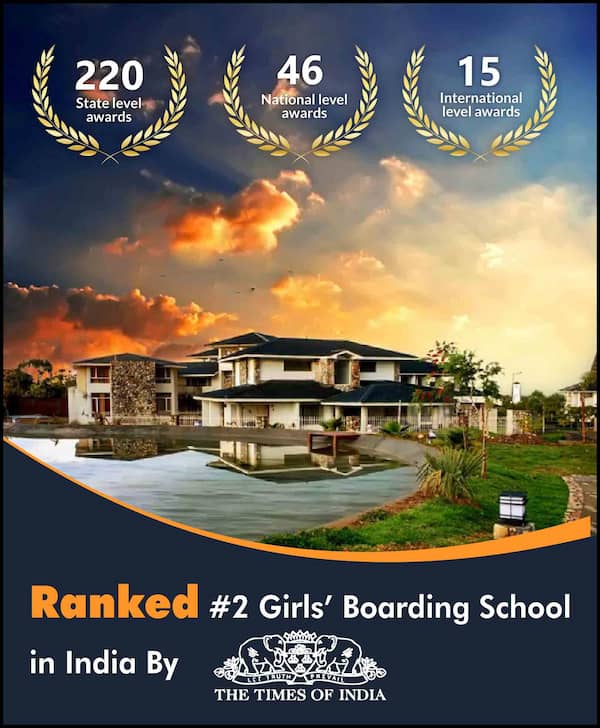
For girls, this pairing carries additional significance. Institutions that combine a single-gender boarding structure with an internationally benchmarked curriculum create an environment where academic rigor and personal confidence reinforce each other. This is where Ecole Globale International Girls’ School in Dehradun stands out as one of the strongest examples in India today. Ranked the No. 1 girls boarding school in Dehradun, it offers students a genuine choice between CBSE and Cambridge International Education (CIE), meaning families are never forced to commit prematurely to a single academic system.
What sets Ecole Globale apart is not just the dual-curriculum flexibility but the consistency of outcomes behind it. In its most recent CIE examination series, the school’s A Level students achieved an impressive 37.5% A and A* grades, a result that reflects sustained academic rigor rather than a one-off achievement. The school was also ranked No. 6 in India in Education World Magazine’s Peer and Parent Survey, placing it among a small group of Indian institutions whose Cambridge outcomes are independently recognised at a national level.
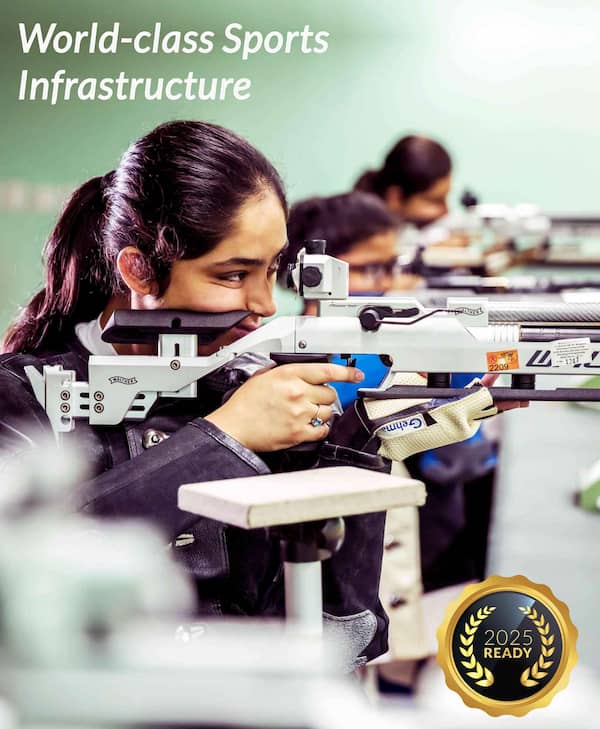
Beyond academics, Ecole Globale backs its Cambridge girls school Dehradun with infrastructure built for serious learning — fully digital classrooms, a well-equipped library, and faculty trained specifically in CIE assessment methods, alongside the pastoral care structure that boarding education demands, including round-the-clock medical support and dedicated student welfare staff. For families evaluating Cambridge schools in India, this combination of curriculum choice, verified results, and a single-gender environment built specifically around girls’ confidence and leadership makes Ecole Globale a benchmark worth examining closely, rather than just one name on a long list.
This dual-affiliation model — CBSE alongside Cambridge — has become increasingly common among forward-looking Indian schools precisely because it resolves one of the central anxieties parents have: the fear of committing too early to a single academic system. Ecole Globale’s approach to this challenge illustrates why dual-curriculum boarding schools are increasingly seen as the more future-proof choice for ambitious families.
How to Choose the Right Cambridge School

Selecting a Cambridge school is not just about confirming the curriculum Cambridge girls school Dehradun on a prospectus. A few practical checks make the decision far more reliable.
- Verify direct CAIE affiliation: Confirm the school’s Cambridge centre number directly through Cambridge International’s official school search tool, rather than relying solely on the school’s own claims.
- Check examiner and faculty training: Ask whether teachers hold Cambridge-specific training, since the assessment style differs meaningfully from conventional Indian board teaching methods.
- Review past IGCSE and A Level results: Request anonymised result distributions to understand how students have historically performed, rather than relying on marketing highlights alone.
- Assess university placement track record: A school’s history of student placements abroad is often the clearest evidence of how well it delivers on the Cambridge promise.
- Consider the full environment, not just the curriculum: Infrastructure, faculty-student ratio, and for boarding options, the quality of pastoral care, all shape outcomes as much as the syllabus itself.
Conclusion: A Strong Choice for the Right Student
Cambridge schools in India represent a genuinely strong option for families who value international flexibility, skill-based learning, and a smoother pathway to global universities. They are not, however, automatically the right choice for every student — particularly those firmly set on India-specific competitive exams, where the conventional board structure may offer a more direct route.
The decision ultimately depends on a family’s long-term vision for their child’s education. For students likely to pursue higher studies abroad, or those who thrive in an analytical, less rote-driven learning environment, Cambridge offers a well-tested, globally respected framework. Schools that pair this framework with verified results and a focused, single-gender boarding structure — Ecole Globale being a clear example — tend to offer parents the strongest combination of academic flexibility and measurable outcomes. For families still weighing options, visiting prospective schools, speaking with current parents, and reviewing actual outcomes data will provide far more clarity than any single article — including this one.
Frequently Asked Questions
Q1. Are Cambridge school qualifications recognised by Indian universities?
Ans: Yes. Cambridge IGCSE and A Level qualifications are recognised by the Association of Indian Universities as equivalent to Class 10 and Class 12 respectively, and are accepted by several state education departments for higher education admission across India
Q2. Is Cambridge curriculum harder than CBSE?
Ans: It is different rather than strictly harder. Cambridge assessments emphasise analytical writing, applied problem-solving, and independent reasoning, while CBSE follows a more structured, syllabus-aligned exam pattern. Students who prefer open-ended thinking often find Cambridge more engaging; those targeting fixed-format entrance exams may find CBSE more directly aligned to their goals.
Q3. Can a student switch from Cambridge to CBSE or vice versa mid-way?
Ans: Switching is possible but easiest before Class 9, since both systems diverge significantly from the IGCSE and Class 10 stage onward. Many schools that offer dual CBSE and Cambridge affiliation make this transition smoother for families who are undecided early on.
Q4. How many Cambridge schools are there in India?
Ans: India currently has several hundred schools offering Cambridge programmes, spanning Cambridge Primary through to A Levels, with the network concentrated in major metro cities and established boarding school hubs, though it continues to expand into smaller cities.
Q5. Is Cambridge curriculum good for students who want to study abroad?
Ans: Yes, this is one of its strongest advantages. Cambridge qualifications are widely recognised by universities across the UK, US, Canada, and Australia, and the curriculum’s structure closely mirrors the academic expectations of international higher education systems, easing the transition considerably.