




Few topics spark as much debate among parents as screen time. Children today are used to phones, tablets and constant messages, so the idea of a hostel with limited devices can feel daunting for both students and families.
This guide explains the screen time rules in boarding schools, why most schools follow them, how students adapt, and what parents can do to help their child settle into a healthier digital routine.
Why Boarding Schools Limit Screen Time
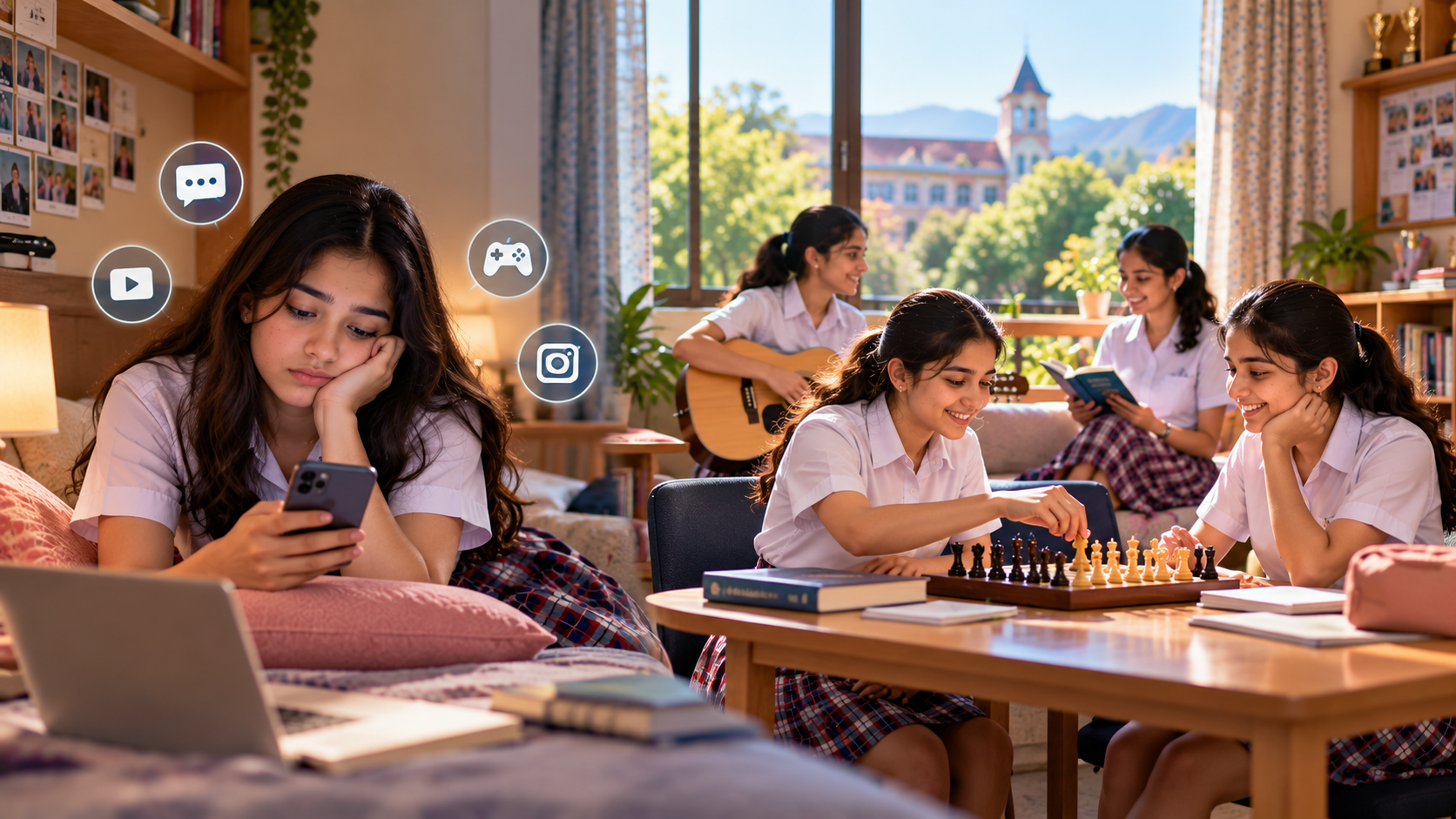
Boarding schools run on a shared routine, and unlimited devices can disrupt it. Schools usually set limits for four reasons.
Better sleep: Late-night scrolling cuts into rest, and tired students struggle in class the next day.
Sharper focus: Study hours work best when students are not distracted by notifications.
Stronger friendships: Students who spend evenings talking, playing and studying together build bonds faster than those glued to screens.
Online safety: With many students in one place, schools need to protect them from cyberbullying, unsafe content and unwanted contact.
Typical Screen Time Rules in Boarding Schools
Every school sets its own policy, so always read the parent handbook. That said, many follow a similar pattern:
| Area | Common rule |
|---|---|
| Personal mobile phones | Not allowed, or deposited with house staff |
| Calls home | Scheduled slots on weekdays or weekends |
| Computers and tablets | Used for study, often in a supervised lab or library |
| Weekend screen use | Limited time for movies or approved content |
| Social media | Usually not permitted for younger students |
Older students may get slightly more freedom, especially for project work. The aim is balance, not a complete ban on technology.
Benefits of Limited Screen Time for Students
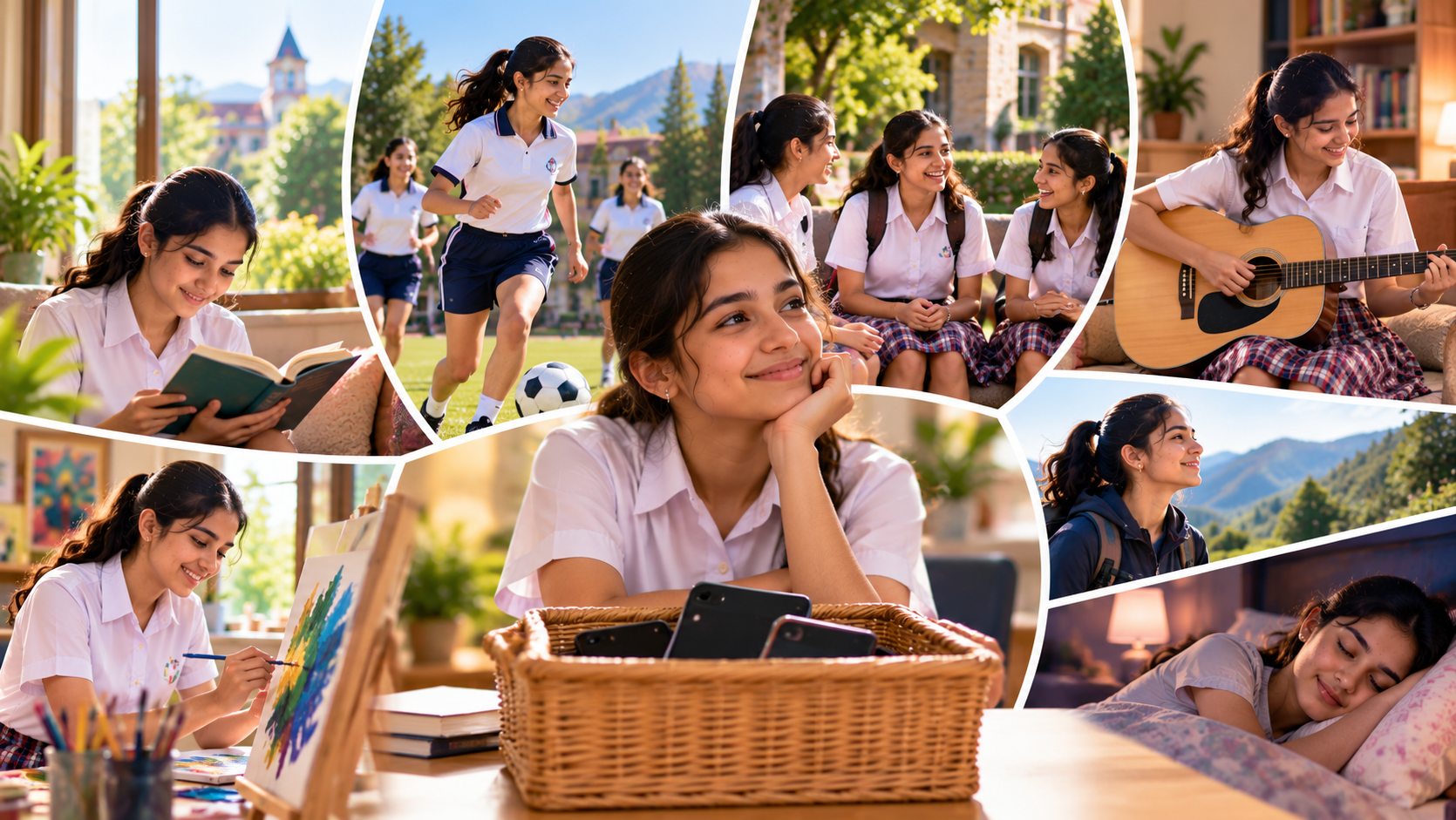
When screen time is managed well, students often notice positive changes within a few weeks:
- Deeper sleep and steadier energy through fixed lights-out routines
- Better concentration during classes and study hours
- Closer friendships built through conversation and shared activities
- More time outdoors for sports, games and hobbies
- Greater confidence, since students learn to be comfortable without constant messaging
Many students say they were surprised by how quickly they stopped missing their phones.
Challenges Students Face and How They Cope
The first couple of weeks are usually the hardest. Students may feel cut off from friends back home, worry about missing out or feel bored in free time.
Schools help by filling the day with structure: sports, clubs, library time and house events. Roommates and seniors also play a big role, because shared games and conversations quickly replace scrolling. Parents can help too, by staying positive about the rules and not offering to send a phone on the sly. Most students adapt within a month.
Staying Connected With Family Without Phones
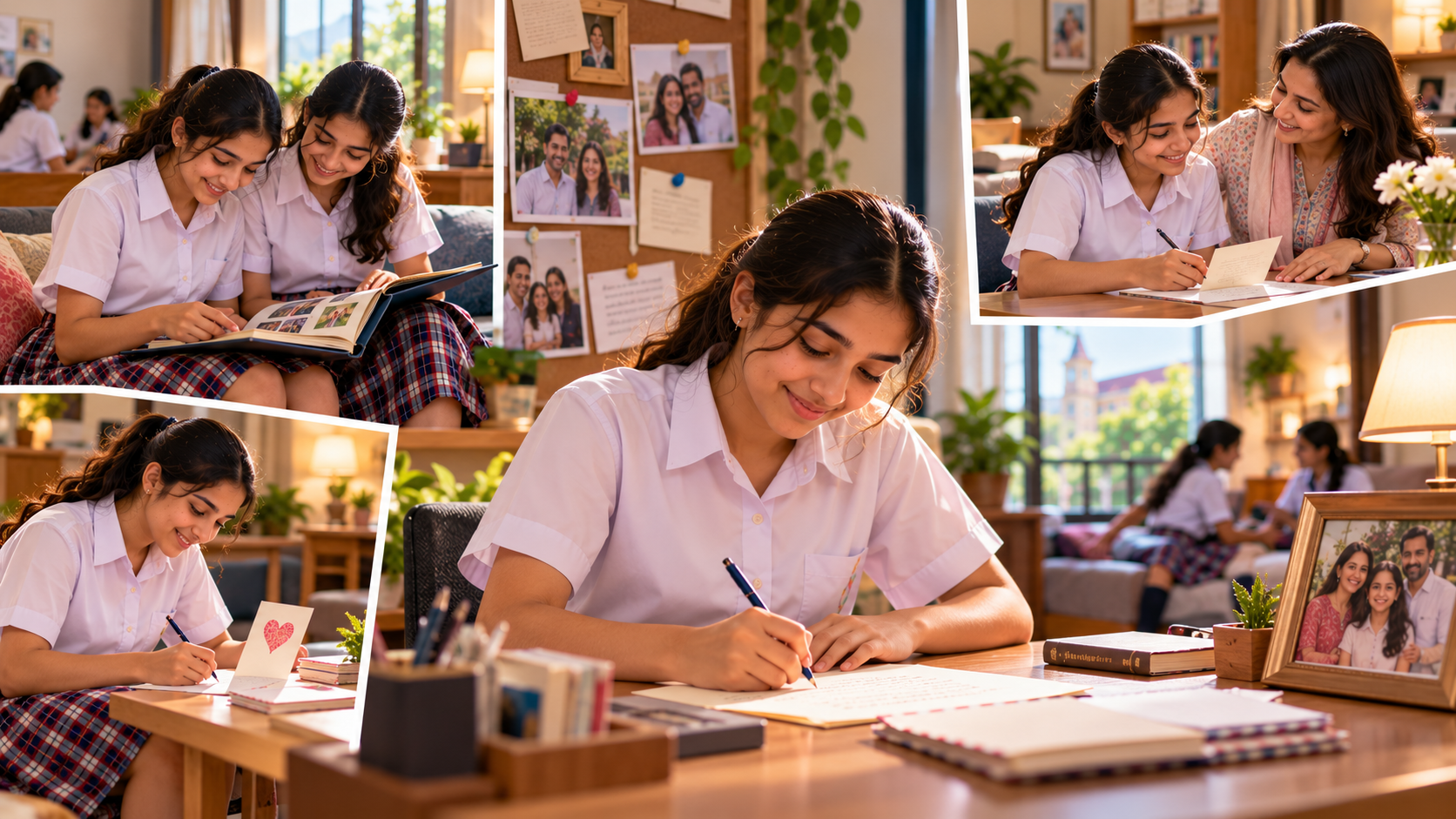
Limited screen time does not mean limited family contact. Most schools make it easy to stay in touch through a few reliable channels:
- Scheduled phone or video calls at fixed times
- Handwritten letters and cards, which many students treasure
- Regular updates from teachers and house staff
- Parent visits on designated days
A predictable call routine helps students more than random calls do. It gives them something to look forward to and stops them from feeling cut off.
Building Healthy Digital Habits
Boarding schools are not anti-technology. Students still use computers for research, assignments and projects, usually under supervision. This teaches them to treat technology as a tool, not a habit.
Many schools also teach online safety, covering privacy, respectful behaviour and how to spot unsafe content. These lessons stay with students long after they leave the hostel.
The best way to reduce screen time is to offer something better. Debate, music, art, sports and community service give students real alternatives, and the range of extracurricular activities at Ecole Globale shows how a school can fill the day with them.
Tips for Parents

Parents shape how students feel about the rules. A few simple habits make a big difference:
- Read the policy before admission and ask the school to explain anything unclear
- Talk to your child early about why the rules exist
- Avoid secret devices, because they undermine trust and the school’s authority
- Model good habits at home during holidays, such as phone-free meals
- Keep calls positive, and share worries with house staff instead of the child
- Stay consistent, so the holidays do not feel like a free-for-all
Balanced Campus Life at Ecole Globale
Ecole Globale is a girls’ boarding school in Dehradun with a fully residential campus, where learning, sports and activities fill the day. A rich student life and a strong sports programme are the kind of foundations that make healthy screen habits easier to build.
When you visit a school, ask about its device policy and how students spend their free time. The answers show how the school balances technology with real-world experiences.
Frequently Asked Questions
Q1. Do boarding schools allow mobile phones?
Ans: Most restrict them, especially for younger students. Phones are often deposited with house staff and returned during holidays or set times.
Q2. How do students contact their parents without phones?
Ans: Through scheduled calls, video calls, letters and updates from staff. Parents can usually reach the school office in an emergency.
Q3. Are screen time rules the same for all ages?
Ans: No. Older students often get more flexibility for studies, while younger students have stricter limits.
Q4. How long does it take to adjust to the rules?
Ans: Most students settle within two to four weeks once they build friendships and a routine.
Clear screen time rules in boarding schools help students sleep better, focus more and build real friendships, and they work best when parents and schools support them together.