





Admitting a daughter to an Indian boarding school from abroad is an important decision for NRI families who want their daughters to receive quality education in India while staying connected with Indian culture and traditions. Choosing the right boarding school requires careful planning, especially when parents live in another country and cannot visit the campus regularly.
For many overseas Indian families, admitting a daughter to an Indian boarding school from abroad involves understanding the admission process, academic curriculum, residential facilities, documentation, fee structure and student safety arrangements. Parents must also consider how their daughters will adjust to a new academic environment and residential lifestyle.
Whether your family is moving back to India or planning your daughter’s education from overseas, this guide explains the important steps involved in admitting a daughter to an Indian boarding school from abroad.
Why Do NRI Families Consider Indian Boarding Schools?
Understanding the benefits of Indian residential education is an important first step when admitting a daughter to an Indian boarding school from abroad. Indian boarding schools provide an environment where students can pursue academics while participating in residential, cultural and extracurricular activities.
Some reasons NRI families consider Indian boarding schools include:
- Academic opportunities: Schools may offer CBSE, CISCE, Cambridge and International Baccalaureate (IB) curricula.
- Cultural connection: Students can become familiar with Indian traditions, festivals, languages and cultural values.
- Residential learning: Boarding school life encourages independence, responsibility and time management.
- Extracurricular activities: Students may participate in sports, music, arts, leadership activities and other programmes.
- Structured environment: A planned daily routine helps students balance academics, recreation and personal development.
For parents considering admitting a daughter to an Indian boarding school from abroad, it is important to compare the actual facilities and educational programmes offered by individual schools.
How to Choose the Right Indian Boarding School
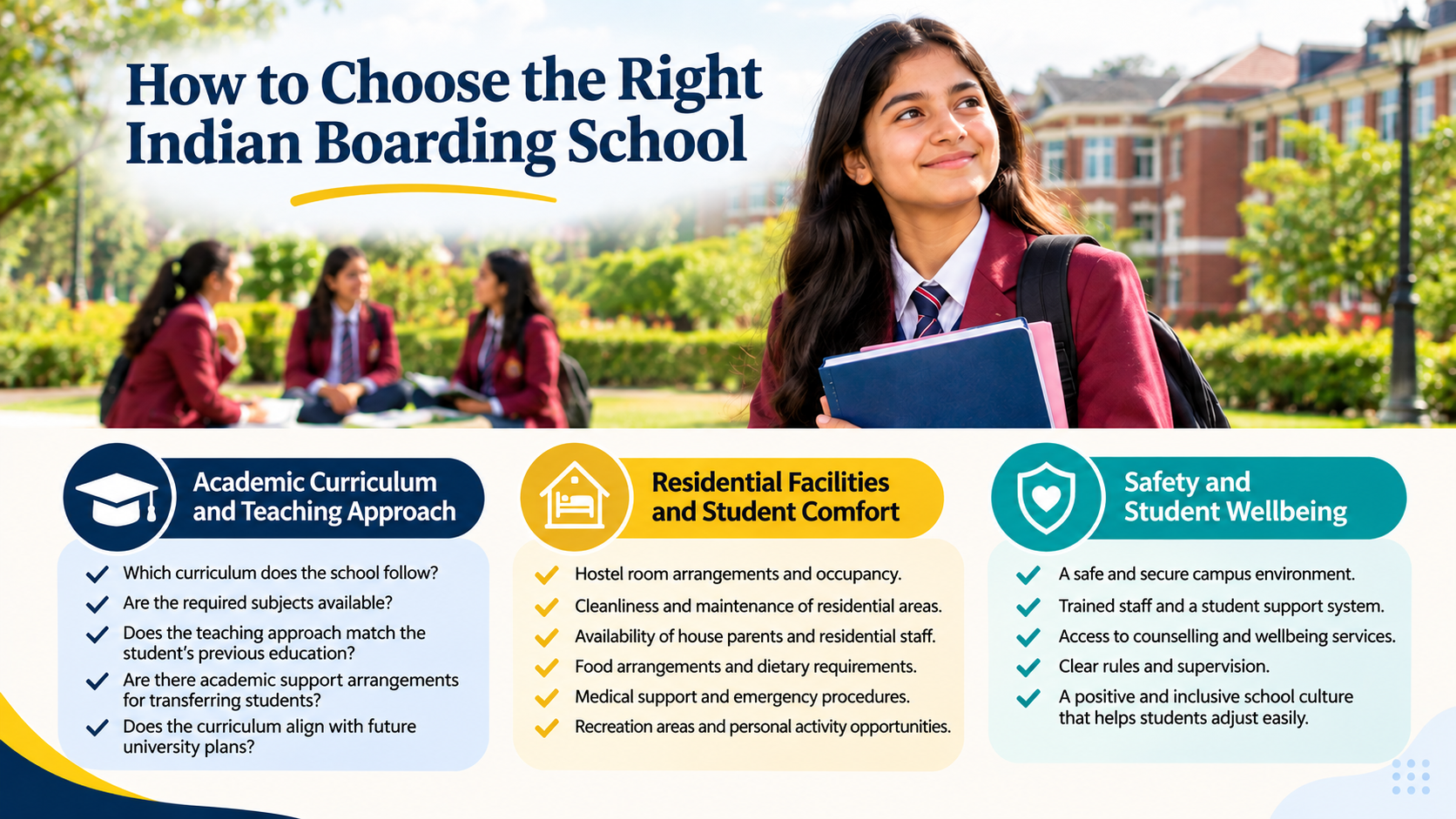
Choosing the right institution is one of the most important decisions when admitting a daughter to an Indian boarding school from abroad. Parents should evaluate academic standards, residential facilities, student wellbeing and the school’s ability to support students who have studied overseas.
Academic Curriculum and Teaching Approach
Before admitting a daughter to an Indian boarding school from abroad, understand the curriculum followed by the shortlisted schools. Indian boarding schools may offer CBSE, CISCE, Cambridge or International Baccalaureate programmes.
Parents should consider:
- Which curriculum does the school follow?
- Are the required subjects available?
- Does the teaching approach match the student’s previous education?
- Are there academic support arrangements for students transferring from overseas?
- Does the curriculum align with your daughter’s future university plans?
Understanding curriculum differences can make admitting a daughter to an Indian boarding school from abroad easier because it helps parents identify schools that match their daughter’s previous academic experience and future goals.
Residential Facilities and Student Comfort
Residential facilities should be carefully evaluated when admitting a daughter to an Indian boarding school from abroad. Since your daughter will be living away from home, parents should understand the school’s accommodation arrangements and daily residential routine.
Ask the school about:
- Hostel room arrangements and occupancy.
- Cleanliness and maintenance of residential areas.
- Availability of house parents and residential staff.
- Food arrangements and dietary requirements.
- Medical support and emergency procedures.
- Recreation areas and personal activity opportunities.
NRI parents who cannot visit the campus immediately can request a virtual tour, photographs or a detailed explanation of the residential facilities before proceeding with admission.
Safety and Student Wellbeing
Student safety is a major consideration when admitting a daughter to an Indian boarding school from abroad. Parents should understand how the school supervises students and responds to academic, medical and personal concerns.
Important questions include:
- What are the hostel supervision arrangements?
- How are visitors managed?
- Is medical assistance available on campus or through an identified provider?
- What procedures are followed during emergencies?
- Is counselling or student support available?
- How are parents informed about important concerns?
Before admitting a daughter to an Indian boarding school from abroad, request clear information about the school’s student welfare policies instead of relying only on general assurances.
Understand the Admission Process for NRI Students
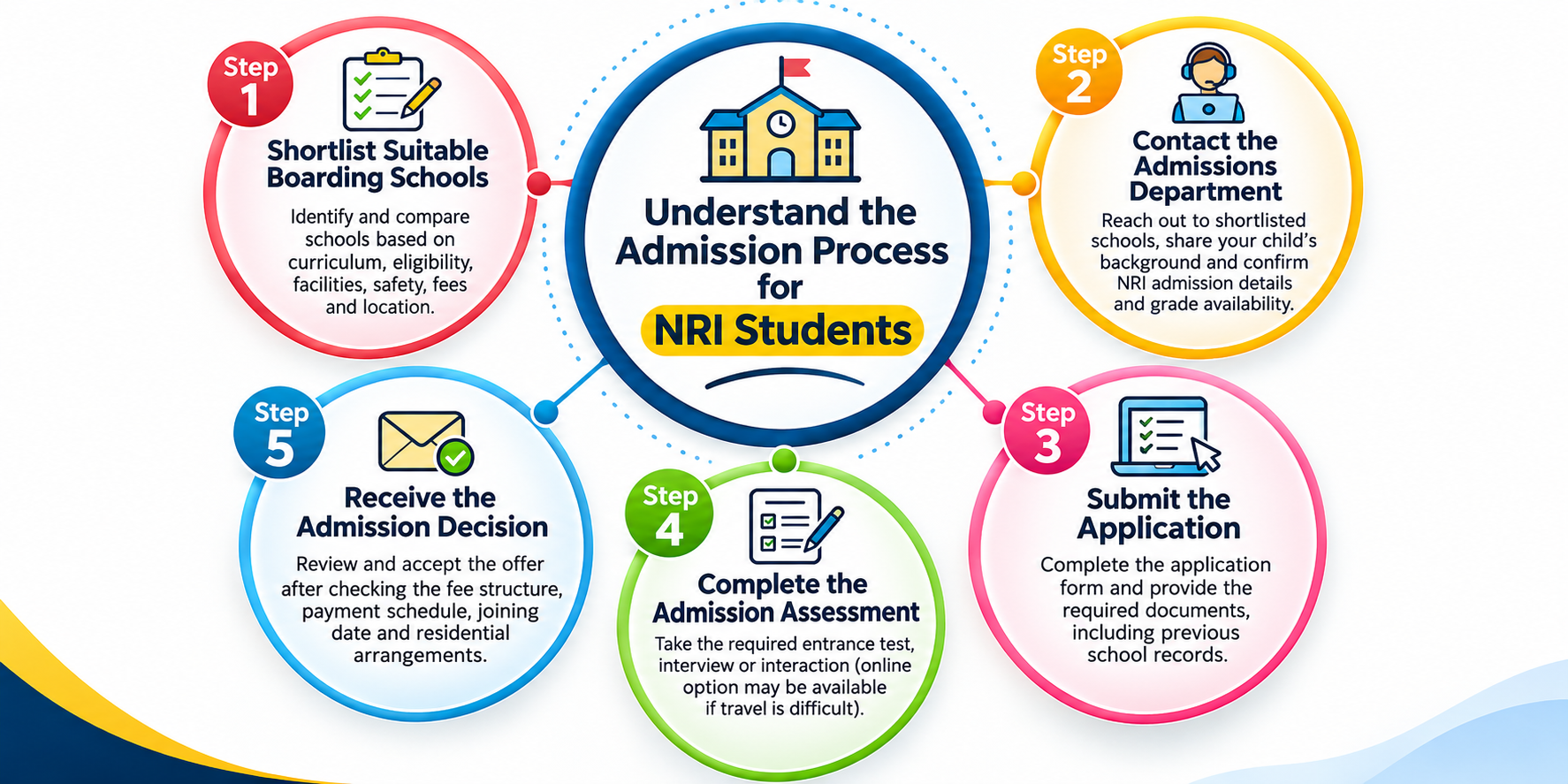
The admission process is an important part of admitting a daughter to an Indian boarding school from abroad. Although individual schools have different admission policies, most follow a process involving school selection, application submission, document verification and an admission assessment.
Step 1: Shortlist Suitable Boarding Schools
Begin by identifying Indian boarding schools that match your daughter’s academic requirements, preferred curriculum, age group and residential needs.
Compare schools based on:
- Academic curriculum.
- Admission eligibility.
- Hostel facilities.
- Student safety and wellbeing.
- Annual fees and additional expenses.
- Location and accessibility.
Creating a shortlist makes admitting a daughter to an Indian boarding school from abroad more organised and helps parents compare institutions before making a final decision.
Step 2: Contact the Admissions Department
Once you have shortlisted schools, contact their admissions departments. Explain that your family lives overseas and that your daughter has studied outside India.
Ask whether the school accepts NRI applicants, which grades have admission opportunities and whether the application process can be completed remotely.
Step 3: Submit the Application
Complete the admission application form and provide the documents requested by the institution. Some schools may allow online applications and digital document submission.
When admitting a daughter to an Indian boarding school from abroad, confirm whether the school requires original documents, certified copies or additional information about previous schooling.
Step 4: Complete the Admission Assessment
Depending on the school and grade, the admission process may include an entrance examination, interview or interaction with the student and parents.
If travelling to India is difficult, ask whether the assessment or interaction can be conducted online.
Step 5: Receive the Admission Decision
After completing the required assessment and document verification, the school will communicate its admission decision.
Before accepting the offer, review the fee structure, payment schedule, joining date and residential arrangements. These details are particularly important when admitting a daughter to an Indian boarding school from abroad because parents may need to coordinate travel and other arrangements from another country.
Documents Required for Boarding School Admission
Preparing the correct documentation can make admitting a daughter to an Indian boarding school from abroad more straightforward. The exact requirements depend on the school, the student’s nationality and her previous educational background.
NRI families may be asked to provide:
- Completed admission application form.
- Recent passport-size photographs.
- Birth certificate or accepted proof of date of birth.
- Passport details, where applicable.
- Previous school’s academic transcripts or report cards.
- Transfer certificate or school-leaving document, if required.
- Parent or legal guardian details.
- Residential address and contact information.
- Medical information and relevant health records.
- Additional documents requested by the school.
If your daughter has studied outside India, ask whether academic records need to be translated, certified or submitted in a particular format.
Before admitting a daughter to an Indian boarding school from abroad, request the official document checklist from the admissions department. This can help prevent delays caused by incomplete or incorrectly prepared paperwork.
Curriculum and Academic Transition for Overseas Students
Academic adjustment is another important consideration when admitting a daughter to an Indian boarding school from abroad. Students transferring from overseas may experience differences in subjects, teaching methods, classroom expectations and assessment systems.
For example, a student following an international curriculum may need time to understand the structure of CBSE or CISCE, while a student moving between international schools may need to compare Cambridge and IB programmes.
Parents should discuss the following with the school:
- Whether previous academic records meet the admission requirements.
- Whether the required subjects are available in the intended grade.
- Whether additional academic support is provided.
- How overseas academic qualifications are evaluated.
- Whether the curriculum supports future university applications.
A suitable academic transition plan can make admitting a daughter to an Indian boarding school from abroad easier by helping the student understand the new curriculum and expectations.
Understanding Boarding School Fees and Additional Expenses
Financial planning is essential for NRI families considering admitting a daughter to an Indian boarding school from abroad. The total cost may include tuition, accommodation, meals and additional school-related expenses.
Ask the school for a detailed fee structure covering:
- Admission and registration charges.
- Tuition fees.
- Hostel and accommodation charges.
- Meals and dining expenses.
- Uniforms, books and learning materials.
- Sports and extracurricular activities.
- Medical or insurance-related charges, if applicable.
- Transportation and optional services.
NRI parents should also clarify accepted payment methods, international bank transfer arrangements, payment deadlines and any applicable transaction charges.
When admitting a daughter to an Indian boarding school from abroad, request written clarification of the refund policy and any additional expenses that may arise during the academic year.
Visa, Travel and Legal Documentation
Travel and immigration requirements should be checked before admitting a daughter to an Indian boarding school from abroad. Requirements depend on the student’s nationality, passport and individual circumstances.
An Indian citizen living overseas may have different requirements from a foreign national seeking admission to an Indian school.
Parents should:
- Confirm the student’s nationality and applicable travel requirements.
- Check whether a visa or other immigration permission is required.
- Verify passport validity and relevant documentation.
- Confirm the school’s joining date and reporting arrangements.
- Understand who will receive the student at the airport or other arrival point.
Foreign-national students should consult official Indian government sources or the nearest Indian embassy or consulate for current immigration requirements. School admission does not automatically provide permission to enter or stay in India.
How Can NRI Parents Stay Connected With Their Daughters?
Communication is an important consideration when admitting a daughter to an Indian boarding school from abroad. Parents living in another country should understand how the school maintains communication with families and provides updates about students.
Ask about:
- Scheduled telephone or video calls.
- School communication applications or parent portals.
- Parent-teacher meetings and academic updates.
- Emergency communication arrangements.
- Rules regarding mobile phones and personal devices.
- Procedures for parents visiting the campus.
Before admitting a daughter to an Indian boarding school from abroad, understand how frequently parents can communicate with their daughters and how the school shares information about academic progress, health concerns and residential life.
Clear communication arrangements help NRI parents remain involved in their daughter’s education even when they live overseas.
Preparing Your Daughter for Boarding School Life in India
Moving from an overseas home to a residential school can be a significant adjustment. Therefore, preparing your daughter is an important part of admitting a daughter to an Indian boarding school from abroad.
Students may need time to become familiar with a new academic environment, daily routine, food, language and social surroundings.
Parents can support this transition by:
- Discussing the reasons for choosing a boarding school.
- Involving their daughter in the school selection process.
- Explaining the daily hostel routine before joining.
- Encouraging her to ask questions about campus life.
- Understanding the school’s rules about personal belongings and communication.
- Arranging a campus visit where possible.
- Maintaining regular and supportive communication after admission.
Parents should consider their daughter’s comfort and willingness to attend a residential school alongside academic and practical requirements. A positive transition is an important part of successfully admitting a daughter to an Indian boarding school from abroad.
Important Questions NRI Parents Should Ask Before Admission
Before finalising a school, NRI families should clarify important details directly with the admissions and residential teams. Asking the right questions can make admitting a daughter to an Indian boarding school from abroad more informed and organised.
Here are ten useful questions:
- Does the school accept applications from NRI students and students educated overseas?
- Which academic documents are required for admission?
- Can the admission assessment or interview be completed online?
- Which curricula and subject options are available?
- What residential supervision and student wellbeing arrangements are provided?
- How are medical needs and emergencies handled?
- How frequently can parents communicate with their daughters?
- What is included in the annual fee structure?
- Are there additional requirements based on the student’s nationality?
- What support is available to help overseas students adjust to boarding school life?
Getting clear answers to these questions can help parents compare institutions and understand the practical requirements of admitting a daughter to an Indian boarding school from abroad.
Conclusion
Admitting a daughter to an Indian boarding school from abroad requires careful planning, research and communication with shortlisted institutions. NRI families should evaluate academic curricula, residential facilities, student safety, admission documentation, fees and communication arrangements before making a final decision.
The right school should provide an educational environment that supports academic progress, personal development and a comfortable residential experience. By understanding the admission process, checking school policies and involving their daughters in the decision, parents can make a more informed choice.
With the right preparation, admitting a daughter to an Indian boarding school from abroad can become a well-organised process that helps families plan their child’s educational journey in India.
Frequently Asked Questions
Q1. Can NRI parents admit their daughters to boarding schools in India?
Ans: Yes. NRI parents can explore admission opportunities at Indian boarding schools. However, eligibility, available grades, documentation and admission procedures depend on the individual institution. Parents should contact the admissions department before beginning the process of admitting a daughter to an Indian boarding school from abroad.
Q2. Can students apply to Indian boarding schools from abroad?
Ans: Many schools may allow overseas families to begin the application process remotely. Online application forms, virtual interactions and digital document submission may be available, depending on the school’s policies. Confirm the available options before admitting a daughter to an Indian boarding school from abroad.
Q3. What documents are required for NRI boarding school admission?
Ans: Commonly requested documents include academic records, proof of date of birth, photographs, passport details where applicable, parent or guardian information and medical records. Requirements vary by school, so parents should request an official checklist.
Q4. Which curriculum is suitable for NRI students in India?
Ans: The right curriculum depends on the student’s previous education and future academic plans. CBSE, CISCE, Cambridge and IB programmes may be available at different schools. Parents should compare subject choices, teaching approaches and university progression requirements before admitting a daughter to an Indian boarding school from abroad.
Q5. How can parents communicate with their daughters while they are abroad?
Ans: Communication arrangements vary between schools. Parents should ask about scheduled calls, video communication, parent portals, academic updates and emergency contact procedures before confirming admission.
Q6. Do foreign-national students need a visa to study at an Indian boarding school?
Ans: Visa requirements depend on the student’s nationality and circumstances. Foreign-national students should confirm the applicable immigration requirements through official Indian government or embassy channels before travelling to India.