





Choosing a residential school requires parents to consider several factors, including academic quality, campus facilities, student safety and daily schedules. One important factor is sleep routines and study time in a residential school. A well-organised routine helps students manage their academic responsibilities while getting enough time for sleep, relaxation and extracurricular activities.
Understanding sleep routines and study time in a residential school helps parents evaluate how an institution manages students’ everyday lives. From morning wake-up schedules to evening study sessions, every activity contributes to a student’s residential experience. Parents should check whether the school maintains a suitable balance between learning and rest.
Why Sleep Routines and Study Time in a Residential School Matter

Sleep routines and study time in a residential school are important because students need a structured schedule to manage their academic and personal responsibilities. A consistent routine encourages discipline, punctuality and better time management.
A suitable daily schedule provides enough time for classroom learning, homework, independent study, sports and relaxation. It also helps students develop healthy sleeping habits and prepare for the next school day.
Parents should understand that sleep routines and study time in a residential school should support overall student development rather than focus only on academic performance.
A balanced routine can help students:
- Develop consistent sleeping and waking habits.
- Complete homework within planned study hours.
- Improve concentration during classroom lessons.
- Participate in sports and recreational activities.
- Develop independent learning habits.
- Manage their time more effectively.
When evaluating sleep routines and study time in a residential school, parents should check whether the timetable provides enough time for both academic preparation and personal wellbeing.
Understand the Daily Timetable of a Residential School
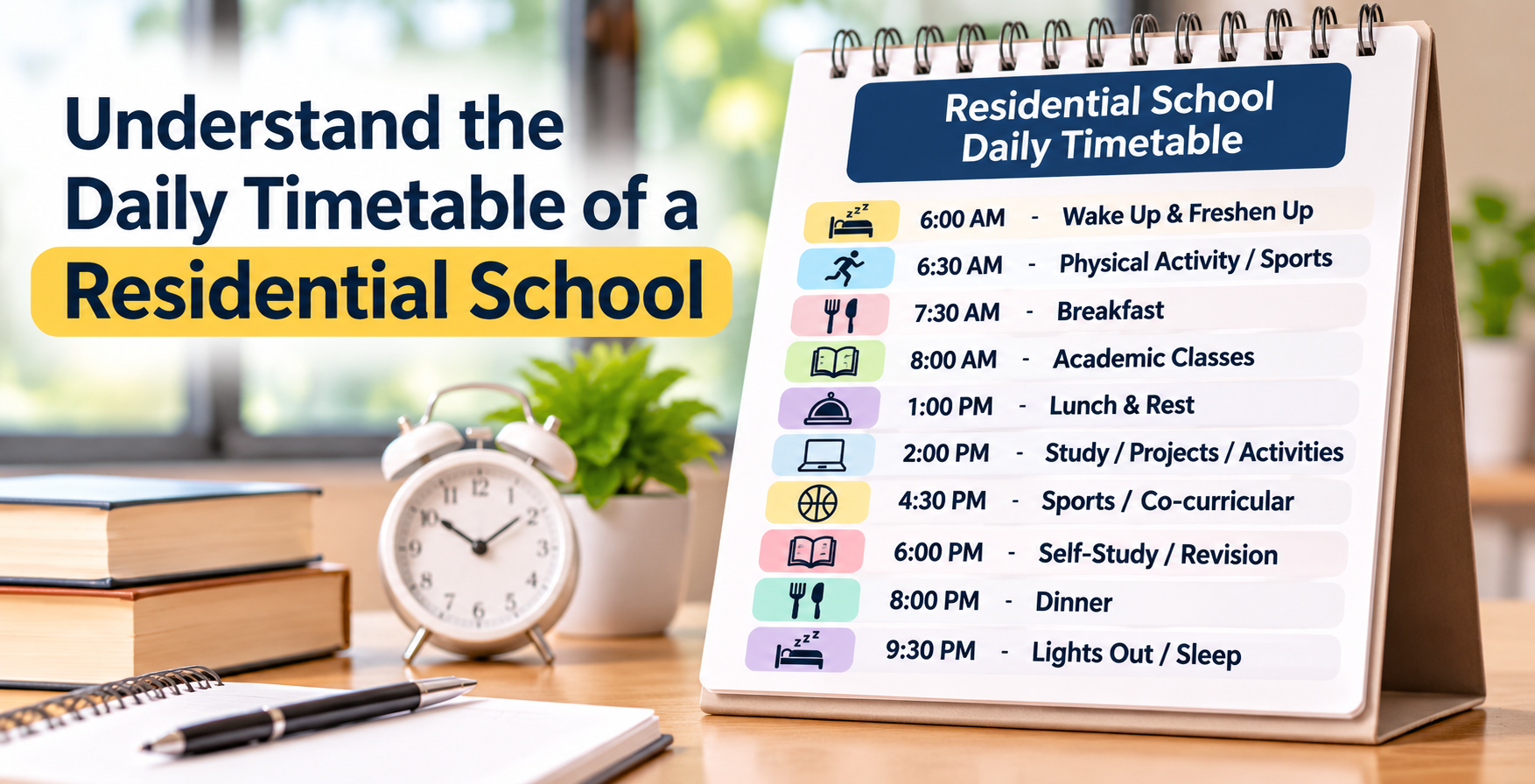
The residential school daily routine generally includes morning preparation, classroom lessons, meals, sports, supervised study and bedtime. Parents should request a sample timetable to understand how these activities are organised.
A structured timetable is an important part of sleep routines and study time in a residential school because it determines how students use their time throughout the day.
A typical residential school timetable may include:
- Morning wake-up and personal preparation.
- Breakfast and classroom lessons.
- Lunch and afternoon academic activities.
- Sports and recreational periods.
- Evening study and homework.
- Dinner and personal time.
- Night preparation and bedtime.
The boarding school timetable for students should be realistic and age-appropriate. Students need sufficient time between activities so that they can complete their responsibilities without feeling unnecessarily rushed.
Parents should also check whether Sleep Routines and Study Time in a Residential School are adjusted according to students’ age groups and academic requirements.
Check the School’s Sleeping and Wake-Up Schedule
A consistent boarding school sleep schedule helps students develop regular sleeping and waking habits. Parents should ask about the usual wake-up time, bedtime and arrangements for nighttime supervision.
The importance of Sleep Routines and Study Time in a Residential School becomes particularly clear when students follow a demanding academic timetable. Proper rest allows them to begin the next day feeling prepared for classroom activities.
Parents should ask the school:
- What time do students wake up?
- When are students expected to go to bed?
- Are bedtime schedules different for younger and older students?
- Is the sleeping environment quiet and comfortable?
- How does the school support students who struggle to adjust?
Healthy sleep routines and study time in a residential school should provide adequate opportunities for rest. Parents should avoid assuming that an earlier bedtime automatically means a better routine; the complete schedule and students’ age-related needs matter.
Understand How Study Hours Are Organised
A planned study timetable in boarding schools helps students complete homework, revise classroom lessons and prepare for examinations. Parents should understand how the school organises supervised study and independent learning periods.
Study hours are an essential part of sleep routines and study time in a residential school because they help students manage academic responsibilities within a fixed daily schedule.
A study timetable may include:
- Homework completion.
- Revision of classroom topics.
- Reading and reference work.
- Examination preparation.
- Individual academic support.
- Independent learning activities.
The study hours in boarding schools should be productive and suitable for students’ academic levels. Longer study sessions do not necessarily guarantee better learning outcomes.
Effective Sleep Routines and Study Time in a Residential School should include reasonable study periods, short breaks and a suitable bedtime. Parents should check whether students are expected to complete most of their academic work during the allocated study hours.
Check the Balance Between Academics and Rest
Balancing sleep and study time is essential for maintaining a manageable residential school routine. Students need time for academic activities, but they also need opportunities to participate in sports, hobbies and social activities.
When reviewing sleep routines and study time in a residential school, parents should check whether the school gives equal attention to learning and relaxation.
A balanced timetable should provide time for:
- Classroom learning and homework.
- Physical education and outdoor games.
- Creative activities and hobbies.
- Social interaction with classmates.
- Personal time and relaxation.
- Adequate nighttime rest.
Sleep routines and study time in a residential school should not involve continuous academic activities throughout the day. A well-planned schedule gives students opportunities to refresh themselves and return to their studies with better focus.
Understand the Importance of Supervised Self-Study Time
Self-Study Time for Boarding Students allows students to revise lessons, complete assignments and develop independent learning habits. It also helps them identify subjects that require additional attention.
Supervised study periods can provide a structured environment where students remain focused and receive academic assistance when needed.
Parents should ask whether teachers or academic supervisors are available during study hours. They should also check how the school monitors homework and supports students who need additional explanations.
An organised Homework Schedule in Residential Schools should give students reasonable time to complete assignments. Students should not regularly need to extend their study sessions late into the night to finish routine homework.
Including independent learning in sleep routines and study time in a residential school helps students become more responsible for their academic progress.
Check Homework Support and Academic Assistance

Students may sometimes find certain subjects or assignments challenging. Residential schools should provide suitable academic support so that students can ask questions and understand difficult topics.
Parents should ask about teacher availability, doubt-clearing sessions, remedial classes and homework monitoring.
A productive night study routine for students should involve meaningful learning rather than simply spending a fixed number of hours at a desk.
The relationship between sleep routines and study time in a residential school is important here. When students receive appropriate academic assistance, they can complete their work more effectively within the planned schedule.
Parents should also check whether the school communicates academic progress and learning difficulties to families.
Understand Screen Time and Bedtime Rules
Digital devices can support learning, but excessive screen use may become a distraction during study and bedtime. Parents should understand the school’s rules regarding mobile phones, computers and other electronic devices.
A suitable approach to sleep routines and study time in a residential school should include practical arrangements for managing screen time.
Parents can ask whether the school:
- Sets limits on personal device use.
- Provides supervised access to digital learning resources.
- Encourages screen-free time before bedtime.
- Follows clear rules for nighttime device use.
- Helps students manage digital distractions.
These arrangements can help students maintain their focus during study periods and follow a more consistent bedtime routine.
How Schools Encourage Healthy Sleep Habits
Developing healthy sleep habits for students requires consistency and a supportive residential environment. Schools can encourage healthy routines by maintaining predictable schedules and providing suitable opportunities for rest.
The Importance of Sleep for Students should be considered when planning classroom activities, evening study periods and bedtime arrangements.
Schools can encourage healthy habits by:
- Maintaining consistent wake-up and bedtime schedules.
- Providing a comfortable sleeping environment.
- Avoiding unnecessarily late academic activities.
- Encouraging relaxing activities before bedtime.
- Helping new students adjust to residential life.
Good Sleep Routines and Study Time in a Residential School should recognise that rest is an essential part of student wellbeing. A suitable routine allows students to participate in academic and extracurricular activities without overlooking their need for sleep.
Questions Parents Should Ask About Sleep Routines and Study Time in a Residential School
Before choosing a school, parents should ask detailed questions about Sleep Routines and Study Time in a Residential School. These discussions help families understand whether the timetable is practical and supportive.
Important questions include:
- What is the complete daily routine for students?
- What time do students wake up and go to bed?
- How many hours are allocated for supervised study?
- Is independent reading included in the timetable?
- What academic support is available after classroom hours?
- How does the school manage homework and examination preparation?
- Are sports and recreational activities included in the daily schedule?
- How does the school support students who struggle with their sleeping routine?
- Are bedtime arrangements different for different age groups?
- How does the school ensure that students receive adequate rest?
These questions help parents assess Sleep Routines and Study Time in a Residential School based on actual practices rather than general promises made during admission discussions.
How to Help Your Child Adjust to a Residential School Routine

Moving into a residential school introduces students to new responsibilities, sleeping arrangements and academic schedules. Parents can help children prepare for these changes before admission.
Understanding Sleep Routines and Study Time in a Residential School in advance can make the transition easier. Parents should explain the importance of following a timetable and managing personal responsibilities.
Some useful steps include:
- Encourage regular sleeping and waking habits.
- Help the child practise organising books and school materials.
- Explain how to follow a daily study schedule.
- Encourage students to ask teachers for academic assistance.
- Discuss the importance of balancing study and relaxation.
- Maintain regular communication during the adjustment period.
A consistent Morning Routine in Boarding Schools may initially feel unfamiliar, but students can gradually become comfortable with their responsibilities.
Parents should remember that adjusting to Sleep Routines and Study Time in a Residential School can take time. Support from teachers, wardens and family members can help students become familiar with their new environment.
Choosing a Residential School That Values Rest and Learning
Choosing a suitable residential school requires careful consideration of its academic environment and daily schedule. Parents should evaluate how the institution manages classroom learning, study hours, recreational activities and sleeping arrangements.
Time Management for Boarding School Students develops through regular practice. A well-organised timetable can help students become more independent and responsible.
Parents should also consider Student Academic Performance and Sleep when evaluating a school’s approach to student development. A timetable should provide opportunities for focused learning while recognising the importance of adequate rest.
The best approach to Sleep Routines and Study Time in a Residential School is one that supports learning without making the daily schedule unnecessarily demanding. Parents should look for a school that provides appropriate academic guidance, healthy sleeping arrangements and enough time for extracurricular activities.
Ultimately, Sleep Routines and Study Time in a Residential School should help students develop discipline, independence and healthy daily habits. A balanced residential environment can make the school experience more organised and supportive.
Conclusion
A residential school should provide an organised environment where students have time for academic learning, personal development and adequate rest. Parents should carefully evaluate Sleep Routines and Study Time in a Residential School before making an admission decision.
By checking the daily timetable, sleeping arrangements, study periods and academic support system, parents can understand how the school manages students’ everyday responsibilities.
Ultimately, Sleep Routines and Study Time in a Residential School should create a healthy balance between learning and relaxation. A thoughtful routine can help students develop independence, discipline and healthy habits throughout their residential education journey.
Frequently Asked Questions
Q1. Why are Sleep Routines and Study Time in a Residential School important?
Ans: They help students maintain a structured daily schedule that includes academic responsibilities, relaxation and adequate rest. A balanced routine can also encourage discipline and better time management.
Q2. What should parents check in a boarding school sleep schedule?
Ans: Parents should check the usual wake-up time, bedtime, sleeping arrangements and whether the schedule is appropriate for the students’ age groups.
Q3. How many study hours should a residential school provide?
Ans: There is no single suitable number for every student. Study hours should depend on age, academic requirements, homework load and individual learning needs. Parents should check whether the timetable includes breaks and sufficient rest.
Q4. What is the importance of supervised self-study time?
Ans: Supervised self-study helps students revise lessons, complete assignments and develop independent learning habits. It also allows them to seek help when they have difficulty understanding a topic.
Q5. How can students balance sleep and study time?
Ans: Students can follow the school timetable, complete homework during planned study periods, take appropriate breaks and maintain a consistent bedtime routine.
Q6. How long does it take students to adjust to a residential school routine?
Ans: The adjustment period varies from student to student. Familiarity with the timetable, supportive teachers and wardens, and regular communication with parents can make the transition easier.