
Every parent who walks into a school admission office eventually faces the same question — which education board is the right one? It sounds administrative at first, almost like a checkbox. But the board your child studies under shapes how they learn, what they learn, how they are assessed, and ultimately how prepared they are for life after school.
In India, the choice is not as simple as picking between two options. There are multiple boards — national, international, and state-level — each with its own philosophy, structure, and set of outcomes. Understanding the real differences between them is not just useful; it is necessary.
This guide breaks down every major education board available in India, what each one genuinely offers, and how to match the right board to your child’s needs.
The Landscape of Education Boards in India

India has one of the most diverse school education systems in the world. Students can study under national boards, international frameworks, or state-run systems depending on where they live, what career paths they envision, and how much flexibility their family needs in terms of school transfers.
The four most widely discussed boards are CBSE, ICSE, IB, and state boards. Each has built a distinct reputation over decades, and each attracts a different kind of student and family.
A Quick Overview Before the Deep Dive
Before comparing them, it helps to understand what a board actually controls. An education board sets the curriculum, designs the examination pattern, decides grading standards, and affiliates schools that follow its framework. It does not run the schools directly — it sets the rules that affiliated schools must follow.
This matters because two schools affiliated with the same board can still differ significantly in quality of teaching, infrastructure, and culture. The board is the foundation; the school builds on it.
CBSE — The Most Widely Adopted Board
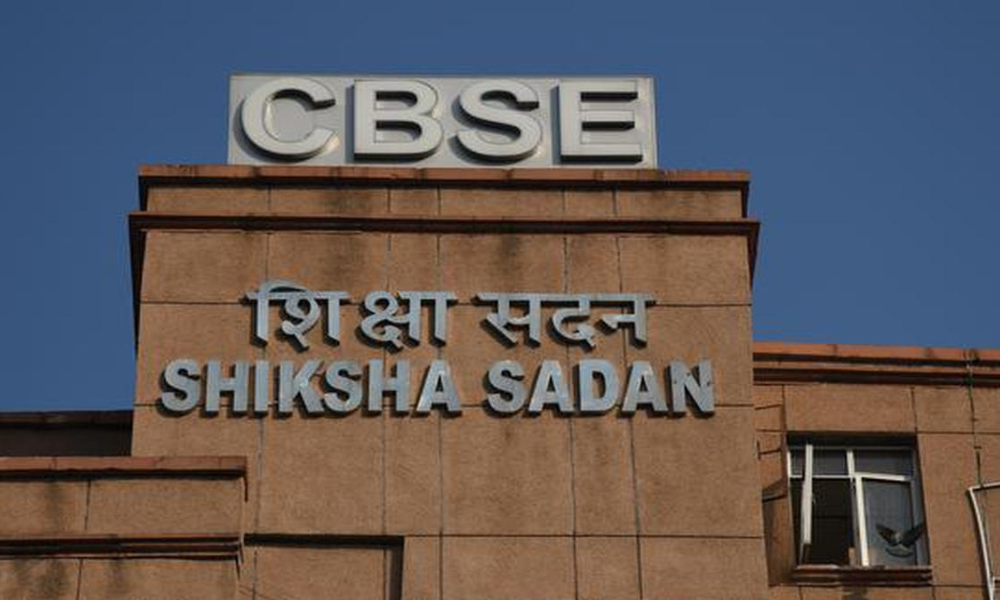
The Central Board of Secondary Education is the most popular school board in India by sheer number of affiliated schools. It is run by the Government of India and is closely aligned with the national curriculum framework developed by NCERT.
Who It Works Best For
CBSE is an excellent fit for families who move frequently — whether due to parental job transfers or other reasons — because CBSE schools exist in virtually every city and town across India. The curriculum remains consistent regardless of which affiliated school a student transfers to.
It is also the go-to board for students aiming at competitive entrance exams. The JEE for engineering and NEET for medicine are both designed with CBSE’s curriculum as the baseline. Students from this board rarely need separate bridging material to prepare for these exams.
Academic Approach
The curriculum is structured, predictable, and assessment-heavy in the senior years. The focus is primarily on core subjects — sciences, mathematics, social studies, and languages. Creative and interdisciplinary thinking is gradually being incorporated, though the board remains more traditional in its examination format compared to international alternatives.
ICSE — Depth Over Breadth
The Indian Certificate of Secondary Education board, governed by the Council for the Indian School Certificate Examinations, takes a notably different approach. The ICSE curriculum is broader, more language-intensive, and demands stronger analytical and writing skills from students.
What Sets It Apart
ICSE students study more subjects at the secondary level, with a particular emphasis on English literature, the arts, and environmental education alongside the standard sciences and mathematics. The examination pattern expects descriptive, reasoned answers rather than direct recall, which builds stronger writing and communication habits over time.
This makes ICSE graduates particularly well-prepared for humanities-based streams at the undergraduate level and for international university applications that value written expression and critical thinking.
The Practical Consideration
ICSE schools are more concentrated in urban areas and can be harder to find in smaller cities. For families who do not anticipate frequent relocations and want a rigorous, language-rich education, it is a strong option. However, students targeting STEM-focused competitive exams may need additional preparation outside the school curriculum.
IB — International Baccalaureate for Global Thinkers
The International Baccalaureate is not an Indian board — it is a Swiss-founded global curriculum framework recognized by universities worldwide. In India, IB schools have grown significantly over the past two decades, particularly in metro cities and among families with international aspirations.
The IB Philosophy
The IB is built on inquiry-based learning. Rather than delivering content for students to memorize and reproduce, it asks students to investigate, connect ideas across disciplines, and engage with real-world problems. The curriculum explicitly develops what the IB calls the “learner profile” — qualities like being open-minded, reflective, principled, and knowledgeable across cultures.
The Diploma Programme (DP), which covers the final two years of school, is particularly well-regarded. Students choose six subjects across different groups, write an extended essay, complete a Theory of Knowledge course, and fulfil Creativity, Activity, and Service requirements. It is demanding — and genuinely preparing.
Who Benefits Most From IB
Students who thrive in IB environments are typically those who enjoy self-directed learning, handle ambiguity well, and are heading toward universities outside India — particularly in the UK, US, Canada, or Europe. Many Indian universities also now recognize IB scores, though the primary advantage remains in international admissions.
For institutions like Ecole Globale International Girls’ School, which combines a residential environment with an internationally oriented curriculum, the IB framework aligns naturally with the goal of developing well-rounded, globally confident young women.
The Cost Factor
IB schooling in India is among the most expensive of all board options. Families considering this path should evaluate it not just against fee structures but against the long-term goal: if international university education is a genuine plan, the IB investment often makes strong financial and academic sense.
State Boards — Rooted, Accessible, and Locally Relevant

Every Indian state has its own board of secondary education — Maharashtra has the Maharashtra State Board, Tamil Nadu has the TN State Board, Karnataka has the Karnataka Board, and so on. Combined, state boards educate the largest number of students in India.
The Strengths of State Boards
State boards are deeply tied to regional languages, local history, and culturally relevant content. For students who will build their lives and careers within their home state, studying under the state board keeps them connected to the academic and social context they will eventually work in.
State board schools are also the most accessible and affordable option across India, making quality education reachable for families across all income levels.
The Limitations to Acknowledge
State board curricula vary significantly in rigor, and some boards have faced criticism for rote-learning-heavy assessments and outdated syllabi. Students from state boards targeting national competitive exams or out-of-state colleges sometimes find themselves needing additional preparation. That said, several state boards — including those in Tamil Nadu and Kerala — have strong academic reputations and produce outstanding results at the national level.
Comparing the Boards Side by Side
| Feature | CBSE | ICSE | IB | State Board |
|---|---|---|---|---|
| Curriculum Focus | Science & Math | Broad + Language | Inquiry-based | Regional + Core |
| Exam Style | Objective + Short Answer | Descriptive | Internal + External | Varies by state |
| Portability | Very High | Medium | High (internationally) | Low |
| Competitive Exam Prep | Excellent | Moderate | Low (needs extra prep) | Varies |
| International Recognition | Moderate | Moderate | Very High | Low |
| Average Cost | Moderate | Moderate–High | High | Low |
How to Actually Make This Decision
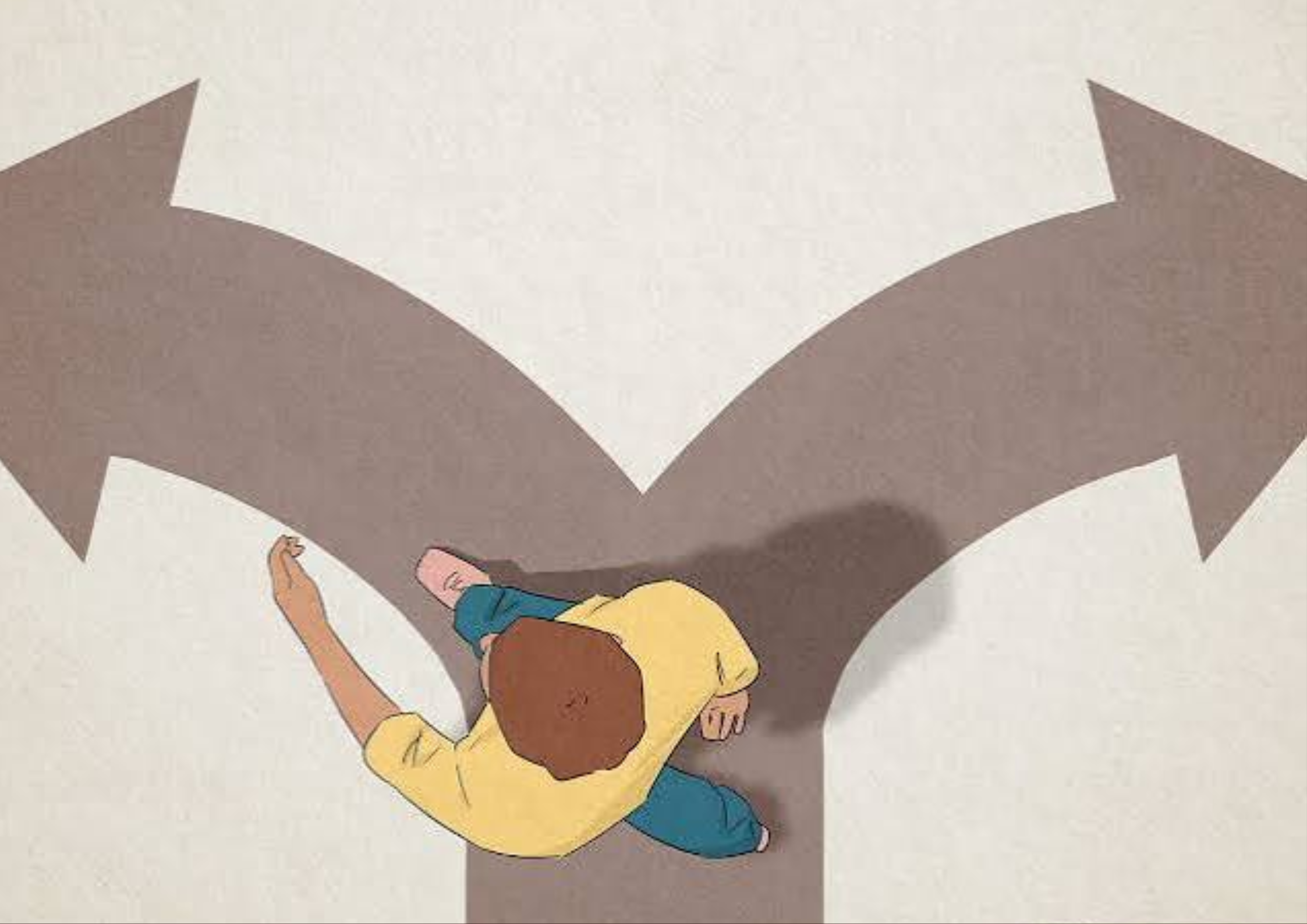
Choosing the right education board is not about finding the most prestigious option — it is about finding the best fit. Here is a framework that helps cut through the noise:
Start with your child’s learning style. Does your child thrive under structured assessments and clear syllabi? CBSE or ICSE will serve them well. Does your child learn better through projects, exploration, and open-ended questions? IB may be the stronger match.
Think about long-term goals. If medicine or engineering through Indian entrance exams is the direction, CBSE is the most practical foundation. If overseas universities are on the horizon, IB opens more doors. If the family plans to stay rooted in one state, a strong state board school may offer the best combination of quality and cost.
Consider mobility. Families that relocate frequently should weigh CBSE’s portability seriously. Switching boards mid-school can disrupt a child’s academic rhythm significantly.
Visit schools, not just board websites. Two schools under the same board can offer completely different experiences. Sit in on a class if possible, speak to current parents, and look at where students from that school end up five years after graduation.
Conclusion: The Board Is a Tool, Not a Trophy
There is no universally superior education board. There is only the right board for a particular child, at a particular stage of life, with a particular set of goals. Parents who make this decision based on peer pressure, brand recognition, or what worked for a neighbor’s child often end up mismatched.
The board sets the framework. But the values instilled at home, the quality of teachers in the classroom, and the environment the school creates — these are what truly shape who a child becomes.
Take the time to understand what each board actually demands and delivers. Your child’s education deserves that level of thought.
FREQUENTLY ASKED QUESTIONS
Q1. Which education board is best for cracking JEE and NEET in India?
CBSE is considered the most aligned board for JEE and NEET preparation since both exams are based on NCERT curriculum, which CBSE follows. Students from CBSE schools typically need less bridging material for competitive exam coaching compared to those from ICSE or state boards.
Q2. Is the IB board recognized by Indian universities?
Yes, most leading Indian universities — including IITs, Delhi University, and many private universities — recognize IB Diploma scores for undergraduate admissions. However, admission criteria vary by institution, and students should verify the specific recognition policy with each university before deciding.
Q3. Can a student switch from one education board to another mid-school?
It is possible but comes with challenges. Curriculum differences, particularly between ICSE and CBSE or between a state board and IB, can create knowledge gaps. Transitions are smoother between Classes 1–5. Switching in secondary school (Classes 9–12) is significantly more disruptive and is generally not recommended unless necessary.
Q4. Which board is better for students interested in studying abroad?
The IB Diploma is the most internationally recognized qualification and is accepted by universities across the UK, US, Canada, Australia, and Europe without additional equivalency certificates. CBSE and ICSE require additional documentation for international admissions, though many foreign universities do accept them.
Q5. Are state board students at a disadvantage in national-level competitions?
Not necessarily. Several state boards — particularly in Tamil Nadu, Kerala, and Andhra Pradesh — maintain high academic standards. However, syllabus coverage and exam format differences can mean state board students need supplementary preparation for national-level competitive exams. The quality of individual schools within any board ultimately matters as much as the board itself.