





In today’s evolving education landscape, fostering creativity in students is more important than ever. Creative activities for students are not only fun and engaging but also crucial for developing critical thinking, collaboration, and problem-solving skills.
Whether in kindergarten or high school, all students benefit from a curriculum enriched with creativity. This article highlights the top 10 creative activities for students of all ages that can make learning more enjoyable and impactful.
Why Are Creative Activities for Students Important?
Creative activities for students help bridge the gap between traditional learning and real-world skills. They promote:
Self-expression
Collaboration and communication
Emotional intelligence
Confidence and public speaking skills
Innovation and flexibility of thought
When incorporated consistently into classroom routines, these activities create a dynamic learning environment where students can explore their interests and talents.
1. Story Cubes and Visual Storytelling

This is one of the most versatile creative activities for students. Use dice or cubes with pictures or words, and ask students to build a story using the images that appear.
Encourages imagination
Builds narrative skills
Can be used across age groups with tailored vocabulary
Pro tip: Let older students draw their own symbols to customize their cubes.
2. Classroom Theatre and Skits

Role-playing and skits are powerful tools for learning. Students can perform scenes from books, historical events, or even science concepts.
Boosts public speaking skills
Enhances understanding through dramatization
Increases empathy by exploring diverse perspectives
This is one of the most engaging creative activities for students in both middle and high school.
3. Art Integration in Core Subjects

Incorporate art into subjects like math or science. For example:
Drawing geometric patterns
Creating 3D models of molecules
Designing infographics for history lessons
These kinds of creative activities for students promote visual learning and improve content retention.
4. Creative Writing Challenges

Give students prompts, pictures, or first lines and ask them to complete a short story or poem.
Builds writing fluency
Encourages personal voice and style
Helps reluctant writers find joy in writing
Make it a weekly classroom tradition to keep creativity flowing consistently.
5. STEAM Projects
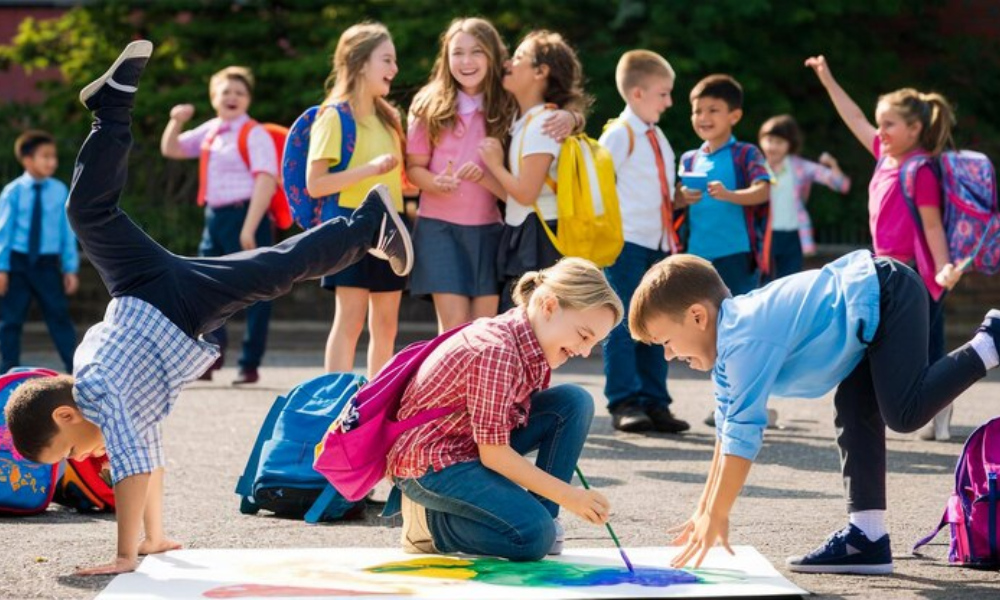
STEAM (Science, Technology, Engineering, Arts, Mathematics) activities are ideal for hands-on, cross-disciplinary learning.
Examples include:
Building bridges from paper
Making balloon-powered cars
Designing water filtration systems
These creative activities for students foster both creativity and logical reasoning, especially useful in upper primary and secondary levels.
6. Mind Mapping and Doodling Notes

Let students create mind maps or visual note summaries of what they learned in class.
Promotes active recall
Helps visual learners process complex information
Stimulates creativity in a structured way
This can be used before exams to replace traditional note-making.
7. Creative Journaling

Journaling is a simple yet impactful creative activity. You can include:
Gratitude entries
Visual journals with drawings
Reflective prompts related to academic content
It encourages self-awareness, emotional expression, and a love for writing. Among all creative activities for students, journaling is the most personal.
8. Classroom Debates with a Twist

Turn debates into creative presentations. For instance:
Each team presents their argument using posters, skits, or mock newscasts
Use role reversal, where students argue for the side they personally disagree with
This develops empathy and creativity simultaneously—key life skills for students of all ages.
9. Puzzle Creation
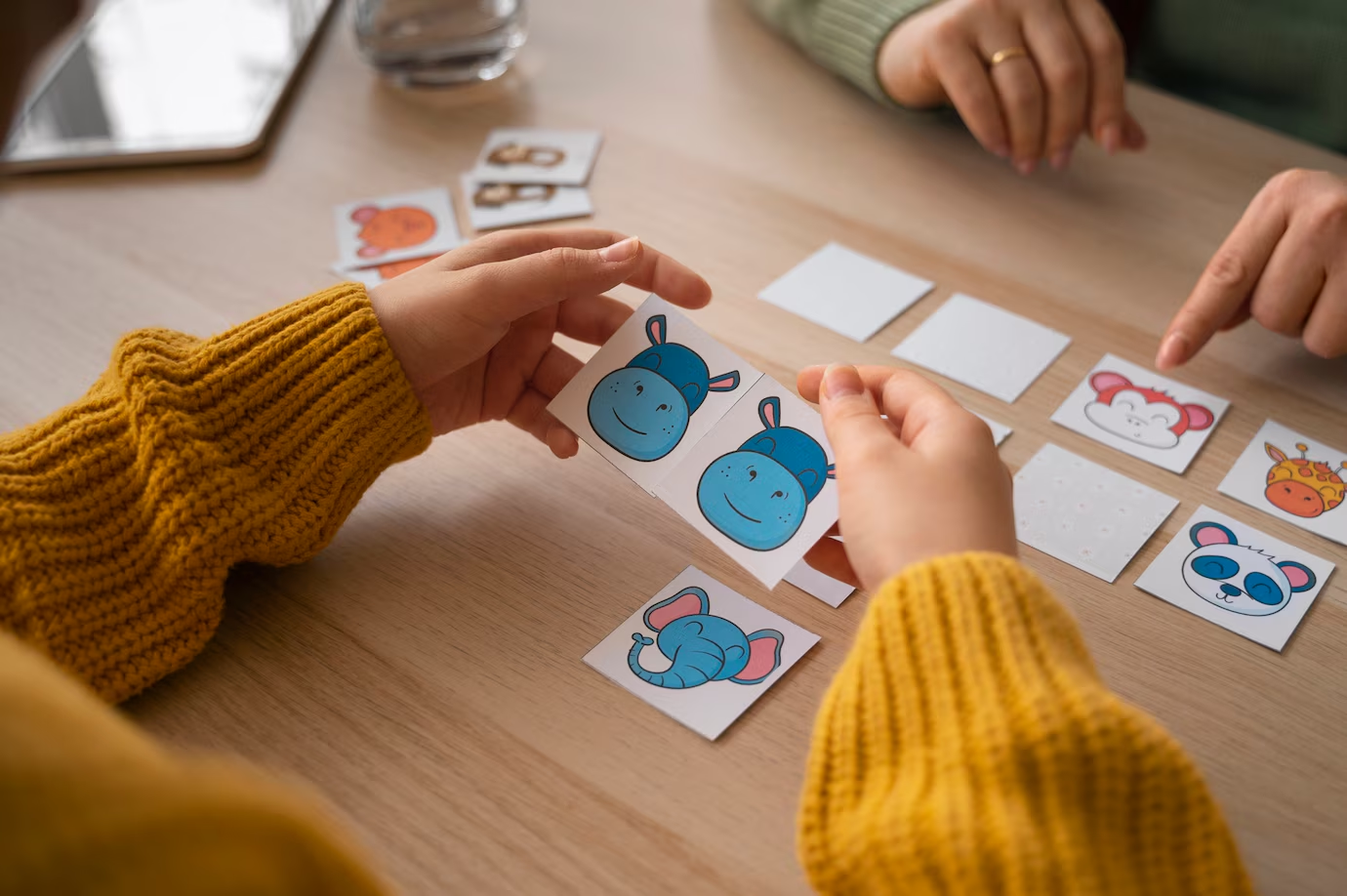
Ask students to design their own puzzles based on what they’re learning. These could be:
Crossword puzzles
Riddles
Escape room-style challenges
Board games for review
These creative activities for students require deep understanding of the content and give them ownership of learning.
10. Music and Rhythm Activities

Even non-music teachers can use rhythm and song to teach concepts. Examples:
Mnemonic songs for science formulas
Rhythmic clapping for multiplication tables
Lyrics composition for social studies topics
This taps into the musical intelligence of students and breaks the monotony of traditional lessons.
Adapting Creative Activities for Different Ages
One of the strengths of creative activities for students is that they can be easily adapted across age levels:
Primary Students: Use more visual, tactile, and movement-based tasks like drawing, coloring, acting, and music.
Middle School Students: Introduce more structure and peer collaboration with tasks like writing challenges, STEAM projects, and group presentations.
High School Students: Focus on problem-solving, debates, design thinking, and real-world projects that relate to career paths or social issues.
Tips for Implementing Creative Activities in the Classroom

Set clear objectives: Align creativity with your curriculum goals.
Foster a safe space: Encourage students to share without fear of judgment.
Be flexible: Let students explore different approaches and allow for messiness in the process.
Celebrate effort, not just outcome: Highlight participation, creativity, and innovation in addition to academic accuracy.
Conclusion
Creative activities for students are not optional—they are essential for holistic development. In a world that increasingly values innovation and adaptability, fostering creativity in education is one of the best gifts we can give our learners.
From storytelling to STEAM, from skits to student-made puzzles, these activities spark curiosity and transform classrooms into hubs of imagination. No matter the age or subject, creative activities for students can turn learning into an unforgettable journey.