Location – Suranjandas Road, Vimanapura, Bangalore, Karnataka 560017
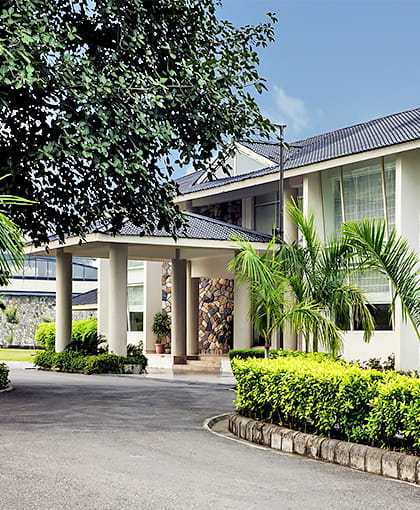
HAL Public School, located in Bengaluru, situated in the vibrant aerospace hub of the city, the school draws inspiration from the legacy of Hindustan Aeronautics Limited (HAL) to nurture young minds with innovation and a quest for knowledge.
With a dynamic curriculum that integrates traditional values with modern pedagogical approaches, HAL Public School prepares students to excel academically while fostering creativity, critical thinking, and problem-solving skills.
Committed to instilling values of integrity, discipline, and social responsibility, HAL Public School empowers students to become responsible citizens and leaders in their respective fields.
Through its unwavering dedication to academic excellence and holistic development, HAL Public School continues to inspire generations of learners to reach new heights and make meaningful contributions to society, and ranked as a best CBSE schools in India.
School details:
| FEE STRUCTURE | Rs. 45000 (approx.) per annum |
| SCHOOL TYPE | Co-ed |
| GRADES | LKG-XII |
| INDOOR SPORTS | Chess, Carrom, Table-tennis |
| OUTDOOR SPORTS | Badminton, Cricket, Throw ball, Basketball, Volleyball, and Football |
| ADDRESS | Suranjandas Road, Vimanapura, Bangalore, Karnataka 560017 |
Comparing CBSE Schools With Other Boards
CBSE schools in India are often compared with ICSE, IB, and Cambridge schools. CBSE works best for families seeking national mobility, exam preparedness, and structured learning. It may feel more exam-oriented than IB or Cambridge, but it offers clarity, affordability, and wide acceptance. The key condition is choosing a CBSE school that goes beyond rote learning and actively builds skills.
Criteria for Ranking the Top 10 CBSE schools in India
In order to rank the Top 10 CBSE schools in India, we used a holistic approach that takes into account various parameters. The criteria used to evaluate the schools are:
Academic Excellence: Evaluating the quality of education based on board exam pass rates, the percentage of students pursuing higher education, and admissions into prestigious universities in India and abroad.
Infrastructure: Assessing the availability and quality of facilities such as classrooms, laboratories, libraries, sports amenities, and technological resources.
Faculty: Reviewing teacher qualifications, expertise, the student-teacher ratio, and professional development opportunities provided to educators.
Extracurricular Activities: Considering the variety and scope of extracurricular programs, including sports, music, dance, drama, debates, and cultural events.
Overall Performance: The overall reputation and performance of the school in terms of student achievements, awards, and recognition.
Our ranking process is based on top CBSE Schools in India data gathered from multiple sources, including official reports, online discussions, and surveys. This information undergoes statistical analysis, followed by thorough assessment, verification, and validation to ensure the rankings are accurate and reliable.
It is important to note that these rankings are based on our research parameters and methodology. While they serve as a useful reference, parents and students are encouraged to conduct their own research before making a final decision on selecting a Best Schools In India.
Common Mistakes Parents Make While Selecting CBSE Schools
One frequent mistake is choosing schools based solely on brand names or board results. Another is ignoring classroom practices and student well-being in favour of infrastructure alone. Parents should also avoid assuming that all CBSE schools follow the curriculum with the same quality and depth.
The best way to avoid these errors is to visit campuses, interact with teachers, and understand how learning happens day to day.
Quick Summary for Parents
CBSE schools in India offer curriculum consistency and national relevance
Quality varies significantly between schools following the same board
Strong CBSE schools focus on conceptual learning, not rote memorisation
Teacher quality and student support systems are critical decision factors
Infrastructure should support learning, not just look impressive
Rankings are guides, not guarantees
The right school depends on your child’s needs and learning style
Expert Insight: Fit Over Fame
As an education analyst, I often remind parents that the best CBSE school is not the most famous one, but the one where a child feels challenged, supported, and understood. CBSE as a board provides a strong foundation, but it is the school’s culture, teaching practices, and values that truly shape outcomes. An informed choice today can define not just academic success, but lifelong confidence and adaptability.
FREQUENTLY ASKED QUESTIONS
Q1. Are CBSE schools in India good for competitive exams?
Ans: Yes, CBSE curriculum aligns well with exams like JEE and NEET due to its focus on concepts and NCERT-based learning.
Q2. Is CBSE better than ICSE for all students?
Ans: Not necessarily. CBSE suits students who prefer structured learning and exam orientation, while ICSE may suit those inclined towards language depth.
Q3. Do CBSE schools focus only on academics?
Ans: Good CBSE schools balance academics with sports, arts, and leadership development. The approach varies by institution.
Q4. Can students transfer easily between CBSE schools?
Ans: Yes, one advantage of CBSE schools in India is smoother transfers across cities due to uniform curriculum standards.
Q5. Are CBSE schools suitable for international studies later?
Ans: Many CBSE students successfully transition to international universities, especially when schools emphasize skills and exposure.
Q6. How early should parents start evaluating CBSE schools?
Ans: Ideally 1–2 years in advance, especially for reputed schools with limited seats and competitive admissions.