If you’ve spent the last few evenings with ten browser tabs open — one comparing CBSE vs ICSE syllabi, another listing Dehradun’s boarding schools, a third open on a parenting forum — you’re not overthinking it.
The short answer: CBSE is the safer bet if your daughter is likely to sit for JEE, NEET, or CUET and stay within the Indian higher-education system. ICSE is the stronger pick if she thrives on English, humanities, and analytical writing, or if you’re keeping the door open to studying abroad. But in a boarding-school context, there’s a third option most comparison articles skip entirely — schools that run both a national and an international curriculum side by side, so the board doesn’t have to be a one-way decision made at age eleven.
This guide breaks down exactly where cbse vs icse girls boarding school differ, why that difference plays out differently once your daughter is living on campus rather than commuting from home, and how to actually decide — with real Dehradun schools as reference points, not hypotheticals.
CBSE vs ICSE: The Quick-Glance Comparison
| Factor | CBSE | ICSE |
| Governing body | Central Board of Secondary Education (Govt. of India) | Council for the Indian School Certificate Examinations (CISCE, private) |
| Curriculum style | Streamlined, NCERT-based, Maths & Science-heavy | Broader syllabus, strong English & humanities weightage |
| Best suited for | JEE, NEET, CUET and other national entrance exams | Analytical writing, humanities, and international study pathways |
| School network | 27,000+ schools across India and abroad | Around 2,300 schools, mostly in cities |
| Senior secondary exam | CBSE Class XII | ISC (Class XII, after ICSE at Class X) |
| Assessment style | MCQ-heavy, application-based, predictable pattern | Descriptive answers, internal assessments, project work |
What Is CBSE, Exactly?
CBSE — the Central Board of Secondary Education — is a government body that affiliates over 27,000 schools in India and abroad. Its curriculum is built on NCERT textbooks, which means the content is uniform whether a student is studying in Dehradun, Delhi, or Dubai. That uniformity is exactly why CBSE dominates: it’s the board most Indian competitive exams are written against, and it’s the easiest board to switch schools within if a family relocates.
CBSE leans noticeably toward Mathematics and Science, with a marking style that rewards application-based and MCQ-format answers. For a girl who already knows she wants engineering, medicine, or a data-heavy career, this is close to a direct runway.
What Is ICSE, Exactly?
ICSE — the Indian Certificate of Secondary Education — is run by CISCE, a private, non-governmental board with roots going back to 1958 and a British-education lineage. It affiliates a far smaller network of around 2,300 schools, concentrated mostly in urban centres, which naturally makes ICSE schools feel more selective and, often, more expensive.
Where CBSE optimises for exam efficiency, ICSE optimises for depth. Its syllabus gives near-equal weight to languages, humanities, and science, with internal assessments and project work counting meaningfully toward the final grade. Class X ends in the ICSE exam; Class XII ends in the ISC exam — both under CISCE.
Where the Two Boards Actually Diverge
1. Curriculum Depth vs. Curriculum Focus
CBSE keeps the syllabus tighter and more predictable — useful when a student is simultaneously preparing for board exams and an entrance exam. ICSE spreads wider, particularly in English literature, and expects more independent analysis rather than recall.
2. Exam Pattern
CBSE papers favour structured, application-based questions with a good share of MCQs — the same format NEET, JEE, and CUET use, which is a big part of why CBSE students often need less “format adjustment” going into these exams. ICSE leans descriptive, with internal assessment and project work forming a real chunk of the final score, which rewards girls who write and reason well over the course of a year rather than just on exam day.
3. Competitive Exam Readiness
This is usually the deciding factor for Indian parents. NCERT-aligned CBSE content overlaps heavily with JEE and NEET question banks, so most coaching institutes are built around it. ICSE students can and regularly do crack these exams — CISCE’s own syllabus is often considered academically rigorous — but they typically need supplementary bridging in Physics, Chemistry, and core Maths concepts that NCERT covers more directly.
4. English & Communication Skills
ICSE has a long-standing reputation for producing strong writers and communicators, largely because of its literature-heavy English syllabus. CBSE has narrowed this gap significantly in recent years through NEP 2020-aligned competency-based questions, but ICSE still tends to edge ahead specifically in written analytical English.
5. School Availability and Flexibility
With 27,000+ affiliated schools versus roughly 2,300, CBSE simply gives you more boarding schools to choose from — which matters when you’re also filtering by “girls-only,” “good hostel infrastructure,” and “within a reasonable travel radius.” ICSE options exist but are concentrated, so shortlists tend to be shorter by default.
Why the Board Matters Differently Once It’s a Boarding Decision
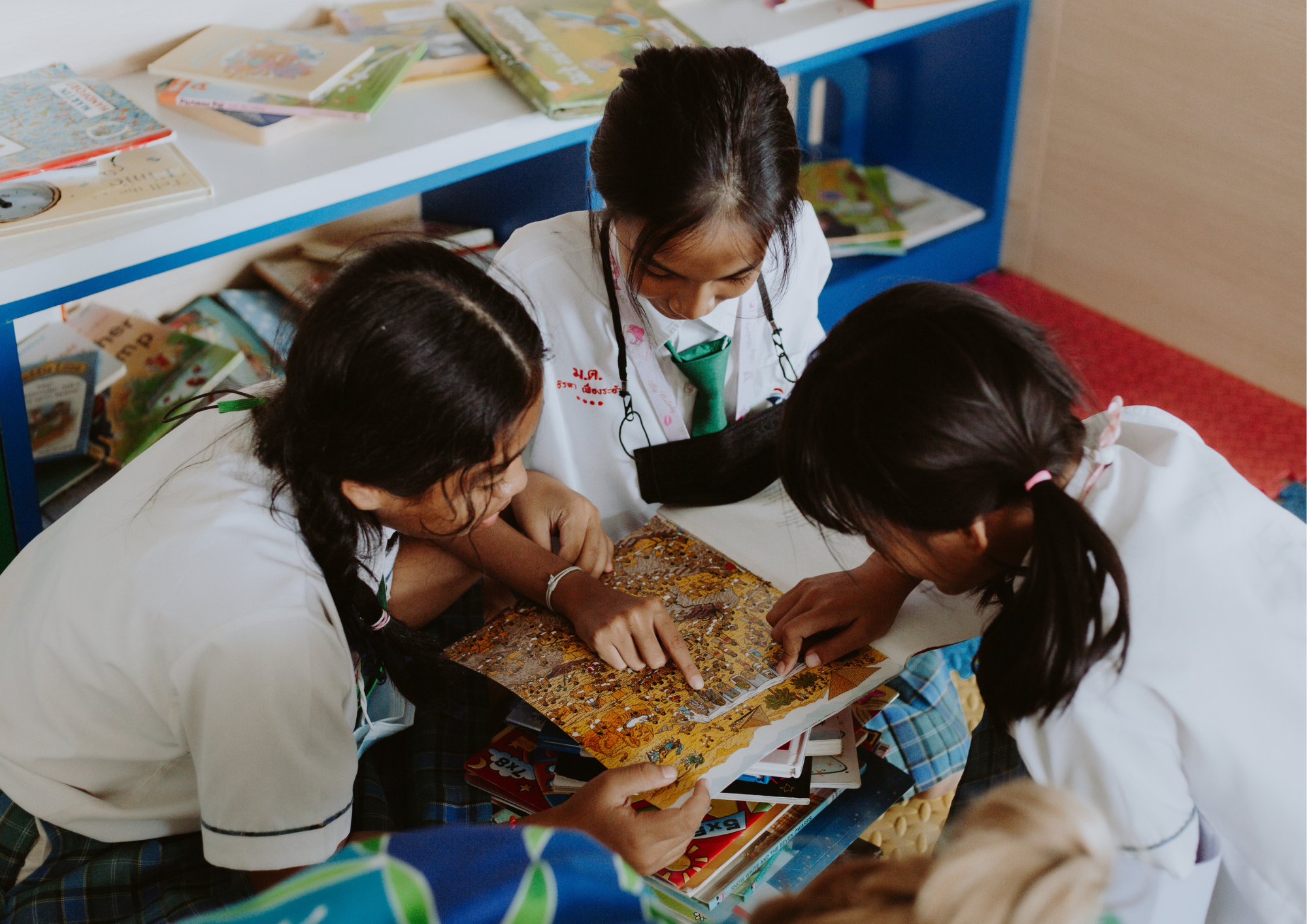
In a day school, if the board isn’t working out, you notice quickly and can course-correct. In a boarding school, your daughter is inside that curriculum for the full academic year, with far less day-to-day parental visibility into how she’s coping with it. That raises the stakes on getting the board right the first time — and it’s why boarding-specific factors deserve as much weight as the syllabus comparison itself:
- How much individual academic support the hostel and faculty structure actually provides outside class hours
- Whether the school runs dedicated coaching or bridging support for NEET/JEE if it’s a non-CBSE campus
- How switching schools mid-board (a much bigger disruption for a boarder than a day scholar) is handled if things aren’t working
- Whether the extracurricular and residential structure builds the independence and confidence that, frankly, matters as much as the exam board over six years
The Option Most Comparison Articles Leave Out: Dual Curriculum
Here’s the thing nobody tells parents outright: choosing a board at age 11 or 12 is really a bet on what your daughter will want at 17 — and that’s a hard bet to make with certainty. A small number of girls boarding schools have responded to exactly this uncertainty by running a dual-curriculum model — CBSE alongside a Cambridge International (CAIE) track — so the choice isn’t locked in as early or as completely.
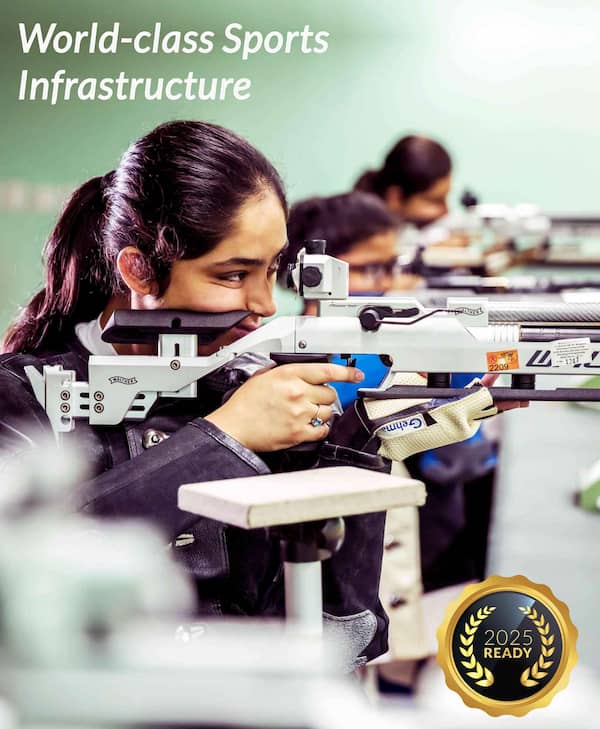
Ecole Globale International Girls’ School in Dehradun is structured this way. Students get the CBSE foundation that keeps NEET, JEE, and CUET fully accessible, layered with Cambridge IGCSE and A-Level options that bring in the analytical depth, research orientation, and international recognition that usually pull families toward ICSE in the first place. Combined with a girls-only residential environment, an equestrian programme, and one of the few school-based shooting ranges in the region, it’s built for parents who don’t want to trade exam-readiness for breadth — or the other way round.
How Three Real Dehradun Girls Boarding Schools Compare by Board
| School | Board | What it means for your daughter |
| Ecole Globale International Girls’ School | CBSE + Cambridge (IGCSE/A Levels) | Keeps NEET/JEE/CUET doors open through CBSE, while the Cambridge track adds the analytical depth and global recognition families usually look for in ICSE |
| Vantage Hall Girls’ Residential School | CBSE | Strong option if the goal is squarely national competitive exams |
| Welham Girls’ School | ICSE / ISC (CISCE) | Traditional ICSE strength in English and the humanities, no CBSE stream |
A Parent’s Decision Checklist
Before you shortlist campuses, sit with these questions — they’ll narrow the CBSE-vs-ICSE debate faster than any syllabus comparison:
- Career direction: Is she already leaning toward engineering/medicine (CBSE advantage) or humanities/writing/international study (ICSE advantage)?
- Learning style: Does she do better with structured, predictable content, or does she thrive with open-ended, analytical work?
- Geographic flexibility: Might the family relocate, or might she want to switch schools later? CBSE’s larger network makes this far easier.
- Undergrad destination: Purely Indian universities, purely international, or genuinely undecided? Undecided is where a dual-curriculum school earns its keep.
- Boarding-specific support: Does the school offer structured coaching, bridging classes, or academic mentorship built into hostel life — not just the classroom?
Schedule a campus visit at Ecole Globale →
Learn more about student life →
Frequently Asked Questions
Q1. Is CBSE or ICSE better for a girls boarding school specifically?
Ans: Neither board is inherently “better” in a boarding context — the residential environment shapes confidence and independence either way. What changes is exam strategy: CBSE boarding schools suit girls aiming at JEE, NEET, or CUET, while ICSE boarding schools suit girls who lean toward English, humanities, and international study routes.
Q2. Can a girl switch from ICSE to CBSE later, or the other way round?
Ans: Yes, but it’s smoother at natural break points — typically before Class 9 or right after Class 10 — since the two boards teach and assess very differently. Mid-year switches usually need bridging classes.
Q3. Which board is easier for NEET and JEE preparation?
Ans: CBSE syllabus and NCERT textbooks map most directly onto NEET and JEE question patterns, which is why most coaching institutes default to CBSE content. ICSE students can and do crack these exams, but typically need extra bridging in Physics, Chemistry, and Biology.
Q4. Is there a boarding school that offers both CBSE strength and ICSE-style depth?
Ans: A small number of girls boarding schools now run a dual-curriculum model — CBSE through the middle years alongside a Cambridge IGCSE or A-Level track. Ecole Globale International Girls’ School in Dehradun is one such school, built specifically so parents don’t have to choose between national exam readiness and international academic depth.
Q5. Does the choice of board affect university admissions abroad?
Ans: Both CBSE and ICSE certificates are recognised by universities worldwide, but ICSE’s broader, English-heavy syllabus is often seen as an easier stepping stone into international curricula, while Cambridge-affiliated schools go a step further with direct IGCSE/A-Level equivalence.
Q6. How many ICSE schools are boarding schools compared to CBSE?
Ans: ICSE has a smaller overall network of roughly 2,300 affiliated schools, and fewer of these are residential compared to the much larger CBSE network, so parents specifically wanting an ICSE boarding school usually have fewer campuses to choose from.