



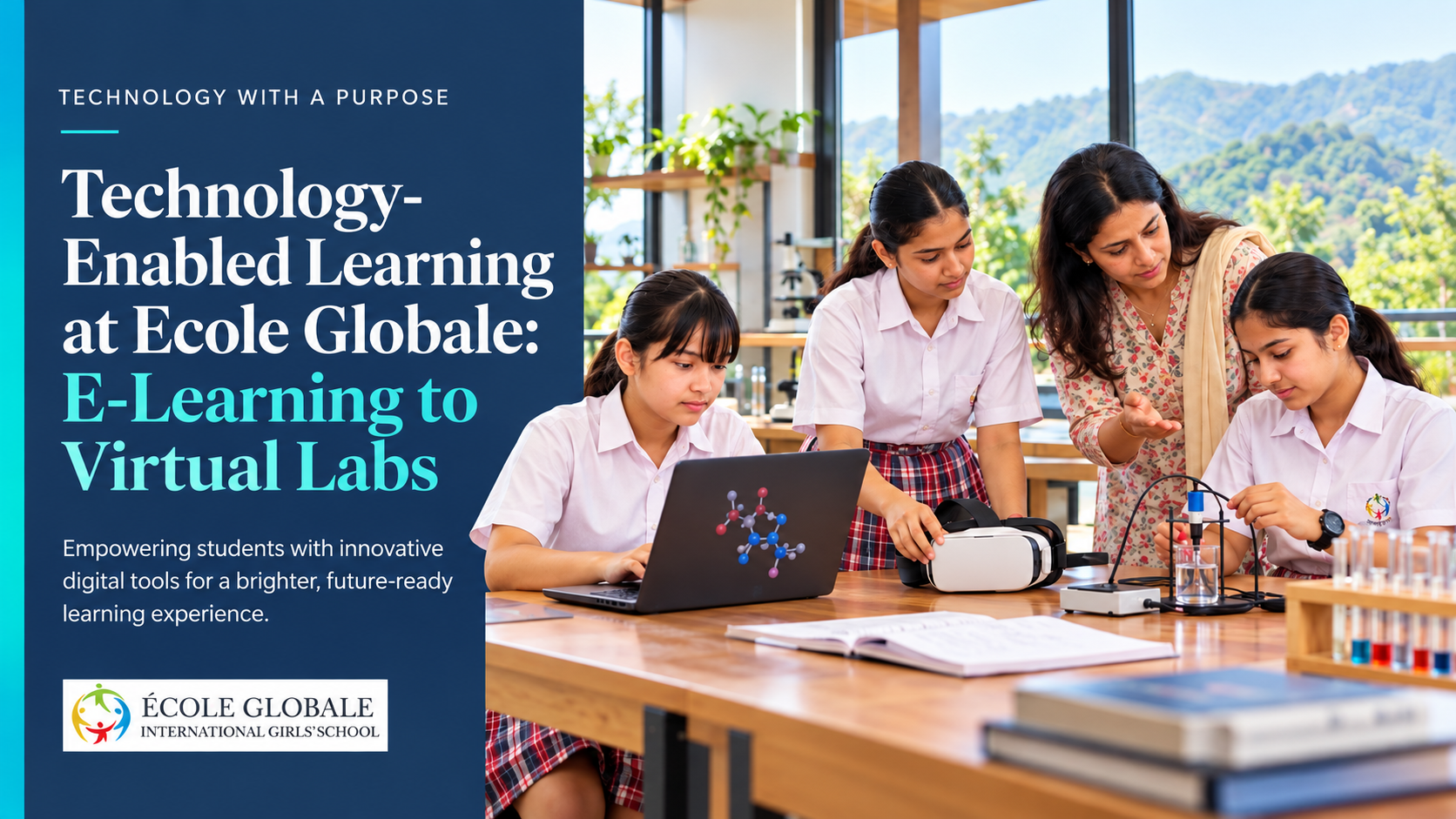
Technology has become an important part of modern learning. From digital resources and interactive classrooms to e-learning platforms and virtual laboratories, technology can give students new ways to explore concepts and participate in learning.
At Ecole Globale International Girls School, technology is integrated into different aspects of the educational experience. The aim is not simply to use more devices, but to use technology-enabled learning to make lessons more interactive, practical, and engaging.
What Is Technology-Enabled Learning?
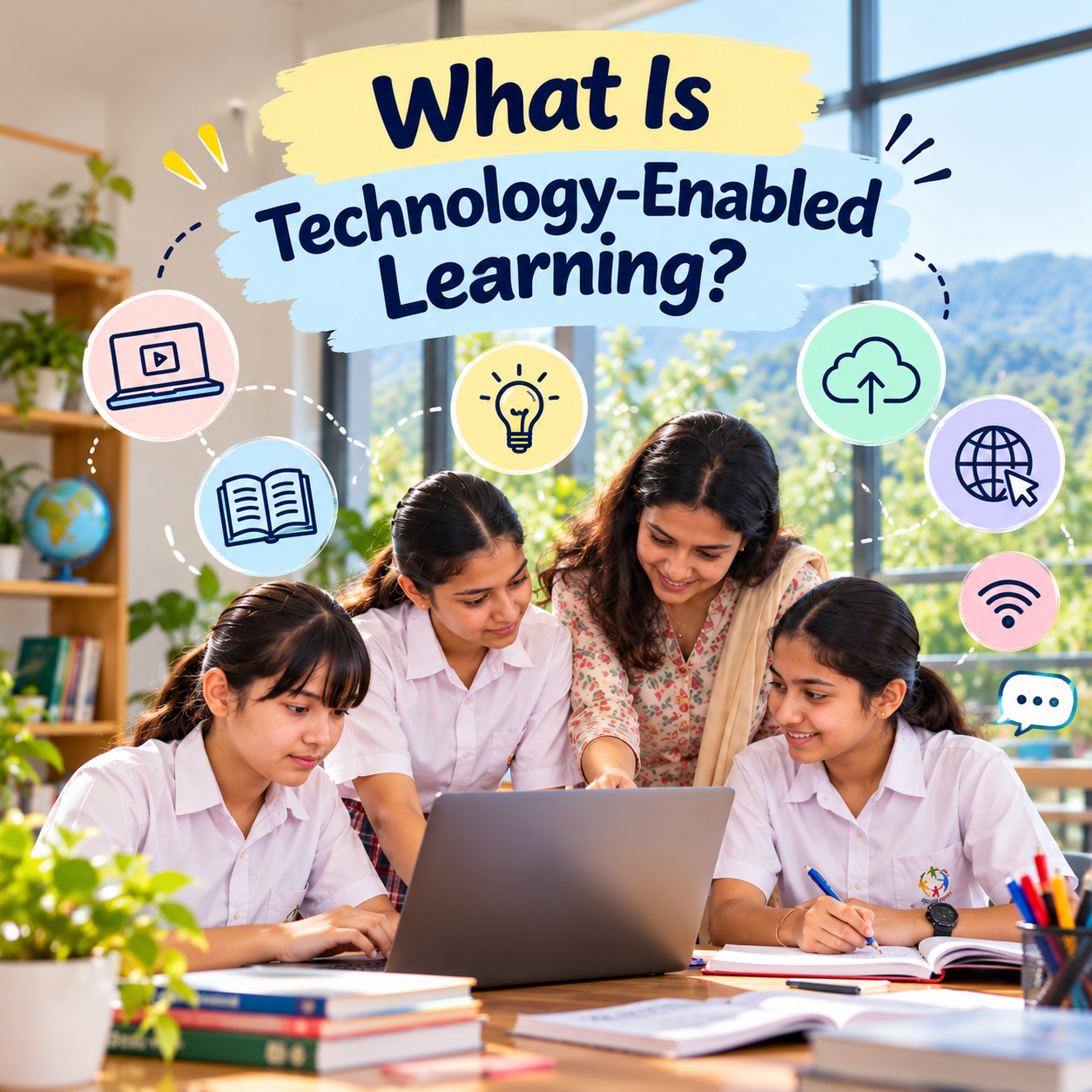
Technology-enabled learning refers to the use of digital tools, educational platforms, multimedia resources, and other technologies to support teaching and learning.
Instead of replacing teachers, technology can complement classroom instruction. Teachers can use presentations, videos, simulations, digital resources, and interactive activities to explain concepts in different ways.
At Ecole Globale, the approach of integrating technology can give students opportunities to explore subjects beyond traditional textbooks and classroom materials.
How Ecole Globale Integrates Technology
When Ecole Globale integrates technology, it can support learning across different areas of school life. Digital tools can be used for classroom teaching, research, communication, presentations, projects, and practical learning.
This approach allows students to become familiar with technology as a learning resource rather than using it only for entertainment.
Technology can also support different learning activities, allowing students to access information, collaborate on projects, create presentations, and explore concepts through multimedia resources.
Digital Learning in Schools
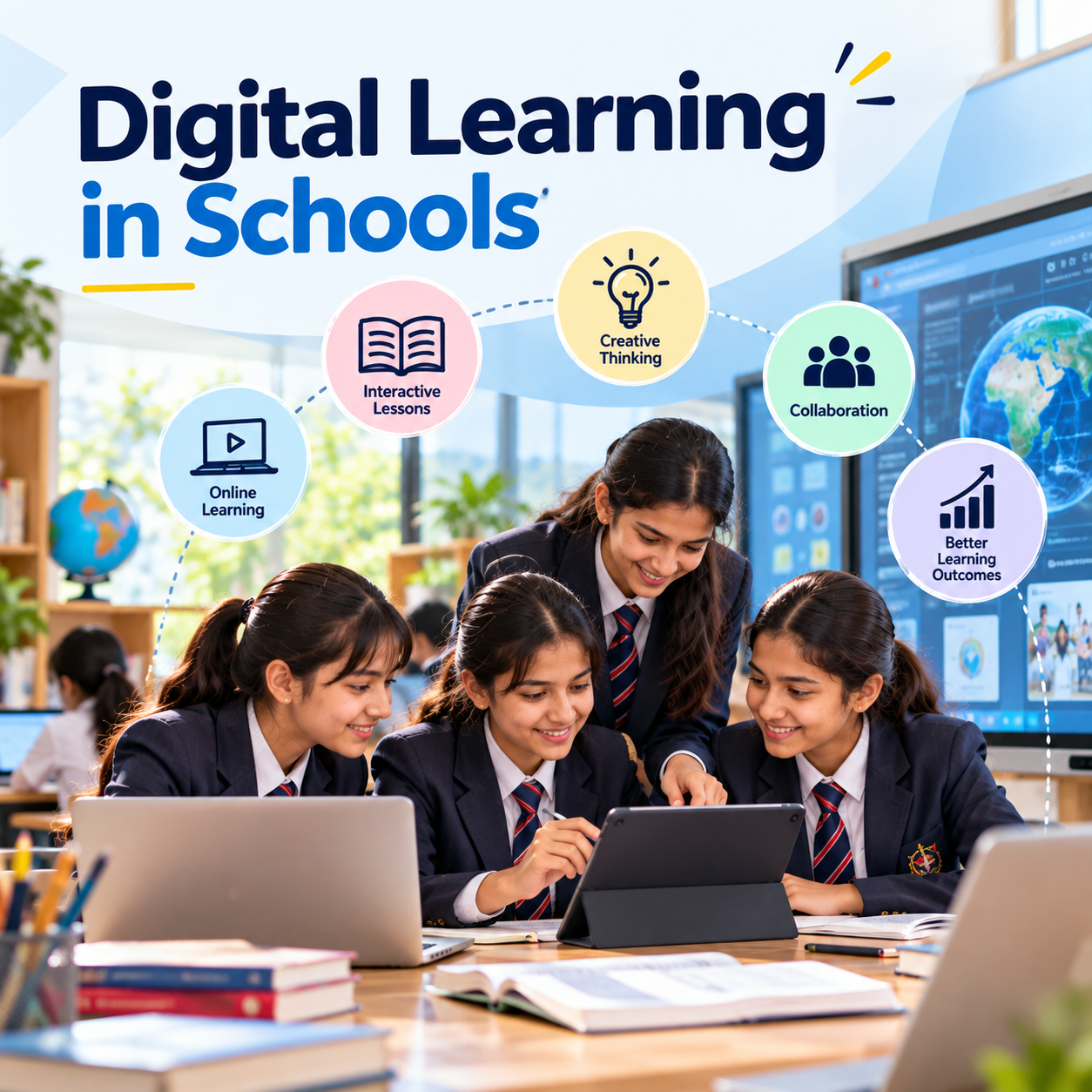
Digital learning in schools provides students with access to electronic resources that can complement traditional teaching methods.
Digital learning may include:
- Educational videos and presentations
- Digital reading materials
- Online research resources
- Interactive learning activities
- Educational applications
- Digital assignments and projects
- Multimedia learning resources
These tools can help teachers present information in different formats while giving students additional opportunities to explore subjects independently.
E-Learning and Flexible Learning Resources
E-learning has changed how students can access educational content. Instead of depending entirely on printed textbooks, students can use digital resources to review concepts, conduct research, and explore additional learning materials.
At Ecole Globale, technology-supported learning can complement classroom instruction by providing students with additional resources for revision and independent study.
Digital resources can also make it easier to revisit difficult topics. Students can review learning materials at an appropriate pace and use different formats to strengthen their understanding.
Virtual Labs and Practical Learning
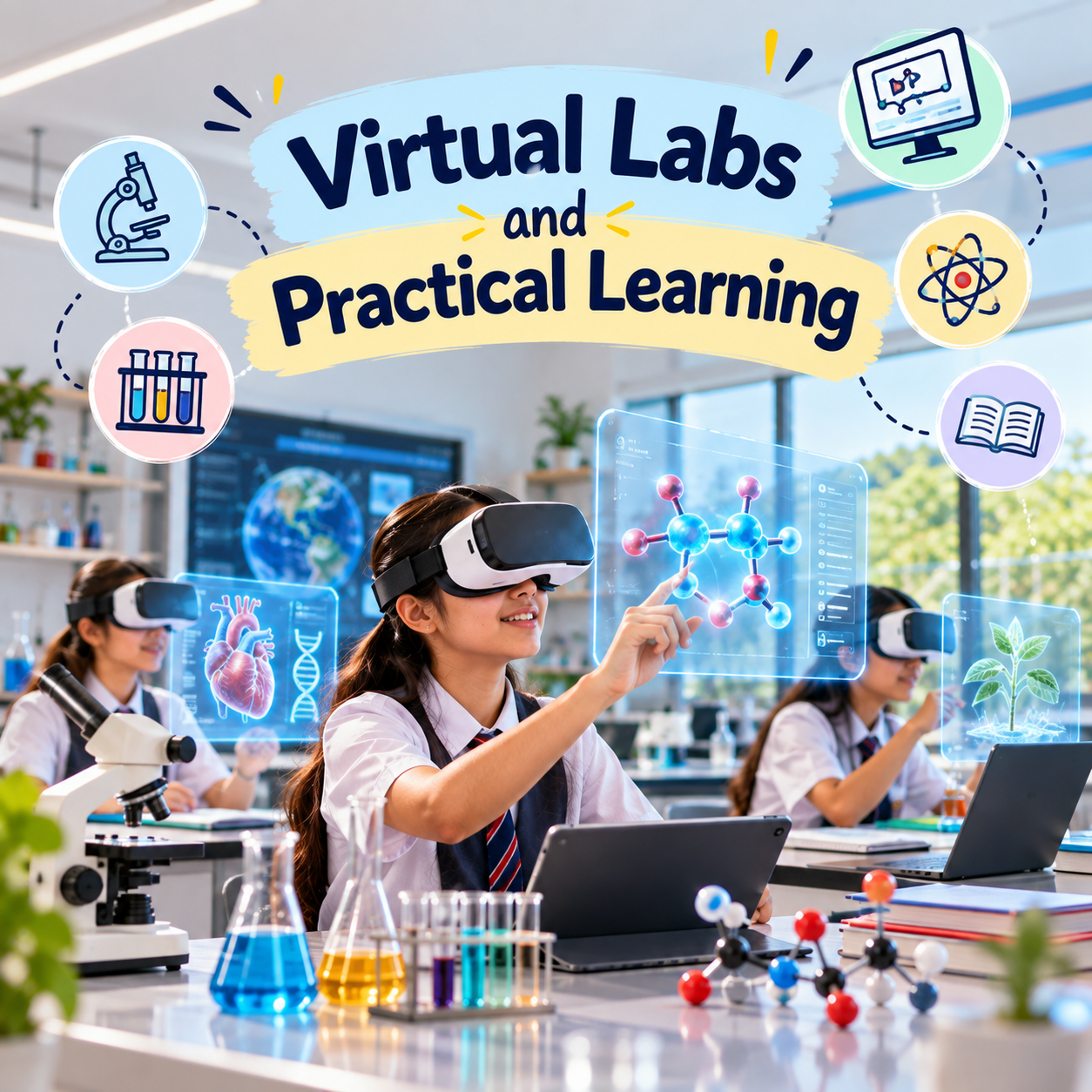
One of the interesting applications of educational technology is the use of virtual laboratory experiences.
Virtual labs can simulate scientific experiments and allow students to explore concepts digitally. They can help students understand experimental procedures, observe simulated outcomes, and explore scientific concepts in an interactive environment.
Virtual labs do not necessarily replace physical laboratory experiences. Instead, they can complement practical work by giving students another way to explore concepts before or after conducting experiments.
For subjects such as science, technology can therefore help connect theoretical concepts with interactive learning experiences.
Interactive Classrooms
Technology can also make classroom lessons more interactive. Teachers can use multimedia presentations, videos, diagrams, animations, and digital activities to explain concepts.
Interactive resources can be particularly useful when a topic is difficult to understand through text alone. Visual representations can help students see processes, relationships, and examples more clearly.
The teacher remains central to the learning process, while technology provides additional tools for explanation and engagement.
Supporting Research and Independent Learning
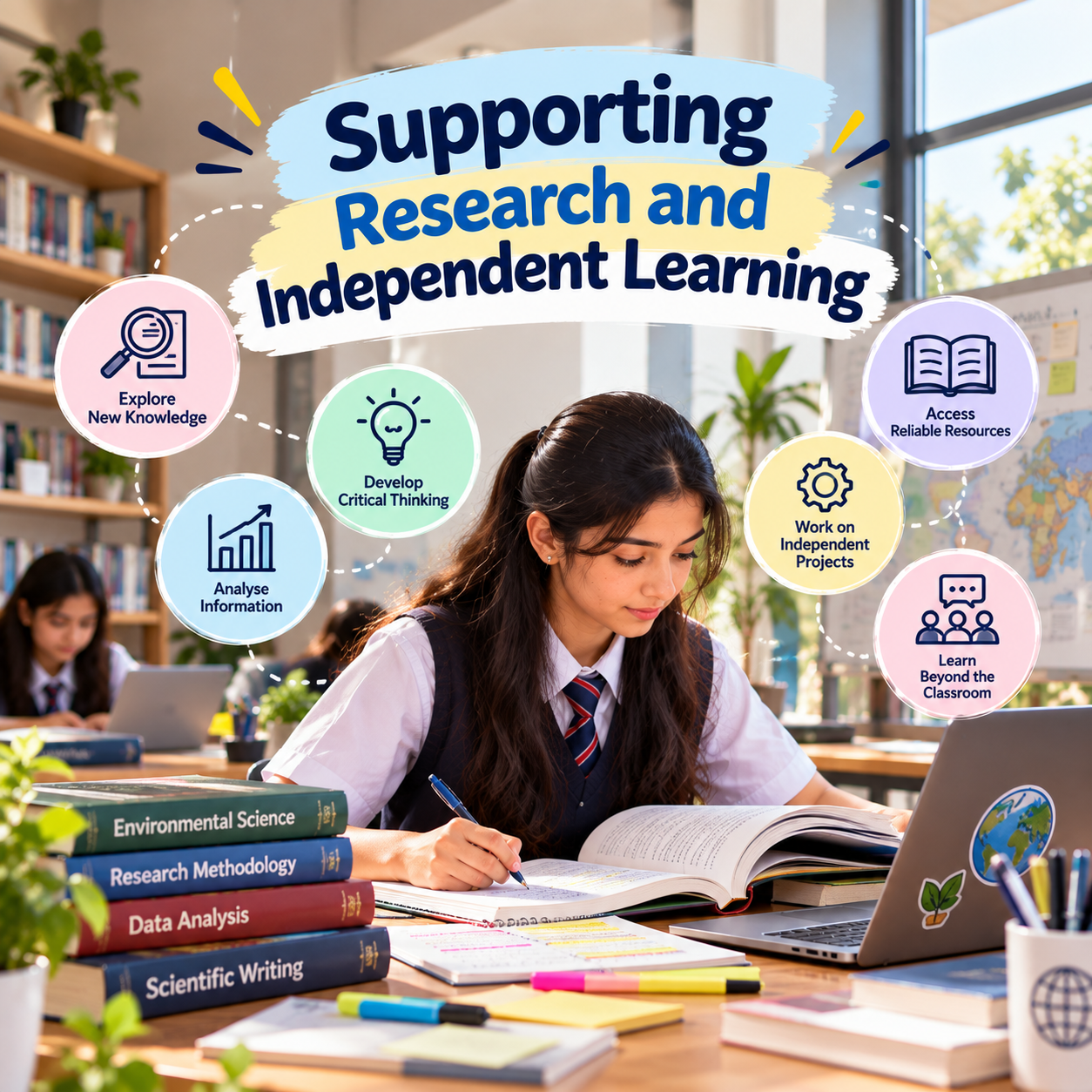
Students increasingly need to know how to find, evaluate, organise, and use information responsibly.
Digital learning in schools can support the development of these research skills. Students can use digital resources to investigate topics, compare information, prepare projects, and present their findings.
This process can encourage independent learning while also highlighting the importance of checking information and using reliable sources.
At Ecole Globale, technology can therefore be part of a broader approach to developing research, communication, and critical-thinking skills.
Technology for Projects and Presentations
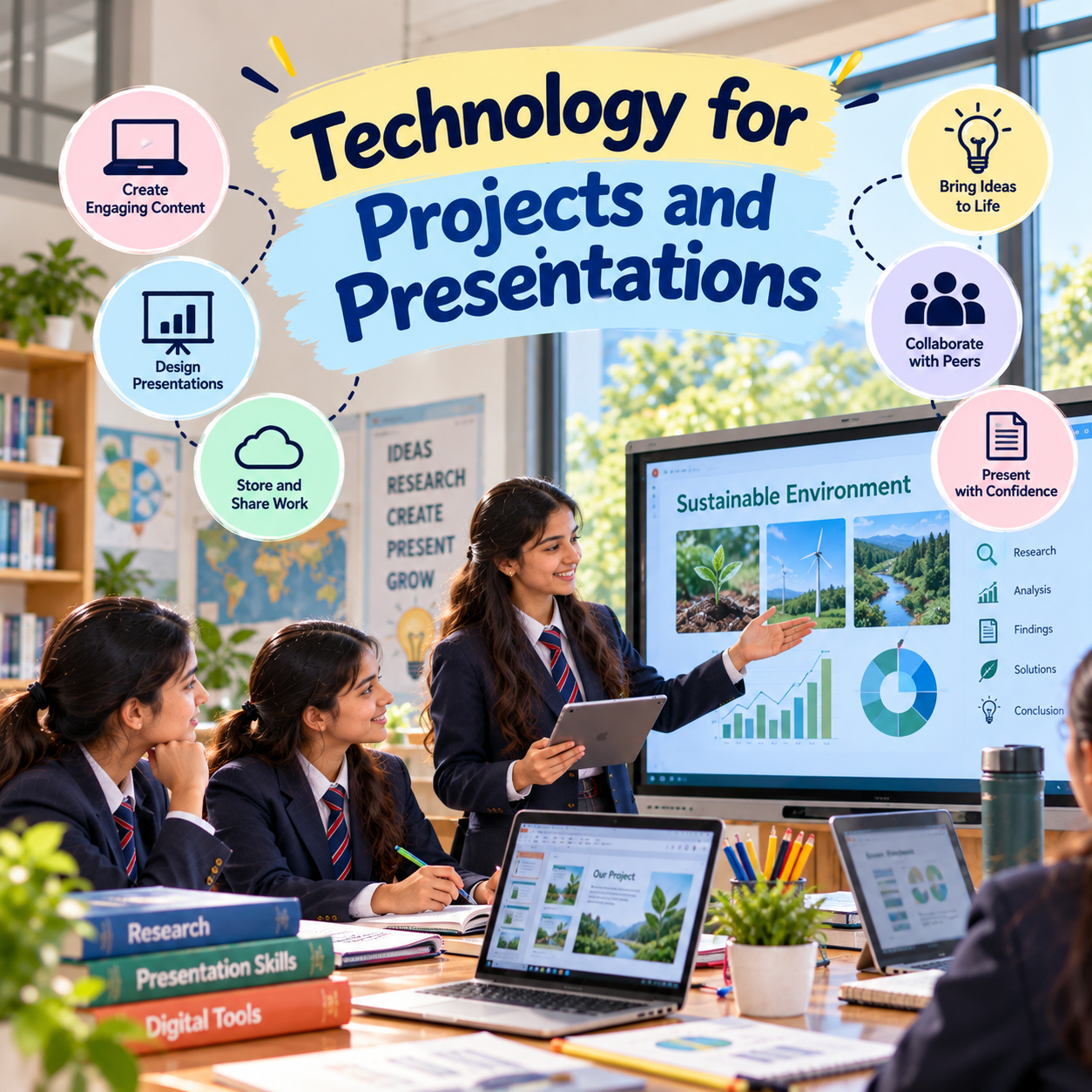
Technology can provide students with different ways to demonstrate what they have learned.
Instead of relying only on written assignments, students can create:
- Digital presentations
- Research projects
- Multimedia reports
- Educational posters
- Digital portfolios
- Collaborative projects
These activities can encourage students to combine subject knowledge with creativity, communication, organisation, and digital skills.
Collaboration Through Technology
Technology can also support collaborative learning. Students can work together on presentations, research assignments, projects, and other activities using digital tools.
Collaborative technology can help students practise communication and teamwork while learning how to contribute to a shared task.
When Ecole Globale integrates technology into collaborative learning, students can gain experience using digital tools while working toward common academic goals.
Developing Digital Skills for the Future
Digital literacy has become an important part of modern education. Students may encounter technology throughout higher education, professional environments, and everyday life.
Technology-enabled learning can help students become more comfortable with digital tools while teaching them how to use technology responsibly.
Students can develop skills such as:
- Digital research
- Online communication
- Presentation design
- Information evaluation
- Digital collaboration
- Responsible technology use
- Basic technology problem-solving
These skills can complement traditional academic knowledge and support students as they prepare for future learning opportunities.
Technology and Creativity
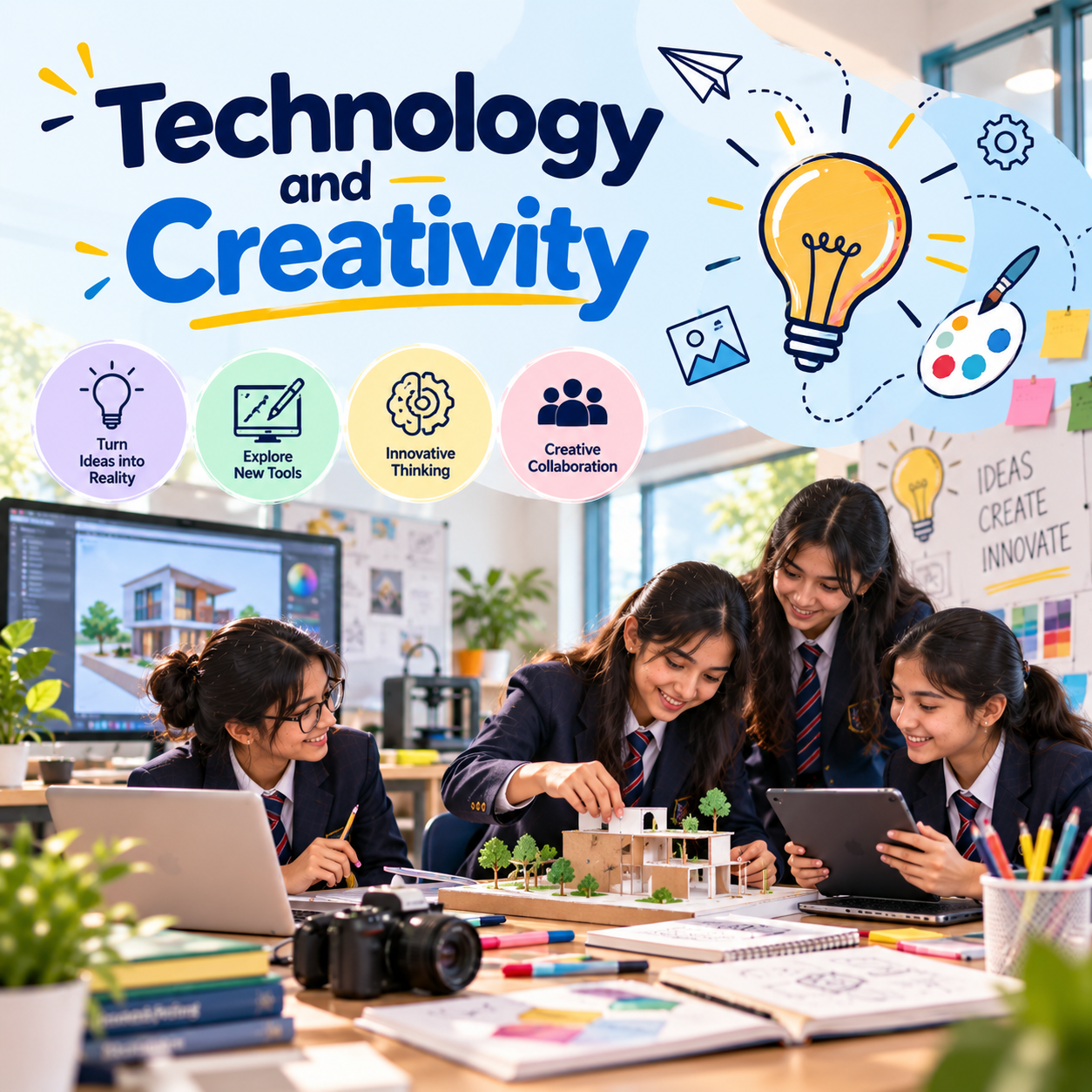
Technology can also provide students with new ways to express their ideas.
Students can use digital tools to create presentations, visual projects, videos, designs, and other forms of digital content. Such activities can encourage creativity while helping students communicate ideas in different formats.
Educational technology can therefore support both analytical and creative learning experiences.
Balancing Technology With Traditional Learning
Technology is most useful when it supports clear educational objectives. Excessive or inappropriate technology use does not automatically result in better learning.
A balanced approach can combine:
- Teacher-led instruction
- Books and printed resources
- Practical activities
- Group discussions
- Sports and extracurricular activities
- Digital learning resources
- Hands-on experiences
This balance helps ensure that technology remains a tool for learning rather than becoming the focus of education itself.
The Role of Teachers in Technology-Enabled Learning
Teachers remain an essential part of the educational process. They help students understand concepts, ask questions, evaluate information, and apply knowledge.
Technology can provide additional resources, but teachers help students understand when and how those resources should be used.
At Ecole Globale, technology can therefore work alongside teacher guidance to create a learning environment that combines academic instruction with digital resources and interactive experiences.
Why Technology Matters at Ecole Globale
When Ecole Globale integrates technology, the purpose is to support a broader educational experience. From e-learning resources to digital research and virtual laboratory experiences, technology can provide students with additional ways to explore academic concepts.
Technology-enabled learning can also support independent learning, collaboration, creativity, research, and digital literacy.
For students growing up in an increasingly digital world, understanding how to use technology effectively and responsibly can be an important part of their education.
Conclusion
From e-learning resources to virtual labs, technology-enabled learning can provide students with new ways to explore subjects, conduct research, collaborate, and demonstrate their understanding.
At Ecole Globale, educational technology can complement traditional classroom teaching by providing interactive resources and opportunities for digital learning. When used thoughtfully, technology can support academic learning while helping students develop research, communication, creativity, collaboration, and digital skills.
The goal of digital learning in schools should not simply be to use more technology. It should be to use the right tools in meaningful ways that support students’ learning and prepare them for an increasingly technology-driven world.
FAQs
Q1. What is technology-enabled learning?
Ans: Technology-enabled learning uses digital tools, e-learning resources, interactive platforms, and educational technology to support classroom teaching and student learning.
Q2. How does Ecole Globale integrate technology into education?
Ans: Ecole Globale integrates technology through digital learning resources, interactive classroom activities, e-learning, research tools, presentations, and technology-supported practical learning.
Q3. What are the benefits of digital learning in schools?
Ans: Digital learning can provide students with flexible access to resources, interactive learning experiences, research opportunities, and different ways to explore academic concepts.
Q4. How do virtual labs support student learning?
Ans: Virtual labs can allow students to explore scientific concepts through simulations and interactive experiments, complementing practical laboratory experiences.
Q5. Why is educational technology important for students?
Ans: Educational technology can help students develop digital literacy, research, communication, collaboration, creativity, and independent learning skills.
Q6. Does technology replace teachers in the classroom?
Ans: No. Technology is a learning tool that can complement teacher-led instruction. Teachers continue to guide students, explain concepts, provide feedback, and support learning.