





Education is not limited to textbooks, examinations and academic achievements. It also plays an important role in shaping students’ behaviour, attitudes, values and personalities. Value Education in Schools helps students understand the importance of honesty, respect, kindness, discipline, responsibility and fairness. These values guide them in making thoughtful decisions and developing positive relationships with others.
In today’s changing world, students need more than academic knowledge to succeed. They must also learn how to communicate respectfully, manage challenges, work with others and contribute positively to society. This is where Value Education in Schools becomes important.
Along with academic learning, character building in schools helps students develop qualities that influence their personal, social and professional lives. By integrating values into everyday learning experiences, schools can support the overall development of responsible, confident and compassionate individuals.
1. Understanding the Importance of Value Education in Schools

Value Education in Schools refers to teaching students the principles and attitudes that help them distinguish between responsible and harmful behaviour. It encourages students to understand values such as honesty, respect, empathy, cooperation and integrity.
These values influence how students behave in classrooms, interact with teachers, communicate with classmates and respond to different situations. For example, students who understand the importance of honesty are more likely to take responsibility for their work and acknowledge their mistakes.
The importance of value education in schools also extends beyond the classroom. Students carry these values into their families, communities and future workplaces. Learning to respect different opinions, follow rules and treat others fairly helps them become more responsible members of society.
2. Character Building in Schools: Developing Positive Habits

Character building in schools focuses on developing positive qualities and habits that influence students’ everyday actions. It is a gradual process that requires consistent guidance, practical experiences and encouragement.
Schools can support character development by teaching students to:
- Take responsibility for their actions and decisions.
- Respect teachers, classmates and other members of the community.
- Follow rules and maintain discipline.
- Be honest in academic and personal matters.
- Show kindness and consideration towards others.
- Accept mistakes and learn from them.
- Work cooperatively with classmates.
Value Education in Schools supports these habits by helping students understand why positive behaviour matters. Rather than simply instructing students to follow rules, teachers can explain the values behind those rules.
For example, maintaining classroom cleanliness teaches responsibility towards shared spaces, while completing group assignments encourages cooperation and accountability.
3. Teaching Honesty, Integrity and Responsibility

Honesty and integrity are essential values that influence how individuals make decisions and build trust. Students should understand that honesty means being truthful, acknowledging mistakes and acting responsibly even when no one is watching.
Value Education in Schools can introduce these principles through classroom discussions, stories, real-life examples and everyday situations. Teachers can encourage students to complete their assignments independently, give credit for others’ contributions and communicate truthfully.
Responsibility is another important part of character development. Students learn responsibility when they manage their belongings, complete assigned tasks, follow classroom expectations and participate in school activities.
Through character building in schools, these qualities become part of students’ everyday routines. Consistent practice helps them understand that their choices have consequences and that responsible behaviour contributes to a positive learning environment.
4. Developing Empathy, Kindness and Respect
Empathy is the ability to understand and consider another person’s feelings and experiences. It helps students develop meaningful relationships and respond thoughtfully to people around them.
Value Education in Schools encourages students to respect individual differences, listen to others and avoid behaviour that may hurt or exclude their classmates. It also helps create awareness about kindness, inclusion and equal treatment.
Schools can promote empathy through activities such as:
- Group discussions about real-life situations.
- Stories that explore different perspectives.
- Peer-support activities.
- Collaborative classroom projects.
- Community service initiatives.
- Discussions about respect and inclusion.
Character Building in Schools should also address bullying, discrimination and disrespectful behaviour. Students need to understand that kindness is not simply about being polite; it also involves treating others fairly and speaking up when someone is being treated unfairly.
5. The Role of Teachers in Value Education

Teachers play an important role in value education in schools because students often learn through observation as well as instruction. The way teachers communicate, resolve disagreements, treat students and respond to mistakes can influence classroom behaviour.
For example, a teacher who listens patiently demonstrates respect. A teacher who admits a mistake demonstrates honesty. Similarly, treating students fairly encourages them to understand the importance of equality.
Teachers can make value-based learning part of everyday classroom experiences instead of restricting it to a separate subject or occasional activity.
Effective character building in schools requires teachers to:
- Encourage respectful classroom discussions.
- Appreciate honesty and responsible behaviour.
- Address bullying and unfair treatment.
- Give students opportunities to take responsibility.
- Encourage cooperation instead of unnecessary competition.
- Provide constructive feedback and guidance.
When teachers consistently demonstrate positive values, students have practical examples they can follow.
6. Integrating Value Education into Everyday School Activities
Value education in schools becomes more meaningful when students practise values through real experiences. Reading about honesty or responsibility is useful, but applying these principles in everyday situations helps students understand their importance.
Schools can introduce value-based learning through different activities:
Morning assemblies: Short talks, stories and discussions can introduce values such as gratitude, discipline, respect and responsibility.
Group projects: Collaborative assignments teach teamwork, patience, communication and accountability.
Sports and competitions: Students learn fair play, respect for opponents, cooperation and how to handle both success and disappointment.
Community service: Activities such as environmental awareness campaigns, cleanliness drives and helping community organisations encourage social responsibility.
Classroom responsibilities: Assigning duties such as maintaining classroom resources or organising learning materials helps students develop accountability.
These activities connect value education in schools with practical learning. They also make character building in schools an ongoing process rather than a lesson that students encounter only occasionally.
7. Building Discipline and Self-Control Among Students
Discipline is an important quality that helps students manage their time, follow routines and work towards their goals. However, discipline should not be understood only as obeying instructions or following school rules. It also involves self-control, consistency and understanding personal responsibilities.
Value Education in Schools helps students recognise why discipline matters in academic and personal life. Students learn to manage their schedules, complete tasks on time, respect classroom rules and make responsible choices.
Self-control is equally important. Students may experience disagreements, academic pressure or frustration. Learning to respond calmly, consider different viewpoints and think before acting can help them manage these situations more effectively.
Through Character Building in Schools, students can develop the habits needed to become more independent and organised. Teachers and parents can support this process by setting clear expectations and encouraging students to take ownership of their actions.
8. Promoting Social and Emotional Development
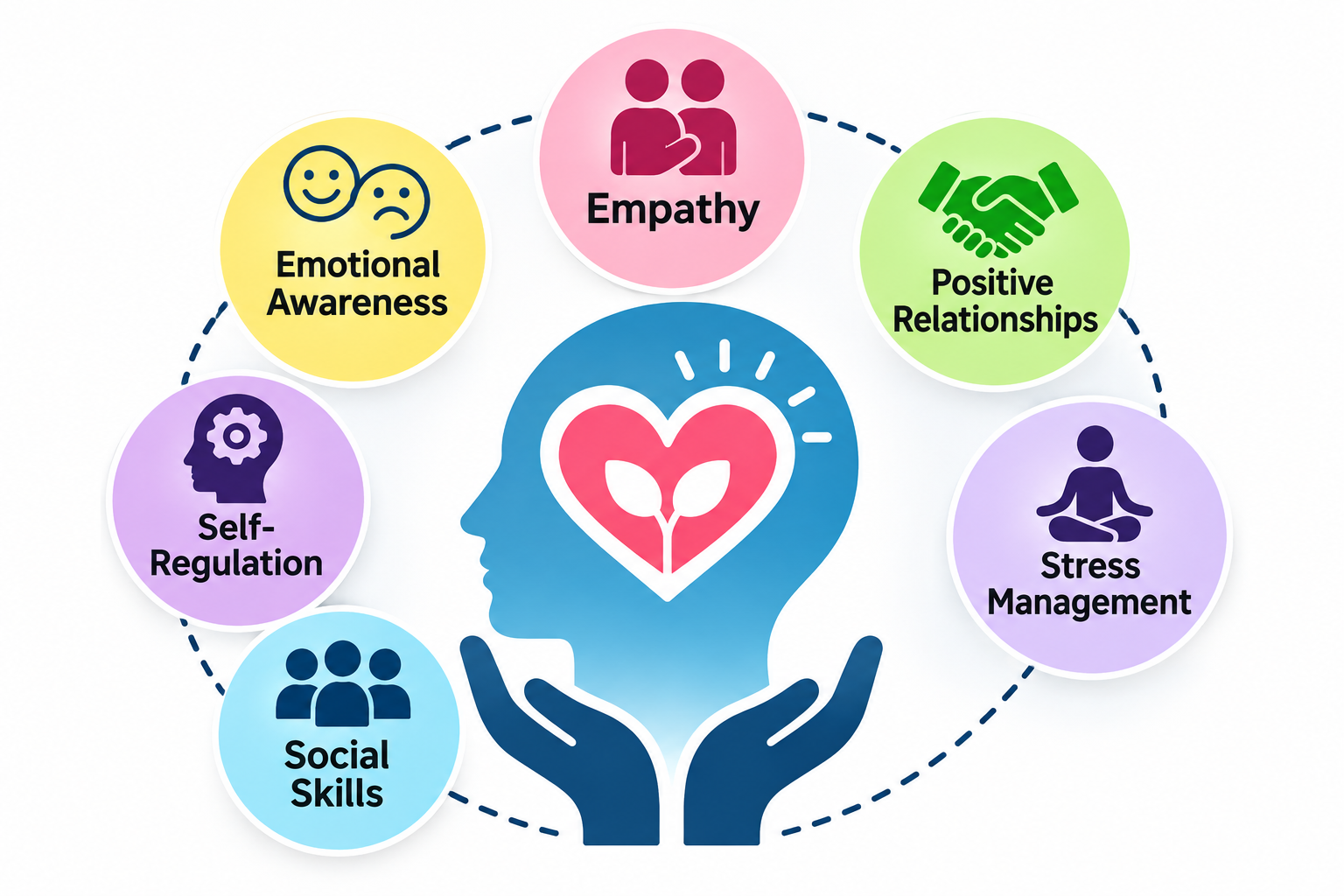
Students experience different emotions as they grow, learn and interact with others. Developing the ability to understand emotions, communicate effectively and manage disagreements is an important part of overall development.
Value Education in Schools can support social and emotional development by encouraging self-awareness, empathy, patience and respectful communication.
For example, classroom discussions can help students understand different perspectives, while group activities can teach them how to manage disagreements and work towards common goals.
Character building in schools also encourages students to develop resilience and learn from challenges. Instead of viewing mistakes as failures, students can be guided to recognise what went wrong and identify ways to improve.
A supportive environment where students feel respected and heard can help them develop healthier relationships and greater confidence in their abilities.
9. The Role of Parents and Schools in Teaching Values
Teaching values is a shared responsibility. While value education in schools provides structured opportunities for learning, families also influence how children understand and practise values.
Parents can reinforce positive behaviour by demonstrating honesty, kindness, patience and respect at home. Simple everyday experiences, such as sharing responsibilities, listening to family members and helping others, can provide meaningful lessons.
Schools and families can work together by:
- Maintaining regular communication about student development.
- Encouraging consistent expectations for behaviour.
- Recognising positive actions and responsible choices.
- Discussing challenges without unnecessary judgement.
- Supporting students when they make mistakes.
- Encouraging participation in community activities.
The success of Character Building in Schools depends partly on consistency between the values taught at school and the behaviour encouraged at home.
10. Preparing Responsible Citizens Through Value-Based Education
The purpose of Value Education in Schools extends beyond individual development. It also helps students understand their responsibilities towards other people, their communities and the environment.
Students who learn about fairness, equality, cooperation and social responsibility may be better prepared to participate thoughtfully in society. They can develop an understanding of different perspectives and recognise the importance of contributing to shared goals.
Schools can encourage responsible citizenship through environmental projects, community initiatives, awareness campaigns and discussions about social issues.
Character Building in Schools can also prepare students for future academic and professional environments, where integrity, teamwork, communication and accountability are important.
Ultimately, value-based learning helps students understand that success is not measured only by academic results. The way they treat others, make decisions and fulfil their responsibilities also matters.
Conclusion
Value Education in Schools is an essential part of a balanced educational experience. It helps students understand the importance of honesty, respect, empathy, discipline, responsibility and fairness. These qualities influence their behaviour, relationships and decisions throughout life.
At the same time, Character Building in Schools provides opportunities for students to practise positive habits through classroom activities, teamwork, sports, community service and everyday interactions.
Schools should make value-based learning a consistent part of their educational approach rather than treating it as an occasional lesson. When teachers, parents and school communities work together, students can develop not only academic knowledge but also the qualities needed to become responsible and thoughtful individuals.
A strong education should prepare students not just to achieve success, but also to use their knowledge and abilities with integrity, compassion and responsibility.
Frequently Asked Questions (FAQs)
Q1. What is Value Education in Schools?
Ans: Value Education in Schools is the process of teaching students important principles such as honesty, respect, kindness, responsibility, empathy and fairness. It helps students develop positive attitudes and make thoughtful decisions.
Q2. Why is Character Building in Schools important?
Ans: Character Building in Schools helps students develop qualities such as discipline, integrity, confidence, responsibility and respect. These qualities support personal growth and help students build positive relationships.
Q3. What are the main values students should learn at school?
Ans: Students should learn honesty, respect, empathy, kindness, cooperation, discipline, responsibility, fairness and integrity. These values can guide their behaviour in academic, personal and social situations.
Q4. How can teachers promote Value Education in Schools?
Ans: Teachers can promote Value Education in Schools through classroom discussions, stories, group projects, sports, morning assemblies and community service activities. They can also demonstrate positive values through their everyday behaviour.
Q5. What is the difference between value education and moral education?
Ans: Value education focuses on developing principles and attitudes that guide behaviour, while moral education often focuses more specifically on understanding right and wrong. Both approaches support ethical decision-making and positive character development.
Q6. How can parents support Character Building in Schools?
Ans: Parents can support Character Building in Schools by reinforcing positive values at home, encouraging responsibility, demonstrating respectful behaviour and maintaining communication with teachers. Consistent guidance from both home and school can support students’ development.