





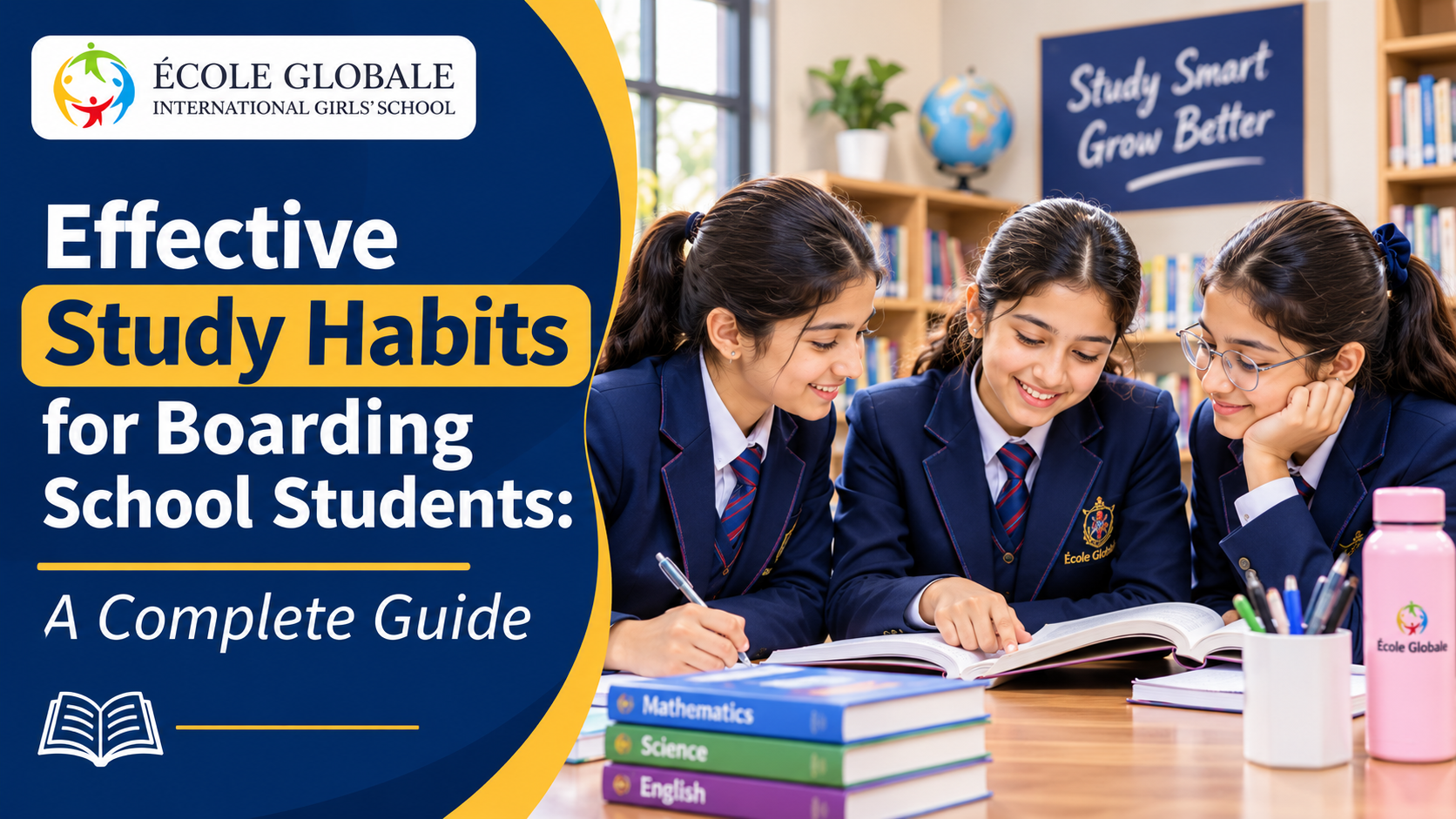
Academic success is not just about spending long hours with books. It depends on consistency, concentration, time management and the ability to understand and apply what is taught in the classroom. For students living on campus, developing Study Habits That Work in a Residential School can make everyday learning more organised and productive.
Residential schools provide a structured environment where students follow regular timetables, attend classes, participate in extracurricular activities and have dedicated study periods. By using this routine effectively, students can develop academic discipline and become independent learners.
Understanding Study Habits That Work in a Residential School also helps students balance their academic responsibilities with sports, hobbies, friendships and personal development. Here are some practical ways to build an effective study routine.
1. Follow a Consistent Daily Study Routine

A regular study schedule is one of the most useful study habits that work in a residential school. Students should make proper use of supervised study periods and allocate time for homework, revision and additional reading.
A consistent routine helps students understand what needs to be completed each day and prevents assignments from accumulating.
Some useful practices include:
- Review classroom notes after lessons.
- Complete homework during the assigned study period.
- Allocate extra time to difficult subjects.
- Revise previously covered topics regularly.
- Prepare books and stationery for the next day.
These practices are among the most effective study habits for boarding school students because they encourage consistency and reduce last-minute academic pressure.
2. Set Realistic Academic Goals
Students often find it difficult to remain focused when they study without a clear objective. Setting small and achievable goals can make learning more manageable.
For example, instead of deciding to study mathematics for two hours, a student can aim to complete a particular exercise or understand a difficult chapter.
Setting achievable targets is one of the study habits that work in a residential school because it gives students a clear direction and allows them to measure their progress.
Students can maintain a weekly study planner that includes:
- Daily homework assignments.
- Topics that need revision.
- Upcoming tests and examinations.
- Difficult subjects requiring additional attention.
- Personal academic improvement goals.
These Study Habits That Work in a Residential School encourage responsibility and help students become more organised.
3. Use Effective Study Techniques

Simply reading textbooks repeatedly may not always lead to better understanding. Students should explore different learning techniques to improve memory, understanding and concentration.
Some effective study techniques include:
- Active Recall: Try remembering information without looking at the textbook or notes.
- Spaced Repetition: Revise important topics at regular intervals.
- Mind Mapping: Create visual connections between related concepts.
- Practice Questions: Solve exercises to test understanding.
- Summarising: Write important information in short, simple notes.
Using these methods is an important part of Study Habits That Work in a Residential School. They encourage students to participate actively in the learning process rather than depend entirely on reading and memorisation.
These techniques also form part of effective study habits for boarding school students who want to improve their academic preparation.
4. Improve Concentration During Study Hours
Concentration plays an important role in academic performance. Students may have access to dedicated study spaces in residential schools, but they also need to develop the discipline to avoid distractions.
Frequent conversations, unnecessary device use and switching between different tasks can interrupt learning.
Students can improve concentration by:
- Keeping their study area organised.
- Focusing on one subject at a time.
- Avoiding unnecessary distractions.
- Taking short breaks between study sessions.
- Completing important tasks before moving to another activity.
Learning to concentrate is among the most practical study habits that work in a residential school. With regular practice, students can use their study hours more effectively and develop greater confidence in their academic abilities.
5. Manage Time Between Studies and Activities

Residential school life includes academics, sports, cultural programmes, clubs and recreational activities. Students need to manage their time so that one responsibility does not unnecessarily interfere with another.
Good time management is one of the Study Habits That Work in a Residential School because it helps students prioritise academic tasks while making room for other interests.
A balanced routine may include:
- Classroom learning and academic preparation.
- Sports and extracurricular activities.
- Supervised evening study periods.
- Homework and personal revision.
- Meals, relaxation and sufficient sleep.
Students should understand that productive learning does not require studying continuously. A balanced routine can help maintain motivation and support overall wellbeing.
6. Make Use of Teacher Guidance
Teachers play an important role in helping students understand difficult subjects and improve their academic performance.
Students should ask questions whenever they find a concept confusing rather than allowing learning gaps to continue.
Teachers can provide support through:
- Explaining difficult topics.
- Giving feedback on assignments.
- Recommending additional learning resources.
- Helping students prepare for examinations.
- Suggesting suitable revision techniques.
Seeking guidance is one of the essential study habits that work in a residential school. Students should actively participate in doubt-clearing sessions and make use of additional academic support whenever available.
7. Develop Independent Learning Skills
Independent learning helps students take responsibility for their education. Instead of depending entirely on teachers or reminders, students should gradually learn to organise their notes, complete assignments and revise lessons independently.
They can develop these skills by reading additional books, preparing their own summaries, researching unfamiliar topics using approved resources and identifying subjects that need more attention.
Developing independence is among the most valuable study habits that work in a residential school because it prepares students for higher education and future academic responsibilities.
It also helps students become more confident in making decisions about their learning.
8. Prepare for Examinations Throughout the Year

Waiting until examinations are approaching to begin revision can create unnecessary pressure. Students should revise regularly throughout the academic year.
Useful examination preparation practices include:
- Create a subject-wise revision timetable.
- Divide large chapters into smaller topics.
- Practise questions and sample papers.
- Review mistakes and understand incorrect answers.
- Seek help with difficult concepts.
- Revise important topics at regular intervals.
These study habits that work in a residential school encourage continuous learning and help students approach examinations with better preparation.
9. Maintain a Healthy Study Environment
An organised and comfortable study environment can make learning easier. Students should keep their books, notebooks and stationery arranged so they can begin studying without wasting time.
Good lighting, comfortable seating and minimal distractions can also support concentration.
Along with the physical environment, students should maintain healthy daily routines. Sufficient sleep, regular meals, physical activity and short breaks are important for maintaining energy and attention.
The most sustainable study habits that work in a residential school combine academic discipline with personal wellbeing.
10. Review Progress and Improve Gradually
Students should regularly evaluate their academic progress instead of focusing only on examination marks.
A weekly review can help them identify completed assignments, difficult topics and areas that need additional revision.
They can also maintain a progress notebook to record academic goals, teacher feedback and improvements.
Reviewing progress is one of the Study Habits That Work in a Residential School that encourages students to recognise their strengths and work on areas that need improvement.
Every student learns differently, so study techniques and routines should be adjusted according to individual learning needs.
How Residential Schools Encourage Effective Study Habits
Residential schools can support academic development through structured timetables, supervised study periods, teacher guidance, libraries and access to learning resources.
Students also learn to take responsibility for their daily academic tasks while participating in sports, hobbies and social activities.
At Ecole Globale, a balanced educational approach can help students understand that academic success involves more than examination results. Curiosity, discipline, independent thinking and consistent effort are equally important.
By practising Study Habits That Work in a Residential School, students can make better use of their learning environment and develop skills that support their long-term academic growth.
Conclusion
Building an effective study routine requires consistency, discipline and a willingness to improve. Regular revision, realistic academic goals, active learning techniques, teacher guidance and proper time management can make studying more productive.
Study Habits That Work in a Residential School help students become organised, confident and independent learners. With the right academic support and a balanced daily routine, students can manage their responsibilities while making the most of their residential school experience.
Frequently Asked Questions (FAQs)
Q1. What are the best study habits for residential school students?
Ans: The best study habits include following a regular timetable, revising lessons daily, setting achievable goals, completing homework on time and asking teachers for guidance.
Q2. How can students improve concentration while studying?
Ans: Students can improve concentration by keeping their study area organised, avoiding unnecessary distractions, focusing on one task at a time and taking short breaks.
Q3. Why is time management important in a residential school?
Ans: Time management helps students balance academic responsibilities with sports, hobbies, social activities and personal routines.
Q4. How can boarding school students prepare for examinations?
Ans: Students should revise lessons regularly, prepare subject-wise study plans, practise questions, review mistakes and seek help with difficult topics.
Q5. What are some effective study techniques for students?
Ans: Active recall, spaced repetition, mind mapping, summarising and practising questions are useful techniques for improving understanding and memory.
Q6. How do residential schools support students academically?
Ans: Residential schools may provide supervised study periods, teacher guidance, academic mentoring, libraries and additional learning resources to support students.