





The benefits of 100 percent residential schools go beyond classroom education. These schools provide an environment where students live, study, participate in extracurricular activities, and develop essential life skills on the same campus. Unlike schools that admit both boarders and day scholars, 100 percent residential schools offer students a shared residential experience built around academic learning, personal development, and community participation.
Understanding the benefits of 100 percent residential schools can help parents decide whether this educational model suits their child’s needs and future goals. A well-managed residential school can encourage independence, consistent study habits, teamwork, time management, and meaningful friendships. Students also have opportunities to explore sports, arts, leadership activities, and other interests beyond the classroom.
However, the success of residential education depends on more than living on campus. Quality teaching, supportive mentors, suitable boarding facilities, student wellbeing, and effective safeguarding are essential for creating a positive learning environment.
Table of Contents
- What Are 100 Percent Residential Schools?
- Why Choose a School Without Day Scholars?
- 7 Benefits of 100 Percent Residential Schools
- How Fully Residential Schools Support Holistic Development
- What Parents Should Check Before Choosing a Residential School
- Frequently Asked Questions
- Conclusion
What Are 100 Percent Residential Schools?
A 100 percent residential school is an educational institution where students live on campus instead of commuting from home each day. Students generally follow a planned routine that includes classroom lessons, supervised study, meals, recreation, extracurricular activities, and rest.
Schools without day scholars provide a shared living and learning environment in which students experience campus life together. They may participate in house activities, team sports, cultural programmes, group projects, and supervised evening study sessions.
The benefits of 100 percent residential schools can include greater continuity between academic and extracurricular experiences. Students can practise classroom learning through group discussions, collaborative assignments, and activities organised outside lesson hours.
Nevertheless, residential models differ between institutions. Parents should check the school’s actual timetable, boarding arrangements, staff availability, student support services, and safeguarding policies rather than assuming every residential school offers the same facilities.
Why Choose a School Without Day Scholars?

Choosing a school without day scholars may appeal to families looking for a consistent campus routine and a strong residential community. Since students live on campus, they can participate in scheduled learning, recreation, and social activities without a daily commute.
The benefits of 100 percent residential schools may also include more opportunities to develop daily routines, manage responsibilities, build friendships, and participate in campus events. Students share experiences with classmates throughout the day, which can encourage cooperation and a sense of belonging.
However, a fully residential environment is not automatically suitable for every child. Students need appropriate supervision, enough rest, access to family communication, and trusted adults who can help them manage academic or personal challenges.
7 Benefits of 100 Percent Residential Schools
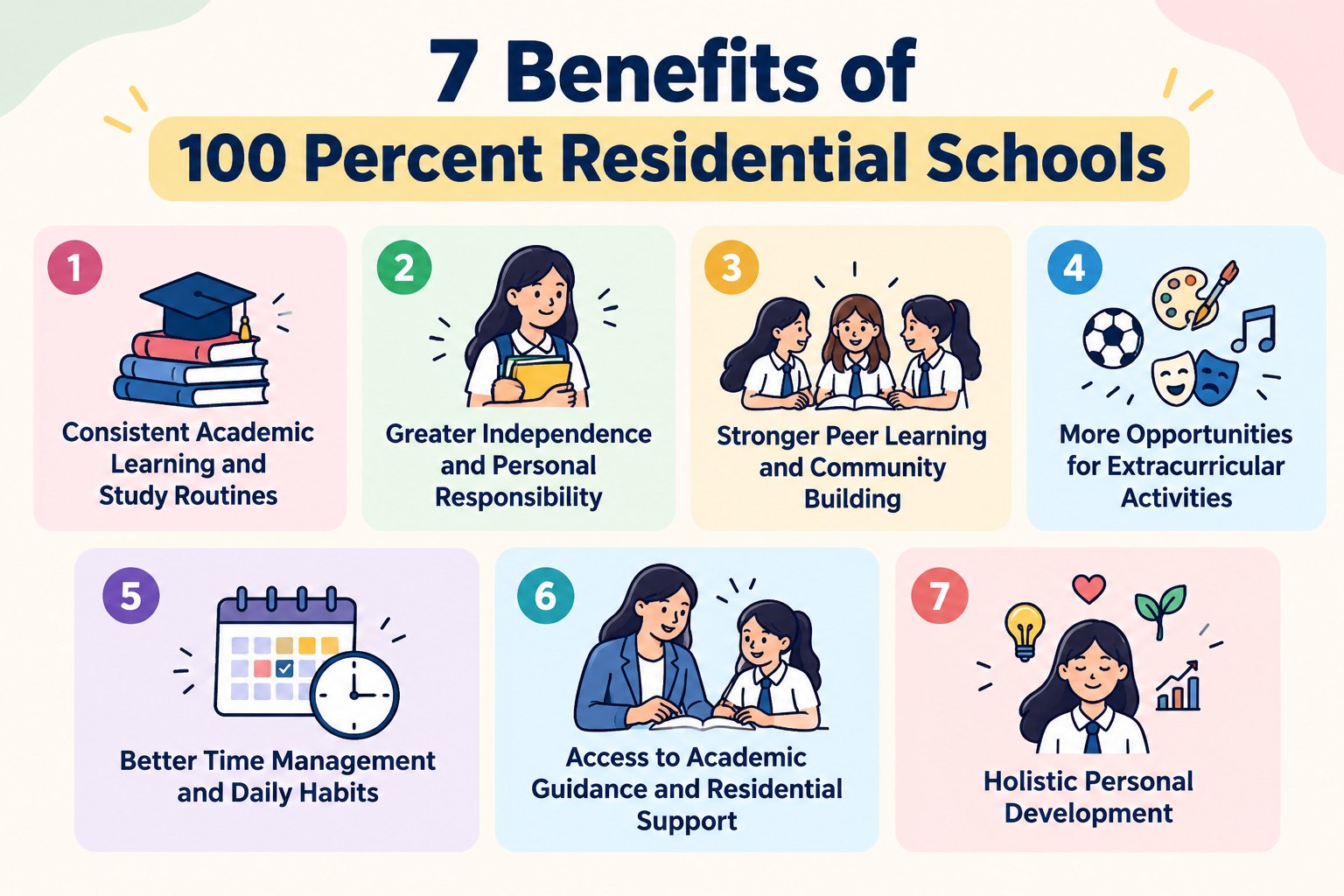
1. Consistent Academic Learning and Study Routines
One of the major benefits of 100 percent residential schools is the opportunity to maintain a consistent academic routine. Students may have access to scheduled study periods, revision sessions, academic guidance, and quiet spaces for completing assignments.
A predictable timetable can help students organise their workload and develop effective study habits. For example, students can plan revision after classes, ask teachers for clarification when support is available, and prepare for assessments without relying entirely on last-minute studying.
Group discussions and peer learning may also help students explore different approaches to solving problems. When combined with qualified teaching and individual guidance, these opportunities can support academic engagement.
A balanced routine is important, too. Effective residential education includes adequate sleep, breaks, recreation, and flexibility for different learning needs rather than filling every hour with academic work.
2. Greater Independence and Personal Responsibility
The benefits of 100 percent residential schools extend to practical life skills. Living away from home gives students opportunities to take responsibility for everyday tasks in an age-appropriate and supervised setting.
Students may learn to organise their belongings, maintain personal spaces, prepare for classes, follow schedules, and manage their school materials. They also practise making decisions, resolving routine problems, and asking for help when necessary.
These experiences can gradually build confidence and self-management. Rather than expecting students to become independent immediately, a supportive school helps them develop responsibility through guidance, clear expectations, and regular practice.
These skills may prove useful when students move on to university, vocational education, or other environments that require greater independence.
3. Stronger Peer Learning and Community Building
Another important aspect of the benefits of 100 percent residential schools is the opportunity to learn and socialise with classmates beyond regular lessons. Students may work together on assignments, exchange ideas, join clubs, and participate in house activities.
Living in a shared community can teach students how to cooperate with people who have different interests, personalities, and perspectives. Group activities can help them practise active listening, respectful communication, conflict resolution, and teamwork.
A school without day scholars may also create a more consistent shared campus experience because students participate in residential and academic activities together.
However, a positive community requires active supervision and clear anti-bullying policies. Schools should promote inclusion, respect personal boundaries, and ensure students know how to report concerns and seek help.
4. More Opportunities for Extracurricular Activities
The benefits of 100 percent residential schools can include opportunities to participate in activities outside classroom hours. Depending on the school’s facilities and programmes, students may take part in sports, music, dance, drama, art, debates, clubs, and cultural events.
These activities allow students to explore their interests and discover abilities that may not be fully expressed through academic subjects alone. Sports can encourage teamwork and discipline, while drama and public speaking can provide opportunities to practise communication and presentation skills.
Clubs and creative projects may also help students develop curiosity, problem-solving, leadership, and collaboration.
Parents should verify which activities are offered, how regularly they take place, whether participation is accessible to different skill levels, and what coaching or supervision is available. The quality of opportunities matters more than the number of activities listed in a brochure.
5. Better Time Management and Daily Habits
A well-organised residential timetable can help students balance lessons, assignments, extracurricular activities, meals, recreation, and rest. This is another of the potential benefits of 100 percent residential schools.
Students can learn to prepare for the next day, track deadlines, organise study materials, and allocate time to different responsibilities. Repeating these tasks within a supportive routine may help students become more organised.
Time management also involves learning when to take breaks and how to prioritise competing responsibilities. Mentors and teachers can help students develop realistic plans instead of expecting them to manage every challenge independently.
These habits can be useful in higher education and later professional life, where individuals often need to balance several responsibilities.
6. Access to Academic Guidance and Residential Support
The benefits of 100 percent residential schools may include access to academic guidance and residential staff at different points throughout the day. Depending on the school’s arrangements, students may receive help with assignments, revision planning, study routines, or personal concerns.
Teachers can clarify difficult concepts, while mentors or residential staff may help students organise their responsibilities and identify appropriate next steps when challenges arise.
Pastoral care is particularly important in residential education. Students should know whom they can approach if they experience homesickness, friendship difficulties, bullying, or academic pressure. Where necessary, schools should have clear referral pathways to qualified counsellors or other professionals.
Parents should ask about staff availability, student-to-staff supervision, counselling arrangements, emergency procedures, and how the school communicates significant concerns to families.
7. Holistic Personal Development
The overall benefits of 100 percent residential schools can extend to social, emotional, physical, and personal development. Daily interaction with classmates and staff creates opportunities to practise empathy, cooperation, respectful communication, and responsible decision-making.
Participation in sports, clubs, cultural activities, and group responsibilities may help students discover interests and develop leadership skills. Students can also learn to recognise differences, respect others’ perspectives, and contribute positively to their community.
Holistic development should not mean expecting every student to excel in every area. Students need opportunities to explore their own interests, make age-appropriate choices, receive constructive feedback, and develop at their own pace.
A supportive residential school balances structured expectations with recreation, personal space, emotional support, and opportunities for students to express their concerns.
How Fully Residential Schools Support Holistic Development

The benefits of 100 percent residential schools are strongest when academic education is connected with everyday learning experiences. Students can apply classroom concepts through projects, discussions, clubs, sports, and shared responsibilities.
For example, a student participating in a team activity may practise cooperation and communication. A student managing a weekly schedule may develop planning skills. A student working through a disagreement with guidance may learn constructive conflict resolution.
Teachers, mentors, and residential staff contribute by modelling respectful behaviour, setting clear expectations, and providing appropriate support. Schools should also maintain accessible procedures for raising concerns and ensure that student wellbeing remains a priority.
What Parents Should Check Before Choosing a Residential School
Although the benefits of 100 percent residential schools can be valuable, the school’s residential status alone does not guarantee a positive experience. Parents should evaluate the quality of education and everyday boarding arrangements before making a decision.
Consider these factors:
- Academic quality: Check curriculum, teaching standards, academic support, and assessment practices.
- Boarding facilities: Review accommodation, hygiene, dining arrangements, healthcare access, and supervision.
- Safeguarding: Ask about anti-bullying procedures, staff training, complaint mechanisms, and emergency arrangements.
- Pastoral support: Find out how the school responds to homesickness, emotional concerns, and adjustment difficulties.
- Daily routine: Review study periods, activities, recreation, family contact, and opportunities for adequate sleep.
- Extracurricular options: Check whether sports, arts, clubs, and other activities match your child’s interests.
- Student readiness: Discuss residential life with your child and consider their needs, preferences, and comfort with living away from home.
Visiting the campus and asking specific questions can help families understand whether the school offers the right environment for their child.
Conclusion
The benefits of 100 percent residential schools may include consistent learning routines, independence, peer interaction, extracurricular participation, time management, academic guidance, and holistic personal development. A campus without day scholars can offer a shared residential experience in which students learn and grow together.
However, successful residential education depends on much more than living on campus. Qualified teachers, effective safeguarding, supportive mentors, balanced schedules, and attention to individual needs are essential. By evaluating these factors carefully, parents can decide whether a fully residential school is a suitable choice for their child’s academic progress, wellbeing, and personal growth.
Frequently Asked Questions
Q1. What are the main benefits of 100 percent residential schools?
Ans: The main benefits of 100 percent residential schools may include consistent study routines, greater independence, peer learning, extracurricular participation, time-management skills, academic guidance, and opportunities for holistic development.
Q2. What is the difference between a fully residential school and a school with day scholars?
Ans: A fully residential school accommodates its enrolled students on campus, whereas a school with day scholars also serves students who commute from home. Specific boarding arrangements vary by institution.
Q3. Do 100 percent residential schools help students become independent?
Ans: They can provide opportunities to practise daily responsibilities, organise schedules, manage belongings, and make age-appropriate decisions. Supportive supervision helps students develop these skills gradually.
Q4. Are fully residential schools suitable for every child?
Ans: No single school model suits every student. Parents should consider their child’s readiness for residential life, educational needs, preferences, and access to appropriate wellbeing support.
Q5. How can parents evaluate a fully residential school?
Ans: Parents should examine teaching quality, boarding facilities, staff supervision, safeguarding, pastoral care, healthcare arrangements, extracurricular opportunities, and family communication policies.