




Safe Adventure Sports in Girls Boarding Schools can help students build confidence, teamwork, resilience, and physical fitness while discovering new interests. From swimming and trekking to supervised climbing activities and outdoor challenges, well-planned sports programmes can make residential school life more engaging and enriching.
For parents choosing a girls’ boarding school, safety should always come before excitement. Activities must match students’ ages, abilities, and experience levels, with qualified instructors, suitable equipment, and clear emergency procedures. A balanced approach to adventure sports and fitness can support students’ physical, social, and emotional development.
This guide explains how schools can provide safe adventure sports in girls boarding schools, create balanced fitness routines, and encourage students to participate confidently while following appropriate safety measures.
Table of Contents
- Why Adventure Sports Matter in Girls’ Boarding Schools
- 7 Safe Adventure Sports and Fitness Practices
- How to Build a Balanced Fitness Routine
- What Parents Should Check Before Choosing a School
- Frequently Asked Questions
Why Safe Adventure Sports in Girls Boarding Schools Matter
Residential schools offer opportunities to combine academic learning with sports, recreation, and personal development. Safe adventure sports in girls boarding schools can encourage students to step outside their comfort zones in a controlled environment while learning to communicate, cooperate, and solve problems.
Outdoor activities can also introduce students to nature and help them develop practical skills such as following instructions, assessing situations, and supporting teammates.
The key is responsible planning. Adventure activities should never be treated as competitions to take unnecessary risks. Schools should select appropriate activities, assess potential hazards, and ensure that students can participate without pressure.
7 Safe Adventure Sports in Girls Boarding Schools and Fitness Practices
1. Swimming with Qualified Supervision
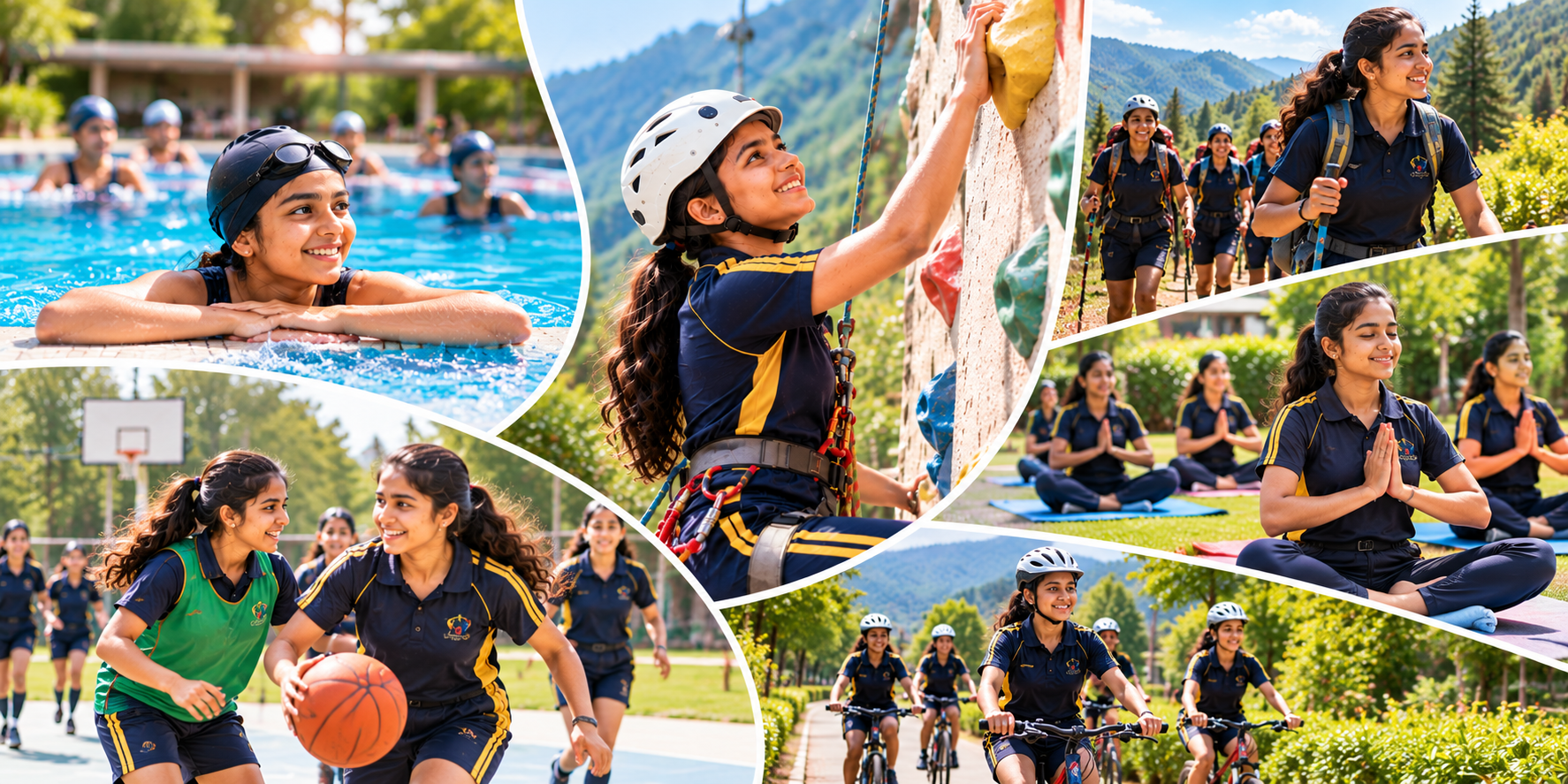
Swimming can support cardiovascular fitness, coordination, and general physical development. It can also help students build water confidence when lessons are appropriate to their ability.
Schools offering swimming should maintain suitable pool facilities, provide qualified instructors, ensure appropriate lifeguard coverage, and establish clear supervision rules.
Students should never swim alone or enter the water without permission. Beginners should receive instruction suited to their swimming ability.
When evaluating safe adventure sports in girls boarding schools, parents should ask about swimming supervision, pool access rules, emergency equipment, and the school’s procedures for managing water-related risks.
2. Guided Nature Walks and Easy Trekking
Guided nature walks and age-appropriate trekking can introduce students to outdoor environments while encouraging observation, teamwork, and appreciation of nature.
Schools should choose routes according to students’ abilities, check weather conditions, plan suitable rest stops, and ensure that trained adults accompany the group.
Students should receive clear instructions about staying with the group, carrying suitable water supplies, and following the activity leader’s guidance.
These activities can form part of safe adventure sports in girls boarding schools when routes are carefully selected and appropriate supervision is provided.
3. Supervised Climbing Activities
Climbing-based activities can help students practise concentration, communication, and problem-solving. However, these activities require specialist instruction and carefully maintained equipment.
Schools should use suitable facilities, trained instructors, appropriate protective equipment, and established safety procedures. Participation should be based on readiness and ability rather than peer pressure.
Students should understand that following instructions is essential and that stopping an activity when asked is part of responsible participation.
Parents exploring safe adventure sports in girls boarding schools should ask whether climbing activities are delivered by suitably qualified professionals and how risks are assessed before each session.
4. Yoga, Stretching, and Mobility Exercises
Fitness programmes do not need to involve extreme challenges. Yoga, gentle stretching, and mobility exercises can help students develop balance, body awareness, flexibility, and relaxation skills.
Schools should provide age-appropriate sessions led by instructors who understand students’ developmental needs. Students should be encouraged to work within comfortable limits rather than forcing movements or competing with classmates.
These practices can complement safe adventure sports in girls boarding schools by helping students prepare for physical activity and maintain a balanced routine.
5. Team Sports and Cooperative Challenges
Basketball, football, badminton, tennis, and other organised sports offer opportunities to develop coordination, communication, and teamwork.
Schools should ensure that students receive suitable instruction, use well-maintained equipment, follow the rules, and have access to appropriate first aid. Coaches should also encourage respectful competition and fair play.
Cooperative outdoor challenges can teach students to listen to one another, share responsibilities, and solve problems as a team.
When planned responsibly, these activities can make safe adventure sports in girls boarding schools part of a wider programme that supports confidence and social development.
6. Fitness Routines That Balance Activity and Rest
A suitable fitness regime includes a variety of activities rather than focusing exclusively on intense training. Walking, games, swimming, dance, age-appropriate strength exercises, and physical education can all contribute to an active routine.
The World Health Organization recommends that children and adolescents aged 5–17 undertake an average of at least 60 minutes of moderate-to-vigorous physical activity daily across the week, including muscle- and bone-strengthening activities on at least three days a week. Individual activities should be appropriate to a student’s abilities and circumstances. Read the WHO recommendations.
Schools should also allow sufficient time for meals, hydration, sleep, and recovery. Students who feel unwell or experience pain should be encouraged to tell a responsible adult rather than being pressured to continue.
Combining appropriate exercise with rest makes safe adventure sports in girls boarding schools more sustainable and supportive of overall wellbeing.
7. Safety Training and Emergency Preparedness
Safety education should be part of every adventure and fitness programme. Before an activity begins, students should understand the rules, listen to the instructor, use required equipment correctly, and know how to ask for help.
Schools should assess risks in advance, check equipment, maintain appropriate adult supervision, and prepare emergency arrangements. Activities such as climbing, trekking, and water sports may require additional specialist planning.
The UK government’s guidance on health and safety on educational visits discusses risk assessment, suitable supervision, and planning for adventure activities. Schools should follow the relevant requirements and guidance for their own location.
These precautions help make safe adventure sports in girls boarding schools a responsible part of student development rather than an avoidable source of risk.
How to Build a Balanced Fitness Routine in a Girls’ Boarding School
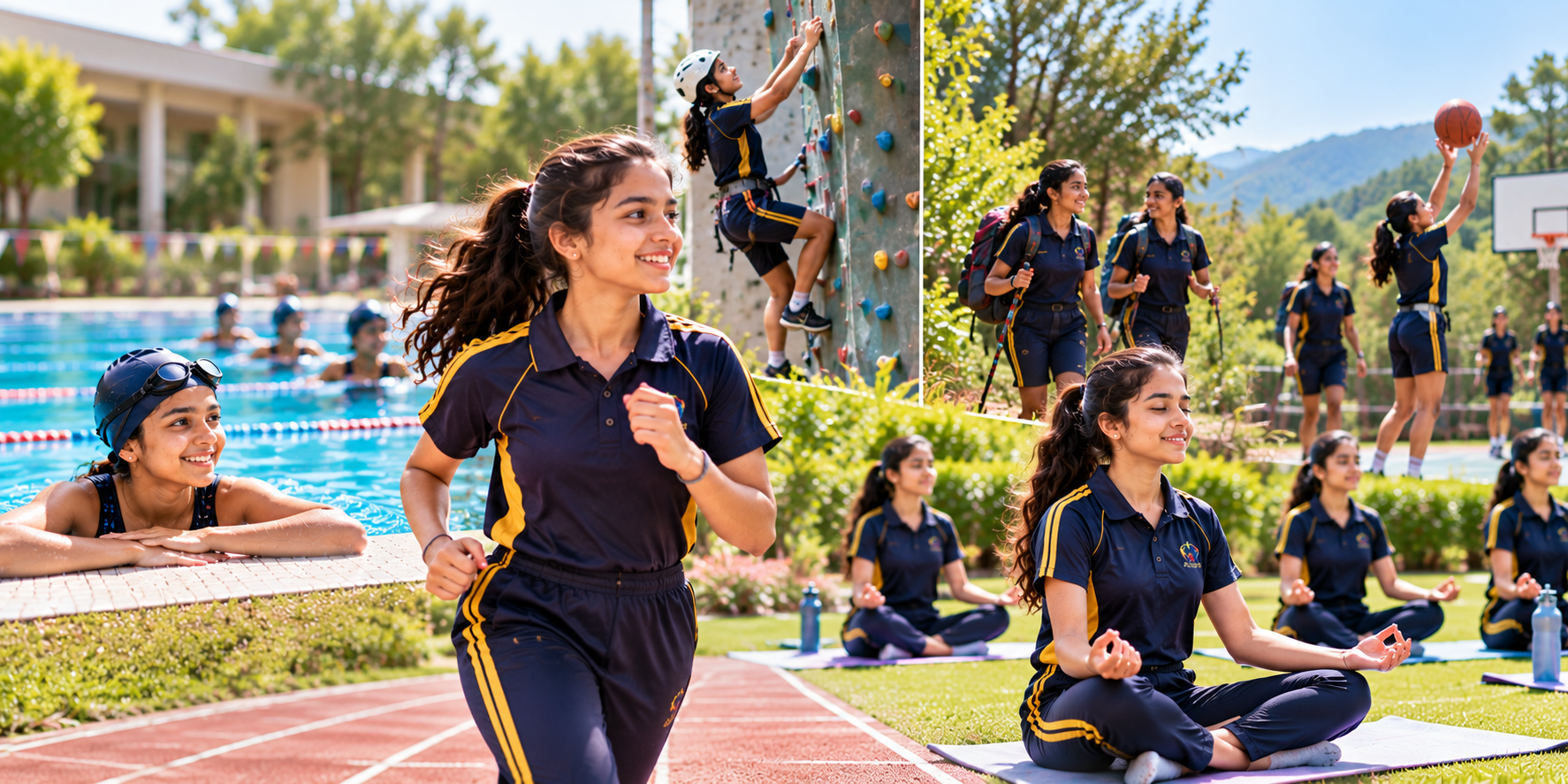
A balanced routine should consider academic commitments, fitness, recreation, meals, and rest. Schools can provide a varied weekly programme so that students have opportunities to participate in different activities without feeling obliged to do everything.
A sample routine might include:
- Daily: Walking, physical education, recreational games, or another suitable activity.
- Several days each week: Organised sports or supervised fitness sessions.
- Selected sessions: Yoga, mobility exercises, or age-appropriate strength and coordination activities.
- Occasional planned events: Guided nature walks or other supervised outdoor experiences, where appropriate.
- Every day: Time for meals, hydration, relaxation, and sufficient sleep.
This is an illustrative framework, not a compulsory exercise prescription. Schools should adapt routines to students’ ages, abilities, academic schedules, health needs, and existing activity levels.
A thoughtful fitness regime helps safe adventure sports in girls boarding schools complement academic learning and residential life.
What Parents Should Check Before Choosing a School
Parents should look beyond the number of sports listed in a school’s brochure. Ask whether activities are conducted by qualified staff, whether equipment and facilities are maintained, and how the school supervises students.
Useful questions include:
- Which sports and outdoor activities are currently available?
- What qualifications and experience do the instructors have?
- How are risks assessed before outdoor activities?
- What first-aid and emergency arrangements are in place?
- How does the school adapt activities for beginners?
- How are rest, hydration, and student wellbeing managed?
- How are parents informed about injuries or incidents?
For example, families researching Ecole Globale International Girls’ School in Dehradun can explore its sports programme and campus and facilities, then contact the school to confirm current activities, supervision arrangements, and safety procedures.
The most suitable school is one that makes physical activity accessible, enjoyable, and appropriately supervised for its students.
Conclusion
Safe adventure sports in girls boarding schools can make residential education more engaging by giving students opportunities to develop fitness, teamwork, confidence, and practical skills. Swimming, guided nature walks, supervised climbing, yoga, and organised team sports can all contribute when activities are selected carefully.
The strongest programmes place student safety and wellbeing first. With qualified supervision, appropriate equipment, clear rules, balanced fitness routines, and time for recovery, schools can help girls enjoy physical activity while continuing to grow academically and personally.
Parents should ask detailed questions about each school’s sports programme before making a decision. A safe, supportive, and varied approach to fitness can help students build positive habits that continue well beyond their school years.
Frequently Asked Questions
Q1. What are safe adventure sports in girls boarding schools?
Ans: They are age-appropriate outdoor or challenge-based activities conducted with suitable supervision, equipment, risk assessment, and safety procedures. Examples may include guided nature walks, swimming lessons, and professionally supervised climbing activities.
Q2. How can adventure sports benefit girls in residential schools?
Ans: When appropriately planned, adventure sports can encourage teamwork, confidence, communication, problem-solving, and physical activity. Benefits depend on the quality of instruction and whether participation is suitable for each student.
Q3. What should schools do to make adventure activities safer?
Ans: Schools should assess risks in advance, select suitable activities, use qualified instructors, maintain equipment, provide appropriate supervision, and prepare emergency procedures.
Q4. How much physical activity should students get?
Ans: WHO recommends an average of at least 60 minutes of moderate-to-vigorous physical activity per day across the week for children and adolescents aged 5–17. Activities should be varied and suitable for individual ability, with rest and recovery included.
Q5. Can beginners participate in adventure sports?
Ans: Yes, when the activity is appropriate for their age and experience and proper instruction and supervision are available. Beginners should be able to progress gradually and opt out of activities they are not ready to attempt.