





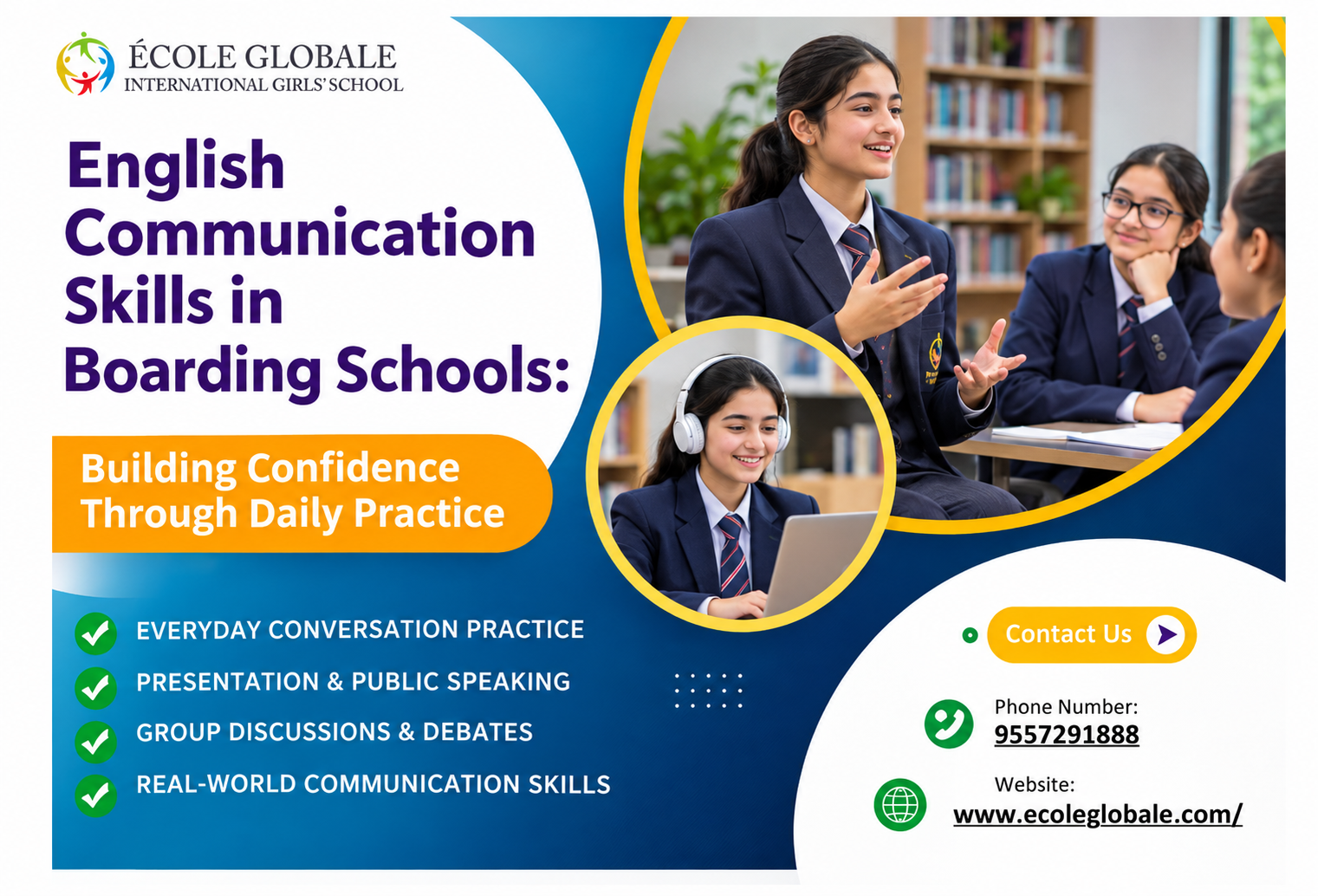
English is an important language for education, communication and future opportunities. For students living in residential schools, everyday interactions provide valuable opportunities to practise speaking, listening, reading and writing. English Communication Skills in Boarding Schools can develop through classroom discussions, group activities, social interactions and extracurricular programmes.
A boarding environment brings students together from different backgrounds. They communicate with classmates, teachers and hostel staff throughout the day. These regular interactions can create opportunities to improve vocabulary, pronunciation and speaking confidence.
Developing English Communication Skills in Boarding Schools is not only about learning grammar or memorising words. It also involves expressing ideas clearly, listening carefully, participating in conversations and communicating respectfully with others.
Why English Communication Skills Matter in Boarding Schools

English communication supports students in their academic and personal development. Students who can express their thoughts clearly may find it easier to participate in classroom discussions, ask questions and share their opinions.
English Communication Skills in Boarding Schools are particularly relevant because students have opportunities to communicate beyond regular classroom lessons. They can practise English during study sessions, group activities, school events and everyday conversations.
Good communication skills can help students:
- Participate more confidently in classroom discussions.
- Understand instructions and learning materials.
- Express opinions and ask questions.
- Develop friendships with students from different backgrounds.
- Prepare for presentations, interviews and future academic opportunities.
- Improve their ability to work in groups.
How Boarding Schools Help Students Improve English Communication Skills
A residential school environment can provide regular opportunities to practise English in different situations. The following activities can support students’ language development.
1. Daily English Conversation Practice
Regular conversation is one of the most practical ways to improve speaking skills. Students can practise English while discussing lessons, sharing experiences, asking questions and talking with friends.
Boarding schools can encourage students to use simple English during suitable daily interactions. Teachers and hostel supervisors can support this practice without making students feel uncomfortable about mistakes.
Daily practice helps improve English Communication Skills in Boarding Schools by making students more familiar with expressing everyday thoughts in English.
2. Classroom Discussions and Group Activities
Classroom discussions give students opportunities to share ideas, explain answers and listen to different opinions. Group activities also encourage students to communicate while working towards a common goal.
For example, teachers can organise discussions on environmental protection, technology, literature or current educational topics.
These activities strengthen English Communication Skills in Boarding Schools by encouraging students to organise their thoughts, use relevant vocabulary and communicate with confidence.
3. Debates and Public Speaking Activities
Debates and public speaking activities help students develop structured communication. Students learn to research a topic, prepare arguments, explain their viewpoints and respond to questions.
Schools can organise speech competitions, classroom debates, morning assembly presentations and speaking exercises.
Such opportunities help students improve English Communication Skills in Boarding Schools while developing confidence, logical thinking and the ability to communicate ideas clearly.
4. Reading Habits and Vocabulary Development
Reading is closely connected with effective communication. Books, newspapers, magazines and educational articles introduce students to new vocabulary, sentence structures and different writing styles.
Boarding school libraries can encourage regular reading through reading periods, book clubs and group discussions about selected books.
As students encounter new words, they can practise using them in conversations and written assignments. This supports the development of English Communication Skills in Boarding Schools through a combination of reading and speaking practice.
5. Writing Activities and Creative Expression
Writing helps students organise their thoughts and understand how sentences are structured. Schools can encourage students to write short stories, essays, diary entries, letters and school magazine articles.
Teachers can provide feedback on grammar, vocabulary, sentence formation and clarity.
Writing activities complement spoken communication and contribute to stronger English Communication Skills in Boarding Schools.
6. Cultural Programmes and School Events
Cultural programmes, annual functions, assemblies and other school events provide opportunities for students to communicate before an audience.
Students may introduce performances, deliver speeches, host programmes or participate in group presentations.
These experiences help students practise pronunciation, expression and audience awareness. They also make English Communication Skills in Boarding Schools more practical by connecting language learning with real school experiences.
7. Interaction with Teachers and Mentors
Teachers play an important role in helping students improve their communication. Regular conversations, constructive feedback and supportive classroom environments can encourage students to speak more freely.
Teachers can help students correct common language errors, learn useful expressions and organise their ideas.
A supportive approach is essential because students may have different levels of English proficiency. Encouragement and regular practice can strengthen English Communication Skills in Boarding Schools over time.
Practical Activities to Improve English Communication Skills
Schools can introduce simple activities that make language practice part of everyday learning.
| Activity | How it helps |
|---|---|
| Daily conversation practice | Improves fluency and everyday vocabulary |
| Storytelling sessions | Develops expression and sentence formation |
| Group discussions | Encourages listening and sharing opinions |
| Debates | Builds structured speaking and reasoning |
| Role-play activities | Provides practice in everyday conversations |
| Reading aloud | Supports pronunciation and reading fluency |
| Speech competitions | Develops public speaking confidence |
| School magazine writing | Strengthens written communication |
These activities can make English Communication Skills in Boarding Schools a regular part of students’ academic and social experiences.
Overcoming Common Challenges in English Speaking
Some students hesitate to speak English because they are worried about making grammatical mistakes, using incorrect words or being judged by others.
Schools should create an environment where students feel comfortable practising without unnecessary pressure.
The following approaches can help:
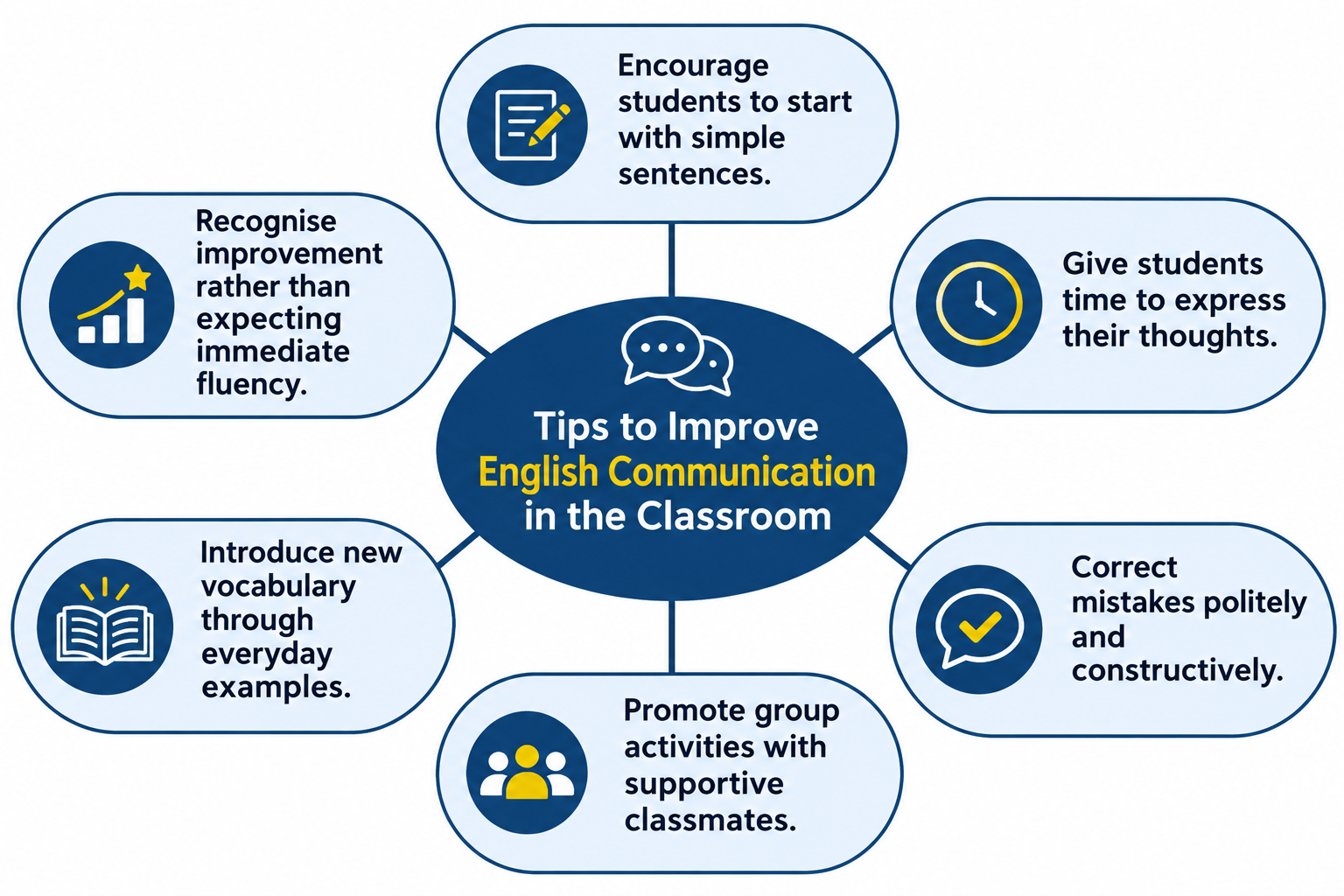
- Encourage students to start with simple sentences.
- Give students time to express their thoughts.
- Correct mistakes politely and constructively.
- Promote group activities with supportive classmates.
- Introduce new vocabulary through everyday examples.
- Recognise improvement rather than expecting immediate fluency.
It is important to remember that language development takes time. English Communication Skills in Boarding Schools improve through consistent practice, useful feedback and opportunities to communicate in different situations.
Role of Parents in Supporting English Communication
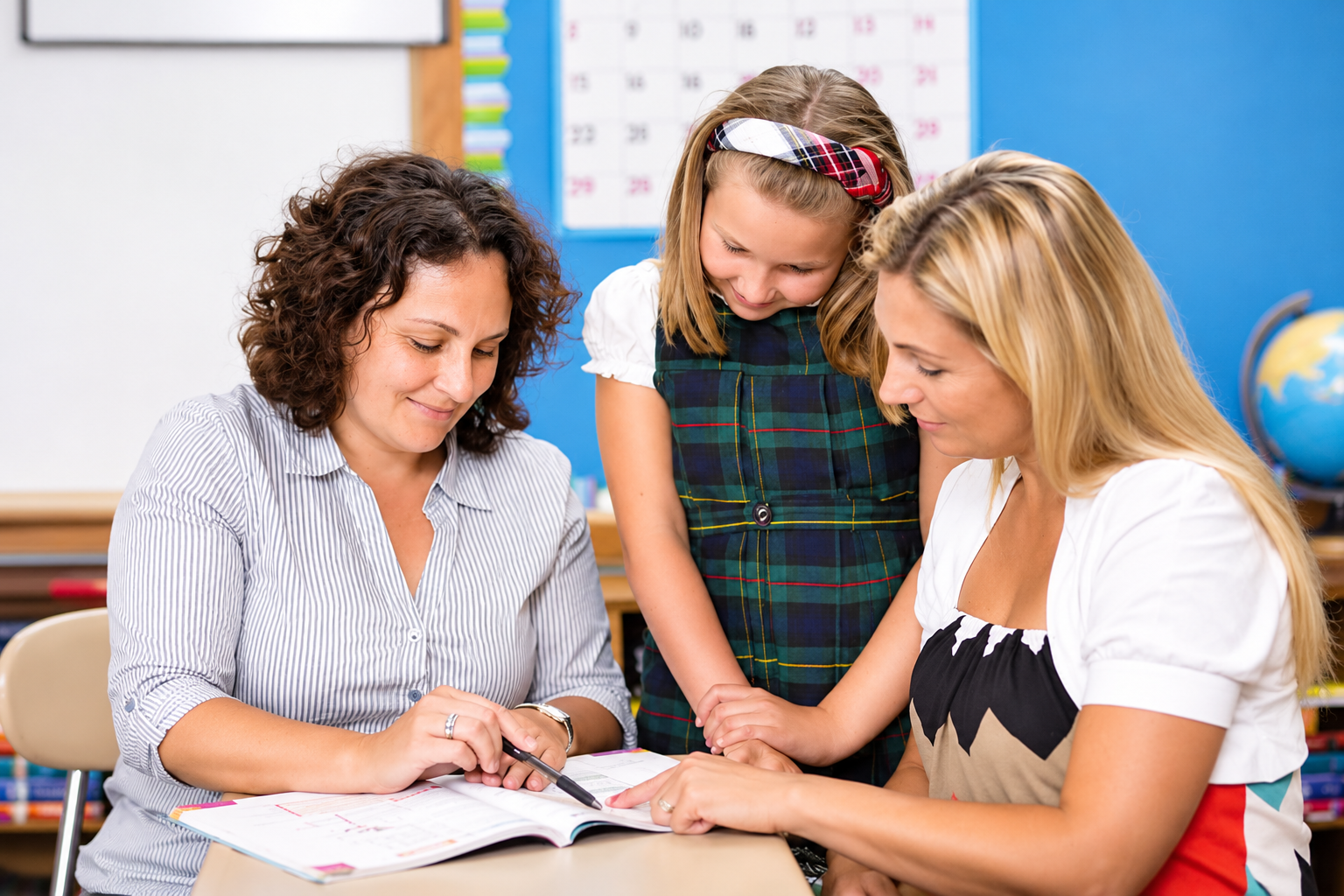
Parents can support language development by encouraging regular reading and conversation at home during holidays and family interactions.
They can ask children about their school experiences, discuss books and encourage them to explain their ideas. Listening patiently is also important because students need opportunities to communicate without feeling pressured.
When parents and teachers work together, students receive consistent support in developing English Communication Skills in Boarding Schools.
How English Communication Supports Future Opportunities
Strong communication skills can be useful in higher education, professional environments and everyday interactions. Students may need to participate in interviews, group discussions, presentations and academic activities where clear communication is important.
Developing English Communication Skills in Boarding Schools can prepare students to express their ideas, collaborate with others and participate confidently in different learning environments.
However, communication is not limited to speaking English fluently. Listening, understanding, respectful interaction and clear expression are equally important.
Conclusion
English Communication Skills in Boarding Schools develop through regular practice, classroom participation and meaningful social interactions. Daily conversations, reading, writing, debates, presentations and group activities provide students with opportunities to strengthen their language abilities.
A supportive boarding school environment can make English practice a natural part of everyday learning. With guidance from teachers, encouragement from parents and consistent effort, students can gradually become more confident and effective communicators.
Frequently Asked Questions
Q1. How do boarding schools improve English communication skills?
Ans: Boarding schools provide opportunities for daily conversations, classroom discussions, group activities, reading sessions, debates and presentations. These activities help students practise English in different situations.
Q2. Why are English communication skills important for boarding school students?
Ans: English communication skills help students participate in lessons, express their opinions, interact with others and prepare for future academic and professional opportunities.
Q3. Which activities improve English speaking skills?
Ans: Daily conversations, storytelling, debates, role-play, public speaking, group discussions and reading aloud can help students improve their speaking abilities.
Q4. How can students overcome hesitation while speaking English?
Ans: Students can begin with simple sentences, practise regularly, read aloud and participate in supportive group activities. Making mistakes is a normal part of learning a language.
Q5. How can teachers support English communication development?
Ans: Teachers can organise speaking activities, encourage classroom participation, introduce useful vocabulary and provide constructive feedback on pronunciation, grammar and sentence formation.