




Public speaking and leadership are important skills that help students express their ideas, make decisions and work confidently with others. Schools play an important role in developing these abilities from an early age. In particular, Public Speaking and Leadership Skills for Girls can help students become effective communicators, responsible decision-makers and active members of their communities.
Girls boarding schools provide opportunities for students to practise these skills through classroom activities, group discussions, assemblies, cultural programmes, sports and student leadership roles. Living and learning in a residential environment also gives students regular opportunities to communicate, collaborate and take responsibility.
Developing Public Speaking and Leadership Skills for Girls is not limited to speaking on a stage or holding a school position. It also involves listening carefully, sharing ideas, respecting different opinions and supporting others.
1. Classroom Discussions and Group Activities
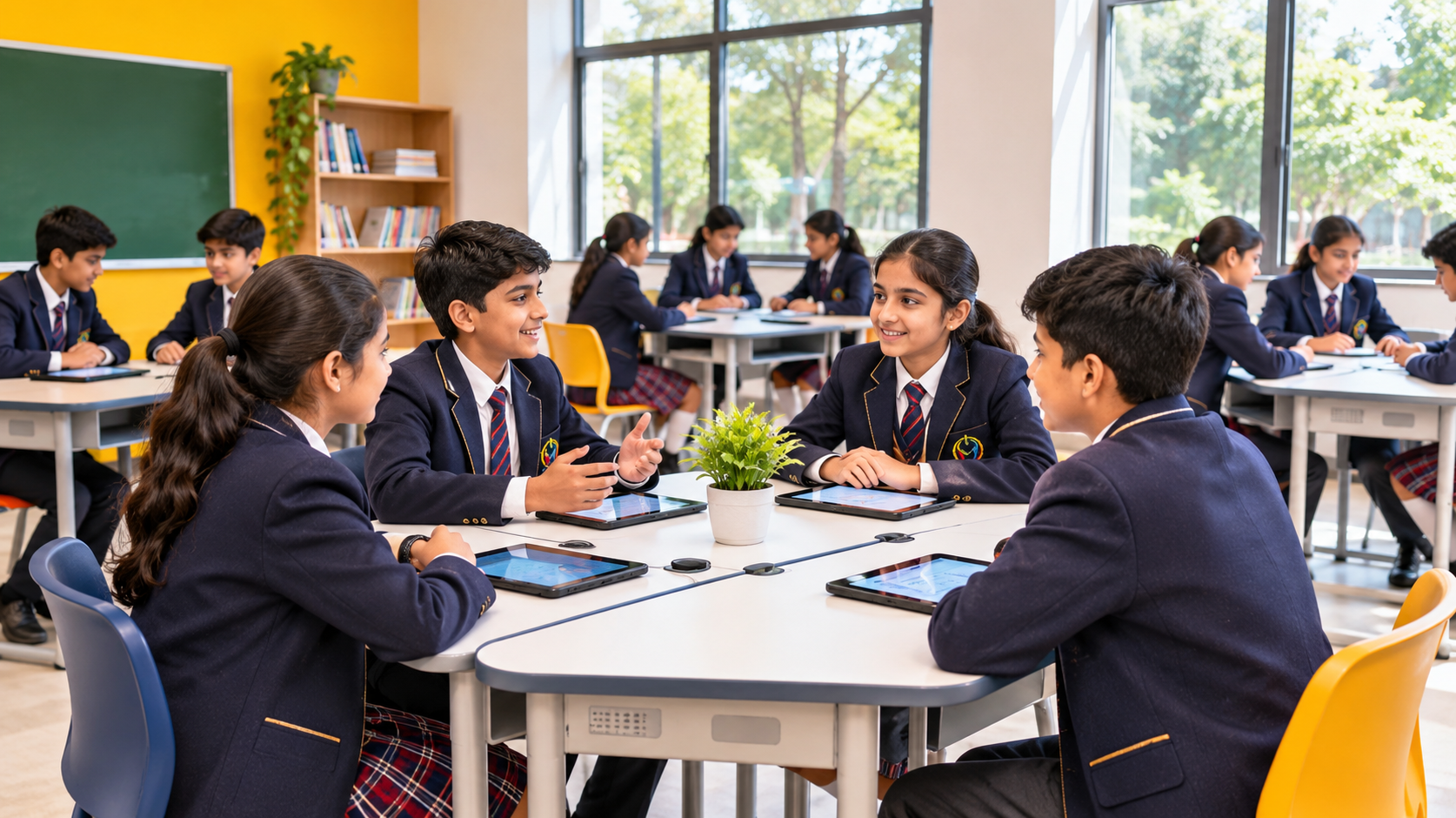
Classroom discussions give students opportunities to express their thoughts and participate in meaningful conversations. Teachers may encourage students to answer questions, share opinions, discuss topics and work together on classroom assignments.
These activities help develop Public Speaking Skills for Girls by making communication a regular part of learning. Students gradually become more comfortable explaining their ideas and participating in discussions.
Group projects also support Leadership Skills for Girls in Schools. Students may take responsibility for dividing tasks, organising information and presenting the group’s findings. These experiences teach cooperation, accountability and problem-solving.
2. Debates and Speech Competitions

Debates and speech competitions are useful ways to practise public speaking. Students learn to research a topic, organise their thoughts and present arguments in a clear and logical manner.
Girls boarding schools can organise debates, prepared speeches, extempore competitions and presentations on academic and social topics. Such activities provide structured opportunities to practise Public Speaking and Leadership Skills for Girls.
Participation also helps students learn how to respond to questions, support their opinions with relevant points and listen respectfully to opposing viewpoints. These abilities are useful in academic discussions and future professional settings.
3. Morning Assemblies and Stage Presentations
Morning assemblies provide regular opportunities for students to speak in front of an audience. They may deliver short speeches, introduce events, share announcements, read important messages or present news updates.
Stage presentations help students practise voice clarity, organisation and audience communication. Repeated opportunities can make public speaking more familiar and manageable.
These experiences contribute to Public Speaking and Leadership Skills for Girls because students learn to communicate information responsibly and address an audience with preparation. They also understand the importance of confidence, clarity and respectful communication.
4. Student Council and Leadership Responsibilities
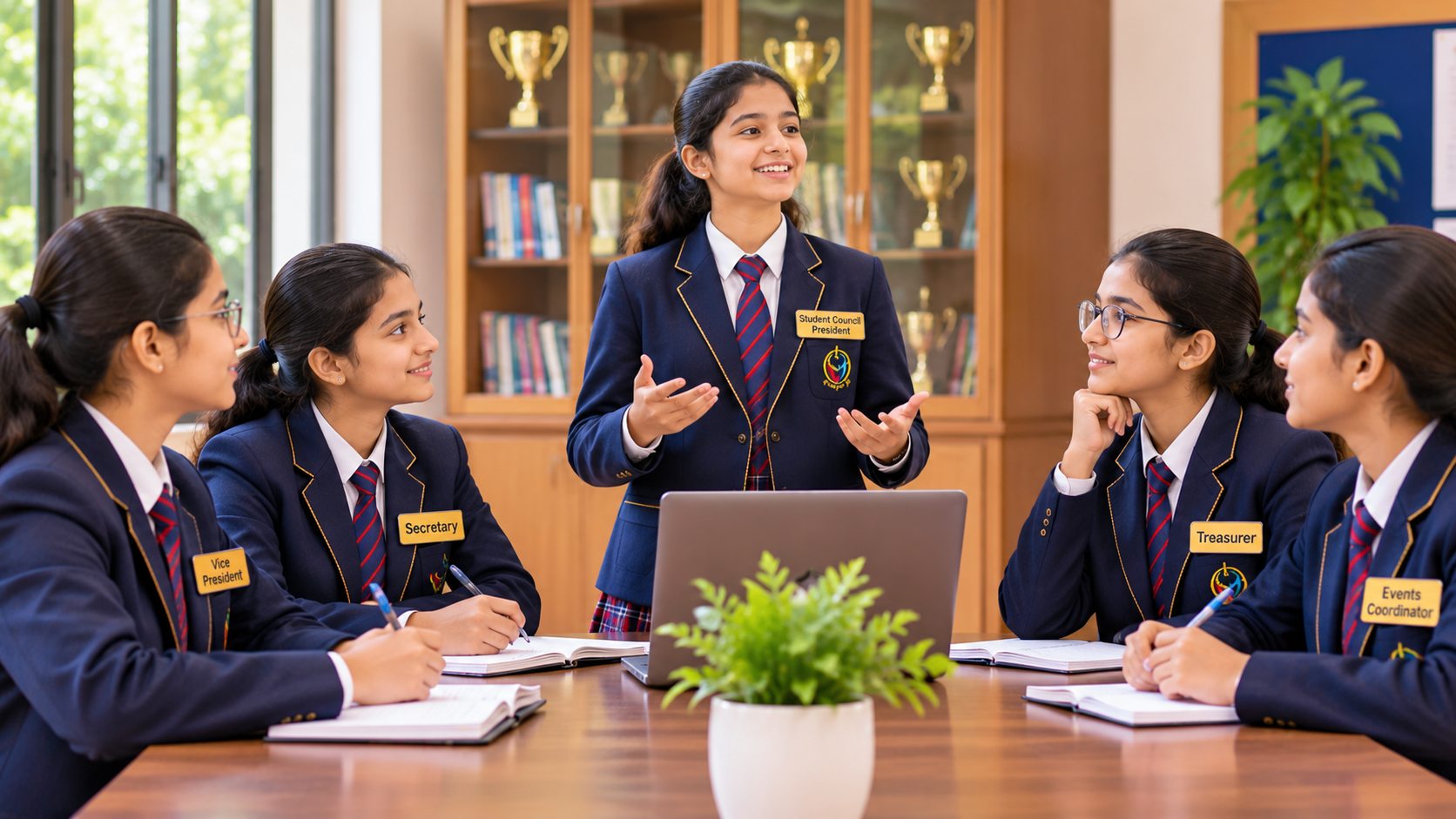
Student councils give students practical opportunities to understand leadership. Students selected for different responsibilities may represent their classmates, communicate concerns, help organise events and coordinate activities.
Such roles develop Leadership Skills for Girls in Schools by teaching students how to make decisions, manage responsibilities and work with others. They also learn that leadership involves service and accountability rather than simply holding a title.
Through these responsibilities, Public Speaking and Leadership Skills for Girls develop together. Students need communication skills to share information, listen to others and explain decisions. They also learn to consider different perspectives before taking action.
5. Sports and Team Activities
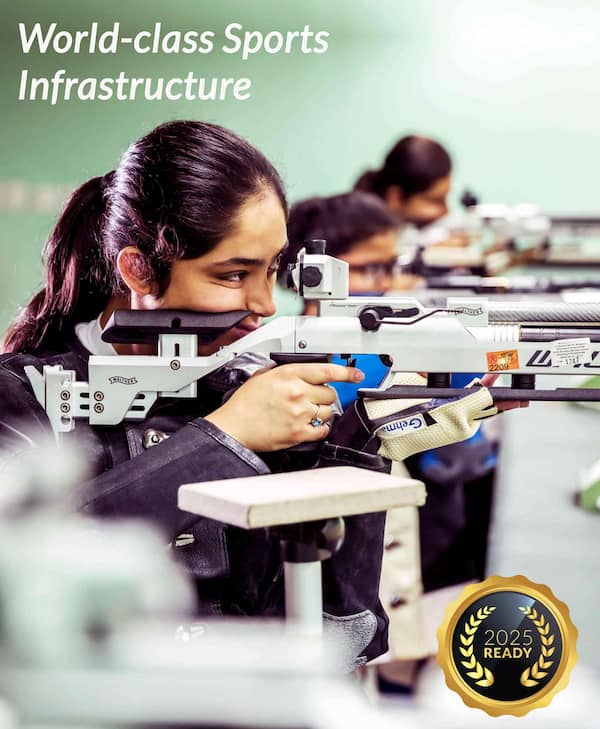
Sports and team activities offer valuable lessons in cooperation, discipline and responsibility. Students learn to follow rules, support teammates, manage challenges and work towards shared goals.
Team captains and group coordinators may also get opportunities to organise practice sessions, communicate instructions and encourage participation. These experiences help develop leadership through practical involvement.
Sports can therefore contribute to Public Speaking and Leadership Skills for Girls by giving students opportunities to communicate, cooperate and take responsibility in different situations.
6. Cultural Programmes and School Events
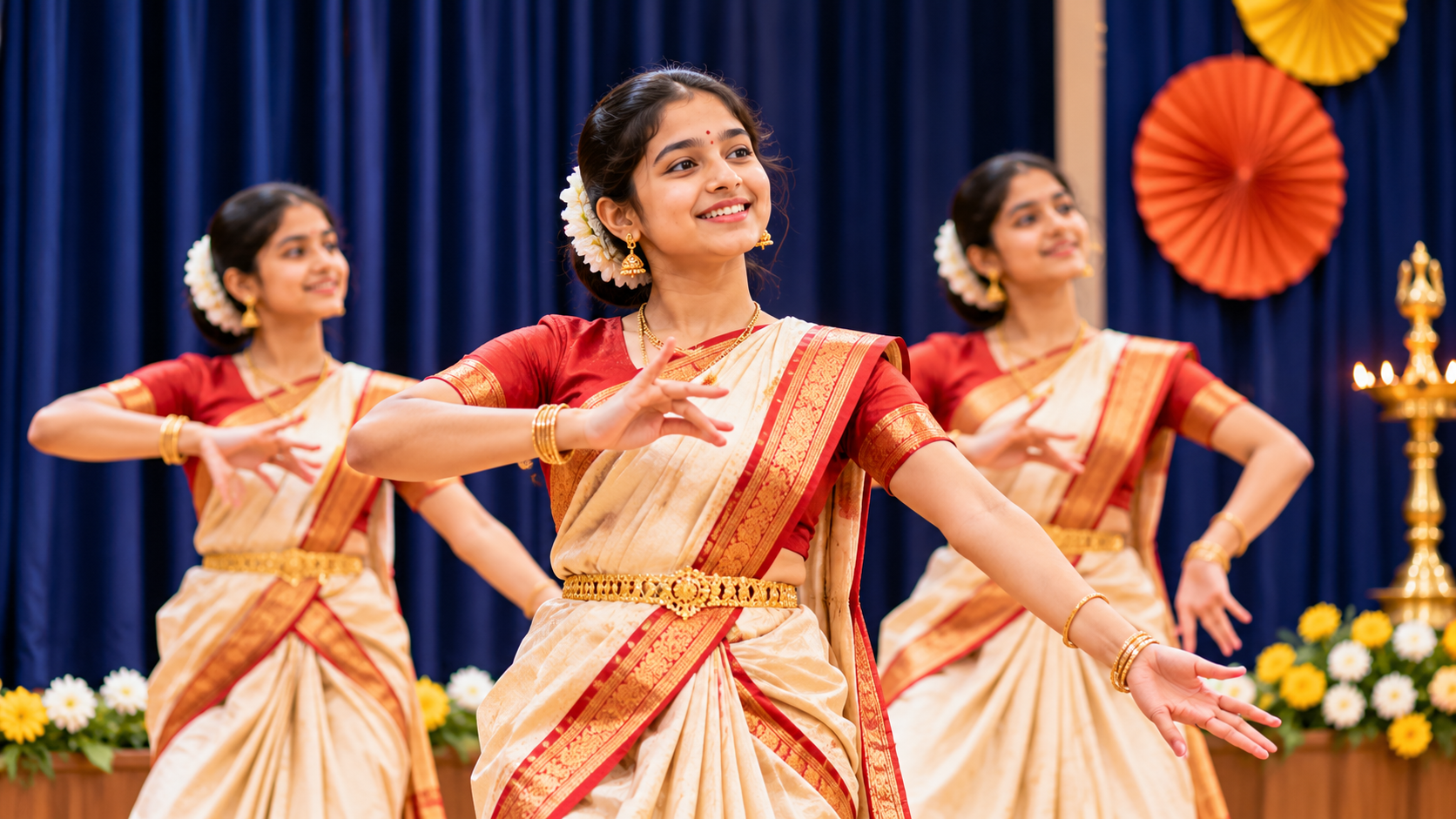
Cultural programmes, annual functions, festivals and school celebrations involve planning and coordination. Students may participate as performers, hosts, organisers, volunteers or team coordinators.
Hosting an event gives students opportunities to introduce speakers, announce performances and communicate with an audience. Organising an event teaches planning, teamwork and time management.
These activities support Public Speaking Skills for Girls while also providing practical experiences in leadership. Students learn how to coordinate with classmates, communicate instructions and contribute to shared responsibilities.
7. Group Projects and Collaborative Learning
Collaborative learning helps students understand how to work effectively with people who may have different ideas and approaches. Group assignments, science projects, presentations and classroom activities require students to communicate and coordinate.
Students may take turns leading discussions, assigning tasks and presenting the final work. These opportunities encourage Leadership Skills for Girls in Schools by developing cooperation, decision-making and accountability.
They also strengthen Public Speaking and Leadership Skills for Girls because students practise explaining information, answering questions and presenting shared ideas.
8. Mentorship and Teacher Guidance
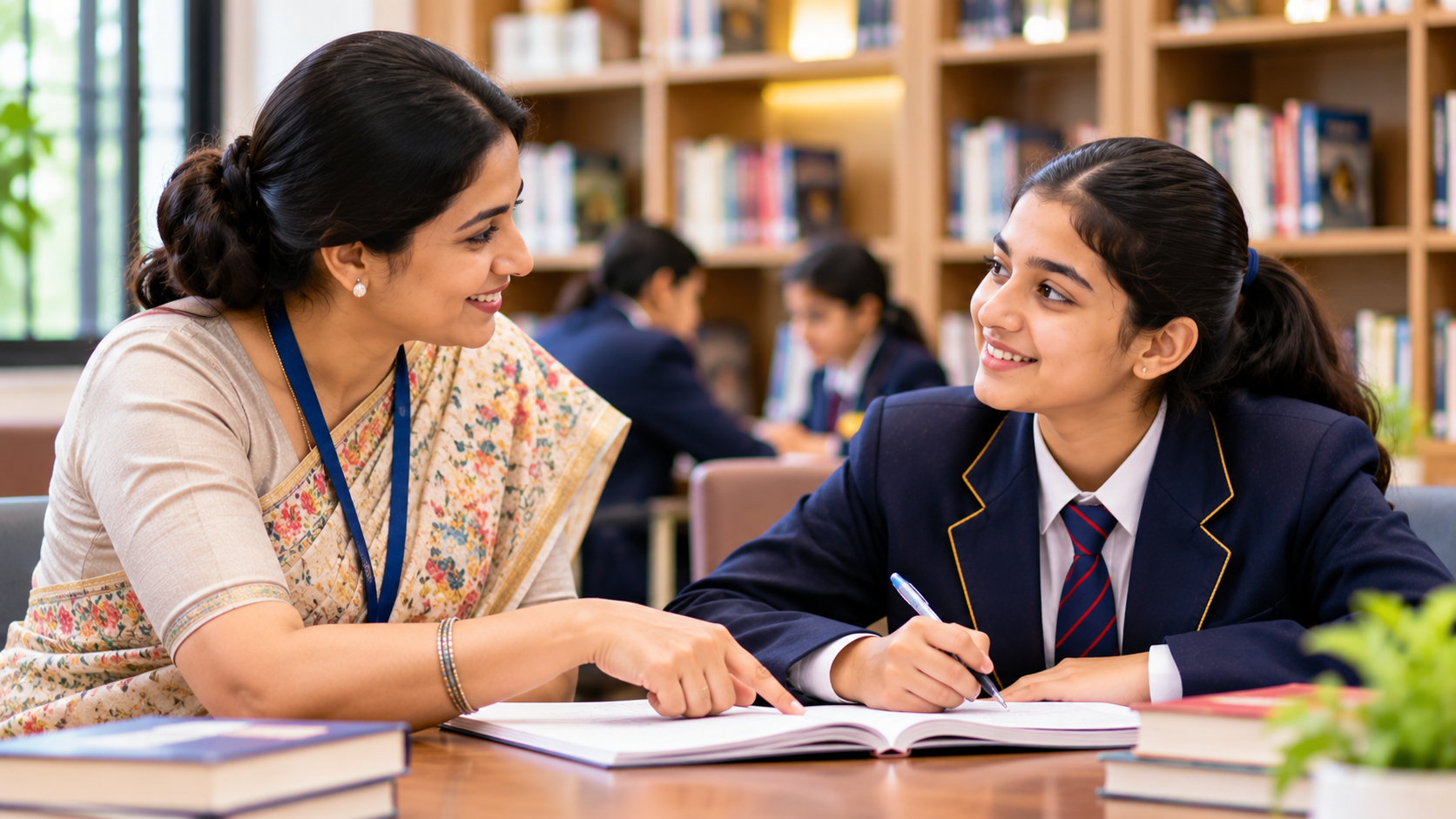
Teachers and mentors play an important role in helping students develop communication and leadership abilities. Constructive feedback can help students improve their speaking structure, presentation skills and ability to communicate with others.
Teachers can also encourage students to participate in activities according to their interests and learning needs. Students who need more practice may begin with small group discussions before moving towards larger presentations.
Consistent guidance helps strengthen Public Speaking and Leadership Skills for Girls without making participation feel like a competition. The aim should be to help every student improve at her own pace.
9. How Residential Life Encourages Independence
Residential life gives students regular opportunities to communicate and take responsibility beyond the classroom. Students interact with peers, participate in shared routines and learn to manage everyday responsibilities.
They may coordinate group activities, help organise celebrations, follow schedules and support classmates. These experiences can encourage independent thinking, cooperation and responsible decision-making.
In this environment, Public Speaking and Leadership Skills for Girls can develop through everyday interactions as well as organised school activities. Students learn to express their needs, discuss concerns and contribute constructively to their residential community.
10. Preparing Girls for Future Opportunities
Communication and leadership abilities are useful in higher education, professional environments and community activities. Students who can explain their ideas, listen to others and work collaboratively are better prepared to participate in different settings.
Developing Public Speaking and Leadership Skills for Girls during school years can help students prepare for interviews, presentations, group projects and future responsibilities.
These skills should be developed through regular practice rather than one-time competitions. Schools can support this process by offering varied activities, constructive feedback and opportunities for students to take initiative.
Conclusion
Public speaking and leadership are valuable abilities that develop through practice, guidance and real-life experiences. Girls boarding schools can support this development through classroom discussions, debates, assemblies, student councils, sports, cultural programmes and residential activities.
Public Speaking and Leadership Skills for Girls are not simply about speaking confidently or becoming a student leader. They also involve listening, making thoughtful decisions, respecting others and taking responsibility.
By providing students with meaningful opportunities to participate and lead, schools can help them develop communication abilities and practical leadership experience that will support their future academic, personal and professional journeys.
Frequently Asked Questions
Q1. Why are public speaking skills important for girls?
Ans: Public speaking skills help girls express ideas clearly, participate in discussions, deliver presentations and communicate effectively in academic and professional settings.
Q2. How do boarding schools develop leadership skills?
Ans: Boarding schools provide opportunities through student councils, group projects, sports, cultural events and shared residential responsibilities.
Q3. What activities improve public speaking skills for girls?
Ans: Debates, speech competitions, morning assemblies, storytelling, classroom presentations and group discussions provide useful speaking practice.
Q4. How can students develop leadership skills at school?
Ans: Students can develop leadership by taking responsibility in group activities, helping organise events, participating in student councils and supporting their classmates.
Q5. Can public speaking and leadership skills help in future careers?
Ans: Yes. Communication, teamwork, decision-making and presentation abilities are useful across many academic and professional fields.