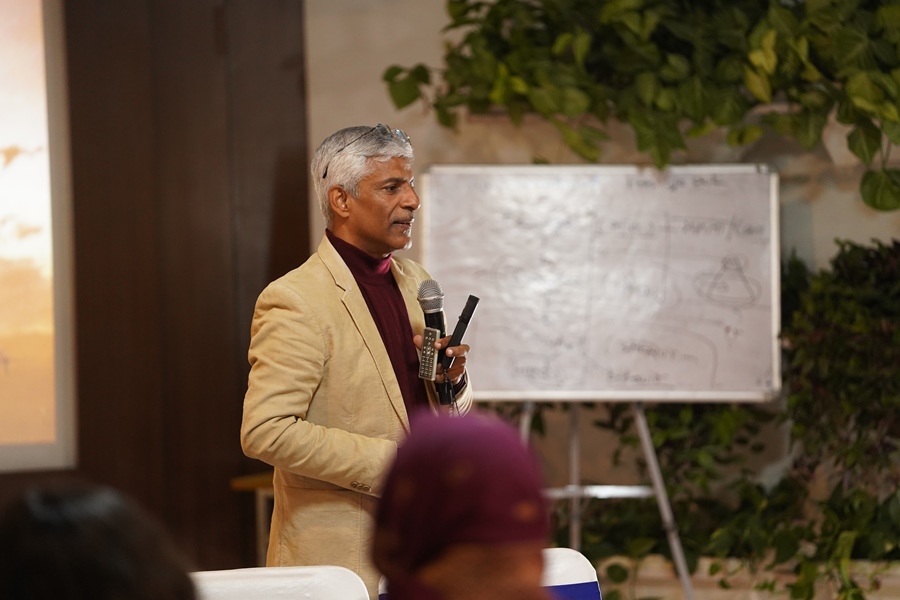

A one-day training programme on Advanced Life Skills was successfully conducted at Ecole Globale International Girls’ School for teachers. The programme comprised two sessions, both focusing on the importance of life skill education in schools.
Session 1, led by Mr. Pankaj Munjal, highlighted Life Skills Education as a major subject essential for holistic development. He emphasized effective communication in social and professional life and explained the concept of life skill empowerment as the ability to make informed decisions, manage emotions, and adapt positively to challenges.
Session 2, conducted by Ms. Anju Varma, focused on self-awareness of teachers and learners. Through reflective activities, she explained “Self-awareness for a better me” achieved through self-investigation, helping educators understand their strengths, values, and areas of growth.
The training was interactive, insightful, and empowering. It enabled teachers to integrate life skills into classroom practices, fostering confident, self-aware, and socially responsible learners.
Use of Artificial Intelligence in the Classroom conducted on 22nd January, 2026
The AI Workshop organized by the Central Board of Secondary Education (CBSE) was a highly informative and professionally enriching capacity-building programme for educators. The workshop was conducted by the distinguished resource persons, Dr Tanu Gupta and Mr Garvit Duggal, who provided comprehensive insights into the expanding role of Artificial Intelligence in the educational domain. The sessions focused on key concepts such as Explainable Artificial Intelligence (XAI) and Generative AI, enabling participants to develop a clear understanding of their applications, advantages, and ethical implications in academic settings.
Dr Gupta elaborated on the growing relevance of Artificial Intelligence in education and demonstrated the effective use of tools such as intelligent tutoring systems, adaptive learning platforms, and AI-driven assessment mechanisms to personalize and enhance student learning experiences. She emphasized the necessity for educators to continuously upgrade their professional competencies to remain effective and relevant in a rapidly evolving educational landscape. The workshop also addressed practical strategies for monitoring and checking plagiarism in students’ academic work, thereby supporting the maintenance of academic integrity in the digital age.
Furthermore, participants were introduced to a wide range of AI-based websites and applications, with detailed explanations of their specific uses in teaching, assessment, feedback, and classroom management. A comprehensive compilation of AI tools, along with their respective functions, was demonstrated through structured and hands-on sessions, ensuring clarity and practical understanding. Overall, the workshop was intellectually stimulating and professionally empowering, equipping educators with the requisite knowledge and skills to integrate Artificial Intelligence responsibly, ethically, and effectively into their teaching practices, while fostering innovation and future-readiness in education.